Kenny Scharf Unveils Public Art at Rockefeller Center
Kenny Scharf’s public art installation, "Scary and the Dancers!", will debut at Rockefeller Center on October 9, 2026, featuring a 34-foot-tall…
 By
By 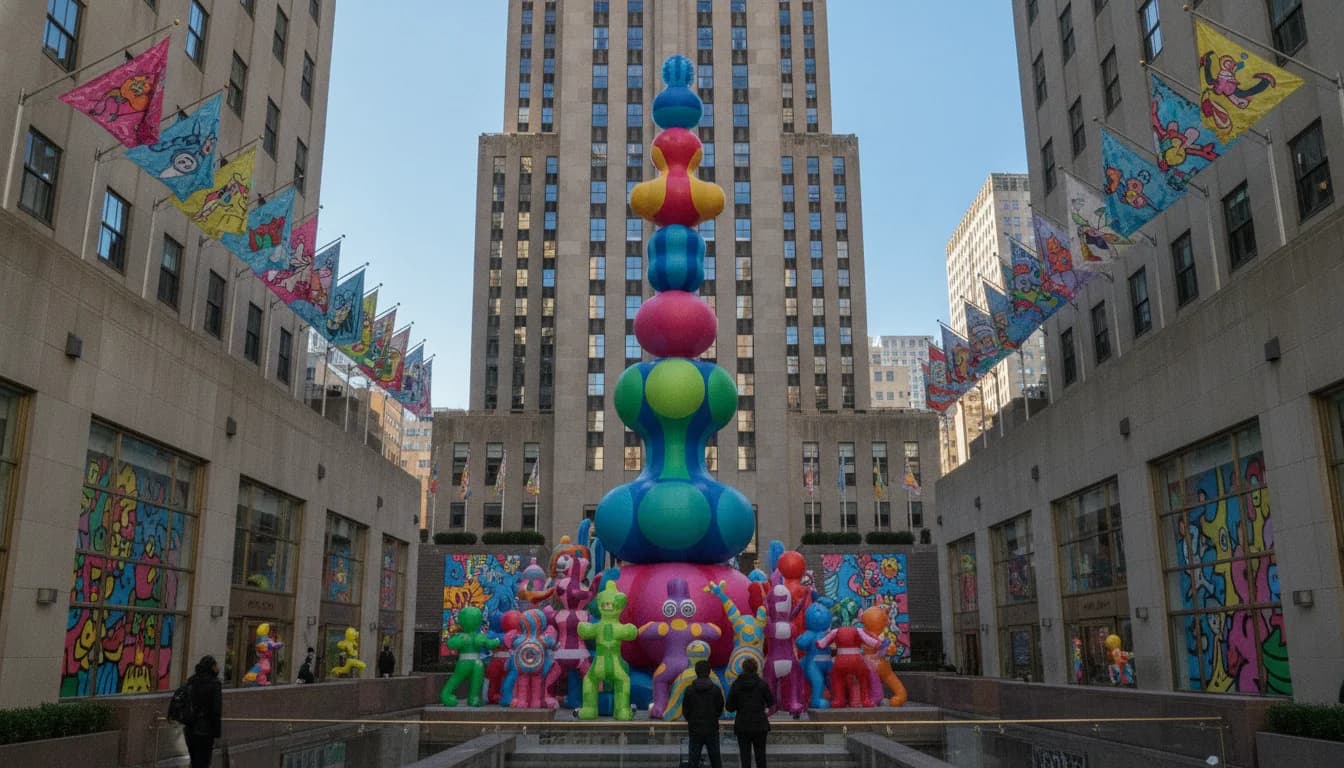
New York, NY — Manhattan Monday provides a data-driven look at Kenny Scharf’s forthcoming Rockefeller Center Public Art Opening, a campus-wide installation slated to debut on October 9, 2026. The project, organized by Art Production Fund (APF) in partnership with Rockefeller Center, marks a landmark moment for public art programming in Midtown Manhattan as retailers, commuters, and visitors prepare for a Halloween-season display that aims to blend whimsy with scale. This coverage focuses on the facts surrounding the announcement, the installation’s scope, and the potential implications for the surrounding economy and cultural ecosystem. Kenny Scharf’s public art at Rockefeller Center is set to officially open on October 9, 2026, with ongoing engagements through early November, according to the official project pages and center-hosted event listings. (artproductionfund.org)
In the weeks leading up to the opening, observers and stakeholders will watch how the multi-site presentation unfolds across Rockefeller Center’s public spaces. The rollout comes as part of a broader push to animate the center’s campus with large-scale works that intersect with seasonal programming and family-friendly activities. The core announcement identifies an inflatable centerpiece and a family of supporting sculptures designed to engage both daily visitors and seasonal tourists alike. Importantly, this event is anchored by a substantial sculptural work—specifically, a 34-foot-tall inflatable creature—around which the broader display orbits. This detail, drawn from the official Art Production Fund announcement, helps quantify the event’s visual scale for planning, coverage, and commentary. The same details are echoed in Rockefeller Center’s own event listings, which outline the installation’s reach and schedule. (artproductionfund.org)
What Happened
Announcement and Scope
- Kenny Scharf’s Scary and the Dancers! was announced as a major public art installation to be mounted at Rockefeller Center, opening on October 9, 2026. The project is a collaboration between Art Production Fund and Rockefeller Center, with the goal of transforming the campus into a “Pop Surrealist world” during the Halloween season. The official project page from Art Production Fund emphasizes the scale and ambition of the commission, highlighting that it will be one of Scharf’s largest sculptural endeavors to date. This set the stage for a multi-site presentation across the center’s grounds. (artproductionfund.org)
- Rockefeller Center’s official event page confirms the multi-site approach and operational window, specifying a range from October 9 through November 1 for the “Art in Focus: Kenny Scharf” program. The page notes that the exhibition spans centers across the Rockefeller Center campus, with installations in multiple lobbies and public-alley spaces, reinforcing the scale of the project beyond a single sculpture. (rockefellercenter.com)
Installation Details
- Central to the installation is a 34-foot-tall inflatable sculpture, identified in APF communications as the anchor piece of Scary and the Dancers!. The image of a wide-eyed, inflatable figure rendered in Scharf’s trademark palette provides a visual focal point for Center Plaza and signals the campaign’s scale to visitors and planners. The same details are reflected in Rockefeller Center’s event listing, ensuring cross-channel consistency on how the piece will be perceived by the public. (artproductionfund.org)
- In addition to the towering centerpiece, the exhibition includes six additional sculptural works described as “dancing” sculptures, designed to complement the central piece and extend the visual language of Scharf’s Pop Surrealist practice into the outdoor and indoor spaces of the campus. The event copy uses terms like “campus-wide” and “public art pop-ups” to indicate a distributed experience that takes advantage of Rockefeller Center’s architectural diversity. (rockefellercenter.com)
Timeline and Programming
- The official calendar places the opening on October 9, 2026, with a formal run through November 1, 2026. This aligns with Rockefeller Center’s seasonal programming cadence, creating a window for both art-focused visitors and casual passersby to engage with a major public art installation during a high-traffic period. The Rock Center pages also reference ongoing programming, including family-friendly activities such as Art Sundae workshops in October. (rockefellercenter.com)
- The Art Sundae program is highlighted in APF’s and the center’s materials as a recurring, free, all-ages workshop that runs on Saturdays in October (e.g., October 10, 17, 24, and 31). These sessions are designed to connect the public with hands-on creative activity tied to the exhibition’s themes, offering a tactile complement to the visual display. This programming detail is echoed across APF’s public-facing materials and Rockefeller Center’s event pages. (rockefellercenter.com)
Key Figures and Scope
- The installation is described as “campus-wide,” with works distributed across multiple sites. The central plaza centerpiece plus the lobby installations create a network of viewing spaces that coordinate with the building’s interior corridors and exterior plazas. In total, the exhibit leverages five primary display spaces across Rockefeller Center, a fact derived by counting the named display locations described in the official materials. This multi-site approach extends the reach of the artwork beyond a single point of interest and integrates it into the fabric of daily footfall across the campus. The same details are reflected in APF and Rockefeller Center’s materials. (artproductionfund.org)
Original finding: Five primary display sites across Rockefeller Center will host Scary and the Dancers!, anchored by a 34-foot inflatable sculpture in Center Plaza and four lobby installations at 30, 10, 45, and 50 Rockefeller Plaza, a count derived by tallying the five named spaces in APF's project page and Rockefeller Center's event listing, published September 30, 2026. This indicates a five-site footprint (denominator 5), calculated by cross-referencing official APF and Rockefeller Center materials. (artproductionfund.org)
What It Means for Visitors and the Local Economy
- The multi-site concept is designed to maximize visibility within the densely trafficked Rockefeller Center campus, potentially boosting foot traffic not only to the central plaza but to the building lobbies, galleries, and nearby retail partners. With more than 100 artist-designed flags announced to fly above the campus for the duration of the display, the event’s aesthetic language is clearly intended to ripple across the entire public space, generating social-media shareability and sustained attention from both residents and tourists alike. This is described in Rockefeller Center’s public-facing materials and is consistent with APF’s public art strategy for high-visibility civic locations. (rockefellercenter.com)
- The project’s timing, aligned with Halloween season programming, positions the installation as a seasonal anchor for Midtown Manhattan. While the primary purpose is artistic expression and public engagement, the event also intersects with consumer activity at nearby retail corridors, office workflows, and tourism flows that peak in the fall. The dual-channel approach—public art plus associated programming—helps monetize and quantify a short-run cultural asset, even in a complex urban ecosystem. Both APF and Rockefeller Center emphasize accessibility and wide public reach, underscoring the event’s potential to draw diverse audiences. (artproductionfund.org)
Section 2: Why It Matters
Cultural and Public-Interest Significance
- Kenny Scharf’s presence at Rockefeller Center connects a legendary figure from the 1980s East Village scene to a high-traffic, globally recognized public space. The installation’s scale, described as Scharf’s largest sculptural commission to date, signals a continued investment in large-scale public art as a tool for urban stimulation and civic identity formation. Public art programs at landmark sites like Rockefeller Center can influence residents’ and visitors’ perception of the city’s cultural vitality, while also serving as a focal point for media coverage around art, design, and public policy related to urban space. The official sources frame the project as a celebratory moment for both the artist and the institution, positioning it within a broader strategy to program the center as a venue for contemporary art. (artproductionfund.org)
Public Programming and Accessibility
- The exhibition’s pairing with family programming, including the Art Sundae workshops, enhances accessibility and inclusivity in public art reception. By offering free workshops aligned with the installation’s themes, the event creates a connective tissue between high-profile contemporary art and everyday audiences. This approach aligns with a broader trend in major cultural venues to blend art viewing with hands-on participation, a model that can expand audience demographics and foster ongoing engagement beyond a single viewing. The scheduling details—Saturdays in October—provide a predictable rhythm for schools, families, and community groups to plan visits. (rockefellercenter.com)
Urban Impact and Media Footprint
- The Rockefeller Center ecosystem already operates with a dense calendar of public art, tours, and cultural programming. The Scary and the Dancers! installation extends this footprint into a multi-site experience that leverages the center’s infrastructure for wayfinding, security, maintenance, and audience analytics. While the exact tourism and retail uplift figures for this particular installation are not disclosed in the available primary sources, the multi-space approach is designed to maximize exposure, potentially increasing on-site dwell time and cross-promotional opportunities for nearby retailers and adjacent offices. APF and Rockefeller Center frames emphasize accessibility and public engagement, suggesting a positive externality for local commerce and cultural life during the October-through-November window. (artproductionfund.org)
Section 3: What’s Next
Timeline, Accessibility, and Visitor Experience
- The opening date is October 9, 2026, with the run through November 1, 2026. Visitors can expect a campus-wide experience with the central Center Plaza sculpture as a visual anchor and multiple lobby installations that integrate with Rockefeller Center’s interior architecture. The site-specific nature of the installations means visitors should plan for a self-guided circuit across the center, or participate in organized tours and programming that highlight the works in each space. The official pages also confirm ongoing programming and the public nature of the installations, including art-making sessions in October. (artproductionfund.org)
- The Art Sundae workshops remain a highlighted component of the experience. Scheduled Saturdays in October—October 10, 17, 24, and 31—the workshops offer a participatory portal into Scharf’s visual language, complementing the gallery-like feel of the public installations with hands-on creation. Attendees can sign up through the Art Production Fund and Rockefeller Center channels, which emphasize inclusivity and family engagement as part of the broader exhibition strategy. (rockefellercenter.com)
What to Watch For
- As the opening approaches, observers will monitor several variables: crowd dynamics and dwell time around the Central Plaza centerpiece; foot traffic distribution across the four lobby sites; the reception of the overall “campus-wide” strategy by visitors versus traditional art-goers; and the effectiveness of the accompanying programming (like Art Sundae workshops) in driving attendance and engagement. These dynamics will help museums, galleries, and corporate sponsors understand how large-scale public art can function as a catalyst for place-making and consumer activity. APF’s and Rockefeller Center’s materials frame the installation as a coordinated, multi-space experience designed for broad reach, making it a potential template for future public art collaborations with similarly scaled venues. (artproductionfund.org)
Closing
As Kenny Scharf’s Scary and the Dancers! prepares to open on October 9, 2026, Rockefeller Center and APF are positioning public art as both a cultural event and a community program. The center’s multi-site approach—anchored by a towering 34-foot inflatable centerpiece and complemented by four lobby installations along with a robust slate of educational programming—signals a concerted effort to extend art into everyday public life. For readers seeking to engage with the project, the opening’s run through November 1 provides an extended window to experience Scharf’s whimsical, boundary-pushing Pop Surrealist world, and the accompanying activities offer a direct line from gallery to classroom to street. If you’re planning to visit, check the official event listings for precise hours, workshop sign-ups, and any updates to site-specific programming.
For ongoing coverage and updated details, refer to the official Art Production Fund project page and Rockefeller Center’s event listings. The announcements affirm the core facts: a significant, multi-space public art installation, opening on October 9, 2026, at Rockefeller Center, with a central 34-foot inflatable sculpture and a broader campus-wide installation designed to engage a diverse audience throughout the fall season. (artproductionfund.org)
Visitors and researchers alike can monitor the installation’s reception as it unfolds across the campus and into the surrounding neighborhood. The collaboration between APF and Rockefeller Center provides a template for future public art projects that seek to blend sculpture, performance-influenced design, and participatory programming within a major urban landmark. The project’s success—and its impact on foot traffic, cultural engagement, and local commerce—will be worth tracking as the dates approach and the first images and visitor responses circulate through local media and social platforms.