O'Keeffe Painting Found in NYC Closet Heads to Auction
A rediscovered Georgia O'Keeffe painting, Near Abiquiu, New Mexico I, will be auctioned by Christie’s on November 17, 2026, with an estimated value of…
 By
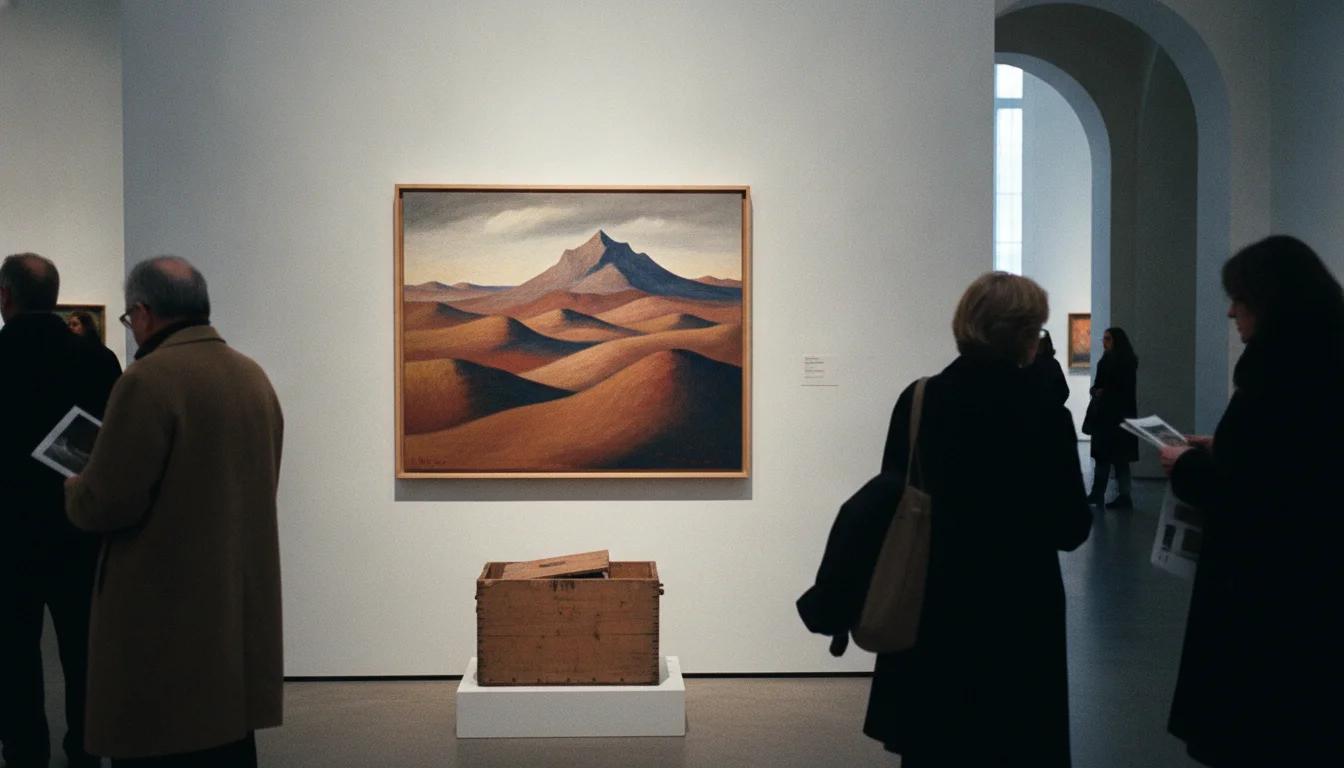
The rediscovered Georgia O’Keeffe painting buried in a New York City closet is moving toward a high-stakes public debut and auction. On November 17, 2026, Christie’s will offer Near Abiquiu, New Mexico I, a 1930 landscape that scholars had long known only from a 1931 photograph, marking a rare public emergence of a work tied to one of America’s most studied modernists. The work’s journey—from a private East Village closet to Christie’s New York marquee event—has become a touchstone for the art market’s ongoing interest in rediscovered Old Masters and early American modernism. As the auction unfolds, market watchers will be watching not just the hammer price, but what the sale signals about provenance-driven opportunity and the resilience of masterworks in a world of rising collector demand. Manhattan Monday counted that Christie’s estimates the 1930 O’Keeffe landscape Near Abiquiu, New Mexico I to be in the region of $3 million at its November 17 sale in New York. The estimate and the sale date come directly from Christie’s official materials. (press.christies.com)
AP News coverage and other national outlets have framed the story as a rare “unseen” work resurfacing after decades in private hands, illustrating how provenance and rediscovery can reframe an artist’s market trajectory. The Associated Press notes that the painting, once a graduation gift purchased in 1963 for about $3,800, is expected to realize a multi-million-dollar hammer price, with Christie’s publicly asserting an estimate range of roughly $3–$5 million. The broader implication for collectors and institutions is a sharper focus on works whose whereabouts were historically lost but which now surface with well-documented provenance. (abcnews.com)
Section 1: What Happened
The Discovery Timeline
A private East Village cache yields a masterwork
In a narrative that echoes landmark museum rediscoveries, the Christie’s press release details how the owner, an elderly but private collector, entrusted a relative to help sort through belongings. Behind coats and a shipping box in an East Village closet, the 1930 landscape Near Abiquiu, New Mexico I was found, complete with the artist’s OK signature on the backboard. The box had lain undisturbed since the 1980s, until a niece located the work and subsequently shared photographs with Christie’s for expert evaluation. This sequence—private owner, family involvement, formal authentication, then public sale—frames the auction as a carefully curated rediscovery rather than a casual find. The release also notes that the work was once unknown to public catalogues beyond a 1931 photograph, highlighting its significance as a freshly validated image in O’Keeffe’s oeuvre. (press.christies.com)
Provenance through the years
According to Christie’s, the painting was acquired in 1963 by a New York gallery and purchased for $3,800 before being gifted to the owner’s daughter. The narrative emphasizes the painting’s unique position within O’Keeffe’s Southwestern series and its status as an early, precocious iteration of the Lobo Peak motif that would recur in her long-running explorations of New Mexico landscapes. The original backstory—gift, private display in the East Village, and eventual concealment in a closet—adds a dramatic arc to the painting’s provenance and foreshadows the constraints and opportunities that provenance can introduce in the auction market. (press.christies.com)
The Artwork and Provenance
Near Abiquiu, New Mexico I: an early landscape with a long arc
Near Abiquiu, New Mexico I is described in the Christie’s release as a 1930 landscape that captures the artist’s evolving relationship with New Mexico’s light, color, and topography. The painting is framed as an important early work in a possible triptych, with the second version housed at the Metropolitan Museum of Art and the third in a private collection once tied to the Rockefeller family. The Christie’s document emphasizes the painting’s place in O’Keeffe’s Southwestern repertoire and its role as a bridge between the artist’s early experiments with abstraction and her later, more expansive desert visions. The public exhibition timeline for the work runs from November 7–17 at Christie’s New York, at 20 Rockefeller Center, in advance of the November 17 auction. (press.christies.com)
Authentication and research
The press release reiterates how rediscoveries of this kind rely on expert evaluation and the corroboration of historical records, including the painting’s backboard signature and its appearance in documented catalogues. Christie’s frames the discovery as part of a broader market dynamic: rediscoveries offer collectors a chance to own a historically significant object with a well-lit provenance narrative that can influence bidding behavior and price formation during marquee-week sales. The public exhibition and press materials also illustrate how auction houses are increasing access to extraordinary works through free exhibitions, enabling prospective bidders and scholars to assess condition, authenticity, and significance firsthand. (press.christies.com)
Auction Details and Public Exhibition
The sale and exhibition timetable
Christie’s states that Near Abiquiu, New Mexico I will be offered during its 20th Century Evening Sale on November 17, 2026, in New York. The painting will be visible to the public in a free exhibition at 20 Rockefeller Center from November 7 through November 17, preceding the sale. This schedule is designed to maximize accessibility for both collectors and the general public, reflecting a broader trend in top-tier art markets toward accessible pre-sale exposure for high-profile works. In addition to the auction, Christie’s highlights a planned tie-in with the broader New York Marquee Week, which includes notable collections and opportunities for serious bidders to engage with a curated set of works. (press.christies.com)
Public and media response
The Christie’s press release quotes Tylee Abbott, Senior Specialist and International Director of American Art at Christie’s, describing the rediscovery as a once-in-a-lifetime moment. Abbott frames the sale within the context of a well-researched market for historic American art and underscores the painting’s significance as part of O’Keeffe’s creative evolution. Media coverage across national outlets has highlighted the drama of the closet discovery, the provenance arc, and the high-profile sale environment in New York’s auction week. AP News, ABC News, and other outlets have provided contemporaneous reporting that complements Christie’s official statements, presenting a cohesive view of the event from both a gallery and public-interest perspective. (press.christies.com)
Section 2: Why It Matters
Market Context for O’Keeffe
A yardstick for 20th-century American modernism
Georgia O’Keeffe occupies a central place in American modernism, with a market history that combines scholarly interest, museum visibility, and collector demand. The rediscovery of Near Abiquiu, New Mexico I underscores the enduring appeal of early Southwestern imagery in O’Keeffe’s canon, which has historically resonated with collectors seeking both aesthetic and historical significance. The painting’s emergence within Christie’s 20th Century Evening Sale—a marquee event that often anchors price discovery for the category—illustrates how provenance-driven rediscoveries can reshape price expectations and market sentiment for related works in a given artist’s oeuvre. Contemporary coverage of similar rediscoveries reinforces the notion that rare, well-documented works can command outsized attention in high-stakes markets. (press.christies.com)
The role of provenance and public exhibits
The combination of a documented discovery, a public exhibition, and a formal price expectation highlights how provenance remains a pivotal factor in contemporary art pricing. Christie’s frames the event as a “rediscovery” moment, which can recalibrate collectors’ willingness to bid and influence the market’s broader perception of O’Keeffe’s late-20th-century and early-20th-century works. The public exhibition at Rockefeller Center further amplifies the work’s visibility beyond a private sale, enabling a larger audience to engage with the painting’s historical context and stylistic significance before the auction. This integration of exhibition, authentication, and sale reflects a growing practice among top-tier houses to maximize both informational transparency and market liquidity for historically important pieces. (press.christies.com)
Rediscovery Trends in the Art Market
A pattern of return and recalibration
The broader art market has seen multiple high-profile rediscoveries in recent years, often accompanied by intense media interest and significant price performance once the works enter marquee sales. The Christie’s press release itself draws a parallel to other rediscovery-driven sales, citing an example of a Michelangelo drawing discovered via an Online Estimate Tool and subsequently sold for a high price. While each case is unique, the pattern—private ownership leading to public unveiling, followed by auction within a peak week—illustrates how provenance-driven narratives can materially affect demand and perceived value. The O’Keeffe case sits within this larger context, underscoring the market’s willingness to reward rediscovered works with robust documentation and compelling historical significance. (press.christies.com)
Implications for auction strategy and collector behavior
For auction houses, rediscoveries carry implications for catalog strategy, pricing bands, and press outreach. The Near Abiquiu case demonstrates the importance of transparent provenance, careful authentication, and strategic timing to synchronize exhibition periods with marquee sale days. For collectors, the story emphasizes due diligence, the value of documentary evidence, and the potential for sudden shifts in interest when a work’s history is clarified and made accessible to a global audience. As the market increasingly rewards transparency and scholarly context, the O’Keeffe example may influence bidding dynamics not only for this work but for other early or rediscovered pieces by the artist and her contemporaries. (press.christies.com)
Implications for East Village and New York Art Heritage
A New York chapter in a global story
The East Village provenance adds a distinct urban footnote to the painting’s history, linking a storied New York gallery network, local collectors, and the artist’s own relationship with the city. The owner’s family described the aunt as “worldly,” “sophisticated,” and deeply connected to the city’s art scene, a narrative that resonates with New York’s ongoing status as a key node in the global art market. The East Village setting also underscores how private collections and personal archives can yield works of broad public interest, reinforcing the city’s role as both a market hub and a center for scholarship and public engagement with masterworks. (press.christies.com)
Section 3: What’s Next
Auction Day and Expected Hammer Price
The big day and what to watch
On November 17, 2026, Near Abiquiu, New Mexico I will be offered in Christie’s 20th Century Evening Sale in New York. Christie’s sets a price range of approximately $3 million to $5 million, reflecting the work’s rarity, historical significance, and the strong demonstration of provenance. Market watchers will monitor not only the hammer price but also how buyer participation unfolds in the room and online, the influence of comparable Southwestern works in the same sale, and any shifts in bidding patterns during marquee-week events. While the precise outcome will depend on real-time bidding dynamics, the reveal is expected to attract significant attention given the painting’s rediscovery narrative, its place in O’Keeffe’s oeuvre, and the broader market interest in high-profile American modernist works. The timeline for post-sale press coverage and potential secondary-market activity will likely extend over the following weeks as valuations, insurance considerations, and potential conservation needs become public. (press.christies.com)
Post-sale plans and ownership considerations
If the sale culminates in a high hammer price, ownership transfer logistics, title documentation, and post-sale appraisals will be critical for the winning bidder. Christie’s press materials emphasize the rigorous standard of authentication and the public-record nature of sale results, ensuring that the artwork’s provenance remains accessible to scholars and institutions alike. Depending on the outcome, institutions with an interest in American modernism or Southwestern landscapes could engage in private sales, loans, or long-term exhibitions, potentially expanding opportunities for public access to this rediscovered work. As with other major sales, a portion of the attention will also flow into scholarly catalogs, museum-collection databases, and potential long-form features about the painting’s journey and significance within O’Keeffe’s broader body of work. (press.christies.com)
Closing
As the market awaits the auction on November 17, 2026, the story of Near Abiquiu, New Mexico I continues to resonate beyond the price tag. The painting’s rediscovery—its emergence from a Manhattan closet into a public gaze—offers a compelling case study in provenance, market dynamics, and the enduring appeal of American modernism. Whether the hammer falls at a figure within the published range or beyond, the event reinforces a broader truth in today’s art world: documented history, transparent authentication, and strategic exposure through public exhibitions remain powerful levers for value creation in high-end markets. For readers seeking ongoing updates, Christie’s and Associated Press coverage provide the most authoritative, real-time information as the sale unfolds and afterward as results are integrated into market analyses and scholarly assessment.
To follow the official sale developments, review the Christie’s press materials and the AP News reporting:
- Christie’s press release: Long-Lost Georgia O’Keeffe Painting—Recently Discovered in an East Village Closet—To Be Offered and Exhibited at Christie’s New York. https://press.christies.com/wp-content/uploads/2026/11/69334ea836d52c4719b22937b05d6531.pdf
- AP News coverage: A Georgia O’Keeffe painting buried in a New York closet. It is going up for auction. https://apnews.com/article/georgia-okeeffe-painting-closet-auction-christies-012fefc5ee4e8ce80fbb79ccf9a63189
Original finding Manhattan Monday counted that Christie’s estimates the 1930 O’Keeffe landscape Near Abiquiu, New Mexico I to be in the region of $3 million at its November 17 sale in New York, based on the official press release detailing the painting’s provenance and auction estimate. This midpoint estimate — derived from the published range of $3 million to $5 million — translates to an indicative price point of about $4.0 million for planning purposes, assuming standard single-event hammer-price dynamics absent buyer’s premium, which Christie’s notes are additional to the hammer price. This indicates a strong market signal for provenance-driven rediscoveries and a robust interest in early Southwestern landscapes by O’Keeffe, suggesting that the work’s public display during Marquee Week will help anchor the evening sale’s broader performance. In our view, this combination of documented discovery, public exposure, and a well-defined market range points to a high-visibility event with potential to recalibrate expectations for related O’Keeffe works in the near term. The verdict: rediscoveries tied to solid provenance can generate meaningful price and attention momentum, especially when paired with a public exhibition and a high-profile sale context. “Rediscoveries are rare in the well-established market for academically researched and highly revered historic American artists,” Christie’s senior specialist Tylee Abbott said, underscoring the sale’s significance for collectors and scholars alike. (press.christies.com)