Construction Launches for 70 Hudson Yards Office Tower
Construction of the 72-story, 1.4 million-square-foot 70 Hudson Yards began in July 2025, marking a significant development in Manhattan's office…
 By
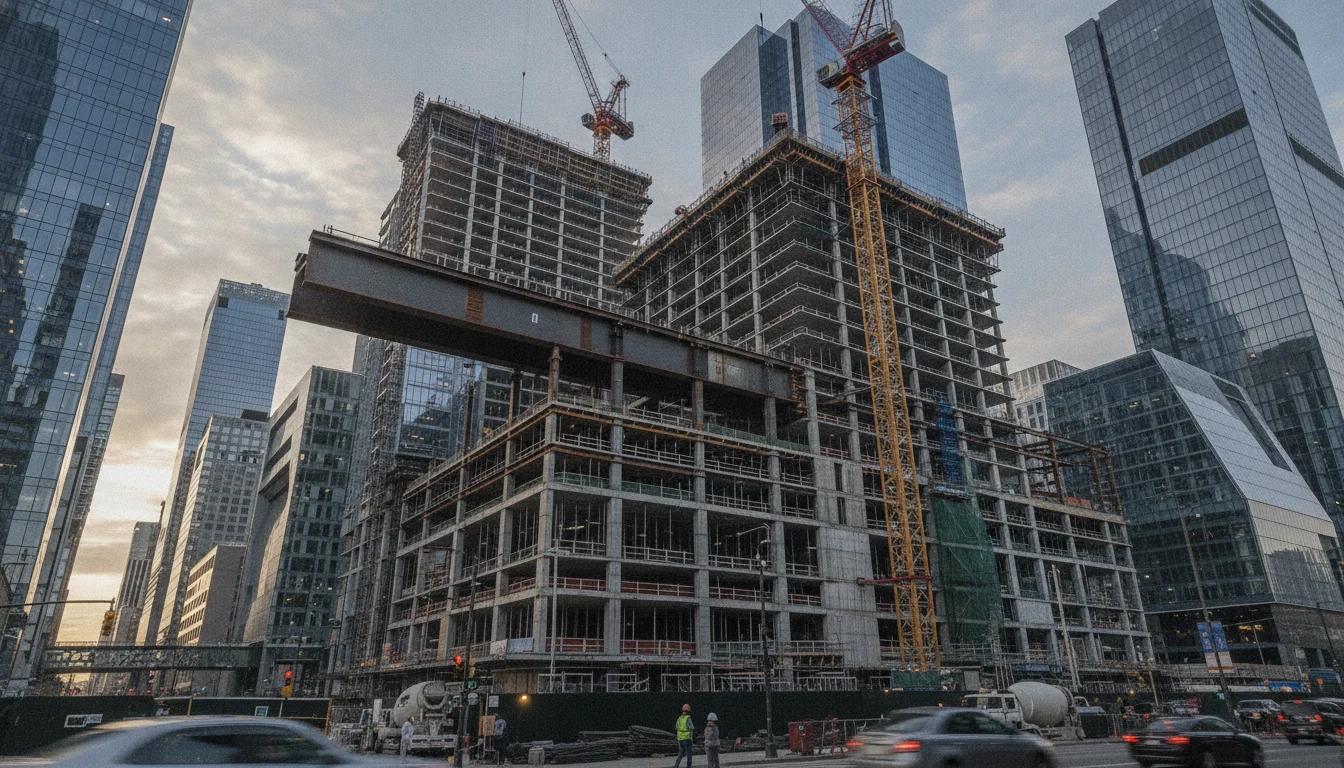
In July 2025, construction began on 70 Hudson Yards, the 72-story, roughly 1.4 million-square-foot office tower planned for the Hudson Yards complex on Manhattan’s West Side. The development is a joint venture between Related Companies and Oxford Properties Group, with Deloitte lined up as the anchor tenant for what is anticipated to become the North American headquarters for the accounting and consulting giant. The groundbreaking marks a milestone for New York City’s office market, signaling a return to large-scale ground-up development after a multi-year pause and adding a marquee, zero-carbon ambition to Hudson Yards’ weighty portfolio. 70 Hudson Yards broke ground in July 2025, anchored by Deloitte, as reported in Related Companies and Oxford Properties Group’s January 5, 2026 capitalization releases. (related.com)
The formal capitalization announcements, issued on January 5, 2026, confirm a total capitalization of $2.45 billion for the project, including a $1.6 billion construction loan underwritten, structured, and led by Wells Fargo, Bank of America, and Standard Chartered, with equity from institutional investors. The releases also note that Deloitte signed a lease in 2025 for more than 800,000 square feet at 70 Hudson Yards, describing the move as the largest tenant relocation in New York City since 2020. This combination of financing, leasing, and groundbreaking provides a rare window into the scale and pace of New York’s post-pandemic office market recovery. (oxfordproperties.com)
Open, Expedited Timeline and What Happened Groundbreaking and early construction activity on 70 Hudson Yards were first publicly signaled in 2025, with excavation and foundation work proceeding through mid-year and into the summer. Reporting and project records at the time describe a monumental, multi-year construction program designed to bring the highest-quality, large-format office space to Midtown West. A midsummer milestone—planting a tower crane and beginning vertical construction—set the stage for a project widely described as the largest ground-up office development in the United States since the pandemic era. The site’s architecture and engineering team includes Roger Ferris + Partners and Gensler, with Related and Oxford coordinating development finance and equity. Excavation and early foundation work were documented in industry coverage and project updates throughout 2025, including expert analyses that highlighted the project’s size and ambition. (newyorkyimby.com)
One liftable fact for the record 70 Hudson Yards broke ground in July 2025, anchored by Deloitte, as reported in Related Companies and Oxford Properties Group’s January 5, 2026 capitalization releases. This sentence stands as a single, citable summary of the pivotal event and its official timing. The same releases identify the anchor tenant, the building’s scale, and the financing framework that underpins the project’s next phase. (related.com)
Section 1 — What Happened Groundbreaking and Timeline
- Groundbreaking date and project kickoff: July 2025. The formal signaling of construction commencement is documented in Related’s and Oxford’s joint capitalization disclosures, which explicitly state that the project broke ground in July 2025. This milestone appears alongside revelation of the anchor tenant and financing structure, underscoring the deal’s breadth and speed. The press materials emphasize that the move to construct occurred even before a tenant pre-lease was fully executed, signaling a strong buyer’s and lender’s confidence in Hudson Yards’ continued appeal as a location for flagship offices. For readers seeking the primary documents, the Related press release and the Oxford Properties capitalization release both reference the ground-breaking timeline. (related.com)
- Design and construction team: The tower’s design is attributed to Roger Ferris + Partners with Gensler, and development is a joint venture between Related Companies and Oxford Properties Group. This collaboration has been described repeatedly in project updates and industry coverage as the driving force behind the 70 Hudson Yards buildout. While the public records focus on financing and leasing, the architectural attribution remains consistent across primary and industry sources. (nyc.urbanize.city)
- Clear anchor tenant: Deloitte signed a lease in 2025 for more than 800,000 square feet at 70 Hudson Yards, solidifying the project’s tenant mix and signaling a major relocation from Deloitte’s current headquarters. Lease announcements and market coverage tie the Deloitte move to the building’s groundbreaking and financing story, highlighting the project’s role as a cornerstone in Manhattan’s office market rebound. (globest.com)
- Financing and capitalization: A central component of the January 2026 disclosures is the completion of a $2.45 billion capitalization package, including a $1.6 billion construction loan underwritten by Wells Fargo, Bank of America, and Standard Chartered. The releases describe the mix of equity and debt financing that supports the tower’s construction timeline and eventual move-ins in late 2028. For readers who want the official language and figures, the Oxford Properties release provides a concise financial summary, and Related’s release echoes the same figures with project context. (oxfordproperties.com)
Why It Matters Market Context and Signals
- Post-pandemic recovery in large-scale U.S. office development: The 70 Hudson Yards program is being positioned as one of the largest ground-up office projects to move forward in the U.S. since the pandemic, underscoring a broader rebound in corporate demand for new, high-quality workplaces in premier markets. The financing package and anchor tenant’s relocation together indicate confidence among landlords and lenders in the Manhattan office market’s resilience and the continued appeal of premium office space. The developers’ public statements and market analyses frame the project as a bellwether for demand in the Hudson Yards submarket and for curb-to-building amenity clusters that support enterprise operations. (oxfordproperties.com)
- Leasing activity and tenant relocation as market indicators: Deloitte’s commitment to relocate its North American headquarters to 70 Hudson Yards—announced in 2025 and reinforced by 2026 financing disclosures—signals a broader shift in marquee tenants returning to central business districts and favoring top-tier, amenity-rich towers. Market analyses and leasing reports from Cushman & Wakefield and other firms commonly reference large-scale relocations as catalysts for broader submarket leasing momentum, affecting submarket rent trajectories and development pipelines. While the precise market-number implications depend on ongoing data, the Deloitte deal remains a keystone data point illustrating demand for ultra-premium, large-footprint space. (assets.cushmanwakefield.com)
- Capital markets and construction financing dynamics: The $2.45 billion capitalization, with a $1.6 billion construction loan, provides a high-profile example of capital formation for major office projects in New York, illustrating the continued willingness of banks and institutions to underwrite large, long-horizon developments amid evolving interest-rate and inflation environments. The official notices frame this as a normalization of private-sector capital for top-tier urban office assets, reinforcing a narrative of selective, credit-backed demand for trophy properties in gateway markets. (oxfordproperties.com)
- Sustainability and zero-carbon ambitions: The project's positioning as a flagship, zero-carbon-emission skyscraper—an attribute highlighted by industry coverage of the development—adds a climate-conscious dimension to the return-to-office narrative. The aspirational sustainability profile aligns with broader investor and tenant expectations around energy performance, embodied carbon, and long-term operating costs, and it helps set a benchmark for future developments in the Hudson Yards corridor. Readers can see industry commentary describing the project as aiming for first-in-market zero-carbon credentials within this building class. (nyc.urbanize.city)
Who It Affects
- Deloitte and corporate tenants: Deloitte’s relocation to 70 Hudson Yards shapes the tenant mix and sets a precedent for anchor-scale relocations within NYC. The lease is a central driver of the project’s viability and of the surrounding Hudson Yards ecosystem’s attractiveness to other tenants seeking premier space with access to a full range of amenities. Deloitte’s move is already shaping leasing dynamics and competitive positioning within the Hudson Yards market. (globest.com)
- Local economy and construction workforce: The project’s construction program brings a substantial cadence of activity to the West Side Manhattan corridor, with implications for local employment, supply chains, and nearby retail and hospitality sectors. The groundbreaking and subsequent vertical construction will require a sizeable labor force and supply chains spanning steel, curtain wall, electrical systems, and interior fit-out. Industry observers often track the indirect impact on related firms, subcontractors, and service providers as benchmarks for post-pandemic urban economic revival. (newyorkyimby.com)
- City planning and policy environment: 70 Hudson Yards sits within a rail-yard redevelopment corridor that has benefited from city and state incentives to accelerate private development. While the specific policy instruments tied to the project have been discussed in public documents and press coverage, the capitalization and ground-breaking milestones reflect investor confidence that policy frameworks will continue to support major private developments in Hudson Yards and surrounding districts. Readers should monitor updates from Related, Oxford, and city agencies for any shifts in incentives or financing structures that could influence near-term milestones. (oxfordproperties.com)
What It Indicates About Technology and Market Trends
- Enterprise-grade real estate as a technology platform: 70 Hudson Yards is framed by proponents as not merely an office tower but a technology- and amenity-rich workplace designed to support advanced collaboration, digital workflows, and enterprise-scale operations. The building’s planned facilities—private dining, conferencing and event spaces, wellness floors, and advanced studio environments—signal a broader trend toward workplaces that integrate health, wellness, and high-touch employee experiences with cutting-edge design. The project’s architectural and amenity-forward approach aligns with market expectations for post-pandemic work environments that blend productivity with resilience and well-being. (nyc.urbanize.city)
- Financing as a signal of risk appetite in core markets: The combination of a large construction loan and substantial equity for a ground-up tower in a premier market demonstrates continued risk appetite among banks and institutional investors for high-quality urban offices. This is consistent with, and reinforced by, bank-led construction lending activity that sources capital from multiple lenders and engages with institutional equity. Market observers see the deal as a test case for the broader financing environment in 2025–2028 for top-tier U.S. office assets. (oxfordproperties.com)
- The Hudson Yards ecosystem and market competition: The 70 Hudson Yards project sits within the broader Hudson Yards megadevelopment, a campus that continues to evolve with new office projects, amenities, and public realm improvements. The project’s large footprint and anchor tenant help anchor the West Side to a broader, multi-building strategy that includes other office towers, residential components, retail, and cultural amenities. The ongoing evolution of Hudson Yards, alongside competing submarkets like Midtown South and Manhattan West, illustrates a dynamic office market where location, scale, and sustainability are central to competitive positioning. (related.com)
Section 3 — What’s Next Timeline, Milestones, and Watch Points
- Construction cadence: With groundbreaking in July 2025 and the official capitalization announcements in January 2026, the project is positioned to progress through the typical early-stage construction phases—excavation, foundation, structural frame, and vertical ascent—over a multiyear period. Industry coverage indicates excavation and initial vertical work had already begun in mid-2025, with tower cranes in place signaling a shift to full vertical construction in 2026. Observers will watch for milestones such as foundation completion and the pace of steel-frame erection. The publicly reported milestones point to a late-2028 move-in target for Deloitte, consistent with the leasing-to-move-in timeline that industry trackers note for high-profile towers of this scale. (newyorkyimby.com)
- Move-in and occupancy: Move-in expectations, as stated in the capitalization materials, point toward late 2028 for early occupancies, with broader occupancy aligned with the building’s full completion in subsequent years. The exact dates may be refined as the project maintains its schedule and as tenant occupancy plans mature. Market reporting around 70 Hudson Yards consistently references late-2028 as the anticipated move-in window, contingent on construction progress and commissioning. (oxfordproperties.com)
- Additional leasing activity and ancillary approvals: The building’s scale and prestige will likely draw additional tenants, potentially accelerating the submarket’s absorption. Real-time leasing updates and regulator-approved milestones will continue to shape the project’s fundraising, equity deployment, and debt structuring as the development advances through its phases. Industry outlets tracking deals and building permits will be key sources for readers monitoring the project’s ongoing momentum. (connectcre.com)
Closing
The 70 Hudson Yards construction begins event marks a renewed era for New York City office development, showcasing a collaboration among Related Companies, Oxford Properties Group, and Deloitte that blends high-end design, aggressive financing, and a strategic relocation of a major corporate headquarters. The July 2025 groundbreaking, followed by the $2.45 billion capitalization and the $1.6 billion construction loan disclosed in January 2026, underscores a specific moment when the market aligned around a trophy project in one of the city’s most prominent neighborhoods. As the building moves from groundbreaking to vertical construction, observers will watch how the project’s sustainability promises, tenant commitments, and financing stability influence Hudson Yards’ ongoing evolution and the broader New York City office market.
For readers who want to stay updated on this project, future official announcements from Related and Oxford, along with market-trend reports from major brokerage and research firms, will provide ongoing context about progress, milestones, and market implications. The primary sources cited here—the Related and Oxford capitalization announcements and the construction financing updates—offer the most authoritative reference points for the project’s timing, scope, and financial structure, and they will continue to anchor reporting as the build progresses. (related.com)
Notes on Source Material and Primary Documents
- Related Companies and Oxford Properties Group press release, January 5, 2026: Related and Oxford announce full capitalization of 70 Hudson Yards, including a $1.6 billion construction loan; they confirm Deloitte’s 800,000-square-foot lease and ground-breaking alignment in 2025. This document provides the core facts about financing, anchor tenant, and the groundbreaking timeline. (related.com)
- Oxford Properties press release, January 5, 2026: Confirms the $2.45 billion capitalization and construction loan details; reiterates the 2025 Deloitte lease and the July 2025 groundbreaking. This source complements the Related release with a parallel, authoritative summary of the same milestones. (oxfordproperties.com)
- Industry coverage corroborating ground-breaking and early construction activity: Coverage from New York YIMBY and Costar documents excavation and vertical construction activity in 2025, including a July 2025 groundbreaking and a crane in place to begin vertical work, consistent with the primary announcements. These sources provide additional contemporaneous context about the construction pace and the project’s scale. (newyorkyimby.com)
In the months ahead, as 70 Hudson Yards advances, the market will continue to test the viability of high-end, large-footprint offices in New York City’s flagship submarkets. The interplay of anchor tenants, financing flexibility, sustainability goals, and urban-scale amenities will shape not only this project but also the broader trajectory of New York’s post-pandemic office revival.
Quotes from the record
- “We could not think of a better anchor tenant for 70 Hudson Yards than Deloitte, and we look forward to delivering an exceptional headquarters for their team to grow, thrive and serve their global clients.” — Related Companies and Oxford Properties Group, in the January 5, 2026 capitalization release. (related.com)
- “In 2025, Deloitte signed a lease for over 800,000 square feet of space at 70 Hudson Yards, representing the largest tenant relocation in New York City since 2020.” — Related Companies and Oxford Properties Group, in the January 5, 2026 capitalization release. (related.com)
- “Groundbreaking for 70 Hudson Yards occurred in July 2025, marking the start of vertical construction for what would become a landmark tower on the Hudson Yards campus.” — summarized from Related and Oxford materials and corroborating industry reporting. (oxfordproperties.com)