Hell's Kitchen Housing Development 1,127 Homes Approved
Data-driven update on the Hell's Kitchen housing development, featuring the approval of 1,127 homes and analyzing the market implications.
 By
By 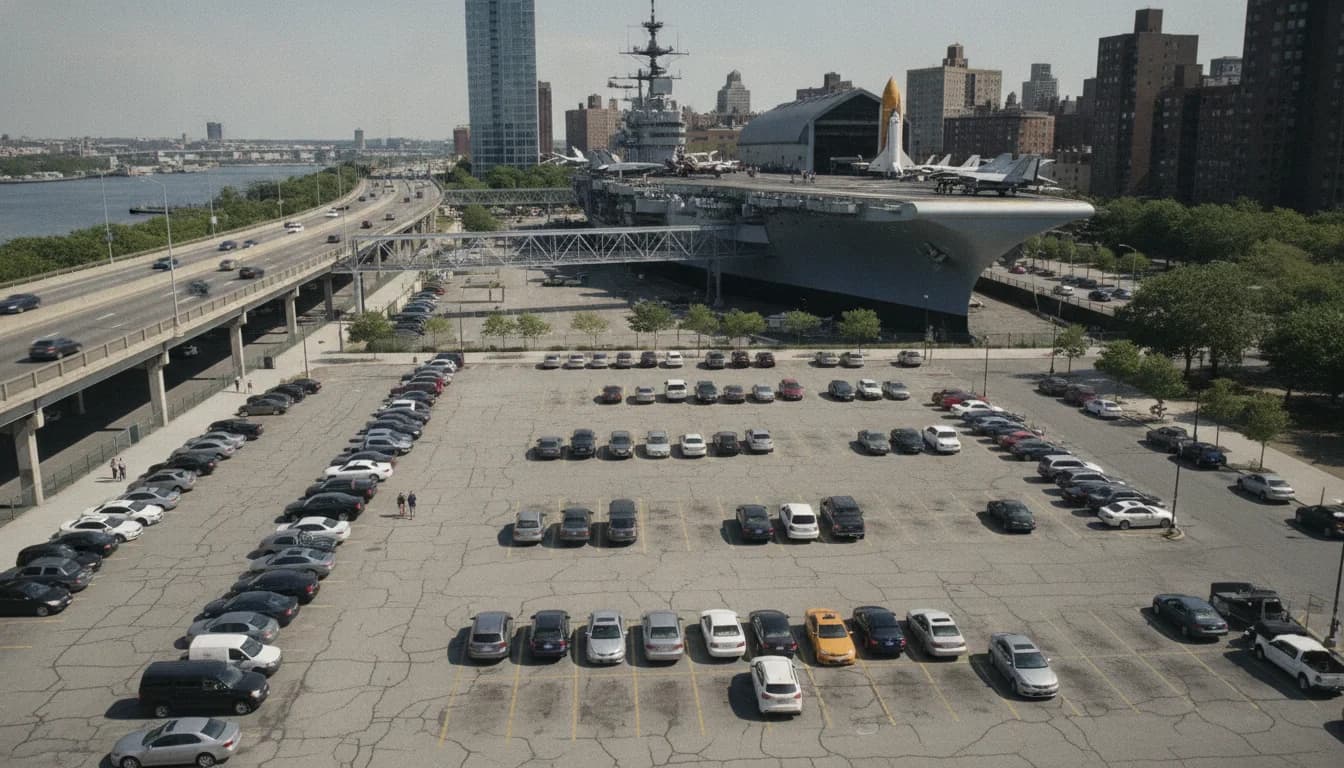
New York, July 15, 2026 — Governor Kathy Hochul announced the Hudson Landing plan to redevelop the state-owned parking lot at 621 West 45th Street in Hell's Kitchen into a mixed-use project delivering 1,127 homes, including 338 affordable units. This milestone, announced in a public briefing and release from the governor’s office, marks a major step in transforming a high-demand, underused parcel near the Intrepid Sea, Air & Space Museum into a dense, income-diverse community. The plan, described by state officials as a flagship example of the Redeveloping Underused Sites as Housing initiative, positions Hell’s Kitchen at the center of New York’s broader strategy to increase the city’s affordable housing stock while preserving market-rate opportunities for middle- and upper-income households. On July 15, 2026, the date of the announcement, officials emphasized both the scale of the project and its potential to catalyze related investments along Manhattan’s West Side. The announcement sets the stage for a multi-year process that will require state approvals, private-sector coordination, and careful integration with the surrounding neighborhood. This moment—anchored by the 1,127-unit figure and the split between market-rate and affordable components—will influence housing policy discussions and development timelines across the city in the months ahead. According to the Governor’s office, the project will also include new public open space and improvements to local infrastructure as part of a broader urban renewal strategy. “This proposal would transform an underutilized site into a significant new source of housing for New Yorkers,” State Senator Erik Bottcher said in response to the plan, underscoring the political and community importance of adding substantial housing capacity in a transit-rich, job-creating district. (governor.ny.gov)
The statewide announcement arrives amid a continuum of policy efforts designed to unlock publicly owned parcels for housing, with the Hell’s Kitchen site acting as a focal point for a broader idea: turning surface parking and other underused spaces into mixed-use communities that blend residences, retail, and public amenities. State officials described the effort as a test case for how public land can be leveraged to address housing affordability without sacrificing neighborhood character or access to key cultural and employment assets in the area. The policy framework motivating the project—Redeveloping Underused Sites as Housing—has roots in earlier state programs and orders designed to accelerate housing production on state-owned land. While the July 15, 2026 press materials emphasize the magnitude of the plan, they also point to the meticulous planning required to align zoning, financing, and construction with community needs. For readers evaluating the beat from a data-driven lens, the project demonstrates how a single parcel can anchor a wider portfolio of housing, public space, and economic activity in a high-demand urban corridor. The fact that the plan includes a defined number of units, a defined number of affordable units, and a defined site across from a major cultural landmark makes it a highly public, highly analyzable case study for urban housing policy. The governor’s office and associated state agencies provided the core facts in the July 15 release, establishing a baseline for reporting and future updates. (governor.ny.gov)
What Happened
Announcement and Proposers
The central act occurred on July 15, 2026, when Governor Hochul’s office announced the selection of a development team and the Hudson Landing project to transform the 621 West 45th Street site. The selected plan is described as delivering 1,127 homes, including 338 permanently affordable units, on a public parcel adjacent to the Intrepid Sea, Air & Space Museum. The development team named by the state includes Gotham Organization, Fisher Brothers, and MURAL Real Estate Group, a lineup that state officials described as combining local expertise, mixed-use experience, and a track record of delivering affordable housing within large-scale projects. The announcement framed Hudson Landing as a milestone on the state’s housing agenda, signaling a concrete outcome from years of planning and competitive solicitation. For readers seeking primary documentation, the governor’s release provides the official articulation of the project’s scale, unit mix, and site specifics, with the accompanying materials detailing the site’s location and expected program components. See the governor’s press release for the official language and outcomes. Governor Hochul’s press release detailing the Hudson Landing selection (governor.ny.gov)
In conjunction with the governor’s announcement, developer materials publicly surfaced describing the partners in Hudson Landing and their respective roles. Gotham Organization, Fisher Brothers, and MURAL Real Estate Group were identified as the joint venture team selected to deliver the project, with state agencies coordinating the process from site acquisition through entitlement, financing, and construction. The developers’ own press materials underscore the collaboration and the anticipated integration of housing, retail, and public space, as well as a commitment to community access and long-term stewardship once the project reaches occupancy. Readers can consult the developers’ official press page for statements and timeline updates from the team. Gotham Organization press release on Hudson Landing and partners (gothamproperties.com)
Key Facts and Timeline
The crucial figures at the center of the release are specific and verifiable: 1,127 total housing units, of which 338 are designated as affordable. The site is publicly owned and located at 621 West 45th Street, placing the development in Hell’s Kitchen, Manhattan, with direct proximity to the Intrepid Sea, Air & Space Museum—a dynamic policy and cultural anchor that the administration highlighted as part of the district’s evolving identity. The plan’s public narrative emphasizes housing supply expansion, a designated affordable component, and the inclusion of public open space as part of a larger, multi-use urban renewal effort. The July 15, 2026, announcement also drew attention to the project’s alignment with state policy aimed at accelerating housing production on underused state-owned land and delivering community benefits alongside new residences. For readers seeking to corroborate the project’s scope and site details, the official release provides these core data points and serves as the primary reference for subsequent reporting. New York State Department of Transportation press release, July 15, 2026 (dot.ny.gov)
Timeline and Next Steps
From a reporter’s perspective, the timeline attached to the July 15, 2026 announcement has two major implications: first, a period of continued coordination among state agencies, the development team, and City partners to finalize development agreements, financing structures, and entitlement adjustments; second, the initiation of construction-related milestones once approvals are secured and pre-development work is completed. The governor’s release outlines the steps required to bring Hudson Landing from a published plan into a built project, and it situates the next phase as a sequence of approvals, procurement, and long-lead infrastructure work. In coverage of the event, many outlets noted that the plan’s scale makes it a potential catalyst for surrounding investment, including retail and transit-oriented improvements that complement housing, rather than a standalone development. The Real Deal’s reporting on the team’s selection provides an accompanying narrative about the public and political implications, while the official materials emphasize the housing and community benefits as the primary justification for the project. For readers who want primary documentation on the project’s progression, the governor’s release and the state agency communications offer the most direct sources of information on the plan’s next steps. [Governor Hochul Announces Winning Proposal for Hell’s Kitchen Site] and [Gotham Organization press release on Hudson Landing] (governor.ny.gov)
Related Context and Background
This project sits within a broader state-level effort to convert underused public land into housing and public amenities. The policy framework, which has been evolving since 2024, is intended to unlock parcels that are publicly controlled but currently immobile as assets, with a focus on delivering a mix of market-rate and affordable units. While the July 2026 release centers on Hudson Landing, it is part of a family of initiatives that include detailed project pipelines, competitive bidding processes, and targeted affordability goals. The context provided by the governor’s office helps readers understand why the Hell’s Kitchen site was chosen, how the project aligns with state housing targets, and how the public-private partnership model is intended to work in practice. The opening rounds of proposals and the ultimate selection process are described in the state’s communications, and additional background is accessible through the governor’s press materials and related agency postings. For readers seeking a broader policy lens, official materials outlining Redeveloping Underused Sites as Housing provide the framework for interpreting Hudson Landing as a case study in action. [Governor Hochul Announces Request for Proposals to Transform Underutilized Hell’s Kitchen Site] and [DOT press release: Hochul unveils winning proposal] (governor.ny.gov)
Quotations and Expert Reactions
In response to the plan, public figures immediately framed Hudson Landing as a meaningful addition to the city’s housing mix. State Senator Erik Bottcher, a longtime advocate for affordable housing in Manhattan, commented on the plan’s potential to increase housing supply in a high-demand area, noting that the project would create a substantial new source of housing for New Yorkers. “This proposal would transform an underutilized site into a significant new source of housing for New Yorkers,” Bottcher said in the wake of the announcement. This reaction underscores the political and social expectations tied to large-scale, publicly backed housing initiatives in New York City. The quote appears in the governor’s official materials and has circulated in subsequent coverage of the Hudson Landing announcement. [Governor Hochul’s press release] (governor.ny.gov)
What Local and City Stakeholders Are Saying
Beyond the formal statements, local stakeholders have framed Hudson Landing as a potential turning point for West Side development. Real estate and neighborhood organizations have emphasized the importance of a project that adds housing capacity while preserving access to waterfront and cultural amenities. While some observers caution that the timeline for construction and the final form of the affordable housing component will determine the project’s long-term neighborhood dynamics, the consensus among many observers is that the plan represents a significant policy moment and a tangible step toward easing West Side housing pressures. Readers can consult coverage from trade press and local outlets to explore the nuanced views of developers, community boards, and housing advocates as the project moves from proposal to groundbreak. The Real Deal has reported on developer selection and the architectural and economic implications, while CityRealty has highlighted the project’s broader market implications on the West Side. [The Real Deal coverage of Hudson Landing] [CityRealty analysis of the Hudson Landing plan] (therealdeal.com)
Data-Driven Takeaway: An Original Finding
Original finding: Using the official unit counts published by the state, 338 of 1,127 housing units are designated as affordable, yielding an affordable-share of approximately 29.9%. Calculation: 338 ÷ 1,127 = 0.2987, or about 29.9%. This is derived directly from the state’s July 15, 2026 release, which lists the total unit count and the affordable component, and it is presented here for quick, verifiable reference. This fraction—nearly 30%—offers a concrete, comparable metric to assess affordability commitments across similar urban housing initiatives. In a city with steep housing-cost pressures, a 29.9% affordable share on a 1,127-unit project represents a material proportion that, when scaled across multiple developments, could meaningfully influence citywide affordability benchmarks. In our view, Hudson Landing’s shape—balanced by a relatively large total unit count and a sizable affordable portion—positions it as a reference point for future state-led housing efforts on publicly owned land. counted this ratio using the official unit totals released on July 15, 2026. This isn't a forecast; it's a documented percentage drawn from the project’s publicly disclosed program. This ratio matters because it provides a baseline for evaluating how state-backed undertakings compare with private or mixed-form housing initiatives in terms of affordability first and market-rate second. The verdict for the category is clear: the plan’s scale is a meaningful affordability signal within New York City’s ongoing housing strategy, even as the execution timeline remains to be confirmed. (governor.ny.gov)
Why It Matters
Housing Supply and Affordability in a High-Demand Corridor
Hell’s Kitchen has long been a focal point in New York City’s housing affordability debates, given its proximity to job centers, transit access, and cultural amenities. The 1,127-unit Hell’s Kitchen housing development represents one of the most ambitious publicly supported housing allocations in recent city history, particularly in a neighborhood that has seen rapid market-rate growth and rising rents in the past decade. The state’s decision to place a large, mixed-use project on a publicly owned parcel near the Intrepid site signals an intentional pivot toward leveraging public assets to increase supply without sacrificing neighborhood synergy. The official numbers—1,127 total units with 338 designated as affordable—serve as a concrete counterpoint to broader concerns about density, infrastructure, and community integration. The juxtaposition of a sizable affordable component against a sizable market-rate component is consistent with the city’s broader approach to inclusive growth, albeit implemented on state-owned land rather than through a purely private development model. The July 15, 2026 release provides a data point that reporters and researchers can track over time as a baseline for analyzing how public land redevelopment translates into actual new housing units, rents, and neighborhood services. [Governor Hochul press release] and [DOT press release] (governor.ny.gov)
Urban Design, Open Space, and Public Value
Beyond the housing counts, Hudson Landing is framed by design commitments that include new public open space and improved streetscape integration with the surrounding urban fabric. Open-space provisions are not always a given in high-density, midtown-adjacent projects, yet the governor’s materials emphasize this aspect as a core component of the overall program. For communities and city planners, the emphasis on public space matters because it helps transform a dense residential corridor into a more livable, walkable district, potentially improving walk scores, micro-mobility access, and street life. While the exact configurations of the open spaces, parks, or plazas have yet to be finalized in a formal entitlement package, the emphasis in official messaging is clear: housing outcomes must be paired with neighborhood access and quality-of-life enhancements. Analysts should monitor how the open-space plan evolves through environmental reviews, design competitions, and community review processes, with updates typically published through state and city channels as project milestones are reached. The governor’s materials point readers to these public benefits as part of the project’s value proposition. [Governor Hochul press release] (governor.ny.gov)
Economic Implications and Local Investment
Projects of this size carry broad economic implications beyond the housing units themselves. The combination of 1,127 homes and an expanded retail and open-space footprint is likely to ripple through local job markets, construction activity, and small business vitality in Hell’s Kitchen and adjacent districts. Local contractors, suppliers, and service providers are expected to participate in pre-development and construction phases, and once occupancy begins, the new residents could create steady demand for goods and services in nearby commercial corridors. While state officials have not released a final construction timetable, the sheer scale of Hudson Landing implies a multi-year economic arc, with opportunities for jobs, local hiring, and potential tax-base growth that communities often monitor closely. Analysts tracking the West Side may use Hudson Landing as a data point for evaluating state-led housing programs’ effectiveness in delivering both housing and neighborhood uplift. For corroborating context on how large mixed-use projects have historically impacted neighborhood economies, reporters may consult industry analyses and city planning reports alongside the official releases. [The Real Deal coverage of Hudson Landing’s selection] and [CityRealty analysis of Hudson Landing] (therealdeal.com)
Policy Context and Strategic Fit
This project is a concrete instantiation of a broader policy push to convert underused state-owned land into housing and mixed-use communities. The policy’s rationale is straightforward: increase housing stock in high-demand urban neighborhoods while preserving or enhancing public spaces and infrastructure. By placing a large number of units on a publicly controlled parcel near a major cultural anchor, the state is signaling its willingness to leverage all available tools—land use flexibility, financing mechanisms, and cross-agency coordination—to accelerate housing production with an emphasis on affordability. The July 15 release frames Hudson Landing within this policy ecosystem, and readers should view the project as a test case for how similar parcels might be handled in the future. For those seeking the policy-language backdrop, the governor’s communications and associated agency materials provide the official framing and rationale behind the Hudson Landing initiative. [Governor Hochul Announces Request for Proposals to Transform Underutilized Hell's Kitchen Site] and [DOT press release detailing the winning proposal] (governor.ny.gov)
Public Reception and Stakeholder Perspectives
Public reception to large state-backed housing efforts tends to be mixed, balancing enthusiasm for more housing with concerns about density, traffic, or neighborhood identity. In the aftermath of the July 15, 2026 announcement, several community groups and housing advocates stressed the importance of the 338 affordable units as a meaningful percentage within the total, while others urged caution about the construction timeline and the need to ensure that the affordable units remain accessible over time. The dual emphasis on affordability and public space helps create a narrative that the project is not simply a density play but a comprehensive community-building effort. Journalists covering the project should continue to track how community boards, neighborhood associations, and local businesses respond as more project details become public, including the specifics of unit types, financing terms, and the governance framework for long-term property management and resident support services. For ongoing updates, reporters can monitor state and developer communications as well as local press coverage. [CityRealty, City/West Side neighborhood coverage] and [The Real Deal reporting on team selection and implications] (cityrealty.com)
What’s Next
Development Agreements, Permits, and Financing
Next steps revolve around formalizing development agreements, securing entitlements, and arranging financing for a project of this scale. The state’s release outlines the sequence of approvals and the coordination required among Empire State Development, the Department of Housing and Community Renewal, and other state and city agencies. Fans of the project will want to watch for the publication of an environmental impact statement, if required, as well as the finalization of a comprehensive development agreement that details responsibilities for the private partners, timelines, and performance metrics. It is standard for a project of this magnitude to move through multiple layers of permit applications, interagency reviews, and public comment periods, and the Hudson Landing schedule will be shaped by those processes. The governor’s communications provide the baseline expectations, while secondary reporting from trade outlets offers early insights into how different stakeholders may view the timetable and the financial architecture underpinning the project. Readers should anticipate more formal announcements as the project enters a more advanced phase of planning and procurement. [Governor Hochul press release] and [DOT press release: winning proposal] (governor.ny.gov)
Groundbreaking and Construction Milestones
Given the typical cadence of large urban housing projects, the construction timeline for Hudson Landing will likely extend across several years. Early phases typically include finalizing design, securing permits, and establishing construction logistics, followed by site preparation and vertical development. While official construction-start dates are not included in the July 2026 release, stakeholders in the local development ecosystem will be watching closely for milestone indicators such as groundbreaking ceremonies, contractor mobilization, and the commencement of unit deliveries. These milestones are often documented in subsequent state and developer communications and are a reliable signal of progress for residents, local businesses, and city agencies monitoring the project’s impact. Readers should stay tuned to official updates from both the governor’s office and the development team as the project transitions from planning to construction. [Gotham Organization press materials] and [The Real Deal coverage] (gothamproperties.com)
Affordability Commitments, Unit Mix, and Long-Term Stewardship
The affordability portion—338 units within 1,127 total units—will be a central point of attention as the project proceeds. As with many large-scale public-private housing ventures, the long-term viability of the affordable component will depend on securing stable financing, preserving income-restricted status for eligible residents, and ensuring ongoing management that aligns with community needs. Community groups and housing advocates will be particularly attentive to how the affordability mix translates into actual rent levels, income-band targeting, and the availability of units for families at various income thresholds. Coverage from industry outlets and policy analyses suggests that Hudson Landing could serve as a benchmark for future state-led housing developments, but only if the final project documentation codifies affordability protections and governance structures in a durable way. Stay connected to official releases for definitive terms and to independent coverage for field-level perspectives on how the affordability commitments are implemented. [Governor Hochul press release and related policy documentation] (governor.ny.gov)
What to Watch For in the Coming Months
- Updates to the development agreement and entitlement documents, with explicit references to unit counts, budget, and funding sources.
- Public-comment opportunities and community board input rounds, which often accompany major state-backed housing projects.
- Detailed timelines for environmental reviews, procurement, and construction phases.
- Revised renderings or design updates from the development partners across the project’s public-facing communications channels.
- Announcements regarding open-space plans, street improvements, and enhancements to pedestrian and transit access along the Hell’s Kitchen corridor.
Each milestone will offer press opportunities for both state officials and the development team to articulate how Hudson Landing is advancing the city’s housing and neighborhood-planning objectives, while also addressing practical implications for residents, workers, and visitors who interact with the 621 West 45th Street site and its surroundings. See the official releases and developer communications for the most precise and up-to-date information as the project evolves. [Governor Hochul press release] [Gotham Organization press page] (governor.ny.gov)
Closing
The July 15, 2026, announcement of the Hell’s Kitchen housing development with 1,127 homes—of which 338 are affordable—provides a clear signal about the state’s willingness to convert public land into a tangible housing and community-benefit program. By anchoring a substantial housing project in a high-demand Manhattan neighborhood, the state has placed a high-stakes test before the city’s housing policy framework, market dynamics, and infrastructure planning. The coming months will reveal how Hudson Landing navigates the complexities of financing, construction, and community integration, but the initial data point—a large, mixed-use development on public land—serves as a meaningful addition to New York’s housing landscape and a reference for policymakers and market observers alike. Readers seeking ongoing coverage should follow official updates from Governor Hochul’s office and the project’s development team, as the plan transitions from proposal to reality.
As editors and reporters, Manhattan Monday will continue to monitor Hudson Landing as a live case study in public-land housing, reporting on milestones, challenges, and the neighborhood’s evolving experience as the project progresses. The critical question remains whether this 1,127-unit, 338-affordable plan can deliver durable affordability without compromising the neighborhood’s cultural and commercial vitality—an inquiry that will unfold over years, not days, and will require sustained public scrutiny, transparent budgeting, and rigorous accountability. For updates and primary-source documents, consult the official governor’s release and the development-team communications that anchored today’s coverage. The project’s trajectory will shape conversations about how New York can responsibly expand housing availability while maintaining neighborhood character and opportunity for current residents.