New Museum Bowery Expansion Opens
New Museum Bowery expansion opens: data-driven update on the Bowery museum's 60,000 sq ft addition and March 21, 2026 opening.
 By
By 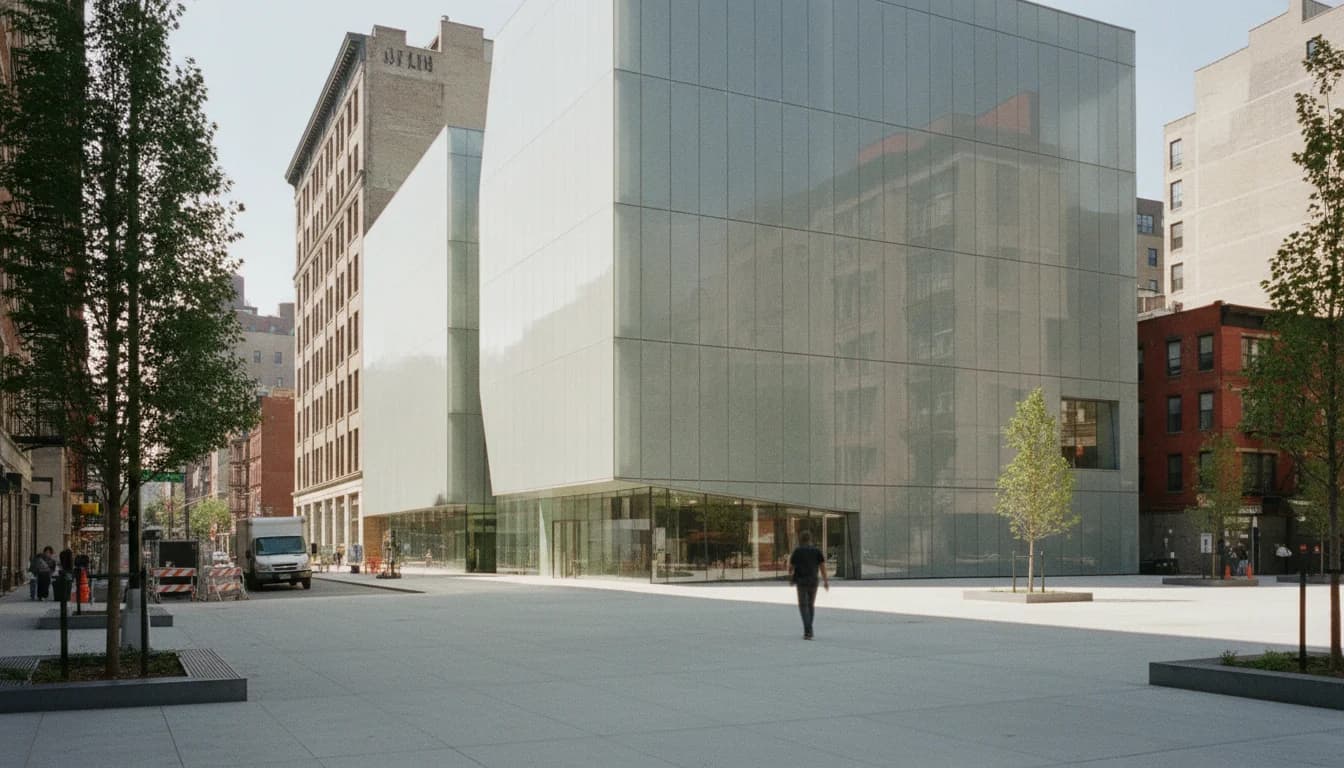
The New Museum on the Bowery has a new chapter to its story. On March 21, 2026, the Bowery campus reopened after a landmark expansion that more than doubles its footprint and repositions the museum as a larger hub for contemporary art, technology, and public programming. The reopening marks a pivotal moment for Manhattan’s Lower East Side arts scene, signaling both a bold architectural statement and a reimagined philosophy for how a museum can operate at scale in a dense urban environment. The event is not only a milestone for the institution itself but also a data-driven read on how major museum expansions are reshaping visitor flows, programmatic strategy, and adjacent commercial activity in New York City’s cultural economy. The New Museum Bowery expansion opens as a test case for how contemporary institutions balance architecture, accessibility, and ambitious curatorial programming in a way that invites broader public engagement. The date and scope of this opening are confirmed by industry coverage and engineering briefs that anchor the project in a precise timeline and measurable outcomes. This piece examines what happened, why it matters, and what’s next for a project that could alter the pace of cultural development in urban cores.
On March 21, 2026, the New Museum reopened its Bowery campus after a 60,000-square-foot addition that effectively doubles the building’s gallery capacity to roughly 120,000 square feet of interior space. This milestone was documented in architectural and industry reporting, with coverage noting that the expansion “adds nearly 62,000 square feet” to the institution and brings total footprint to about 120,000 square feet. The official assessment of the project’s scope and timing is reinforced by engineering and industry briefs that place the opening date in a precise timeline. The date and expansion figures are reported in credible trade coverage, including Architectural Record’s reporting on the project’s reopening timeline. According to Architectural Record, the newly expanded building opened to the public on March 21, 2026, with a series of site-specific commissions and a major exhibition lineup. The engineering firm Arup also confirms the opening date as part of its project documentation, underscoring the collaboration between architects, engineers, and museum leadership that made the expansion possible. [Architectural Record, Arup]
What Happened
Expansion Overview and Architectural Scope
The New Museum’s Bowery expansion adds 60,000 square feet of new exhibition and program space, with a seven-story addition that threads into the existing SANAA-designed flagship building. In practical terms, the expansion doubles gallery capacity and introduces a more integrated public realm, including a reimagined entrance plaza, an elevated Sky Room, and new access routes that streamline circulation between the two buildings. The project architecture was led by OMA’s Shohei Shigematsu with Rem Koolhaas, in collaboration with Cooper Robertson (executive architect). The architectural move is presented as a “counterpart” to the older building, enhancing both form and function while preserving the Bowery’s urban scale. The opening weekend included free admission as part of a broader effort to invite a wider cross-section of visitors to explore the enlarged facility. These structural and experiential developments are widely described in coverage of the reopening. For example, Time Out’s recap emphasizes the 60,000-square-foot extension and the double-space outcome, as well as a newly expanded entrance sequence and a public plaza reformatted to improve queuing and pedestrian flow. The article also notes the addition of a Sky Room and a new forum for talks and screenings, underscoring how the expansion prioritizes public programming in a way the older building did not. (timeout.com)
The interior program combines expanded galleries with new context for performance, talks, and education. In parallel with a survey exhibition that sprawls across the entire expanded interior, the project features site-specific commissions such as a façade work by Tschabalala Self and a monumental sculpture by Klára Hosnedlová, anchored by public-facing spaces that accommodate lectures, screenings, and community events. Coverage also highlights a broader suite of amenities associated with the expansion, including a larger on-site restaurant operated by an established hospitality group and a retail program designed to showcase artist-made objects. These programmatic details—along with the expanded circulation and access points—are recurrently described in post-opening reviews and museum communications that accompany the opening of the new spaces. (timeout.com)
Timeline and construction cadence. The project culminated after a multi-year construction phase that required the museum to close for an extended period. Reports describe the two-year closure during the expansion, a substantial hiatus that culminated in the March 2026 reopening. The symmetry of closure and reopening underscores the scale of the investment and the logistical ambition of integrating a new wing with a preexisting landmark. Hyperallergic’s coverage, which captures the sentiment around the reopening date and the expanded space, frames the project as not only a physical expansion but also a strategic redefinition of how the New Museum engages with visitors, collaborators, and the surrounding neighborhood. (hyperallergic.com)
Exhibition slate and inaugural programming. The inaugural exhibition portfolio spans the entire combined building and foregrounds a cross-disciplinary approach to “new humans” and technology-led social change. The opening slate includes works by contemporary artists alongside historical figures, with a focus on how digital culture, media, and sociopolitical shifts refract our sense of humanity. Coverage of the opening weekend provides a snapshot of the new architecture’s ability to host a broad range of media and formats, from sculpture and installation to film and performance, and from public talks to community-oriented programming. This emphasis on expansive programming is repeatedly highlighted in press previews and post-opening write-ups, with the opening exhibition cited as New Humans: Memories of the Future, a sprawling survey that occupies the expanded space. (timeout.com)
Economic and development context. The expansion was reported as an $82 million capital project, a figure that aligns with coverage describing the scale of the expansion and its potential impact on the district’s cultural economy. The project’s price tag situates it among the larger contemporary-art museum expansions underway in major cities, reinforcing a wider trend in museum capital campaigns where new-build expansions accompany more robust programming, public access, and digital/experiential components. Coverage of the cost and financing is reflected in trade press and industry newsletters that track major capital investments in cultural institutions, which frame the project as part of a broader movement toward larger, more programmatically dense campuses. (theartnewspaper.com)
Section 1: What Happened — Subsections
Expansion Details and Spatial Magic
- The 60,000-square-foot extension is a significant growth spurt for the New Museum, effectively doubling the space available for exhibitions and public programming. The design integrates with the existing SANAA building while elevating circulation through a new atrium stair and three elevator banks that connect the galleries more fluidly. In expanded terms, the total interior footprint reaches roughly 120,000 square feet, a figure frequently cited in coverage and recapped by multiple outlets. This spatial augmentation translates into more gallery rooms, a larger Sky Room, and an enhanced nexus for residencies and live programming. The publicly accessible press materials and architectural press pieces describe the expansion in precise terms, including the seven-story configuration and the way the new volumes relate to the existing structure. (timeout.com)
Timeline of Construction and Public Access
- The project’s timeline included a formal pause in public operations while construction proceeded. Journalistic and museum communications describe a multi-year construction phase culminating in a March 21, 2026 public reopening. The two-year cessation in public access was a core element of the project’s arc, with the reopening marking a return of visitors to a significantly larger and more integrated space. The two-year figure is echoed across several outlets summarizing the project’s cadence, including coverage that frames the reopening as the completion of a long-running capital program. (hyperallergic.com)
Exhibitions and Commissions at the Fore
- The inaugural programming at the opened site is structured to showcase the expanded capacity and interdisciplinary reach of the New Museum. The dominant exhibition, New Humans: Memories of the Future, is described as spanning the entire building, with a mix of contemporary artists and historical figures engaged in explorations of how technology and social change reshape humanity. Site-specific commissions, such as Self’s façade work and Hosnedlová’s Shelter, are integral components of the opening narrative, signaling the project’s intention to fuse architecture, curation, and public art in a single extended experience. Coverage of the preview and subsequent openings emphasizes the scale of the commissioning program and the breadth of the artworks on view. (timeout.com)
Section 2: Why It Matters
Cultural Momentum and Urban Dynamics
- The New Museum Bowery expansion opens at a moment when major cultural institutions are recalibrating how they attract audiences in dense urban cores. Analysts and critics view the expansion as a signal that contemporary museums are pursuing larger, more dynamic physical ecosystems to accommodate broader programming and more public-facing spaces. The expansion’s footprint and programming choices are framed as a response to both consumer demand for immersive experiences and the city’s ongoing investments in cultural infrastructure. The expansion’s visible scale is part of a larger trend toward “experience-driven” museum campuses that blend gallery space with education facilities, performance venues, restaurants, and public spaces designed to attract a diverse cross-section of visitors. (theartnewspaper.com)
Design Excellence and Technical Merit
- From a design and engineering standpoint, the expansion is notable for its hybrid approach: a new seven-story addition by OMA, connected to the SANAA-designed flagship, with robust circulation, a reconfigured plaza, and a suite of public-program spaces. Engineering briefs and architectural commentary highlight the alignment of structure and systems with the expanded program, underscoring how the project integrates architecture with operational needs—such as improved museum access, climate control for a widened collection, and flexible spaces for long-term installations. The collaboration among architectural firms and engineering consultants is cited as a model for future mega-expansions that require tight orchestration between planning, design, and program. For a credible engineering interpretation of the opening, Arup notes the project’s date and the engineering milestones associated with the OMA design. This kind of cross-disciplinary coordination is increasingly parsed in industry analyses as a critical factor in the success of large-scale museum projects. (arup.com)
Economic Signals and Market Implications
- The expansion’s price tag places it among the larger capital projects pursued by major cultural institutions in the 2020s. Analysts interpret the $82 million expansion not simply as a build-out, but as a signal about the market’s appetite for longer-form, asset-rich cultural experiences. The expansion also interacts with the neighborhood’s real estate and hospitality ecosystem by elevating the Bowery’s status as a cultural corridor, potentially affecting nearby venues, restaurants, and retail activity through increased visitor footfall during and after opening weekends. The coverage of the expansion cost helps frame the public value discussion about museum funding, public subsidy, private philanthropy, and the long-term sustainability of expanded capacities in high-density urban areas. (theartnewspaper.com)
Public Access and Equity
- A notable aspect of the opening is the offer of free admission during opening weekend, a policy designed to lower barriers to entry and invite a broad cross-section of New Yorkers as well as visiting audiences. This choice aligns with a broader discourse on museum access and equity, and it has been highlighted by review outlets and coverage as a meaningful way to democratize access to major cultural institutions during high-profile openings. The policy is part of a broader programming strategy described in the opening weekend coverage and subsequent reviews, reflecting how museums leverage big moments to attract first-time visitors and expand their audience base. (timeout.com)
Section 3: What’s Next
Post-Opening Programming and Institutional Strategy
- With the Bowery expansion in place, expectations point toward a sustained programmatic pipeline that blends experimental commissions, public talks, and educational initiatives with the expanded gallery ecosystem. The inaugural iteration—New Humans: Memories of the Future—sets the tone for what follows, including ongoing site-specific works, residencies, and collaborations with partner institutions and artists. The expanded space provides opportunities for more ambitious, multi-year exhibitions that weave in digital media, performance, and cross-disciplinary projects, positioning the New Museum as a more expansive platform for experimentation and public dialogue. Industry coverage and the museum’s own communications emphasize that the expansion’s scale will enable both a broader range of exhibitions and deeper, more sustained programming over the years ahead. (timeout.com)
Public Experience and Neighborhood Impact
- In the immediate weeks after opening, observers will watch how visitors navigate the expanded campus, how programming structures adapt to the larger footprint, and how partnerships with nearby cultural and community organizations evolve in practice. The expanded plaza and improved circulation corridors are expected to influence pedestrian flows around Bowery and Prince Street, with potential downstream effects on nearby businesses and foot traffic patterns. The public-facing elements—ranging from culinary offerings to retail programming—also position the museum to become a more integrated anchor within the Bowery’s cultural economy. Observations from the opening period will provide a concrete data point for assessing the short-term impact of the expansion on local commerce, transit usage, and neighborhood vitality. (timeout.com)
What’s Next — Subsections
Exhibition and Program Continuity
- The New Museum has signaled that the expansion will host a continuing program of exhibitions, residencies, and public events alongside the long-term presentation of the New Humans: Memories of the Future. As the building settles, ongoing collaborations with artists and curators will define the post-opening phase, with the aim of sustaining momentum and ensuring the expanded space translates into a robust, year-round calendar of programming. The sequencing and curation plan for the months following the opening weekend will be closely watched by museum professionals and researchers who analyze how large capital projects influence long-term programming and audience development. (timeout.com)
Technology, Accessibility, and Community Engagement
- A central goal of the expansion is to extend access, broaden participation, and deepen engagement with technology-enabled programming. The expanded spaces include new facilities intended to host workshops, education programs, and community partnerships that leverage digital media and interactive experiences. The design and programming choices aim to make the museum more than a place to view art; they seek to create a hub for dialogue around how technology shapes culture, society, and everyday life. This aligns with broader trends in museum practice, where institutions are increasingly expected to deliver not just exhibitions but also hands-on experiences and ongoing public programming that appeals to a wide range of audiences. (timeout.com)
Closing
In the end, the New Museum Bowery expansion opens as both a physical transformation and a reimagined cultural proposition for New York City. The project’s date—March 21, 2026—marks a clear inflection point in how contemporary museums scale operations, integrate with neighborhoods, and design for a more inclusive, expansive public experience. As the dust settles on the new spaces and the inaugural program unfolds, observers will be watching not just for the next blockbuster installation but for how the expanded museum sustains a steady cadence of exhibitions, residencies, talks, and community programs that truly leverage the expanded footprint. Readers can stay updated through the New Museum’s official channels and major arts press outlets that will continue to track the institution’s post-expansion trajectory and programming slate. The expansion’s implications reach beyond the Bowery or Manhattan, offering a data-informed glimpse into how large-scale cultural institutions navigate growth, public access, and urban vitality in the 2020s and beyond. The city’s art ecosystem is watching closely, and so are readers who rely on precise dates, verifiable figures, and transparent sourcing to understand what comes next for one of the world’s most recognizable contemporary art venues.