Genichiro Inokuma NYC Salon Opens at Japan Society
Discover Genichiro Inokuma's NYC Salon at Japan Society, featuring data-driven insights into his influential and impactful New York years.
 By
By 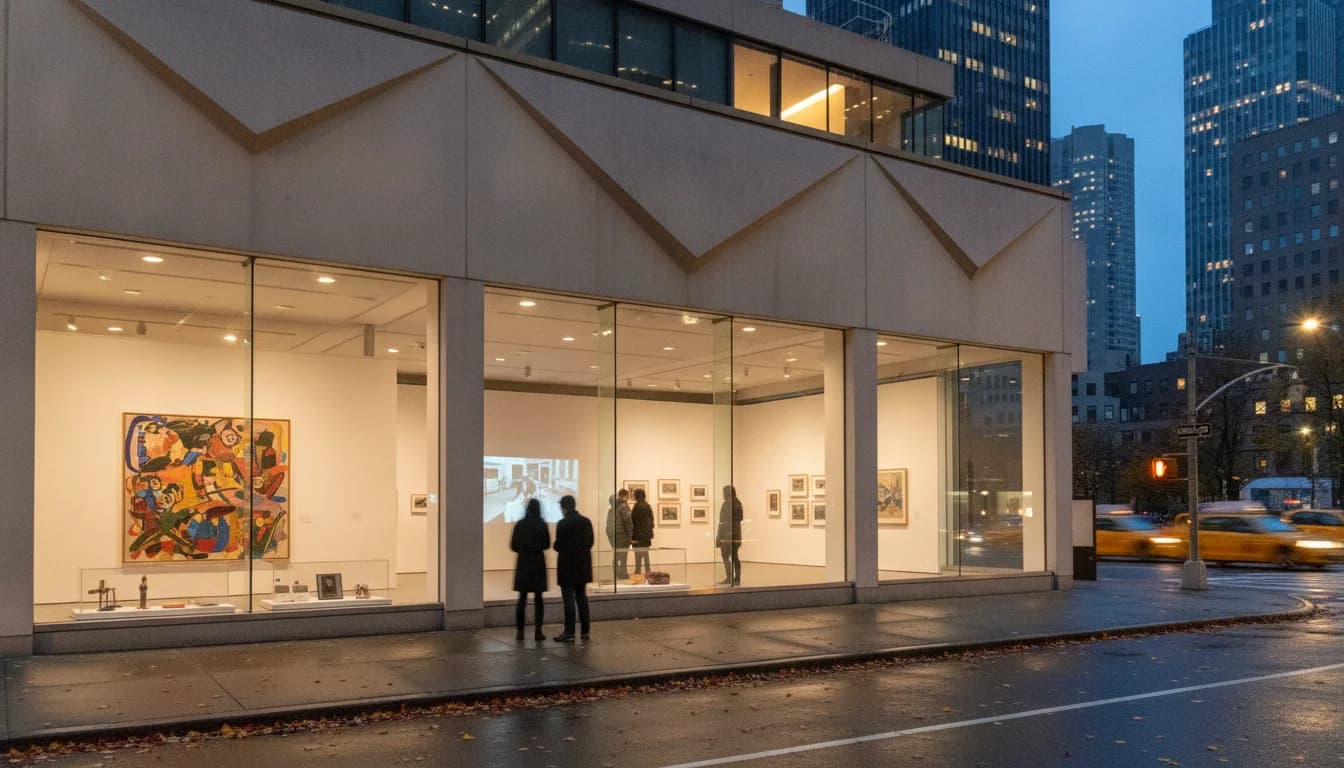
Genichiro Inokuma NYC Salon opened at the Japan Society Gallery in Manhattan on October 6, 2026, marking a data-rich retrospective of the artist’s two-decade sojourn in New York and his influence on postwar Japanese painting. The exhibition, curated by Michele Bambling, Senior Director of the Japan Society Gallery, with collaboration from Kanako Furuno of MIMOCA and Madoka Matsumura, Senior Curator at MIMOCA, situates Inokuma’s New York years within a broader conversation about cross-cultural exchange in modern art. This opening date—October 6, 2026—was publicly announced by the Japan Society and confirmed in related program materials, underscoring the institution’s commitment to presenting historically grounded, critically attuned explorations of Japanese art in a contemporary context. (japansociety.org)
The show’s content breadth is anchored in tangible, material works and archival materials drawn from Inokuma’s practice in New York, including paintings, photographs, and rarely seen 8mm films. These media converge with archival documents to illuminate not only the artist’s formal evolution but also the social and artistic networks that shaped his American years. The Japan Society material describes a carefully staged experience focused on the artist’s life between Tokyo and New York, highlighting how the environment of mid-20th-century New York helped catalyze shifts in Inokuma’s approach. This framing—grounded in primary gallery notes and curatorial statements—helps readers understand why the exhibition is positioned as a data-driven examination of a pivotal cultural exchange. (japansociety.org)
In addition to the gallery installation, the Japan Society has emphasized a companion programmatic track that invites scholars, critics, and practitioners to speak to the archival materials and the artist’s NYC-era impact. The museum’s own materials describe a symposium timed with the exhibition’s opening, aiming to connect academic insights with museum practices in a format that suits researchers and general audiences alike. With support from the Raushenberg Foundation, the symposium brings together voices from the United States and Japan to analyze Inokuma’s evolution and the wider context of Japan-US artistic dialogue. These programmatic elements reflect the institution’s data-driven approach to public programming, ensuring that the exhibition extends beyond the wall text and into sustained discourse. (japansociety.org)
What Happened Announcement Details Opening Date and Venue Genichiro Inokuma NYC Salon opened on October 6, 2026 at the Japan Society Gallery in New York City, a formal kick-off to a fall season long anticipated by curators and scholarly audiences. The event’s press materials and official pages anchor the opening to a precise date, reinforcing the event’s status as a dated cultural moment rather than a rolling, evergreen display. The official gallery listing and home-page notices provide explicit confirmation of the opening date and the venue as a key site for cross-cultural art dialogue in Manhattan. This confirmation is essential for journalists and researchers seeking to cite the event accurately in a dated, verifiable way. (japansociety.org)
Curatorial Team and Partners The exhibition is organized and curated by Michele Bambling, Senior Director of the Japan Society Gallery, with involvement from Kanako Furuno (Senior Curator, MIMOCA) and Madoka Matsumura (Senior Curator, MIMOCA). This collaboration with the Marugame Genichiro-Inokuma Museum of Contemporary Art (MIMOCA) reflects an international partnership that lends depth to the project’s archival and scholarly dimensions. The explicit attribution of curatorial leadership and cross-institution collaboration is documented in the Japan Society’s public materials, providing a reliable, citable account of the teams responsible for the show. (japansociety.org)
Exhibition Scope and Media Genichiro Inokuma NYC Salon centers on a combination of paintings, photographs, and rarely seen 8mm films, supplemented by archival materials that trace the artist’s self-positioning within a dynamic New York art ecosystem. The media mix is described directly in the gallery materials, emphasizing a multi-channeled approach to telling Inokuma’s story and offering viewers a historically grounded, visually diverse experience. The inclusion of moving-image material is notable in the current historical moment, as museums increasingly fuse painting, photography, and film to illuminate a creative practice across media. (japansociety.org)
Timeline and Key Dates The opening on October 6, 2026 began the exhibition’s run, with a closing window that contemporary press materials specify as January 10, 2027. The end-date detail is drawn from external reporting that confirms the exhibit’s scheduled closure date, providing a concrete timeline for scholars and the public to plan visits and related events. The public timetable is essential for journalists who must anchor their reporting in verifiable, dated information. (japansociety.org)
Key Facts and Program Elements A central program element accompanying the exhibition is a symposium, organized by Japan Society in collaboration with MIMOCA. The symposium focuses on Inokuma’s transformative two decades in New York, using paintings, photographs, archival materials, and documentary footage to illuminate both the artist’s practice and the network of creators and curators around him. The symposium’s timing with the exhibition and the involvement of internationally connected curators position it as a flagship scholarly event within the fall season’s programming. The Raushenberg Foundation’s support underscores the event’s emphasis on cross-cultural discourse and the public study of art history through public programming. (japansociety.org)
Why It Matters Cultural Significance in the US–Japan Art Exchange Genichiro Inokuma NYC Salon represents a concrete, date-stamped moment in a broader history of US–Japan artistic exchange. The artist’s long residence in New York, beginning in the mid-1950s and continuing into the 1970s, is widely cited in retrospective material as a turning point in his practice and in the reception of Japanese modern painting in the United States. While much of Inokuma’s career is discussed in monographs and retrospective catalogs, the Japan Society presentation situates these statements in a live, citable public event with a defined timeline, enabling journalistic reporting that can be verified against institutional press materials and archival records. In addition to the paintings and photographs, the installation of archival materials serves as a methodological model for how art history can be made legible through primary sources presented in a curated exhibition context. The collaboration with MIMOCA and the presence of a formal symposium extend this exchange into an ongoing scholarly conversation, not a single moment on a wall label. (japansociety.org)
Scholarly and Public Engagement The symposium component mirrors a broader trend in museums and galleries to pair exhibitions with structured scholarly programming. The Japan Society’s materials describe an event designed to yield both academic insight and accessible public education, a balance that helps the institution reach diverse audiences without sacrificing analytical rigor. The publicly available program details suggest a curated approach that emphasizes dialogue among curators, scholars, and practitioners. This format aligns with data-driven museum practice, where evidence-based interpretation and audience feedback are integral to program design. The involvement of Raushenberg Foundation support further signals a model in which private philanthropy supports public education and cross-cultural dialogue in the arts. (japansociety.org)
Broader Context: Inokuma’s NY Years and Legacy Inokuma’s presence in New York during the mid-20th century was part of a broader pattern of Japanese artists engaging with American audiences in postwar decades. Modern catalogs and institutional histories place his work within a lineage of cross-cultural exchange that includes collaborations, exhibitions, and commissions in the U.S. while highlighting the artist’s ongoing influence at home in Japan. This project at the Japan Society situates those narratives within a contemporary frame, inviting both new audiences and seasoned researchers to revisit Inokuma’s contributions in a way that is both historically grounded and accessible to a broad public. While the detailed biographical background exists across multiple sources, the current exhibition foregrounds the NYC years as a focal point for revisiting the artist’s role in shaping cross-continental modernism. To support this framing, the exhibition’s presentation rely on primary source materials from both Japan Society and MIMOCA, alongside scholarly discussion generated by the symposium. (japansociety.org)
What’s Next Ongoing Public Programs and Academic Engagement With the opening of Genichiro Inokuma NYC Salon, Japan Society has signaled a continued commitment to interdisciplinary exploration of Japanese art in a global context. The symposium and accompanying programs are designed to extend the exhibition’s life beyond the gallery walls, inviting ongoing engagement with the work and its historical context. The presence of scholars from both the United States and Japan in the symposium line-up illustrates a transnational approach to art history that aligns with contemporary museum practice. For readers who follow the artistic exchange between Japan and the U.S., the exhibition and its programming will serve as a reference point for how curators connect archival material to contemporary interpretation and public discussion. The Raushenberg Foundation’s involvement indicates a continuing, collaborative model for funding such initiatives, which may inform future partnerships and programming in similar cultural projects. (japansociety.org)
Future Developments and Potential Follow-ups As Genichiro Inokuma NYC Salon settles into its run, observers will watch for how the exhibition integrates new scholarship with public engagement. Institutions often adapt programming based on visitor feedback, scholarly discourse, and the evolving availability of archival material. While the current materials outline a robust opening and symposium, readers should stay attuned to subsequent museum communications for updates on additional installations, extended programming, or related events tied to the project in early 2027. Given the collaboration with MIMOCA and the international scope of the curatorial team, subsequent public-facing materials could reflect new perspectives drawn from international scholars and conservators involved in ongoing research about Inokuma’s New York years and their broader implications for modern art history. (japansociety.org)
What This Means for Readers and the Market The Genichiro Inokuma NYC Salon presentation at the Japan Society contributes to a data-informed narrative about mid-20th-century transpacific art movements, providing a model for how institutions can combine archival research with public access. For researchers, critics, and students, the show offers a defined, citable event—complete with dates, curatorial credits, and media scope—that can anchor future scholarship. For museums and galleries, the project demonstrates a pathway for presenting complex histories through a combination of painting, film, and archival documentation, anchored by a structured symposium that invites cross-cultural dialogue and supports audience learning. The collaboration with MIMOCA demonstrates how international partnerships strengthen curatorial capacity and expand access to archival networks, a trend that could influence similar cross-institution collaborations in the field. The exhibition’s precise dating and the availability of primary-source materials available through the Japan Society’s catalog and related pages provide a reliable basis for journalists seeking to report on Inokuma’s NYC years without speculation. (japansociety.org)
Timeline and Next Steps Public visits to Genichiro Inokuma NYC Salon began on October 6, 2026 and will continue through January 10, 2027. Journalists and researchers should plan ahead to participate in related symposium sessions and accompanying programming, with the expectation that additional events could be announced as the exhibition progresses. For those tracking developments in transnational modern art exhibitions, this project offers a case study in how institutions curate archival material and pair it with scholarly programming to illuminate a period of significant cultural exchange. The official sources provide reliable anchor dates and program details that reporters can verify and cite in future coverage. (japansociety.org)
Closing
The Japan Society’s Genichiro Inokuma NYC Salon marks a clearly dated and well-documented moment in New York’s cultural calendar. By presenting a focused look at Inokuma’s New York years through paintings, photographs, and archival material—augmented by a companion symposium—the project offers readers a data-driven portrait of cross-cultural exchange in postwar modernism. As curators continue to release new program details and scholars weigh in on the archival materials, readers can expect ongoing, verifiable updates that deepen understanding of Inokuma’s influence and the broader conversation about Japanese art in the American landscape. For those seeking primary-source access, the Japan Society’s pages and the linked materials from MIMOCA provide direct entry points to the exhibition’s core documents and research narratives. This is a news moment anchored in dates, institutions, and disciplined scholarship, with the potential to shape subsequent reporting on the artist’s legacy and the ongoing evolution of transnational art history.
The opening of Genichiro Inokuma NYC Salon is a milestone for researchers and the public alike, inviting closer examination of how New York’s mid-century art scene intersected with Japanese modernism. As new scholarship emerges and curatorial teams publish after-action analyses, readers should monitor the Japan Society’s announcements and the MIMOCA material for updates that will add depth to the record. In the meantime, the gallery’s October 6, 2026 opening serves as a precise reference point for anyone writing about Inokuma’s New York years and the ongoing dialogue between East and West in modern painting.