The Orion Queens Development 1,000 Homes: NYC Housing Push
A data-driven update on The Orion Queens development 1,000 homes and its implications for housing supply and neighborhood resilience.
 By
By 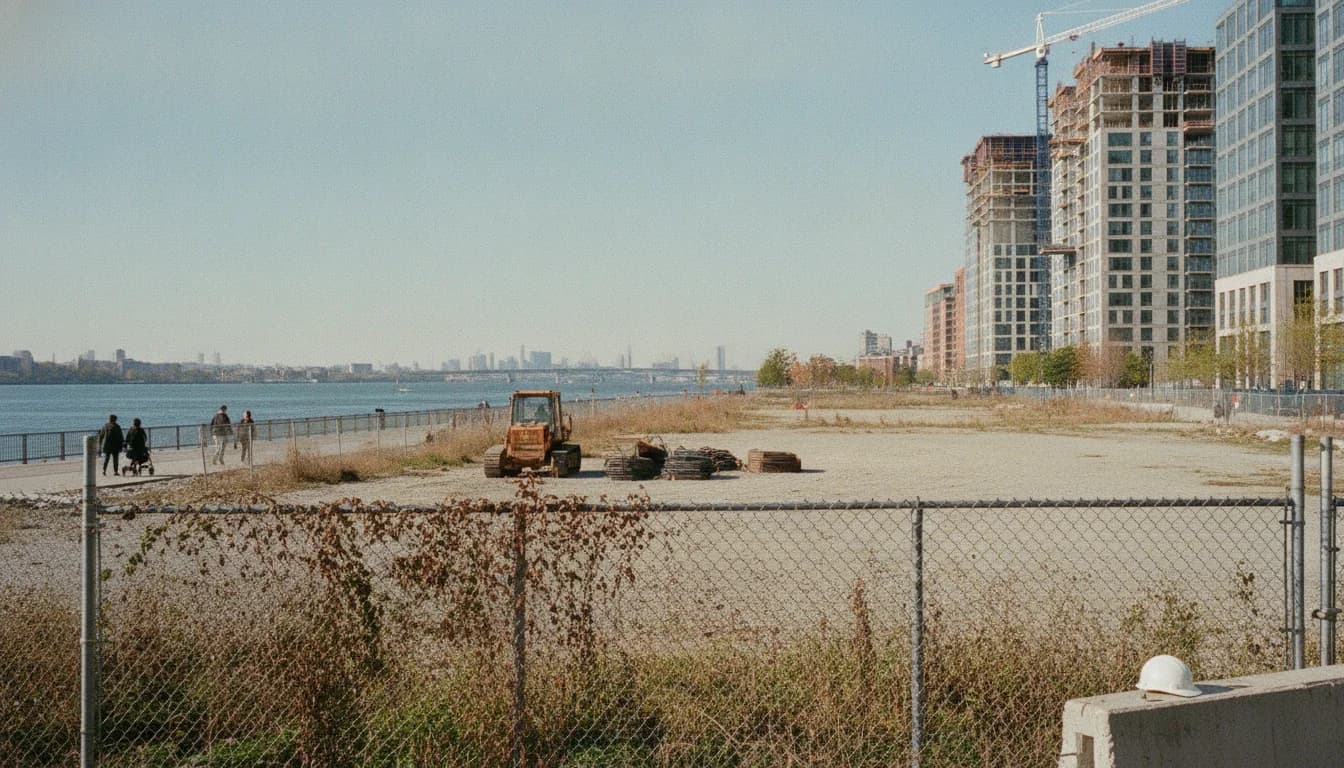
The Orion, a landmark mixed-use project planned for Hunter’s Point South in Queens, will deliver nearly 1,000 homes across three buildings, according to a July 29, 2026 press release from the New York City Department of Housing Preservation and Development (HPD). The announcement marks a pivotal step in transforming a long-vacant city-owned site into a new neighborhood core that blends housing with childcare, workforce development, and retail amenities. The Orion sits on Parcel E of Hunter’s Point South and is part of a broader waterfront redevelopment momentum in western Queens. This initial update provides the essential details, context, and what readers should watch for as the project advances toward financing, permitting, and construction. According to the HPD press release dated July 29, 2026, The Orion will transform a long-empty lot in Hunter’s Point South into a mixed-use project delivering nearly 1,000 homes across three buildings. (nyc.gov)
The Orion is designed as a three-building, mixed-use project on a roughly 70,000-square-foot city-owned site at 54-42 2nd Street, in Queens Community District 2, known as Parcel E. The development team designated by HPD includes Slate Property Group and The Hudson Companies as co-leads, with Volunteers of America–Greater New York (VOA-GNY) providing supportive services, and Marvel Architects handling design. Commonpoint will lease and operate a childcare center, a workforce development center, and an indoor community pool. This ensemble of partners reflects a deliberate blend of affordable housing, social services, and community spaces intended to create a sustainable neighborhood hub rather than a stand-alone building. The Orion’s ownership and management framework, as outlined by HPD, emphasizes a continuum of housing options paired with supportive services. HPD’s press release also notes the project’s alignment with the city’s broader housing strategy, including a focus on public-land development and mixed-income finance structures. The development team and project scope are described in HPD’s press release published July 29, 2026. (nyc.gov)
What Happened
Announcement Details
The Orion was unveiled by HPD on July 29, 2026, as a long-planned transformation of a vacant Queens site into a mixed-use community featuring nearly 1,000 homes across three buildings. The press release explicitly identifies Parcel E as the project site and confirms the expectation of about three buildings on the site. This announcement is the culmination of a multiagency effort to repurpose city-owned land for housing and community facilities in Hunter’s Point South. The announcement’s exact date and key figures are documented in HPD’s press release. (nyc.gov)
The development team named by HPD includes Slate Property Group and The Hudson Companies, with Volunteers of America–Greater New York (VOA-GNY) providing supportive housing experience, alongside Marvel Architects as the design firm and Commonpoint as the operator for childcare and workforce programs. The public disclosure of the team composition and their roles is part of HPD’s formal release. (nyc.gov)
The RFP process that led to The Orion’s selection was publicly posted on June 13, 2025, signaling the city’s public-estate fast-tracking approach to housing production on waterfront land in Queens. HPD’s release frames this as part of a broader city effort to accelerate affordable-housing development on publicly owned sites while incorporating community amenities. (nyc.gov)
Project Scope and Unit Mix
The Orion is described as delivering approximately 980 new apartments, with a substantial share reserved for income-restricted households. HPD’s numbers specify about 658 income-restricted units, including roughly 149 supportive housing units, and the remaining units will be allocated to other affordability bands under the project’s mixed-income framework. This breakdown reflects a deliberate balance between market-rate, affordable, and supportive housing components within a single, transit-accessible waterfront complex. HPD’s briefing confirms these unit counts and the mixed-income approach. (nyc.gov)
The project includes nearly 8,900 square feet of community facility space operated by Commonpoint, a childcare center serving infants to Pre-K, and a workforce development center intended to link residents with local employment opportunities. Ground-floor retail space totaling about 6,000 square feet is also planned, creating a mixed-use environment that aims to serve both residents and the surrounding community. These specifics—unit counts, community facilities, and retail—are outlined in the HPD release and are echoed in subsequent coverage by industry outlets. (nyc.gov)
The Orion’s architectural design is led by Marvel Architects, a firm with a portfolio of HPD projects and waterfront planning experience. The inclusion of a three-building configuration with a shared ground-floor program signals a neighborhood-scale project rather than a single-use tower, a choice aligned with parcel-based and land-use planning practices common to the Hunters Point South redevelopment. HPD’s release identifies Marvel as the designer and notes the internal coordination with partner agencies and service providers. (nyc.gov)
Timeline and Next Steps
The current HPD release emphasizes that financing must be secured and construction commenced in accordance with the city’s housing plan, with ongoing public engagement to keep the community informed. The press release indicates that the development is intended to proceed under the city’s Mix-Income Market Initiative framework (MIMI), a financing approach that blends income bands within market-rate developments to cross-subsidize affordable units, a model HPD has used on other projects. The release highlights this framework as central to delivering the Orion’s mixed-income outcome. (nyc.gov)
The broader policy context cited in the release includes City Hall’s Block by Block plan and a capital program to support housing production, signaling that The Orion is part of a larger governance effort to scale affordable-housing supply in a high-cost city. The HPD release references the administration’s capital investment and staffing to accelerate development review and financing workflows, which will influence the project’s financing and permitting timeline. The linkage between The Orion and the city’s housing strategy is explicit in the press materials. (nyc.gov)
Community and Stakeholder Perspectives
Queens leaders and housing advocates have framed The Orion as a concrete step in addressing the city’s housing shortage, particularly in a high-opportunity neighborhood with transit access. Donovan Richards Jr., Queens Borough President, is quoted in HPD’s release as emphasizing that the project’s affordable component is a critical response to rising living costs in Long Island City. The release also features remarks from state and local officials highlighting the importance of expanding affordable housing while maintaining neighborhood vitality. These quotes reflect the broader policy narrative around The Orion and its role within the city’s housing strategy. (nyc.gov)
Some community voices have asked for ongoing scrutiny of the pace and breadth of affordability, reflecting a common theme in waterfront redevelopment where housing supply must be balanced with neighborhood amenities and infrastructure. Local coverage and community-interest outlets have reported debates around whether the scale and mix of units adequately address residents’ affordability needs, underscoring the importance of transparent progress reporting as The Orion advances. While HPD’s release provides the project’s official facts, community conversations continue around how this development translates into real-world affordability, access, and neighborhood cohesion. (sphere-piccolo-d7rm.squarespace.com)
What This Means for the Market
- The Orion’s nearly 1,000-unit scale places it among the largest waterfront housing efforts in western Queens in recent years, with a substantial portion dedicated to income-restricted units. Analysts and reporters watching New York’s housing market will note the project’s potential to influence nearby rents and vacancy trends, especially given its mix of family-sized units and the incorporation of childcare and workforce development elements. The combination of 658 income-restricted units and a significant share of the units set aside for homeless or near-homeless populations aligns with citywide goals to expand affordable housing while stimulating neighborhood-equitable growth. Industry coverage that echoed HPD’s figures suggests the project could become a touchstone for future public-land housing initiatives in the city. (bisnow.com)
Why It Matters for Manhattan Monday Readers
- For readers of Manhattan Monday who track technology and market trends, The Orion represents more than a housing project: it signals a model for integrated urban redevelopment that pairs housing with social services and job-training opportunities. The Orion’s design emphasizes transit connectivity, waterfront resilience, and community-serving amenities that could influence how developers approach similar sites in other boroughs. Analysts will be watching how financing structures like the Mixed Income Market Initiative (MIMI) perform in practice and whether this model becomes a reference point for future city-owned-site programs. HPD’s framework and the project’s scale offer data points for evaluating public-land strategies, public-private partnerships, and the role of nonprofit partners in sustaining long-term neighborhood vitality. (nyc.gov)
The Orion marks the next step in the transformation of Hunter’s Point, bringing hundreds of new homes, a new childcare center, workforce development, and retail space to a long-vacant lot. This project shows how we can use public land to deliver mixed-use projects that benefit future residents and the surrounding community alike. — Leila Bozorg, Deputy Mayor for Housing and Planning, quoted in HPD release. (nyc.gov)
What It Means for Design, Financing, and Policy
The Orion’s partnership with Marvel Architects and Commonpoint reflects a trend toward placing social infrastructure—childcare, workforce training, and community spaces—at the core of affordable-housing developments. This integration reduces the risk of “housing without community” by embedding services that support families and long-term resident stability. The plan’s explicit inclusion of a daycare facility and a workforce development center aligns with a broader policy emphasis on building supportive ecosystems around housing, which can improve occupancy stability and neighborhood outcomes over time. HPD’s release frames these elements as central to the project’s promise, and early discussions with the development team suggest that the amenities will be funded and managed through the project’s financing mix, which includes income-restricted and market-rate components cross-subsidizing these services. (nyc.gov)
The Orion’s ground-floor retail and public-space ambitions indicate an intent to create a walkable, livable waterfront district, a design philosophy that is increasingly shaping waterfront redevelopment across New York City. In the context of rising construction costs and the city’s ambitious housing targets, projects of this type test the viability of integrated, multi-use districts as a scalable, replicable approach to urban renewal. Analysts will assess whether the Orion’s model can reduce commute times, increase local employment, and expand access to childcare and training, creating a broader, more sustainable neighborhood ecosystem. (nyc.gov)
Section 2: Why It Matters
Affordability and Access
- The Orion’s unit mix, with approximately 658 income-restricted apartments and around 149 supportive units, anchors the project in the city’s ongoing effort to widen affordable-housing access within high-opportunity zones. The two-thirds affordability ratio within a nearly 1,000-unit development is a notable data point for readers tracking how public-land projects translate policy into housing outcomes. The numbers come directly from HPD’s release, which frames them as a core objective of the Orion’s design and financing. (nyc.gov)
Public-Private Collaboration
- HPD’s selection of Slate Property Group, The Hudson Companies, and VOA-GNY as the core development team underlines a cross-sector collaboration model that brings private development capacity together with nonprofit service delivery. The collaboration includes Marvel Architects for design and Commonpoint for operational programs, illustrating a holistic approach to neighborhood-building beyond mere apartment delivery. This alignment with public policy goals is a recurring theme in city housing programs and is documented in HPD’s release. (nyc.gov)
Community Amenities as Catalysts
- The Orion’s included community amenities—childcare, a workforce development center, an indoor pool, and flexibly usable community space—are designed to support long-term resident stability and mobility. The press materials emphasize that these amenities are not only services but also economic catalysts, facilitating workforce readiness, family stability, and social cohesion. This approach resonates with research in housing and urban planning that links supportive services with higher affordable-housing retention rates and neighborhood vitality. The HPD release highlights these features as essential components of the Orion’s value proposition. (nyc.gov)
Market Context and Policy Alignment
- The Orion is presented as a concrete instance of a city-wide housing strategy that prioritizes production on public land, expedited review processes, and a commitment to climate-resilient waterfront development. The press release references the Block by Block plan and a significant capital program intended to accelerate project financing and construction. For readers monitoring public policy and housing economics, The Orion provides a real-world data point about how policy levers—the LIFT Task Force, expedited land reviews, and capital commitments—translate into a large-scale housing development. (nyc.gov)
Community Reception and Debate
- Local voices have framed The Orion within a broader debate about affordability depth and pace. While many view the project as a critical step forward, some community leaders question whether the scale and speed match the neighborhood’s affordability needs. This tension is a hallmark of waterfront redevelopment discussions in Queens and other boroughs, where development often outpaces the delivery of housing and services. Reports and commentary from local outlets and community boards provide a sense of how this project is being received in the community, even as the official information emphasizes the housing goals and service components. (sphere-piccolo-d7rm.squarespace.com)
Section 3: What’s Next
Financing and Approvals
- The Orion’s path forward depends on securing financing for the project and obtaining the necessary city approvals to begin construction. HPD’s press materials indicate that financing must be secured before construction can commence, signaling a multi-stage process that includes closing on funding and finalizing entitlements. The project’s Mix-Income Market Initiative framework will inform how different units are financed and subsidized to achieve the planned income mix. The exact financing timeline was not specified in the HPD release, but the key milestones—financing, approvals, and construction—are typical to waterfront-housing initiatives of this scale. (nyc.gov)
Community Engagement and Updates
- HPD notes that a robust community-engagement process underpinned the RFP and design phases. Ongoing communication with community boards, local organizations, and residents will be essential as the Orion moves from predevelopment to construction. Expect periodic project updates, public briefings, and potential design refinements as financing terms are finalized and construction plans are locked in. The public-Engagement narrative from the RFP phase and the current release emphasizes transparency and collaboration with local stakeholders. (nyc.gov)
Monitoring and Metrics
- As the project unfolds, readers should look for updates on unit occupancy, affordability metrics, and residents’ use of the on-site services. The Orion’s success will likely hinge on how effectively the workforce development center connects residents to local job opportunities, how childcare capacity scales with family needs, and how retail and open spaces contribute to daily living and neighborhood vitality. While HPD provides the baseline numbers for units and services, ongoing reporting will reveal how those numbers translate into real-world outcomes for Queens families. (nyc.gov)
Closing
The Orion Queens development 1,000 homes represents a substantial step in New York City’s housing strategy, combining three-building residential capacity with a built-in network of social services and community facilities. The project aligns with the Mamdani administration’s broader housing-creation goals and showcases how public land, private development, and nonprofit service providers can collaborate to deliver housing, childcare, and workforce opportunities in a single footprint. For readers who track city planning, affordable housing, and waterfront redevelopment, The Orion offers a concrete data point about how large-scale, mixed-income housing can be structured, financed, and integrated with neighborhood services. As financing discussions advance and construction timelines emerge, Manhattan Monday will continue to monitor the Orion’s progress and its impact on Long Island City’s housing landscape.
Readers seeking updates can follow HPD’s announcements and the project’s official communications channels for the latest milestones, financing confirmations, and construction timelines. The Orion’s progress will be watched closely by housing advocates, policymakers, developers, and the many residents who stand to benefit from a more affordable, connected, and resilient Queens waterfront.
In sum, The Orion Queens development 1,000 homes embodies a data-informed approach to urban renewal that seeks to balance housing supply with essential social services and neighborhood amenities. The project’s success will hinge on timely financing, community engagement, and the effective integration of services that support families, workers, and local businesses as Hunter’s Point South evolves into a more complete, livable district. The Orion’s trajectory in the coming months will be a telling indicator of how New York City translates ambitious housing policy into tangible, neighborhood-scale outcomes. (nyc.gov)