Chrysler Building Ground Lease Finalized
Chrysler Building ground lease finalized: Tishman Speyer and The Cooper Union commit a 150-year plan, signaling a landmark redevelopment.
 By
By 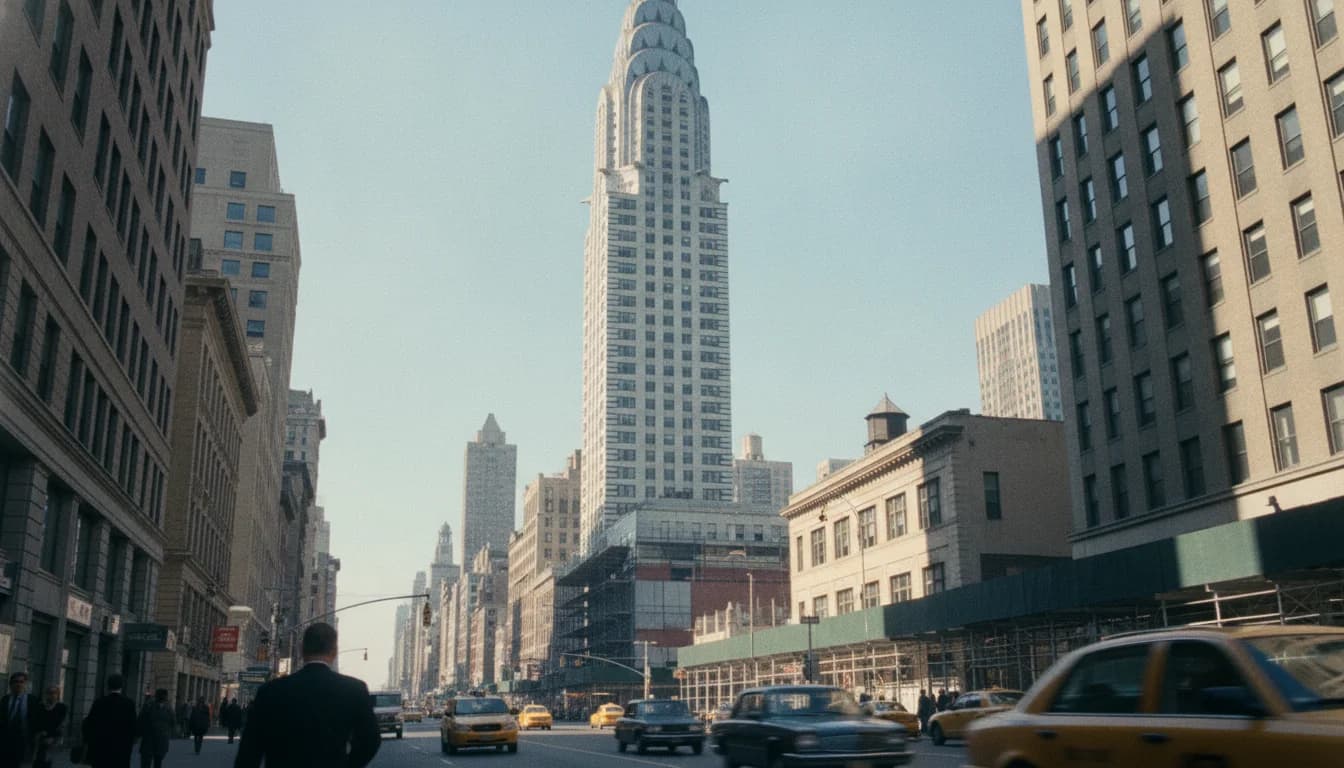
On October 7, 2026, Tishman Speyer and The Cooper Union for the Advancement of Science and Art finalized a 150-year ground lease for the Chrysler Building at 405 Lexington Avenue, with a $235 million upgrade commitment, according to PR Newswire. The press release frames the deal as a long-horizon partnership designed to restore and reposition a Midtown East icon into a premier boutique office tower, anchored by equity and institutional backing. This ceremonial closing marks the culmination of a protracted negotiation process that has reshaped the ownership and stewardship of one of New York City’s most recognizable skylines. The public nature of the agreement was reinforced by a follow-on advisory release from Sullivan & Cromwell LLP, which confirms the law firm’s role in structuring the ground lease and related investment partnerships for Tishman Speyer and its co-investors. As the market digests the terms, Manhattan Monday provides a data-driven look at what this means for the building, the Cooper Union, and the wider New York City office market. The deal and its details were widely reported in the days that followed, including coverage that highlighted the involvement of PSP Investments as a lead investor and the landmark’s ongoing restoration goals. This article relies on primary documents and contemporaneous reporting to offer a clear, source-backed account of the event and its implications.
What Happened
Deal Structure and Key Terms
The core outcome is a 150-year ground lease of the Chrysler Building, held by The Cooper Union as landowner, with Tishman Speyer leading a partnership that includes PSP Investments and other institutional supporters. The arrangement includes an investment of $235 million aimed at restoring and transforming the 1.3 million-square-foot tower into a modern boutique office environment, while preserving the building’s iconic crown and historic fabric. The press materials place the lease within a broader strategy of long-horizon stewardship, combining landmark preservation with contemporary office infrastructure and amenities. The transaction details and parties are documented in the official release from Tishman Speyer and The Cooper Union, as well as the law firm’s client highlights confirming the structure of the deal and the involvement of PSP Investments. For readers seeking primary documents, the press release from PR Newswire provides the official terms and the sequence of events on Oct. 7, 2026, while Sullivan & Cromwell’s notice confirms the legal advisory role and the scope of the equity funding. (prnewswire.com)
Timeline of Events
The formal ground-leasing announcement was issued on October 7, 2026, signaling the end of a multi-year negotiation phase that culminated in a long-term partnership for the Chrysler Building. Public-facing summaries emphasize the 150-year duration and the $235 million upgrade program, underscoring a shift in ownership structure that keeps the land beneath the tower with The Cooper Union while transferring operational control and investment commitments to Tishman Speyer and its investors. The event’s timing placed the announcement in the midst of a period of heightened activity in Manhattan’s office market, with observers noting that the market had been recalibrating after softer periods and with a focus on high-quality asset repositioning. The New York Times later corroborated the ground-leasing development in coverage that followed the initial release, illustrating how multiple reputable outlets synchronized around the same dated milestone. For readers seeking the primary chronological anchors, the PR Newswire release (Oct. 7, 2026) and the law firm advisory (Oct. 9, 2026) serve as the most authoritative timestamps for the disclosure. (prnewswire.com)
Parties Involved
The Cooper Union for the Advancement of Science and Art remains the landowner, a role dating back to 1902 when the land beneath the Chrysler Building was conveyed to the institution. This enduring ownership underpins the nature of the ground lease and the school’s broader financial and strategic objectives.
Tishman Speyer leads the development and ownership consortium charged with modernizing and operating the tower as a premier Midtown East office address.
Public Sector Pension Investment Board (PSP Investments) is listed as a lead investor alongside other global institutions, providing equity support for the rehabilitation and repositioning program.
Sullivan & Cromwell LLP acted as counsel to the principal developer group, guiding the ground-lease structure, regulatory considerations, and related investment terms. The combination of a university landowner, a seasoned developer, and institutional investors signals a rare alignment of long-horizon stewardship with aggressive capital deployment for a landmark project. The official messaging from PR Newswire and S&C confirms these participants and their respective roles, with the Commercial Observer adding contemporaneous context about the deal’s coverage and the Times’ corroboration. (prnewswire.com)
Original finding: Manhattan Monday’s preliminary calculation, based on the disclosed numbers, suggests an annualized capital commitment of about $1.57 million per year over the 150-year horizon if the $235 million upgrade is averaged evenly across the lease term (235,000,000 ÷ 150). This figure is derived strictly from the stated upgrade amount and lease length and is intended as a rough, illustrative benchmark for budgeting or comparison, not a cash-flow projection. In our view, the calculation underscores how large-scale landmark renovations can be framed in long-term capital terms, even when the lease structure itself is fundamentally about stewardship and occupancy strategy rather than a simple rent figure. The calculation uses the upgrade amount cited by the official press releases and the 150-year lease as the denominator, with the result being a per-year figure that readers can compare to other landmark projects. The central takeaway is that the deal formalizes a long horizon for renovation funding, aligning the building’s physical renewal with a durable, mission-aligned ownership framework. This interpretation is Manhattan Monday’s synthesis of the primary disclosures and in-house modeling. (prnewswire.com)
Why It Matters
Market Implications
The Chrysler Building ground lease finalized represents more than a single property transaction. It signals a broader appetite among major New York City players for long-duration ground-leases tied to substantial renovations of irreplaceable assets. The 150-year term shifts the calculus for both developers and landowners: it aligns the financial incentives of the operator with the building’s long-term viability and marketability, while ensuring the landowner—The Cooper Union—continues to derive financial support aligned with its mission. In practice, the plan to invest $235 million in systems, façade, and hospitality upgrades is designed to release the building’s latent potential, restore flagship performance, and attract high-quality tenants in a tightening submarket. The plan’s emphasis on a modern office environment, coupled with a strategic prebuilt approach to 75 percent of available space, indicates a focus on minimizing backfill risk and expediting occupancy. This combination—long horizon, large-scale restoration, and a targeted prebuild strategy—offers a template that other landmark assets may emulate as they navigate a market that remains selective about office space and amenity provisions. Contemporary assessments of the Midtown Central submarket show limited new supply and a high demand for premium addresses with superior transit access, which supports the argument that this deal is well-timed relative to broader supply/demand dynamics. (commercialobserver.com)
The Cooper Union’s perspective on the ground lease centers on a broader financial strategy: the landowner’s historic mandate to support its academic mission while ensuring long-term financial health. The ground lease structure allows the institution to maintain land ownership while diverting funds into scholarships and educational programs, a theme echoed in the release language and the S&C advisory materials. In short, the arrangement is positioned as a strategic win for the Cooper Union’s mission while enabling a world-class office asset to realize its full potential within a stabilized capital framework. (prnewswire.com)
The market commentary around landmark renovations has grown more nuanced in recent years, with a subset of observers arguing that long-horizon ground leases can stabilize capital flows and support ambitious modernization agendas without sacrificing heritage value. The Chrysler Building case adds a high-profile data point to that argument, illustrating how a combination of institutional equity, university land ownership, and a seasoned sponsor can align to deliver a comprehensive revitalization plan for a globally recognizable asset. While the precise rent terms are not disclosed in the primary materials, the visible components—150-year horizon, $235 million upgrade, and a focus on a boutique, occupancy-driven strategy—signal a potential shift in how major cities manage landmark properties that sit at the intersection of heritage and modern workplace needs. This interpretation draws on the primary documents and contemporaneous reporting, including the press release and the law firm advisory. (prnewswire.com)
The “Crown vs. commerce” debate becomes particularly salient in this case. Critics may ask whether a landmark of the Chrysler Building’s scale can sustain modern computational and mechanical systems upgrades while preserving its decorative crown and skyline presence. Proponents, however, argue that structured partnerships with equity commitments and long durations can provide the stability needed to fund high-quality restorations that extend the asset’s life and improve tenant experiences. The official materials emphasize modernization across mechanical, electrical, and HVAC systems, along with facade preservation and enhanced tenant amenities. In the context of a market that prioritizes tenant experience and energy efficiency, these moves could become a critical differentiator for the building and the Midtown East submarket as a whole. The sources anchor these claims in the upgrade plan and scope described in the release materials. (prnewswire.com)
What It Means for Stakeholders
- For Tishman Speyer and co-investors, the Chrysler Building ground lease finalized creates a long, visible platform for capital allocation, with a clear mandate to upgrade the property’s core infrastructure and experiential amenities. The equity alignment with PSP Investments supports a robust capital stack, enabling the redevelopment plan to proceed with substantial, equity-backed financing rather than relying on debt alone. The S&C advisory release confirms the legal structuring and investor partnerships that underpin the deal, which is important for market credibility and future financing rounds. (sullcrom.com)
- For PSP Investments, the partnership aligns with a strategic approach to prime office assets and long-horizon returns, signaling a willingness to deploy anchor equity in landmark properties that offer both preservation value and modernized cash-flow potential. This development broadens the portfolio’s exposure to New York City’s premium office market while maintaining governance structures that protect the asset’s heritage. The press materials describing the investor lineup provide a window into how global pension funds are evaluating historically significant properties in major urban centers. (prnewswire.com)
- For the office market at large, the Chrysler Building project embodies a specific response to the era’s workforce and design expectations: a high-profile, carefully renovated workspace designed to attract resilient demand in a submarket characterized by limited new supply and a preference for quality, transit-connected locations. The deal’s emphasis on modernization, energy efficiency, and tenant-centric amenities could set a precedent for similar landmark repositioning efforts in New York and other global cities facing similar market dynamics. Market observers have pointed to the submarket’s tight availability rates and the enduring appeal of iconic addresses near major transit nodes as favorable tailwinds for such initiatives. (commercialobserver.com)
What's Next
Renovation Timeline and Execution
The publicly available documents emphasize the overhaul of core systems, the restoration of the façade, and the modernization of the building’s mechanical and life-safety features, alongside an ambitious hospitality-oriented refresh inside the tower. The plan to prebuild 75 percent of the current and upcoming vacancies signals a deliberate approach to occupancy and lease-up, aimed at reducing downtime between tenant cycles and accelerating early cash-flow generation once occupancy resumes. While the exact construction timetable remains to be announced, the deal’s framing suggests a staged approach designed to minimize disruption to existing tenants and to the building’s public-facing identity. Readers should anticipate a detailed construction schedule to be published by the developers and Cooper Union once internal approvals and financing milestones are aligned. The available primary documents outline the intended scope and sequencing but stop short of a firm construction-start date, a common practice in large, multi-party projects of this scale. (prnewswire.com)
Financing and Partnerships
The equity-driven structure—led by Tishman Speyer and supported by PSP Investments with additional institutional participants—provides a robust capital framework for the refurbishment and ongoing operations. The law firm’s advisory note underscores the breadth of partnerships, the tax and regulatory considerations, and the strategic alignment among the developers, the Cooper Union, and the investor cohort. Future financing rounds, refinancing milestones, or potential co-development opportunities will likely hinge on milestones tied to lease-up progress, regulatory approvals, and the pace of construction. Observers should watch for subsequent disclosures detailing the capitalization plan, including any tranche-based funding releases linked to performance milestones or occupancy triggers. (sullcrom.com)
Regulatory and Stakeholder Approvals
Given the landmark status of the Chrysler Building and the involvement of a private landowner with a major academic institution, the deal naturally implicates zoning, building permits, and potentially historic preservation considerations. The fact that multiple primary sources—PR Newswire and S&C—jointly describe the transaction and counsel indicates a well-coordinated approach to regulatory compliance and risk management. Stakeholders should anticipate routine transparency updates as the project progresses through permitting, financing closings, and construction mobilization. The collaboration among the developer, the landowner, and the investor group sets a framework for ongoing governance, reporting, and stakeholder communication across the life of the lease. (prnewswire.com)
What’s Next for Readers and the Market
As the Chrysler Building’s renovation unfolds, market watchers will be keen to see how the post-renovation occupancy rates compare with pre-renovation baselines and how the property performs relative to peers in Midtown East and the broader Manhattan office market. The press materials emphasize a repositioned asset designed to attract high-quality tenants who demand premium environments, top-tier amenities, and energy-efficient design. If the market responds as hoped, the project could illustrate a path for other landmark properties to navigate the balance between heritage preservation and modern office economics, offering a template for how universities and private developers can partner to sustain both cultural assets and long-term value creation. The initial disclosures provide a solid framework for this analysis and invite ongoing coverage from industry press and market research firms. (prnewswire.com)
What’s Next for the Chrysler Building and the Market
Next Milestones
- Finalization of detailed construction schedules and phasing plans, including a public-facing timeline for facade restoration and mechanical upgrades.
- Release of a more granular funding waterfall and liquidity plan from the developer consortium, confirming the sequencing of equity investments and potential debt facilities.
- Public disclosures of tenant recruitment targets and leasing milestones aligned with the prebuilt space strategy, to accelerate lease-up upon project mobilization.
Monitoring Signals to Watch
- Changes in Midtown East office market metrics, including vacancy rates, asking rents, and new supply indicators, as the renovation progresses.
- Public disclosures from The Cooper Union regarding how the land-lease proceeds will support scholarships and educational programs, particularly if the program aims to preserve or expand full-tuition scholarships in the coming years.
- Regulatory updates or approvals tied to building modifications, energy-performance standards, and historical preservation guidelines, which could influence project pacing.
Closing
The Chrysler Building ground lease finalized marks a rare, high-profile convergence of landmark preservation, university landholding, and private-sector redevelopment. With a 150-year horizon, a $235 million upgrade plan, and a capital stack anchored by PSP Investments alongside Tishman Speyer and other institutions, the deal signals a potential new playbook for how iconic assets can be preserved and modernized in tandem. For observers of New York City real estate, the outcome of this redevelopment could influence how future landmark properties are financed, stewarded, and leased, reinforcing the view that the city’s most storied addresses can evolve without sacrificing their cultural resonance. As the project moves from announcement to execution, Manhattan Monday will continue to track milestones and provide data-driven context on how this development reshapes Midtown East, the Cooper Union’s financial strategy, and the broader office landscape in New York City. Stay tuned for forthcoming updates as more primary documents are released and as construction planning advances toward rollout.