Sol on Park Affordable Housing Milestone
Sol on Park affordable housing milestone highlights the financing of 229 homes specifically for seniors on the Morris Houses campus.
 By
By 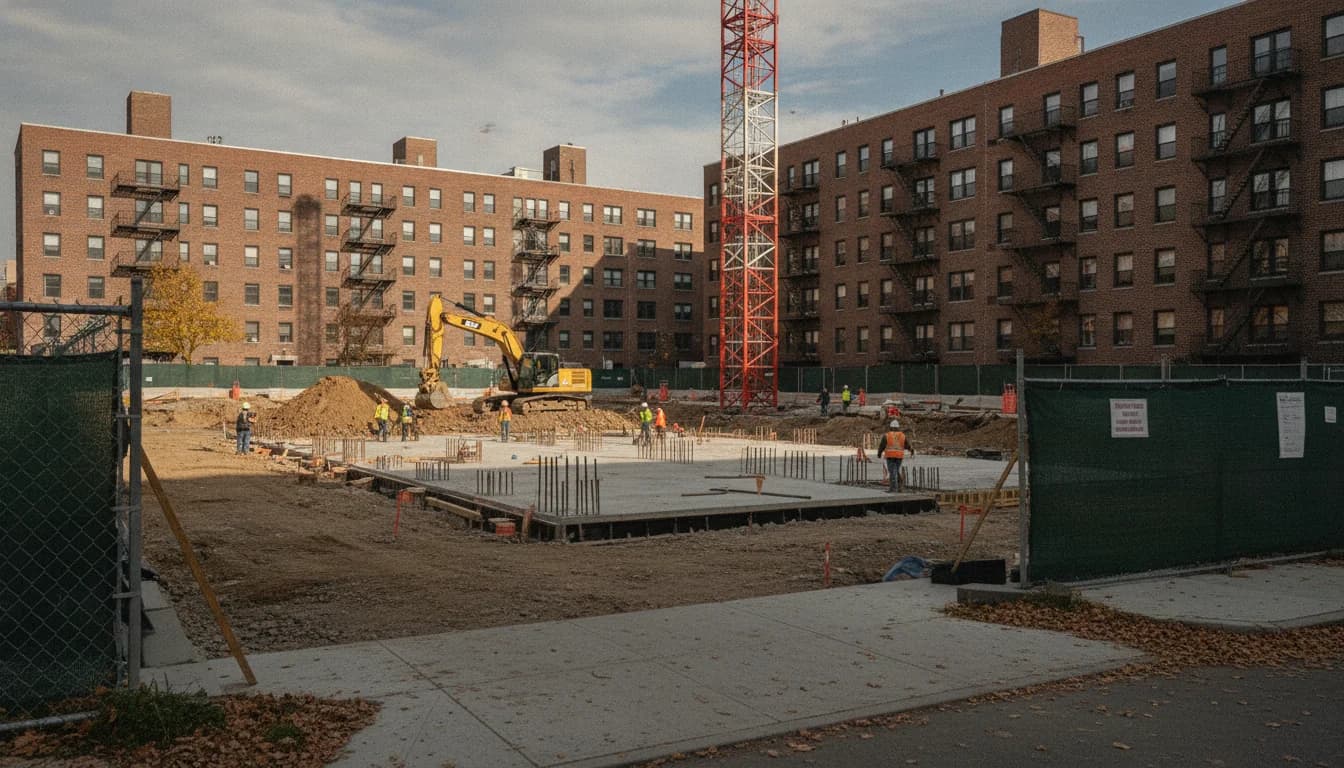
The Manhattan Monday newsroom reports a major update in the city’s affordable senior housing stock. On July 1, 2026, New York City Mayor Zohran Kwame Mamdani announced the financial closing for Sol on Park, a 229-unit, all-affordable senior housing development on the Morris Houses campus in the Bronx. The financing marks a landmark step in the city’s Transfer of Assistance approach, a tool the administration has touted as a catalytic way to convert underutilized public land into deeply affordable homes for older New Yorkers. The closing confirms the project’s path from planning to construction, with residents expected to move in during early 2029 and the broader Morris Houses community set to benefit from new on-site services and facilities. This milestone matters not only for the Morrisania neighborhood but as a testing ground for how public land, public investment, and private development can align to expand senior housing at scale in New York City. (nychdc.com)
One liftable fact central to this story: On July 1, 2026, Mayor Mamdani announced the financial closing for Sol on Park, a $214 million project delivering 229 affordable homes for older New Yorkers on the Morris Houses campus in the Bronx. (nychdc.com)
News Headline: Sol on Park closes financing to deliver 229 affordable senior homes on Morris Houses
Section 1: What Happened
Announcement and Timeline
July 1, 2026 marked the official financial closing for Sol on Park, signaling the end of a multi-year financing phase and setting the construction timetable in motion. The press release from the Mamdani administration describes the closing as a milestone in a $214 million project intended to bring 229 affordable senior homes to NYCHA’s Morris Houses campus in the Bronx. The release notes the collaboration among NYCHA, the Department of Housing Preservation and Development (HPD), and the Housing Development Corporation (HDC), highlighting the project as the city’s largest Transfer of Assistance transaction to date. The announcement also emphasizes the public-private partnership character of the deal and the role of a joint development team led by The NRP Group with Selfhelp Realty Group and Foxy Management. (nychdc.com)
The same day, city officials highlighted the broader purpose of the project: reshaping public land to provide deeply affordable housing for seniors while offering on-site services and community space. The release underscores the use of the Transfer of Assistance model to move Morris Houses residents into Sol on Park, thereby creating a brand-new, accessible home for residents who would otherwise remain in public housing on the Morris site. These details align with NYCHA’s long-running strategy to blend public assets with innovative financing to expand housing supply for vulnerable populations. (nychdc.com)
Additional context on timing and governance comes from New York City Housing Authority board materials. At the April 29, 2026 NYCHA Board Meeting, the board discussed related resolutions and actions around the Morris I & II campuses and the Sol on Park development, including approvals related to the transfer of assistance and the structure of the project’s ground lease with Sol on Park JV, LLC. The minutes confirm the involvement of NYCHA, HPD, HDC, and the project’s developer group, with formal approvals for related transactions described in the docket. (nyc.gov)
Project Financing and Partners
The Sol on Park project is described as a $214 million development designed to deliver 229 affordable senior homes on the Morris Houses campus, located on 3728 Park Ave in the Bronx. The press release identifies the lead development team as a partnership among NYCHA, HPD, and HDC, with construction led by a coalition of private developers including The NRP Group (developer) and co-developers Selfhelp Realty Group and Foxy Management. The project’s design and financing underscore a public land reuse model paired with an innovative financing structure designed to maximize housing outcomes for seniors. (nychdc.com)
The NYCHA board materials provide granular detail on the project’s structure, including the use of a 99-year ground lease and the Transfer of Assistance framework that shifts public housing subsidies to support construction and operations in Sol on Park. The documents note that the project involves land initially allocated for Morris I & II, with the development transitioning to Sol on Park on Park Avenue under the Sol on Park JV, LLC entity. The board’s authorization resolutions reflect a complex mix of disposition, RAD (Rental Assistance Demonstration) conversions, and related financing instruments, underscoring the complexity and scale of this municipal housing initiative. (nyc.gov)
A core design and development detail that emerges from the public documents is the per-unit scale and composition. The press release emphasizes 229 homes, with a mix that includes units reserved for current Morris Houses residents, formerly homeless seniors, and Housing Connect lottery applicants. The NYSERDA project overview corroborates the building’s massing and efficiency focus, noting 18 stories and 204,246 square feet of space. The project team is highlighted as a joint effort among developers and a design team that prioritizes health, sustainability, and accessibility. (nychdc.com)
An important policy mechanism cited in the official materials is the Transfer of Assistance, which the Mamdani administration frames as a critical tool for converting public land and public investment into new affordable homes. The press release positions Sol on Park as a proof of concept for expanding this financing tool across the five boroughs, signaling a potential template for future projects that aim to balance housing supply with resident protections and community services. (nychdc.com)
Roles and Public-Private Collaboration
The Sol on Park project is described as a multi-agency, multi-partner effort. NYCHA provides the site and social service integration, HPD and HDC coordinate financing and regulatory approvals, and the development team (NRP Group, Selfhelp Realty Group, Foxy Management) delivers the construction, property management, and resident services. The press release emphasizes that this collaboration is a model for how public land, public investment, and private developers can together create a large-scale, time-bound affordable housing program for seniors. The board materials likewise reflect the interagency coordination required to implement the transfer of assistance and related ground-lease arrangements. (nychdc.com)
The on-site services and design philosophy highlighted in the materials point to a health-centric, energy-efficient approach. Sol on Park is described as pursuing LEED Platinum and Passive House standards, with a health-focused design that includes on-site health services partnerships and community facilities. The NYSERDA project overview confirms the building’s emphasis on health, safety, and environmental performance as central to its conception, including the research into safer materials and low-impact construction. (nychdc.com)
The project’s scope is also linked to a broader policy objective: to expand affordable housing for seniors while strengthening NYCHA’s future as a public developer. The NYCHA board materials reference the broader Block by Block housing strategy and the administration’s aim to deliver thousands of new affordable homes over the coming decade, situating Sol on Park within a wider suite of reform and expansion efforts. The press release and board materials together illustrate how this single project sits at the intersection of policy, public financing, and private delivery. (nychdc.com)
Section 2: Why It Matters
Housing Supply and Senior Servicing Impacts
The Sol on Park project is designed to deliver 229 affordable units for older New Yorkers on the Morris Houses campus, a scale that positions it as one of the city’s more ambitious senior-housing efforts in recent years. The unit mix—80 units reserved for current Morris Houses residents, 69 for formerly homeless seniors, and 79 available through the Housing Connect lottery—illustrates a deliberate attempt to balance existing tenants with new eligibility groups, while preserving long-term affordability. This mix is documented in the public materials accompanying the July 2026 closing. (nychdc.com)
The project’s on-site amenities and social services are designed to address broader needs beyond shelter. The press materials describe a health and wellness center, partnerships with local providers, and a robust program of resident services, all within a two-building, resident-centric design that integrates with the Morris Homes community. The NYSERDA design studies also emphasize human-centered design elements—access to health resources, mobility enhancements, and community spaces—that align with growing policy emphasis on health as a housing outcome. (nychdc.com)
Public Land Reuse and Financing Innovation
Sol on Park represents a notable instance of public land reuse paired with innovative financing. The Transfer of Assistance approach, used here on the Morris Houses site, is characterized as the City’s largest application to date, suggesting a scalable path for future public housing expansions. The strategy leverages public land and funding to create a sustainable, long-term housing solution for seniors, a demographic with acute needs in New York City’s housing market. The official materials frame this as a scalable model that could inform future citywide implementations. (nychdc.com)
The interagency collaboration—NYCHA, HPD, HDC—along with private developers, reflects a broader trend in urban housing markets toward public-private partnerships that can accelerate delivery timelines without sacrificing affordability commitments. The board minutes describe the required approvals, ground-leases, and financing structures that underpin this approach, offering a blueprint for how similar projects might proceed in other neighborhoods. This is particularly relevant as cities nationwide experiment with RADs, ground-lease arrangements, and mixed-income distributions to expand supply. (nyc.gov)
Health, Sustainability, and Community Benefits
A defining feature of Sol on Park is its emphasis on occupant health and environmental performance. The project’s intent to achieve LEED Platinum and Passive House standards places it at the forefront of sustainable affordable housing design, while the inclusion of a health-focused design and on-site services aligns with broader policy priorities around healthy housing as a determinant of well-being for seniors. The NYSERDA project materials provide a detailed account of the safety and health-focused design elements and the planned sustainability measures that will guide construction and operation. (nyserda.ny.gov)
Beyond the physical building, Sol on Park is structured to create long-term community benefits through on-site services and collaborative partnerships. The project’s plan includes a health center partnership with Union Community Health Center and involvement from nonprofit groups like Green Bronx Machine, all aimed at supporting residents’ day-to-day health, nutrition, education, and social engagement. The press materials outline these partnerships as integral to the project’s model of service-enriched housing. (nychdc.com)
Market Context and Forward-Looking Trends
The Sol on Park announcement arrives at a moment when New York City and other major urban areas are reexamining how to meet rising demand for affordable housing, particularly for seniors and households with limited income. The project’s scale, financing structure, and emphasis on public land reuse are illustrative of a policy and market trend toward large-scale, publicly anchored projects that can mobilize private capital while preserving long-term affordability. The interagency coordination highlighted in the official releases underscores a broader shift toward integrated, cross-agency housing solutions. (nychdc.com)
As a data point in market dynamics, Sol on Park demonstrates how sophisticated financing tools—such as the Transfer of Assistance and 99-year ground leases—can unlock substantial capital for projects that might not fit standard subsidy programs. The board materials show the complexity of aligning property disposition, RAD transitions, and long-term affordability commitments, but they also illustrate a viable path for delivering hundreds of units without compromising public accountability. This is a trend that other municipalities may study as they seek scalable paths to housing stability for seniors. (nyc.gov)
Section 3: What’s Next
Construction Timeline and Move-In Plans
With the closing in place, construction activities are expected to commence under the leadership of the developer coalition, with early occupancy anticipated in 2029. The press release notes a specific move-in timeline tied to the completion of construction and the transfer of assistance arrangements, signaling a concrete date for residents and neighbors awaiting the new community. The public documents also emphasize the intent to activate the building’s community facilities as soon as the new homes are completed and ready for occupancy. (nychdc.com)
The move-in plan is complemented by ongoing community engagement and resident participation. NYCHA’s involvement includes continuing collaboration with Morris Houses residents through the Resident Association and related community groups, ensuring that residents have a voice in the development’s operations and programming. The board materials reference this ongoing partnership as part of broader improvements in NYCHA’s community development initiatives. (nyc.gov)
Next Steps for Policy and Practice
After the financial closing, the city and its development partners will advance the ground-lease arrangements, zoning considerations, and construction contracts necessary to bring Sol on Park to completion. The sub-issues include ensuring that the 80 Morris Houses households, the 69 formerly homeless seniors, and the 79 Lottery-eligible units are integrated into the final occupancy plan, with clear guidelines for income verification, eligibility, and service allocations. The board minutes and press materials outline the key steps in this process and the expected regulatory milestones, reflecting a rigorous approach to project governance. (nyc.gov)
In the longer term, observers will watch how the Transfer of Assistance approach plays out in practice, including how well the program preserves affordability as the city scales this model to other sites. The NYSERDA materials place Sol on Park within a broader research initiative on safer materials and resilient design, suggesting that the project may also contribute to a growing evidence base on health-oriented, sustainable construction in affordable housing. (nyserda.ny.gov)
Closing
Sol on Park affordable housing marks a watershed moment for the Morris Houses campus and the city’s broader approach to aging in place, public land reuse, and cross-agency collaboration. As construction advances toward 2029 occupancy, the project will serve as a live case study of how public investment, private development, and resident-first design can converge to deliver substantial, long-term benefits for seniors and the surrounding community. Readers who want to follow updates should monitor announcements from NYCHA, HPD, and HDC, as well as agency partner releases and independent analyses that evaluate the Transfer of Assistance model in practice.
Stay tuned for progress updates and new data as Sol on Park moves from financing to foundation, from design documents to shovel-ready construction, and from plan to a tangible neighborhood asset for Morrisania and beyond. The coming months will reveal how this model adapts to real-world challenges, including supply-chain dynamics, workforce development, and ongoing resident engagement that will shape the project’s ultimate impact.