Open Streets NYC Expands to over 150 Locations in Manhattan
NYC DOT announces the launch of the Open Streets season with more than 150 locations across Manhattan, aiming to enhance public spaces for walking,…
 By
By 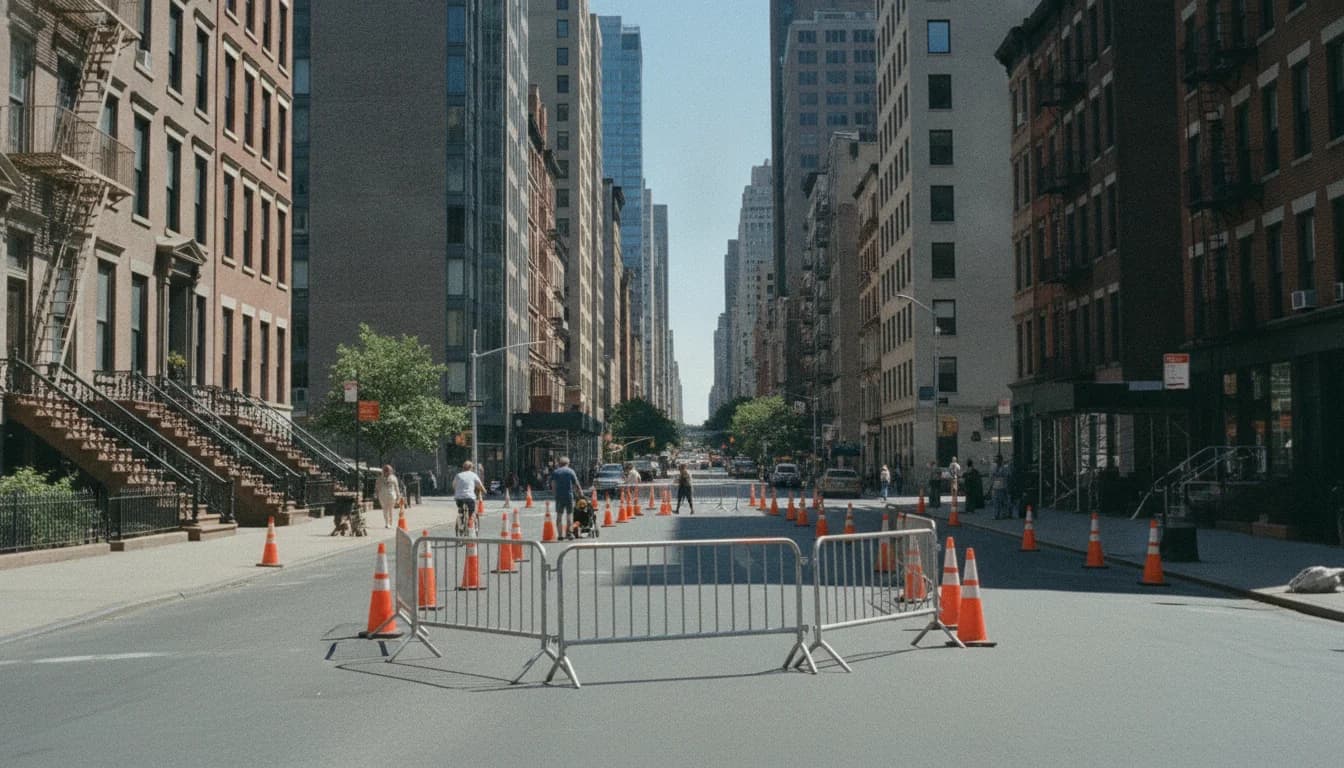
The city’s streets are being reimagined again. NYC DOT announced on May 21, 2026 that the Open Streets season would launch with more than 150 initial locations across the five boroughs, according to the NYC DOT press release. This headline figure anchors a broader plan to convert more of Manhattan and other borough streets into flexible public spaces for walking, biking, and community programming. The Open Streets initiative, first launched in 2020, continues to evolve as a central tool for urban space diversification, with a focus on safety, accessibility, and local economic activity. For readers seeking the official details and a map of locations, the NYC DOT provides a centralized Open Streets page and location data. Open Streets press materials remain the authoritative source for 2026 site lists, hours, and qualifying criteria. (nyc.gov)
Open Streets NYC expansion is not a one-time event. It represents an ongoing, data-informed program that the city uses to evaluate street usage, public space equity, and community programming needs. The May 21, 2026 release frames the expansion as part of a broader strategy to create more pedestrian- and cyclist-friendly corridors while fostering local economic activity and school partnerships. The agency notes that the effort will emphasize safety, accessibility, and inclusive access as essential design principles, with ongoing reviews and updates to locations and programming throughout the season. This year’s push also includes new partnerships intended to streamline access to funding for community groups. As Commissioner Mike Flynn described, Open Streets spaces are intended to be “safe, lively, and welcoming while also helping to expand the program fairly and inclusively to neighborhoods across the city.” (nyc.gov)
The early part of the 2026 season is complemented by broader planning and programming that touch multiple programs beyond Open Streets itself. The partnership with CitizensNYC aims to accelerate microgrant funding for community partners, reducing administrative hurdles so neighborhoods can more quickly activate streets with arts, food, and educational programming. The collaboration is part of a broader commitment to distribute resources equitably across districts, particularly in areas where public space has lagged in quality or access. This context is reflected in the press materials and related DOT communications, which emphasize the goal of enabling a wider, more vibrant use of street space across Manhattan and beyond. (nyc.gov)
Beyond the press materials, the city is also signaling a tangible set of near-term physical changes as part of the Open Streets expansion. Notably, Avenue B and Decatur Avenue are highlighted for specific redesign efforts intended to improve safety, accessibility, and pedestrian-focused programming. On Avenue B, the plan builds on a successful Open Street launched in 2020, with improvements to safety near schools and a formalization of two-way cycling connections. On Decatur Avenue, a previously launched Open Street (since 2024) will see upgraded crosswalks and curb extensions to reduce vehicle speeds and support ongoing programming. These redesign efforts illustrate how the city is coupling space reallocation with targeted street-improvement investments to reinforce the public-space goals of Open Streets. The May 2026 release details these upgrades as concrete examples of the expansion in action. (nyc.gov)
What happened in concrete terms
- Announcement and scope: The NYC DOT publicly kicked off the 2026 Open Streets season with more than 150 initial locations across the five boroughs, signaling the ongoing expansion of the program citywide. This figure is drawn from the NYC DOT press release dated May 21, 2026. The press release also notes that the initiative aims to promote economic development, support schools, facilitate pedestrian and bike mobility, and provide new ways for New Yorkers to enjoy cultural programming and build community. The press release explicitly indicates that locations and program hours are available on the Open Streets portal. (nyc.gov)
- Rolling application process and deadlines: NYC DOT indicates a rolling application process for Open Streets proposals, with a specific deadline for educational institutions to receive decisions by September 2026 (for applications received by June 10, 2026; the release notes a minimum 90-day review window). This reflects the program’s ongoing, iterative nature and the city’s intent to balance speed with safety and community input. (nyc.gov)
- Partnerships and funding channels: The May release highlights a partnership with CitizensNYC to streamline microgrant funding for Open Streets community partners, reflecting a broader effort to reduce administrative barriers and accelerate activation in neighborhoods citywide. (nyc.gov)
- Redesigns and corridor improvements: Specific corridors highlighted for redesign include Avenue B (East 4th Street to East 12th Street) to strengthen safety around schools and formalize two-way cycling, and Decatur Avenue (East 194th Street to East 195th Street) for safety upgrades and enhanced pedestrian experience. These details were enumerated as part of the 2026 expansion plan in the May 2026 release, illustrating how the program marries space conversion with targeted street improvements. (nyc.gov)
- Scope update from recent years: The same policy and program materials emphasize that the Open Streets program has evolved since its inception in 2020, with a focus on equitable access and consistent maintenance of public spaces. The program’s expansion has been a recurring theme in City DOT communications and planning documents, including broader street-planning updates. For readers tracking the broader trend, the city’s 2025 and 2026 Open Streets communications provide a sequential view of growth, scale, and policy adjustments. (nyc.gov)
Section 1: What Happened
Announcement Details
In May 2026, the New York City Department of Transportation publicly announced the 2026 Open Streets season with more than 150 initial locations across the five boroughs. The news was framed as part of a broader strategy to turn streets into public spaces that support economic development, education, mobility, and cultural programming. The formal press release also introduced a rolling application process and clarified deadlines for school-related Open Streets. The official statement placed a premium on safety, inclusivity, and community activation, underscoring the city’s ongoing commitment to reimagining street space for pedestrians and cyclists. This development followed earlier years of expansion that have gradually grown the program’s footprint citywide. The announcement also highlighted a partnership with CitizensNYC to streamline microgrant funding for community partners. The primary data point—“more than 150 initial locations across the five boroughs”—came from the May 21, 2026 NYC DOT press release. (nyc.gov)
Timeline and Deadlines
- Application window and review timeline: The 2026 season is being managed on a rolling basis, with education institutions needing to submit by a deadline (June 10, 2026) to receive decisions by September 2026, and a minimum 90-day review period for all applications. This reflects the city’s effort to balance timely activations with safety and logistical planning for Open Streets programming. The official guidance for rolling applications and deadlines is provided in the May 2026 press materials. (nyc.gov)
- Redesigns and corridor work: The 2026 plan identifies concrete corridor improvements, including the Avenue B corridor (East 4th Street to East 12th Street) to improve school safety and create two-way cycling connections, and the Decatur Avenue corridor (East 194th Street to East 195th Street) with safety upgrades and enhanced pedestrian experiences. The details reflect a shift from mere street closures to integrated street-improvement projects that support Open Streets programming. (nyc.gov)
Notable Redesigns in 2026
- Avenue B corridor improvements: The Avenue B project builds on a prior Open Street initiative from 2020, expanding safety measures around nearby schools, formalizing two-way cycling, and introducing traffic-calming elements to bolster pedestrianpriority zones. These changes align with the city’s intent to convert more street space into usable, safe public space while maintaining essential mobility. The May 2026 release enumerates this plan as a core redesign effort accompanying the expansion. (nyc.gov)
- Decatur Avenue upgrades: On Decatur Avenue, a corridor with a history of Open Street activity since 2024, the plan includes raised midblock pedestrian crossings and curb extensions, designed to slow traffic and support ongoing programming. The project is cited in the same official release as part of the 2026 upgrade slate. (nyc.gov)
Section 2: Why It Matters
Economic and Community Impact
Open Streets expansions function as a form of place-based economic development. By reallocating street space for pedestrians and programming, neighborhoods can host outdoor dining, markets, performances, pop-up education, and community events without the friction of vehicle congestion. The 2026 expansion, with more than 150 initial locations, signals a sustained investment in public space as a driver of local commerce and cultural vitality. The DOT release frames these spaces as mechanisms to promote economic development and support neighborhoods by enabling safe, car-free environments that attract visitors and residents to local business districts and community assets. The expansion’s impact is therefore twofold: it broadens opportunities for small businesses and cultural groups to activate streets, and it creates recurring opportunities for residents to engage with their neighborhoods in a more active, outdoor setting. (nyc.gov)
Equity, Access, and Public Space
A central theme of the Open Streets expansion is equity in access to public space. The DOT notes a commitment to fairness and inclusivity, with new funding mechanisms designed to reduce administrative barriers for community partners. The collaboration with CitizensNYC is highlighted as a key element in expanding the reach and effectiveness of the program, ensuring that communities with historically limited access to well-maintained public spaces can participate and benefit from street activation. In the context of Manhattan and across the five boroughs, this expansion is part of a broader public-space equity strategy that aligns with the city’s ongoing efforts to invest in neighborhoods that have faced disparities in access to inviting urban space. The May 2026 press materials explicitly link Open Streets to equity and inclusive programming. (nyc.gov)
Mobility, Safety, and Urban Design Trends
The expansion emphasizes safer, more walkable, and bike-friendly streets. The plan to add two-way cycling on Avenue B and the pedestrian enhancements along Decatur Ave are examples of how the city is blending street closure with street redesign to support safer mobility. The focus on school-adjacent corridors and the integration of traffic-calming measures reflect a broader urban-design trend toward flexible, human-scaled street environments that prioritize pedestrians and cyclists during peak programming times. The Open Streets 2026 framework and the design changes illustrate how the city is pursuing a multi-modal, space-forward approach to urban mobility, aligning with global trends toward reclaiming street space for communities rather than solely for through-traffic. (nyc.gov)
Broader Context in New York City Planning
The Open Streets expansion sits within a larger city planning and transportation policy context that includes ongoing public-space initiatives and street redesign efforts. The city’s Open Streets program has evolved since its inception in 2020, and the 2025–2026 period marks a notable scale-up, with multiple corridors across the five boroughs being redesigned to accommodate increased pedestrian activity and programming. The official program materials highlight a continuum of expansion and refinement, including annual recap reports and planning documents that document the impact, outcomes, and equity considerations of the program. For readers tracking historical and policy context, cross-referencing the DOT’s 2025–2026 materials and the broader NYC Streets Plan updates provides a comprehensive view of how Open Streets expansions fit into the city’s long-term urban space strategy. (nyc.gov)
Section 3: What’s Next
Timeline, Projections, and Future Sites
The 2026 Open Streets expansion is being implemented with a rolling approach to site activation, allowing new locations to come online as community partners complete plans and meet safety prerequisites. The DOT’s 2026 site lists indicate that Open Streets locations may be added or adjusted throughout the season as proposals move through the review process. The program’s ongoing site development is reflected in the dedicated 2026 Open Streets Sites section and related notices. This approach allows Manhattan and other boroughs to respond to local conditions, school calendars, and neighborhood feedback, while maintaining the program’s core objective of expanding car-free and vehicle-free spaces for public use. (nyc.gov)
How to Engage: Applications and Upcoming Sessions
For groups seeking to participate in the Open Streets program, the Open Streets page provides details on application types (Full Closure, Limited Local Access, and Full Closure: Schools), rolling submission guidelines, and the 2026 application guidelines. The page links to the 2026 Open Streets application and guidelines and notes that the standard rolling application window remains in effect, with deadlines that vary by corridor type and launch timing. Community groups, schools, and merchant associations are encouraged to prepare proposals that address safety, operations, and community programming needs. The 2026 application materials outline the process and provide links to the online application and information sessions. (nyc.gov)
Programwide 2026-2027 Outlook
As the 2026 season unfolds, observers should watch for: updates to corridor design and safety enhancements, potential new locations added to the map, evolving funding mechanisms for partner organizations, and ongoing program evaluation reports that assess the economic, social, and mobility outcomes of the expansion. The city’s Open Streets framework and related policy texts indicate an ongoing commitment to not only expanding street-space but also refining support systems for communities activating those spaces. For those tracking policy and city planning trends, the evolving 2026–2027 pipeline offers a window into how New York City intends to balance rapid activation with long-term street design and equity goals. (nyc.gov)
Closing
The Open Streets NYC expansion represents a continued, data-driven effort to reclaim street space as a shared public asset. With more than 150 initial Open Streets locations announced for 2026, the program signals a sustained push to connect neighborhoods, boost local economies, and expand access to outdoor programming in Manhattan and the city at large. The partnerships with CitizensNYC and the explicit design updates to corridors like Avenue B and Decatur Ave illustrate how the expansion is translating planning objectives into tangible street-level changes. As the season progresses, New Yorkers can expect ongoing updates to locations, hours, and programming, with the Open Streets page serving as the primary source for the latest information. To stay informed, follow NYC DOT press releases and the Open Streets portal for real-time updates, hours, and application details. (nyc.gov)