Nostrand Houses Public Housing Preservation Trust Modernizes
Nostrand Houses Public Housing Preservation Trust modernizes Brooklyn's public housing with a comprehensive $607 million investment plan.
 By
By 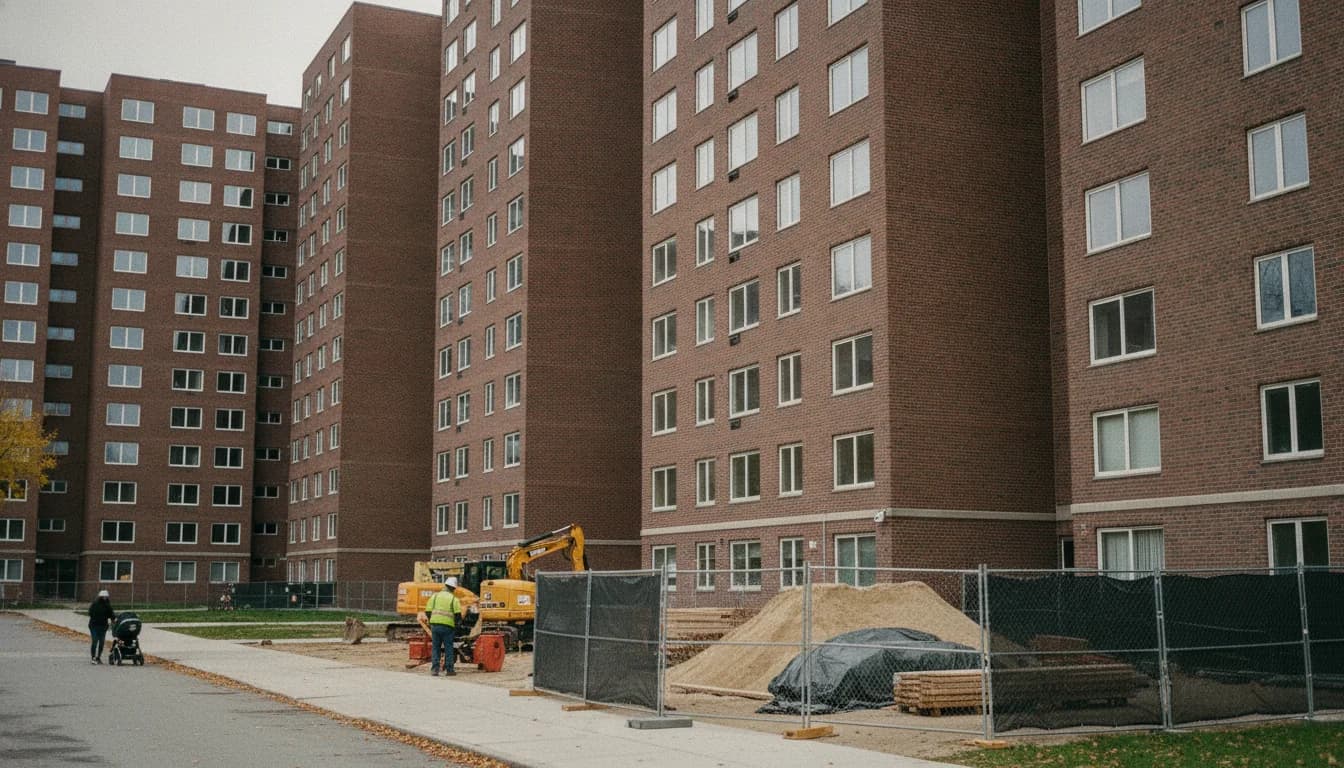
Nostrand Houses in Brooklyn reached a milestone on September 29, 2026, when its financing closed as the first project under the New York City Public Housing Preservation Trust. The milestone was publicly announced the following day by Mayor Zohran Mamdani, NYCHA, and the Trust, marking a new era in the city’s approach to funding and upgrading aging public housing stock. The press materials emphasize that this is the first financial closing through the Trust, a structure designed to unlock federal funding while preserving public ownership and permanent affordability. The development’s 1,148 apartments will undergo a comprehensive modernization that managers say will uplift daily living conditions for roughly 2,000 residents. This is more than a construction project; it is a test case for a model that city officials hope to scale across New York City’s public housing portfolio. For readers seeking to verify the event, the official press materials and related documents provide the primary record of the milestone.
According to the NYC Mayor’s Office press release dated September 30, 2026, Nostrand Houses will undergo a $607 million modernization affecting 1,148 apartments and approximately 2,000 residents, marking the first financial closing through the Public Housing Preservation Trust. This headline figure anchors the story and foreshadows the scope of renovations, which are described in detail in the accompanying release and transcripts. The move is described as a definitive step in an ongoing effort to transform NYCHA properties through a new funding architecture that blends public oversight with private capital in a publicly owned and permanently affordable framework. The press materials also stress that the Trust’s approach is intended to create a scalable blueprint for other NYCHA developments that opt into the program. Readers should understand that the Nostrand closure is both a financial milestone and a proof point for a broader policy strategy to modernize aging public housing without sacrificing affordability or resident rights. For readers looking to verify, typical search terms include Nostrand Houses Public Housing Preservation Trust, Nostrand Houses $607 million modernization, and Nostrand Houses financial closing 2026.
What Happened
Background: The Public Housing Preservation Trust and Nostrand Houses’ path to inclusion
The Public Housing Preservation Trust (PHPT) was established as a governmental instrument authorized by state legislation, with the aim of accelerating capital investments in NYCHA properties by tapping additional federal funding while keeping housing publicly owned and permanently affordable. This framework was created with the intent to address decades of federal disinvestment and maintenance backlogs in New York City’s housing stock. The 2022 law enabling the Trust was a turning point for how NYCHA could structure financing and partnerships, and Nostrand Houses was positioned as the inaugural development in this new model. Key background materials and timelines show the Trust’s design, governance, and the policy rationale behind its formation. See related materials on the official preservation trust site and city governance pages. (preservationtrust.org)
Resident voice and the December 2023 Nostrand vote to join the Trust were central to this path. Nostrand Houses residents became the first NYCHA development to vote to participate in the PHPT, a moment widely cited as historic for public housing in New York City. This decision set in motion multi-year planning, design, and financing processes that culminated in the September 2026 closing. The vote and its significance are documented in NYCHA’s historical materials and in the Trust’s own chronology. (home4.nyc.gov)
The vote and the Trust’s rollout were not isolated to Nostrand; other NYCHA developments—Bronx River Addition, Unity Towers, and Hylan Houses—have voted to join the Trust, signaling a broader programmatic push within the city’s public housing modernization agenda. This context is reflected in official timelines and committee materials that track the leading sites and ongoing elections. (nyc.gov)
The financial closing and the project’s scale
The core fact of September 29, 2026: Nostrand Houses’ comprehensive modernization was financially closed, marking the first project to reach closing through the PHPT. The official press materials describe a $607 million modernization covering 1,148 apartments across 16 buildings, serving about 2,000 residents. The release frames this as not just a renovation, but a structural upgrade to public housing ownership and funding streams, combining federal subsidies with local and philanthropic capital to deliver durable improvements. The official closing date and the scale of work are itemized in the Mayor’s Office release and supporting documents. (nyc.gov)
The financing package combines multiple partners and sources, including Merchants Capital (financing and subsidy), the AFL-CIO Housing Investment Trust (labor and workforce participation), and private-sector lenders, with the New York City Housing Development Corporation (HDC) and HUD playing enabling roles. The release highlights a long-term ground lease and a restructured subsidy model designed to unlock operating subsidies that are said to be several times larger than those available under traditional NYCHA financing. This architecture is explained in the press materials and corroborated in subsequent briefing transcripts. (nyc.gov)
Project scope details include modernized kitchens and bathrooms, upgraded heating and cooling, new elevators, improved accessibility, lead and mold remediation, upgraded security systems, and other critical improvements. The release enumerates these components to illustrate the breadth of the modernization and the expected improvements to daily living standards for residents. The exact scope information is reiterated in the official narrative and the related transcript. (nyc.gov)
A point of reference for how the project is configured is the design-build selection process that preceded the closing. In 2025, NYCHA, in partnership with PHPT, announced the selection of the design-build team that would perform the renovations for Nostrand Houses. This background shows how the Trust’s project pipeline moved from planning to procurement to execution, underscoring the procedural rigor behind the modernization. While construction will follow the closing, the procurement step is a critical milestone in the program’s lifecycle. (nyc.gov)
The closing is framed as the “first financial closing” within the Trust and is presented as a proof point for the viability and scalability of the PHPT approach. The Mayor and Trust leadership emphasize that Nostrand Houses will serve as a reference model for other Trust projects, which, if successful, could unlock billions in federal funding for a broader set of NYCHA developments. This signals a potential shift in capital planning for public housing in New York City. (nyc.gov)
Timeline and near-term steps following the closing indicate that construction is expected to begin in the fall of 2026, with NYCHA maintaining oversight and the Trust coordinating with city agencies, developers, and labor partners to execute the renovations. The closing materials explicitly note a plan to move into construction after the closing, signaling a transition from planning to on-site work. (nyc.gov)
Why It Matters
Resident-centered financing at scale
- The Nostrand Houses modernization illustrates a new financing paradigm in public housing, one that explicitly centers resident outcomes while expanding funding capacity beyond traditional Section 9 funding. The Trust’s structure is designed to preserve ownership, guarantee long-term affordability, and permit greater access to federal operating subsidies through Section 8-like mechanisms. This framework aims to expedite repairs that have historically faced funding delays, allowing residents to benefit from modernized apartments and building systems more quickly than under prior arrangements. The Mayor’s Office materials frame this as a model with potential applicability to other NYCHA sites. (nyc.gov)
Asset-building opportunities linked to education and community services
- The Nostrand project includes a notable asset-building component tied to NYC Kids RISE, which will create Nostrand Houses Community Scholarships and allocate a recurring contribution to NYC Scholarship Accounts for residents’ children. The plan envisions a holistic approach to community welfare that pairs housing improvements with financial literacy and college savings, seeking to address long-standing disparities in asset ownership. This aspect is highlighted in the official materials and is positioned as a scalable feature for the Trust’s other projects. (nyc.gov)
Policy and funding context for a city-wide transformation
- The PHPT model is part of a broader policy shift in New York City’s approach to public housing, intended to pair dedicated public funding with private capital, philanthropic support, and tenant engagement to deliver durable improvements. The closing at Nostrand is framed as a milestone that could unlock billions in federal funding and create a more predictable, programmatic path for NYCHA’s capital needs. Officials have described the Trust as a strategic inflection point in the city’s housing policy, with implications for governance, oversight, and resident protections. The context is laid out in the PHPT governance materials and related press coverage. (nyc.gov)
Resident voices and community governance
- Residents’ voices were instrumental from the start of the PHPT process at Nostrand Houses. The December 2023 vote to join the Trust is documented in city and Trust materials, and the ongoing Construction Council and resident engagement activities are highlighted as part of how the modernization plan evolved. The governance model emphasizes resident rights, lease protections, and involvement in design and implementation, which is a core differentiator of the PHPT approach compared to conventional renovation programs. Primary documents tracking the vote and engagement history provide the basis for understanding the resident-centered design of Nostrand’s modernization. (home4.nyc.gov)
Two primary sources anchoring the reporting
The official NYC Mayor’s Office press release announcing the $607 million modernization and the first financial closing through the PHPT, dated September 30, 2026, is a primary source for the key facts and quotes that frame the milestone. It provides the core figures, scope, and actors involved, including Mayor Mamdani, NYCHA, HDC, and the Trust. The press release content is the anchor for the central numbers and the event date. [NYC Mayor’s Office press release] (Source: https://www.nyc.gov/mayors-office/news/2026/09/mayor-mamdani--nycha-and-the-public-housing-preservation-trust-a) (nyc.gov)
The related transcript of the press briefing provides additional context, quotes, and confirmations about the Trust’s role, the closing date, and the broader programmatic implications. The transcript is available as an official companion document to the press release and corroborates the running timeline and stakeholder comments. [NYC Mayor’s Office transcript] (Source: https://www.nyc.gov/mayors-office/news/2026/09/transcript--mayor-mamdani--nycha-and-the-public-housing-preservation-trust-a) (nyc.gov)
Additional primary materials help frame the narrative around resident votes and the Trust’s broader project pipeline. For example, the October 31, 2024 NYCHA notice announcing the first Request for Proposal (RFP) for Nostrand Houses reflects an earlier procurement milestone and the Trust’s active role in identifying modernization partners. [NYCHA RFP notice] (Source: https://www.nyc.gov/assets/nycha/downloads/pdfs/services/nostrand-houses-public-notice-final-draft-2026-en.pdf) (home4.nyc.gov)
A separate planning and governance reference documents Nostrand Houses’ place in the Trust’s timeline, including the Nostrand timeline page and the committee records about resident votes. These materials provide critical background on how Nostrand Houses became the first project and how subsequent developments may follow. [PHPT Nostrand Timeline] (Source: https://www.preservationtrust.org/nostrand-timeline) (preservationtrust.org)
For readers seeking the broader policy context and the initial vote decision, primary materials exist describing the November 2023–December 2023 period in which Nostrand residents engaged in the decision to join the Trust, the factors that influenced the vote, and the public housing policy landscape at the time. [Past development votes] (Source: https://home4.nyc.gov/site/nycha/residents/past_development_votes.page) (home4.nyc.gov)
What’s Next
Construction and long-term modernization schedule
With the closing in place, Nostrand Houses moves into construction, targeting a fall 2026 start for major system upgrades and unit renovations. The scope includes upgrading heating and domestic hot water infrastructure, electrical and plumbing systems, elevators, and accessibility features, with a focus on safety, health, and energy efficiency. Residents can anticipate a phased approach to work across the 16 buildings, with commitments to minimize displacement and preserve permanent affordability throughout the process. The official materials specify a transition from planning to on-site work following the closing, and local officials have stressed the ongoing role of the Construction Council and resident leadership in guiding the process. (nyc.gov)
The project’s design-build path—chosen through a formal procurement process—is intended to accelerate delivery while ensuring quality control and workforce inclusion. The design-build team’s selection and the partnership structure are documented in the PHPT materials and related NYCHA updates, illustrating how the project intends to deliver a comprehensive, multi-year modernization rather than a series of episodic repairs. (nyc.gov)
The Trust’s broader project pipeline indicates ongoing activity beyond Nostrand. In addition to Nostrand, three NYCHA developments—Bronx River Addition, Unity Towers, and Hylan Houses—have joined the Trust, with additional elections and projects in progress. This suggests that the Nostrand model could be replicated and scaled, subject to resident votes and financing arrangements. The committee and governance records corroborate this expansion trajectory. (legistar.council.nyc.gov)
What This Means for the Market and Public Housing Policy
The Nostrand modernization represents a tangible shift in how public housing capital is assembled in New York City, moving toward blended funding stacks leveraging federal subsidies, city capital, philanthropy, and private debt. The structure is designed to unlock capital that would otherwise be inaccessible to NYCHA under traditional financing models, enabling a once-in-a-generation upgrade of aging stock. Observers will watch closely how the federal operating subsidies translate into long-term affordability and whether other developments can replicate the financial model with similar urgency and resident buy-in. This is the central promise and risk of the PHPT approach, as reflected in the press materials and policy discussions surrounding the Trust’s creation. (nyc.gov)
The educational and community-support components accompanying the Nostrand modernization, notably the NYC Kids RISE scholarship accounts and related social services partnerships, illustrate a broader social objective: to connect housing investments with measurable improvements in residents’ economic prospects. If these programs scale across other Nostrand-like projects, they could become a differentiator of the PHPT model compared with conventional public housing modernization efforts. The press materials outline these components and their expected impact, while partner organizations describe how these programs will be implemented on the ground. (nyc.gov)
The policy significance extends beyond Nostrand, as the Trust’s framework could alter how future capital funding is structured citywide. The combination of residents’ votes, a fully public entity, and a blended funding stack is presented as a blueprint for unlocking federal support while maintaining public ownership. Analysts and housing advocates will be watching how the Trust’s early implementations influence debates about public housing finance, tenant rights, and inclusionary investment strategies in other jurisdictions. The official materials repeatedly frame Nostrand as a test case with policy implications for NYCHA’s future approach. (nyc.gov)
Market watchers are also assessing the labor and supplier ecosystems tied to a project of this scale. The involvement of Labor partners (AFL-CIO Housing Investment Trust, Mason Tenders District Council, and others) signals a commitment to union jobs and local workforce development as integral components of the modernization. These elements are highlighted in the closing materials and related statements, underscoring how the Trust integrates labor stability with capital delivery. (nyc.gov)
What’s Next (Continued)
The Nostrand project’s near-term focus will be on on-site execution, tenant communications, and the management of construction impacts. NYCHA and the Trust will likely release periodic updates on milestones, project dashboards, and safety metrics as construction progresses. Interested readers should monitor official NYCHA pages, the Mayor’s Office briefings, and the Trust’s publications for quarterly progress reports and milestone announcements. The primary sources cited above will serve as the reference points for these updates. (nyc.gov)
For readers following the broader Earth-to-Board transformation within NYC’s public housing, the next major indicators will be the progress of other PHPT projects (Bronx River Addition, Unity Towers, Hylan Houses), the outcome of additional resident votes, and any new procurement decisions related to Nostrand’s modernization program. The Trust’s project timelines and committee minutes provide guidance on when and how these developments are expected to advance. (legistar.council.nyc.gov)
Closing
The Nostrand Houses modernization, anchored by a $607 million investment and the first financial closing through the Public Housing Preservation Trust, marks a watershed moment in New York City public housing policy and practice. The closing, achieved on September 29, 2026, and announced to the public on September 30, 2026, demonstrates that a resident-centered trust model can mobilize capital at scale while preserving public ownership and tenant rights. The project’s scope—rejuvenated apartments, upgraded building systems, and enhanced accessibility—coupled with social programs tied to education and community services, offers a holistic approach to urban renewal that may influence future decisions across the city’s public housing portfolio.
As Nostrand Houses begins construction this fall, the eyes of housing policy researchers, city planners, residents of NYCHA developments, and market participants will be on the Trust’s ability to deliver on its promises. The story is not just about numbers; it is about the lived experience of residents who stood up to demand better housing and a better pathway to securing the resources necessary to modernize aging infrastructure. Stakeholders will watch closely how the Trust navigates procurement, construction, and long-term affordability, and whether the Nostrand model can be replicated at scale. Updates will continue to emerge from the Mayor’s Office, NYCHA, HDC, and the Trust, with detailed progress reports and independent evaluations expected as the modernization unfolds.
Readers seeking ongoing updates should stay tuned to official channels and primary documents, including the NYC Mayor’s Office press materials, NYCHA procurement notices, and the Trust’s own public timeline pages. These primary sources will provide the most reliable and traceable record of progress as Nostrand Houses enters a new era of modernization and community-building through the Public Housing Preservation Trust.