Galileo Musical Will Open at Broadway's Shubert Theatre
Galileo will begin Broadway previews at the Shubert Theatre on November 10, 2026, before a December 6 opening.
 By
By 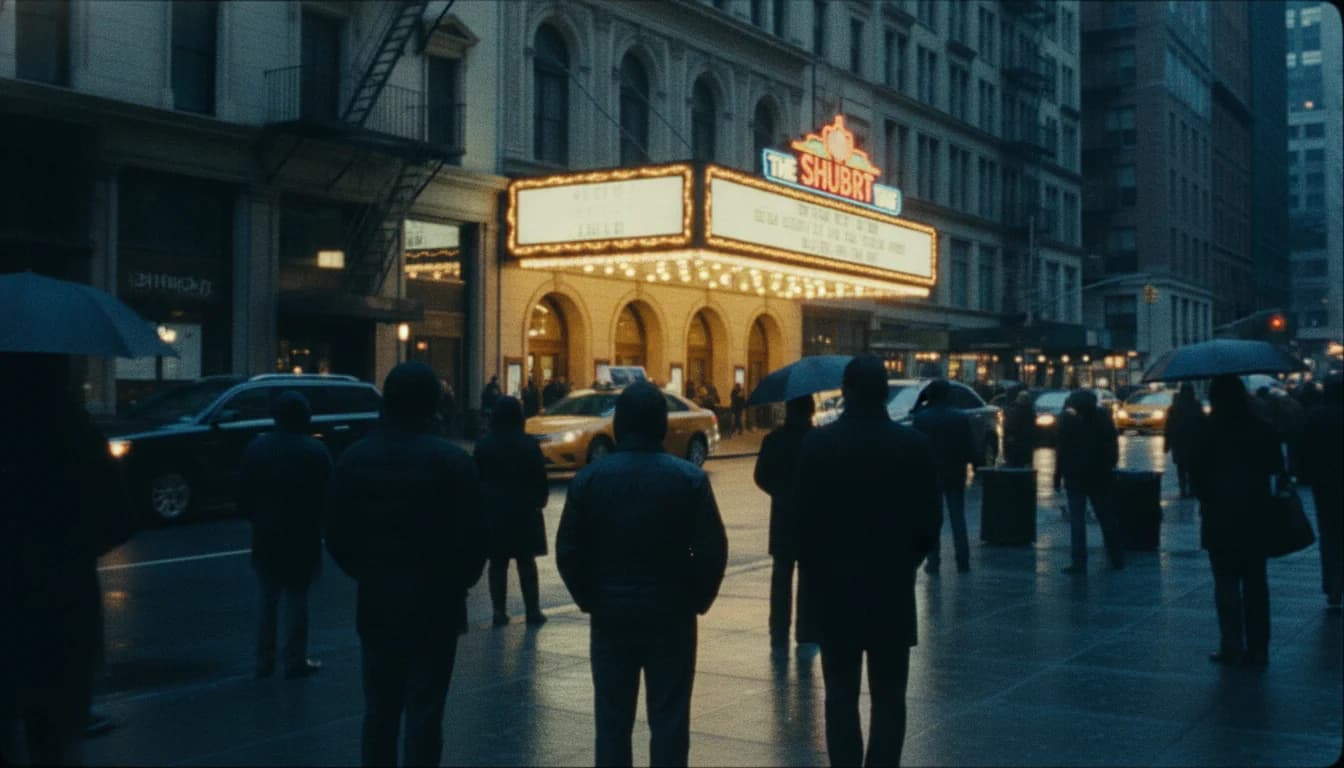
Manhattan Monday brings a data-driven update on Galileo Broadway musical developments, outlining the formal Broadway debut, key dates, and what the production signals for the industry. The show, rooted in the life of Galileo Galilei, was officially announced to move to Broadway at the Shubert Theatre this winter, with preview performances scheduled to begin on November 10, 2026 and opening night set for December 6, 2026. This move, announced by producers Amanda Lipitz, Henry Tisch, and Jordan Roth, places Galileo on one of Broadway’s most storied stages and signals a notable entry into a market that has seen heightened competition for audience attention and production budgets. The announcement emphasizes that Galileo will feature a collaboration among a prominent creative team and a cast led by Raúl Esparza, marking his first Broadway lead role in more than a decade, with Jeremy Kushnier and Joy Woods in supporting roles. The production’s development traces back to Berkeley Repertory Theatre, where Galileo had its world premiere before heading to Broadway. These decisions highlight a deliberate strategy to balance critical appeal with commercial viability amid a shifting Broadway landscape. (shubert.nyc)
The event matters for multiple stakeholders. For theater practitioners and industry observers, Galileo’s Broadway arrival offers a case study in how modern musical productions are structured—from creative leadership to casting, from development trajectories to on-stage technology. For audiences, the news signals a new high-profile entry with a sophisticated visual language and a narrative rooted in science and history. For investors and producers, the announcement underscores the ongoing dynamics around budget management and risk, with the producers themselves noting within the press statement that the Broadway business has become more expensive to stage, a factor shaping decisions about previews, casting, and production design. The production team’s framing of Galileo as a story about truth-versus-power suggests a resonance with contemporary cultural debates, potentially broadening its appeal beyond traditional musical theater audiences. (shubert.nyc)
In addition to the immediate Broadway context, broader industry coverage points to a rapidly evolving technology landscape in live theater. Projections, LED walls, and real-time video design have become hallmarks of contemporary Broadway productions, enabling ambitious storytelling while maintaining practical considerations around stage space and lighting. This dynamic is not unique to Galileo; it sits within a wider trend observed across recent shows where projection design and LED surfaces are used to deliver cinematic-scale visuals on stage. Analysts and journalists have highlighted that projection and LED technologies are increasingly central to narrative immersion on Broadway, even as productions navigate budgetary pressures and the logistical complexities of live performance. Galileo’s Broadway approach will likely be watched as a bellwether for how tech-enabled storytelling blends with traditional musical theater craft. (latimes.com)
Section What Happened
Announcement and Key Dates
Official Broadway move confirmed
On February 10, 2026, Galileo, the new musical inspired by the life of Galileo Galilei, was announced to premiere on Broadway at the Shubert Theatre. The press release identified Amanda Lipitz, Henry Tisch, and Jordan Roth as the producers and set the framework for a Broadway run beginning with previews on November 10, 2026, and an opening night on December 6, 2026. The formal announcement positioned Galileo as a flagship project for a season that aims to mix cultural significance with Broadway-scale production values. The press release also confirmed the Shubert Theatre as the production home, anchoring expectations for a high-visibility launch in New York City. (shubert.nyc)
Key dates for audiences and ticketing
The production press materials establish a precise calendar for the public and the industry: previews begin November 10, 2026 at the Shubert Theatre, with opening night scheduled for December 6, 2026. These dates are critical for prospective audiences, critics, and wholesale ticketing channels, as they shape early selling periods, press events, and potential award-season alignment. The calendar also informs industry stakeholders about the planning horizon for set design, casting, marketing campaigns, and casting announcements expected as the runway to opening night progresses. (shubert.nyc)
Creative team and principal cast
The Galileo Broadway musical is led by a distinguished creative team: a book by Danny Strong, original score by Zoe Sarnak and Michael Weiner, directed by Tony Award winner Michael Mayer, and choreography by David Neumann. In the principal cast, Raúl Esparza will star in the title role, returning to Broadway in a lead capacity after more than 13 years, joined by Jeremy Kushnier and Joy Woods in key supporting roles. This ensemble is positioned to deliver a blend of contemporary vocal-writing, historical storytelling, and physically dynamic staging, with the world-premiere lineage tracing back to Berkeley Repertory Theatre. Additional casting was noted as forthcoming at the time of the announcement. (shubert.nyc)
Development history and origins
Galileo’s development path continues to reflect a typical Broadway trajectory for a high-profile musical: initial development and world premiere at a renowned regional theater, followed by a transfer to a Broadway stage. The Shubert Organization press release confirms that Galileo had its world premiere at Berkeley Repertory Theatre before moving to Broadway, a pattern that aligns with industry expectations for a show of this scale and ambition. This origin story is relevant for industry watchers assessing the show’s creative maturity, production readiness, and potential reception across regional and national markets. (shubert.nyc)
Contextual quotes from the production team
In the press release, the producers offered a pointed reflection on Galileo’s significance and the broader risk-reward calculus of staging ambitious new work today: “The moment Galileo lifts his telescope to the sky and reshapes our understanding of the universe is one of history’s great turning points,” the statement notes. The same communication emphasizes that the production team recognizes the tension between truth and power as an evergreen narrative with contemporary relevance. Additionally, the producers acknowledge that the Broadway business has become “viciously expensive,” a candid reflection on the financial and logistical complexities that shape decisions around previews, marketing, and staging fidelity. These quotes underscore the show’s dual aim: deliver a compelling scientific-historical story while navigating the realities of modern Broadway economics. (shubert.nyc)
What happened next: production philosophy and audience expectations
A critical takeaway from the formal announcement is the emphasis on Galileo as a story about discovery, courage, and the defense of scientific truth under pressure. This framing, coupled with a star-led cast and a prominent director, suggests an intent to attract both traditional musical theater audiences and a broader cohort of science- and history-minded viewers. The announcement positions Galileo as a culturally resonant work whose reception will be measured not only in box office numbers but also in its ability to stimulate discussion about science, religion, and the historical arc of scientific progress. (shubert.nyc)
Why It Matters
Market implications for Broadway in 2026
Galileo’s Broadway debut comes at a moment when producers and theater professionals are closely watching market dynamics for high-profile, tech-enabled musicals. The press materials acknowledge a challenging environment for new Broadway productions, highlighting that the business has become more expensive. This admission, coupled with the escalation of production technologies and the need to attract diverse audiences, places Galileo at the center of discussions about cost management, artistic ambition, and strategic marketing. Observers will be watching how Galileo balances creative audacity with financial discipline, and whether its performance on Broadway supports a broader pattern of sustainable investment in big-budget, tech-forward theater. (shubert.nyc)
Technology’s growing role in narrative on stage
Across Broadway, producers and designers increasingly rely on projection design, LED walls, and real-time video to tell complex stories with a cinematic sensibility. Industry coverage and case studies have documented a steady shift toward integrated media design as a core storytelling tool rather than a supplementary element. This trend has been evident in recent productions that blend LED surfaces with projection mapping to create immersive environments, enabling more dynamic scene changes and more expansive storytelling canvases within the constraints of a live stage. Galileo’s Broadway transfer places it within this broader technological shift, and its success could influence future Broadway planning around design budgets, vendor partnerships, and on-stage storytelling techniques. (latimes.com)
Cast, creative leadership, and audience resonance
Raúl Esparza’s involvement in the title role is a notable factor in audience expectations, given his prior Broadway work and recognition within the theater community. His return to a lead Broadway role after more than a decade signals a potential draw for critics and ticket buyers who follow performer trajectories closely. The combination of a renowned director, a contemporary score, and a historically grounded figure like Galileo Galilei creates a narrative package with both artistic pedigree and mass-access appeal. The broader cultural moment—where audiences are keenly attentive to science and evidence-informed storytelling—could amplify Galileo’s resonance beyond traditional musical audiences. (shubert.nyc)
Industry perspectives on development vs. Broadway risk
From an industry perspective, Galileo’s development path—Berkeley Repertory Theatre to Broadway—illustrates a model of nurturing a work through a robust regional platform before Broadway convergence. The approach can serve as a template for similar projects seeking to balance artistic ambition with budgetary realities. Yet, observers equally note the financial pressures highlighted by the producers; the balance between creative aspiration and financial viability remains a pivotal axis around which the show’s long-term success will turn. As the production enters previews later in 2026, industry watchers will be evaluating not only the artistic response but also the efficiency and effectiveness of its production design, talent procurement, and marketing strategy. (shubert.nyc)
Contextual comparisons with other tech-forward Broadway productions
A broader context for Galileo involves comparing its approach to other tech-forward shows that have integrated projection, LED walls, and sophisticated media design to convey story and mood. Notable case studies in recent years have demonstrated how projection design can elevate a narrative, sometimes in tandem with live performance, to create immersive environments that extend beyond traditional stage boundaries. Such examples underscore the industry’s evolving expectations for new Broadway musicals: audiences expect high production value and a cohesive integration of technology with storytelling. This context is important for understanding Galileo’s potential reception and for anticipating the kinds of design and production choices the show may pursue. (avnetwork.com)
What's Next
Preview and opening timeline
Looking ahead from the August 2026 moment, the Galileo Broadway musical is scheduled to begin preview performances on November 10, 2026, at the Shubert Theatre in New York, with opening night planned for December 6, 2026. This timeline provides a structured window for finalizing casting, refining production design, and executing marketing outreach designed to convert interest into advance sales. As previews approach, expect further casting announcements and potentially updates to design and technical elements as the production team aligns with stage readiness milestones. The producers’ communications frame this period as a critical phase for calibrating the balance between storytelling ambition and audience accessibility. (shubert.nyc)
Next steps for audiences and press
In the months leading to November 2026, audiences should monitor official channels for ticket availability, additional casting confirmations, and press previews. The official Galileo site and Shubert Theatre communications are primary sources for authoritative information, including accessibility accommodations, performance schedules, and any updates to the opening plan. Press coverage and industry analysis in trades and mainstream outlets will likely accompany previews, with early reviews and audience reactions shaping the momentum of the Broadway run. (shubert.nyc)
What to watch for in development and production
As Galileo enters its preview phase, several factors will be critical to monitor: the evolution of the stage design and media integration, the pace and quality of the cast’s performances, and the efficiency of production logistics in a high-profile Broadway environment. Projection design, LED wall management, and real-time video elements will likely be scrutinized for both artistic impact and operational reliability during previews. Observers will also look for early indicators of how the production handles the balance between scientific storytelling and Broadway-genre expectations, including pacing, song structure, and dramatic clarity in the context of a historically grounded figure. The industry literature suggests that these elements will be decisive in determining audience reception and long-term sustainability of the production. (latimes.com)
The broader cultural and educational potential
Beyond box office performance, Galileo’s Broadway musical has the potential to function as a cultural touchstone that engages audiences with scientific history through a high-profile artistic medium. With a narrative centered on Galileo Galilei and the tension between discovery and institutional authority, the show could contribute to broader public conversations about the intersection of science, faith, and progress. The collaboration between a renowned creative team and leading performers may also inspire educational pathways and outreach initiatives aligned with science communication and the arts. While commercial outcomes remain a core measure, the show’s potential for educational impact remains an aspect to watch as the Broadway run unfolds. (shubert.nyc)
Closing
The Galileo Broadway musical represents a significant entry in Broadway’s contemporary landscape—a high-profile transfer that blends historical storytelling with modern production technology and a star-led cast. As previews approach in November and opening night looms in December 2026, Manhattan Monday will continue to monitor ticket trends, casting updates, design innovations, and critical reception to provide readers with timely, data-informed insights. For ongoing updates, follow official channels and trusted industry outlets that are tracking Galileo’s progress from the Shubert Theatre to the footlights of Broadway. (shubert.nyc)