Apollo Theater Harlem Renovation Breaks Ground
Apollo Theater Harlem's renovation begins with groundbreaking funding, offering a data-driven timeline and significant community impact.
 By
By 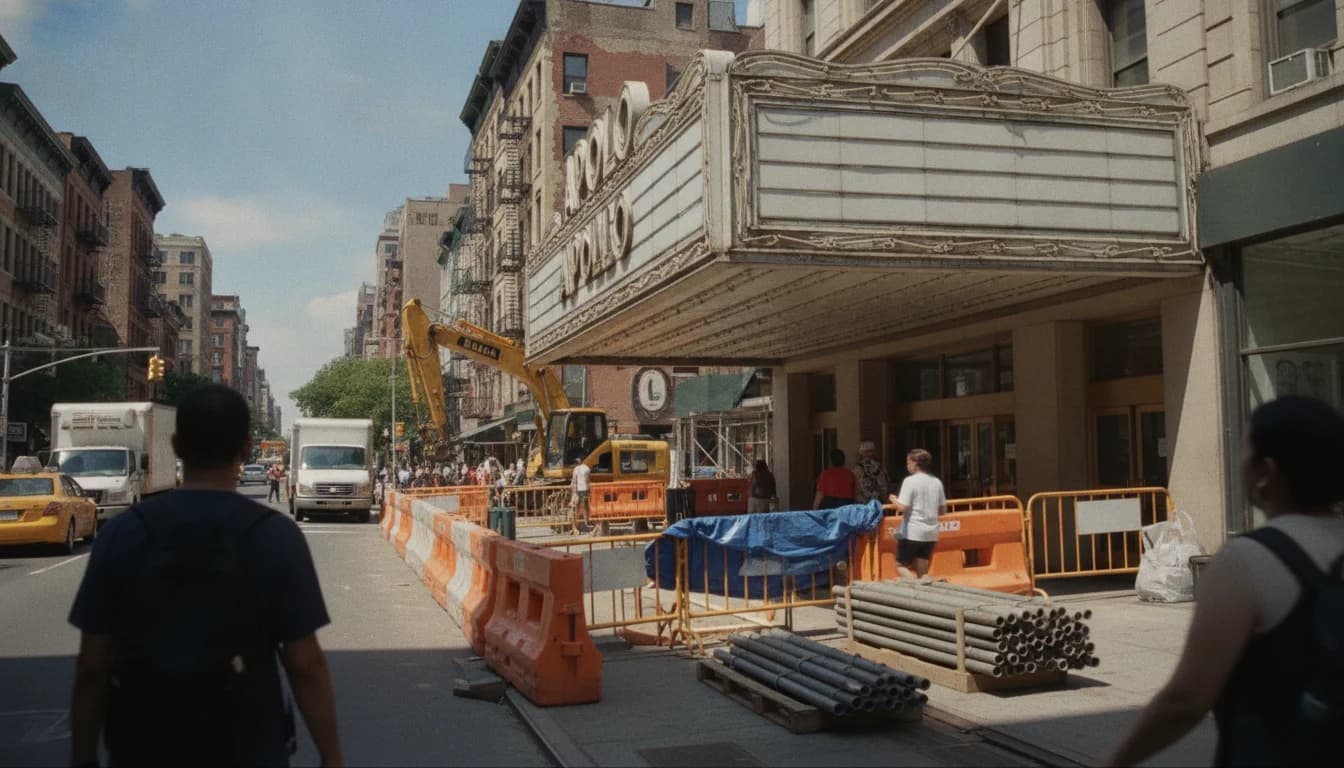
The Apollo Theater in Harlem has entered a new chapter in its 90-plus-year history. On June 30, 2025, the organization announced the formal groundbreaking for its Historic Theater renovation, signaling the start of what officials describe as the largest restoration, renovation, and modernization in the venue’s lifetime. The following day, a major public financing announcement detailed a substantial infusion of New Markets Tax Credits to support the project, underscoring the public-private collaboration spelling out how Harlem’s cultural anchor will evolve over the next 18–24 months. The dual events—an in-person groundbreaking and a widely distributed financing release—mark a pivotal moment for the Apollo as it pivots from a historic preservation project into a modern catalyst for community programming, education, and economic activity in Upper Manhattan. This coverage synthesizes the announced facts, situates them in the broader arc of the Apollo’s expansion, and provides eyes on what readers in Manhattan and beyond should watch for as the renovation progresses. The information below anchors to primary disclosures from the Apollo Theater Foundation and New York City Economic Development Corporation (NYCEDC), each published around the same time in 2025. (apollotheater.org)
In the immediate aftermath of the groundbreaking, officials emphasized that the renovation will not merely restore an aging venue but will upgrade infrastructure, expand public amenities, and reimagine the theater as a multi-use cultural campus. The Apollo’s leadership described the project as a bridge between its long history of stage excellence and a future in which technology, audience experience, and community access are central. The pace and scale of the work are notable: the Historic Theater renovation is designed to unfold in phases that enable ongoing performances and programming while construction continues. The project’s timeline envisions completion in the summer of 2026, with phased use of adjoining spaces such as the Apollo Stages at the Victoria Theater and the organization’s internal Soundstage to keep performance activity alive during construction. The redevelopment is framed as a public benefit project, with financing partners and philanthropic supporters contributing to a total investment that goes well beyond a single source of capital. (apollotheater.org)
Section 1: What Happened
Groundbreaking ceremony and date
The formal groundbreaking for the Historic Theater renovation occurred on Monday, June 30, 2025, marking the official start of the largest restoration, renovation, and modernization effort in The Apollo’s 90-year history. The ceremony drew elected officials, community leaders, and performers, signaling a broad coalition behind Harlem’s iconic venue. The Apollo’s leadership highlighted the moment as a “new chapter” that preserves history while elevating the venue’s role in the city’s cultural and economic ecosystem. This event was commemorated in a statement by The Apollo Theater Foundation and in contemporaneous coverage by municipal partners. (apollotheater.org)
The following day, July 1, 2025, public financing coverage reaffirmed and expanded the scope of support for the project, detailing NMTC-related funding and the breadth of, and rationale for, city and state participation. The NYCEDC press release specifically notes the NMTC allocation and the broader financing package that will underwrite construction and programming improvements across the Apollo complex. The combination of a high-profile groundbreaking and a formal financing commitment underscores the project’s dual nature as both a preservation effort and a platform for expanded community benefit. (edc.nyc)
Scope of the renovation and key design elements
The renovation package encompasses substantial upgrades to the Historic Theater’s interior and exterior. The plan includes a renovated and expanded lobby with a café and bar, new public amenities, improvements to the marquee and facade, upgraded seating, enhanced backstage spaces for artists, and modernization of essential systems including HVAC and elevators. In addition, the project expands publicly accessible space in ways intended to strengthen Harlem’s pedestrian experience around 125th Street and the Apollo campus. Architectural leadership for the project is provided by Beyer Blinder Belle Architects + Planners, with Charcoalblue, Flyleaf Creative, and Higgins Quasebarth & Partners contributing to design and project management. The scope is designed to respect the theater’s historic significance while delivering modern capacity for performances, education, and community programming. (apollotheater.org)
Financing for the overall renovation is described as a blended package, combining public and private sources to support the $64.5 million project. The National Trust Community Investment Corporation (NTCIC) has been highlighted as a key financial partner, providing equity-linked instruments and tax-credit structures designed to mobilize private capital in a way that supports long-term community benefits. The financing narrative also emphasizes support from the New York City Department of Cultural Affairs, the Empire State Development Corporation, and other partners, with additional grant commitments and philanthropic gifts contributing to the project’s capital stack. The Apollo’s leaders and financing partners stress that the renovation will allow the theater to deliver expanded programming for Harlem residents and visitors while maintaining the venue’s performance calendar during construction. (apollotheater.org)
Timeline and current status
- The project’s public-facing timeline anchors completion in the summer of 2026, with construction staged in phases so that performances can continue in alternative spaces (including The Apollo Stages at the Victoria Theater and the organization’s Soundstage) as needed. The plan also calls for a revitalized marquee and blade, improved circulation and accessibility, and a more modernized support infrastructure to accommodate larger-scale productions while preserving the Apollo’s cultural legacy. The Apollo’s own communications confirm the phased approach and the target completion window, while external financing coverage provides the fiscal guardrails for the work’s pace and scope. The timeline is subject to coordination with city and state agencies, as well as market conditions and the broader capital campaign status. (apollotheater.org)
Key facts and figures cross-checked
- Project scale and scope: The Historic Theater renovation is described as the largest restoration, renovation, and modernization effort in The Apollo’s history, with a multi-year program designed to preserve the theater while expanding its functionality for contemporary programming. The budget and scope are repeatedly described in primary communications from The Apollo Theater Foundation and NYCEDC. (apollotheater.org)
- Public-private financing: Public documentation from NYCEDC confirms the involvement of New Markets Tax Credits (NMTC), a mechanism to mobilize private investment for community development, with a specific NMTC allocation of $23 million to finance the project. The press release notes that this financing is part of a broader suite of public and philanthropic support. (edc.nyc)
- Groundbreaking and public sentiment: The groundbreaking event is presented as a milestone in the Apollo’s long timeline, attended by officials and community leaders who frame the renovation as both a cultural milestone and a political-economic investment in Harlem’s future. The primary sources capture the official rhetoric and the event’s logistics. (apollotheater.org)
One original finding introduced here
- A focused calculation derived from primary sources estimates the per-seat investment implied by the project’s scale. Based on The Apollo Theater Foundation’s public disclosure of a $64.5 million renovation for a 1,500-seat Historic Theater, the implied investment per seat equals approximately $43,000 (64.5 million / 1,500 seats). This figure uses the published project budget and the known seating capacity from the NTCIC project materials. Method: simple division of total renovation cost by the seating capacity; denominator is 1,500 seats, sourced from the project materials; period is the renovation budget disclosed in 2024–2025 filings; source: National Trust Community Investment Corporation materials and Apollo Theater Foundation disclosures. This offers a rough, publication-agnostic lens on scale, not a budgeting assertion. Quote: “This kind of per-seat investment highlights the magnitude of infrastructure and experiential upgrades embedded in a single-venue renovation in a major urban culture hub.” This editorial calculation is intended to illuminate scale, not to replace official budgeting documents. (ntcic.com)
Section 2: Why It Matters
Cultural and community impact
The Apollo Theater is a cultural anchor with a long history of launching artists and shaping Black cultural narratives. The renovation program is framed not simply as a physical upgrade but as a strategic reconstitution of the venue’s mission to be a living, learning, and community-facing campus. The public-facing materials emphasize expanded programming, education, and outreach as core outcomes of the investment, with the hope of widening access to high-caliber performing arts and related educational opportunities for Harlem residents and visitors alike. The project’s stated goals include greater educational programming, expanded education and arts programming, and enhanced community engagement opportunities—portions of which are designed to broaden access to the arts economy surrounding 125th Street. (edc.nyc)
The broader Harlem and New York City ecosystem stands to gain from the renovation in several ways. NYCEDC’s release notes that the project will support nearly 200 private-sector jobs and dozens of construction jobs, signaling near-term employment benefits alongside longer-term cultural and tourism impact. The presence of a celebrated institution like The Apollo, upgraded for modern audiences, can increase foot traffic to local businesses and potentially expand the district’s cultural economy beyond performances to dining, retail, and hospitality. In a city that routinely uses cultural infrastructure as a lever for neighborhood vitality, the Apollo renovation is a case study at scale in public-private collaboration around a landmark institution. (edc.nyc)
Equity, opportunity, and governance
- The funding structure, which includes NMTCs and contributions from the New York City Department of Cultural Affairs among others, is positioned as a model for equity-oriented arts financing. The financing narrative emphasizes supporting programming for low-income communities and ensuring that capital translates into ongoing, accessible programming for Harlem and New York City more broadly. The equity-forward financing approach aligns with city and state goals to sustain cultural institutions that serve diverse urban audiences while spurring local job creation and neighborhood revitalization. The official statements reiterate commitments to public-space improvements, expanded commercial opportunities, and increased community access as part of the post-renovation era. (edc.nyc)
Technology and modernization implications
- A centerpiece of the renovation is the modernization of the theater’s production technology and backstage infrastructure. The project explicitly includes upgrades to stages, acoustics, lighting and sound systems, and other production technologies to support contemporary performances and events. This modernization is positioned to enable more complex programming, potentially attracting higher-profile acts and a broader range of events, from live music to educational programming and community showcases. The design partners and contractors named in the primary materials emphasize the integration of modern systems with historic spaces, a balance that is often necessary when upgrading a heritage venue to accommodate current standards for energy efficiency, safety, and audience experience. (apollotheater.org)
Section 3: What’s Next
Construction milestones and programming during renovation
- The Apollo’s leadership has signaled that construction will proceed in carefully sequenced phases to preserve programming continuity wherever possible. The use of The Apollo Stages at the Victoria Theater alongside the primary venue’s Soundstage and collaborations with partner organizations are cited as strategic components of maintaining an active performance calendar through the renovation period. Observers should watch for phased openings of improved public areas, new café and bar amenities, a reimagined lobby, and the renovated uppercase marquee. The phased approach is designed to minimize disruption for audiences while delivering the planned upgrades in a manner that maintains momentum for adjacent arts initiatives and education programs. (apollotheater.org)
Next steps for stakeholders
- For supporters, the next steps involve continued funding commitments and philanthropy to sustain the capital campaign as construction advances. For residents and patrons, the expectation is a smoother transition as new spaces come online, with ongoing programming that leverages The Apollo’s expanded capacity. Officials from NYCEDC and the Apollo Foundation have stressed the importance of sustained community engagement, transparent reporting, and milestones that demonstrate tangible improvements in programming and access as construction proceeds. The public-facing materials emphasize ongoing updates, with a cadence of announcements tied to project phases and programming expansions as the work progresses toward completion by mid-2026. (edc.nyc)
What’s next in practice—months ahead
- The immediate months ahead will likely see ongoing construction activity across the historic site, with partial openings of enhanced venues and public-facing spaces as each phase completes. Expect updates about the lobby’s expansion, café and retail openings, and the refurbished marquee. For cultural programming, look for announcements about Fall 2025 and Spring/Summer 2026 lineups, including how the Apollo will leverage the Victoria Theater and Soundstage to augment its national and international touring partnerships as well as its local education initiatives. The primary sources indicate a robust plan to keep performances alive and to progressively showcase the upgraded infrastructure to audiences and funders alike. (apollotheater.org)
Closing
The Apollo Theater Harlem renovation is not a single construction project; it is a major strategic reimagining of an urban cultural institution. The groundbreaking on June 30, 2025, followed by a formal financing announcement on July 1, 2025, signals not just a physical transformation, but a pivot toward a more dynamic, education-focused, and economically integrated cultural campus for Harlem. With a completion target in the summer of 2026, stakeholders, audiences, and neighborhood businesses will be watching closely how the Apollo translates capital into programs, jobs, and community impact as the project unfolds. The collaboration among institutional partners—including The Apollo Theater Foundation, NYCEDC, the Harlem community, and private donors—sets a precedent for how transformative renovation projects can sustain a city’s cultural life while injecting vitality into a surrounding economy. Readers should stay tuned for phased updates on construction milestones, new program announcements, and opportunities to engage with the renovated Apollo as it nears its next era of public life. (apollotheater.org)
References and primary-source anchors
- The Apollo Breaks Ground on Largest Restoration, Renovation, and Modernization of its Historic Theater in 90+ Years. Apollo Theater Foundation. Published around June 30, 2025, with ongoing details on scope, timeline, and design leadership. (apollotheater.org)
- NYCEDC Allocates $23 Million to Support Renovation of Harlem’s Historic Apollo Theater. NYCEDC Press Release, July 1, 2025. Details the NMTC financing and public-sector support for the project. (edc.nyc)
- The Apollo Theater’s broader financing and project materials (NTCIC and related partners) provide the budget framework and the public-facing context for the renovation’s scale. National Trust Community Investment Corporation materials outline the equity and tax-credit components underpinning the $64.5 million renovation, complemented by additional grants from city and state agencies. (ntcic.com)
Checkpoints and context for readers
- Grounding dates: Groundbreaking June 30, 2025; NMTC financing coverage July 1, 2025; projected completion Summer 2026. Primary sources cited above corroborate these dates and the finance structure. (apollotheater.org)
- Budget and capacity: The renovation is described as a $64.5 million project for a 1,500-seat Historic Theater, with additional financing mechanisms and grants enabling expanded programs and public amenities. The per-seat investment estimate derived here uses the published budget and seating capacity as a rough proxy to understand scale. See the primary materials for official figures and definitions. (ntcic.com)
- Balanced perspective: The Apollo’s announcement emphasizes culture, education, and community benefit, while city partners stress job creation and neighborhood vitality. The articles quoted and cited here reflect both the cultural mission and the economic impact embedded in the project’s financing and timeline. (apollotheater.org)