351 Powers Avenue ELURP Approval Granted
An in-depth, data-driven report on 351 Powers Avenue ELURP approval, exploring its significant implications for affordable housing in the Bronx.
 By
By 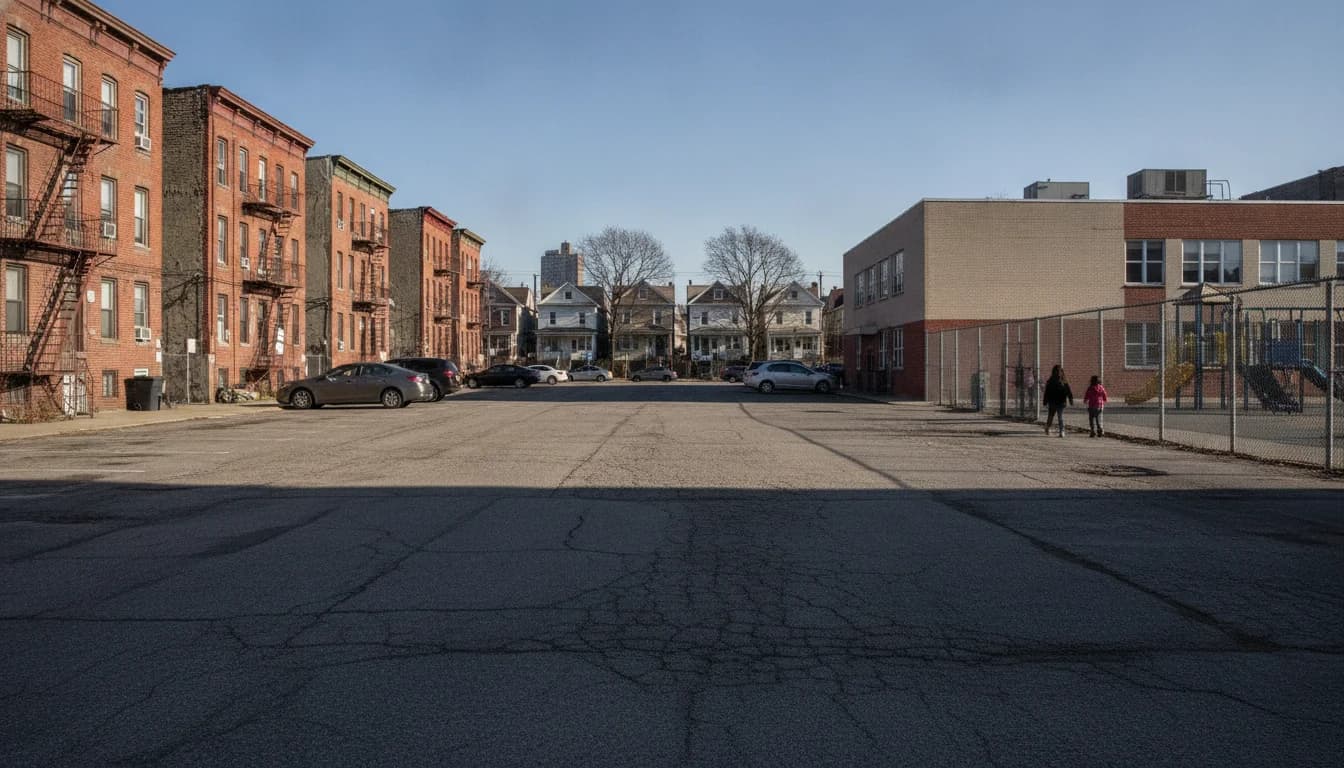
In a milestone for New York City’s housing strategy, the City Council approved the City’s first Expedited Land Use Review Procedure (ELURP) application for 351 Powers Avenue, a City-owned parcel in the Bronx, on May 20, 2026. This landmark decision was designed to accelerate the disposition and development of publicly owned land slated for affordable housing, a priority the administration has pursued through voter-approved reforms intended to shorten timelines and reduce bureaucratic friction. On May 20, 2026, the City Council approved the first ELURP application for 351 Powers Avenue, reducing the pre-development review from roughly seven months to 90 days, according to HPD's release. This dramatic timeline compression is central to the narrative of ELURP’s potential to deliver housing more quickly, while still maintaining essential public review. (nyc.gov)
The 351 Powers Avenue project sits on a City-owned parcel in Mott Haven, Bronx, currently characterized as an undeveloped lot used as a parking area for a local school. The site will host 84 affordable homes, including a set-aside of 30 units for formerly homeless residents, along with a ground-floor workforce development training center, a theater, and indoor and outdoor recreational amenities for residents. The configuration and program mix are designed to align with the city’s broader affordable housing and neighborhood investment goals, while leveraging ELURP’s streamlined review pathway to shorten the typical development timeline. The details and official approvals are documented in the City’s ELURP materials and related council filings. HPD press release: City Council Approves City’s First Ever Expedited Land Use (ELURP) Application (nyc.gov) NYC Council Legistar file LU 0064-2026 (legistar.council.nyc.gov)
What happened, in precise terms, is that 351 Powers Avenue became the first site to complete a full ELURP disposition process, culminating in a formal approval that enables the selected development team to move toward finalizing the sale and beginning construction, subject to remaining regulatory steps. The ELURP framework, a voter-approved mechanism designed to accelerate the public review of select affordable housing projects on city-owned land, accelerates reviews by consolidating engagement and shortening the review calendar. The City’s own materials emphasize a 90-day process window under ELURP, a substantial reduction relative to the standard ULURP timeline. The May 20, 2026 HPD release underscores this efficiency gain and frames 351 Powers Avenue as a landmark test case for the new process. For readers seeking official filings, the Legistar entry LU 0064-2026 provides the formal disposition path and associated subcommittee actions. (nyc.gov)
Section 1: What Happened
Project Snapshot
Site and Program
351 Powers Avenue is a City-owned parcel located in Mott Haven, Bronx. The project plan contemplates 84 affordable housing units, including a targeted component of 30 units set aside for formerly homeless residents. In addition to housing, the development includes a ground-floor workforce development training center, a theater, and both indoor and outdoor recreational amenities for residents, all designed to foster a mixed-use, community-oriented environment. These programmatic choices reflect a broader policy objective to couple affordable housing with supportive services and community infrastructure. The official project description and disposition details are captured in HPD outreach materials and associated filings. HPD press release (nyc.gov)
Timeline and Process
The ELURP pathway was designed to expedite certain types of affordable housing development on City-owned land by compressing the typical public review cycle. The City’s description highlights a 90-day review window for ELURP, contrasted with a traditional ULURP timeline of several months. On May 20, 2026, the City Council’s action approved the 351 Powers Avenue ELURP disposition, marking the first full ELURP approval in the City’s history. This milestone follows in February 2026, when 351 Powers Avenue entered the ELURP process as a city-initiated project, signaling the formal start of the new expedited track. The primary public records detailing the approval and the associated legal filings can be found in the HPD press release and the Council’s Legistar entry. (nyc.gov)
Key Facts and Figures
- 84 affordable housing units are planned for 351 Powers Avenue, with 30 units reserved for formerly homeless residents. This configuration aligns with the city’s priority to expand deeply affordable housing options in high-need neighborhoods. The project’s unit mix and its role in the Mott Haven context are described in the official release. HPD press release (nyc.gov)
- The ELURP process reduced the pre-development review from roughly seven months to 90 days, a reduction that the City frames as a core benefit of the expedited pathway. This is cited in HPD’s May 20, 2026 release. HPD press release (nyc.gov)
- The approved disposition is for a City-owned site in the Bronx (Mott Haven) identified in the council docket LU 0064-2026, which includes the associated subcommittee and hearing records. Legistar LU 0064-2026 (legistar.council.nyc.gov)
The City’s ELURP framework is a product of voter-approved reforms aimed at speeding the disposal and development of city-owned land for affordable housing. This first test case—351 Powers Avenue—has quickly become a focal point for policymakers and developers evaluating ELURP’s potential to accelerate project delivery while preserving essential public review and community input. The ELURP concept and its practical implications have drawn coverage from multiple outlets, including coverage from City Limits and industry press, which help illustrate the broader policy context around ELURP and its practical manifestations in the Bronx. For readers seeking broader context on ELURP’s aims and mechanics, see external analyses such as City Limits’ reporting on ELURP’s kick-off and CBCNY’s examinations of the concept’s potential impact. (citylimits.org)
Section 2: Why It Matters
Accelerating Affordable Housing Delivery
The most immediate implication of the 351 Powers Avenue ELURP approval is the acceleration of housing delivery through a streamlined public review. The City’s own numbers show a 90-day ELURP review window, compared with the longer ULURP period, which typically stretches to several months. The practical effect is a shortened pre-development phase that accelerates the pipeline of affordable housing across the city. This case adds a data point to the broader argument that well-designed expedited procedures can shorten timelines without compromising critical review steps. The City’s May 20, 2026 release frames the 90-day SLA as a meaningful efficiency delta, and this delta is what proponents argue can unlock more units faster in high-need areas like Mott Haven. (nyc.gov)
A nuanced reading, however, requires attention to the potential trade-offs that accompany any expedited review. While ELURP emphasizes speed, critics have cautioned about maintaining robust community engagement and ensuring that the selection of development partners remains open and competitive. The public record around ELURP’s rollout includes diverse perspectives, with observers noting both the value of faster timelines and the need to preserve inclusive, deliberative processes. This balancing act is reflected in broader housing-policy discussions, including analyses from local think tanks and industry coverage that track ELURP’s early applications and their reception among community boards and borough presidents. (nyc.gov)
Equity, Community Input, and Public Review
ELURP was designed with equity in mind, aiming to deliver affordable housing more quickly while maintaining meaningful community input. The 351 Powers Avenue project explicitly pairs 84 units with a 30-unit segment for formerly homeless residents and includes a ground-floor workforce center and public amenities. These elements are intended to maximize neighborhood benefits beyond mere housing stock, incorporating workforce development and cultural programming into the project’s fabric. City officials and advocates have highlighted this integrated approach as a model for the next wave of city-initiated ELURP projects. The official statements about community benefits and program components are documented in the HPD release and related filings, which are accessible to the public for review and comment. (nyc.gov)
On the other side of the discourse, critics emphasize that expedited processes can compress the time available for community boards and local residents to weigh in on design, traffic, and neighborhood impacts. The current debate mirrors broader conversations about how best to balance speed with deliberation in urban redevelopment, particularly in neighborhoods with long histories of disinvestment. Observers point to the need for ongoing transparency, ongoing reporting on ELURP projects, and robust post-approval oversight to ensure that the promised benefits are realized without unintended side effects. These themes are echoed in independent analyses and industry coverage that monitor early ELURP cases and assess their impact on neighborhoods like Mott Haven. (citylimits.org)
Policy Context and Legal Framework
The ELURP framework was created to accelerate the disposition of city-owned land for affordable housing, building on voter-approved changes to the land-use review process. Key specifics cited in the public record include the concept of concurrent reviews and a streamlined Council timeline, as well as the potential for faster project delivery in designated districts. The Legistar filing LU 0064-2026 offers a formal articulation of the disposition, including the sale to a developer selected by HPD and the associated approvals. This policy backdrop helps readers understand why 351 Powers Avenue is a milestone project, not merely a single site approval. For readers seeking the statutory and procedural scaffolding behind ELURP, the primary documents provide the official basis for the accelerated process. Legistar LU 0064-2026 (legistar.council.nyc.gov)
The broader policy context around ELURP is also discussed in policy analyses and trade press, which describe ELURP as a response to the city’s housing imperative and to voter-approved public oversight reforms. For example, sector-wide reviews and housing-policy commentary highlight how the expedited approach could reshape project timelines, influence developer competition, and alter the sequencing of community consultation. These perspectives help readers assess the potential scalability of ELURP beyond the Bronx and into other parts of the city. (citylimits.org)
Section 3: What’s Next
Next Steps for 351 Powers Avenue
With the ELURP approval in place, the focus shifts to implementing the project up to construction and occupancy. The approved disposition sets the stage for the selected development team—Lemle & Wolff Companies, HELP Development Corp., and True Development New York, LLC—to advance to the formal sale of the site and finalize project design, financing, and construction sequencing under the ELURP framework. HPD’s materials and the Legistar docket lay out the steps following council approval, including the required regulatory clearances, the construction plan, and the timeline to delivering 84 affordable homes. The RFP and procurement steps connected to this site—such as the initial design and development process—are documented in HPD’s own project pages, which provide a continuous view into the project’s evolution. HPD RFP and Developer Selection (nyc.gov) 351 Powers Avenue RFP Process (nyc.gov)
Implications for ELURP Rollout Citywide
The 351 Powers Avenue case is widely watched as a potential template for ELURP rollout across the city’s 12 eligible community districts and beyond. Observers will be evaluating not only the speed gains but also the quality and inclusivity of the community engagement embedded in the expedited path. If the 90-day review proves to be a sustainable cadence across multiple projects, the city’s housing pipeline could accelerate meaningfully—particularly for deeply affordable housing that requires complex financing and service integration. Analysts and policy researchers are tracking early ELURP cases, comparing timelines and outcomes to historic ULURP projects, and assessing whether this expedited approach can deliver on promised benefits while maintaining robust public review standards. These early indicators will help determine ELURP’s scalability and any necessary adjustments to guidelines, oversight, and accountability measures. (citylimits.org)
Monitoring and Accountability
A critical question for ELURP’s success is how the city will monitor and report on outcomes. Stakeholders are expected to track metrics such as time-to-approval, the number of units delivered, occupancy outcomes, and the integration of community benefits into project designs. Public-facing dashboards, quarterly reporting, and periodic audits could become standard features of ELURP-enabled projects, creating a reproducible template for future applications. The City’s official materials and council filings provide the governance framework that underpins these accountability mechanisms, while independent observers may propose enhancements based on early results from 351 Powers Avenue and similar initiatives. As this nascent program unfolds, a continuous dialogue among agencies, developers, residents, and community boards will be essential to ensure that speed does not come at the expense of equity, transparency, and long-term neighborhood health. (nyc.gov)
Closing
The approval of 351 Powers Avenue’s ELURP disposition signals a watershed moment for New York City’s housing policy—an instance where a voter-approved reform translates quickly into tangible development outcomes on the ground. As the Bronx moves from approval to construction, observers will be watching how ELURP’s underlying mechanics—public input, financial feasibility, and project quality—hold up under accelerated timelines. The city’s ongoing reporting and the continued publication of primary documents will be essential for journalists, policymakers, and residents aiming to understand how this first ELURP project performs and what it might portend for future city‑initiated affordable housing initiatives. For readers seeking official records and updates, the HPD release and the City Council’s Legistar filing remain the authoritative starting points, with ongoing developments anticipated as developers advance to construction and occupancy. The 351 Powers Avenue case is not just a single project; it is a signal about how the city intends to deliver housing more rapidly while maintaining the public processes that safeguard community interests. Readers can stay informed through HPD’s updates and the City Council’s docket notices as the project progresses toward completion. (nyc.gov)