HPD Unveils Orion Development with Nearly 1,000 Homes
The New York City Department of Housing Preservation and Development announced The Orion, a mixed-use project in Hunter’s Point South, set to provide…
 By
By 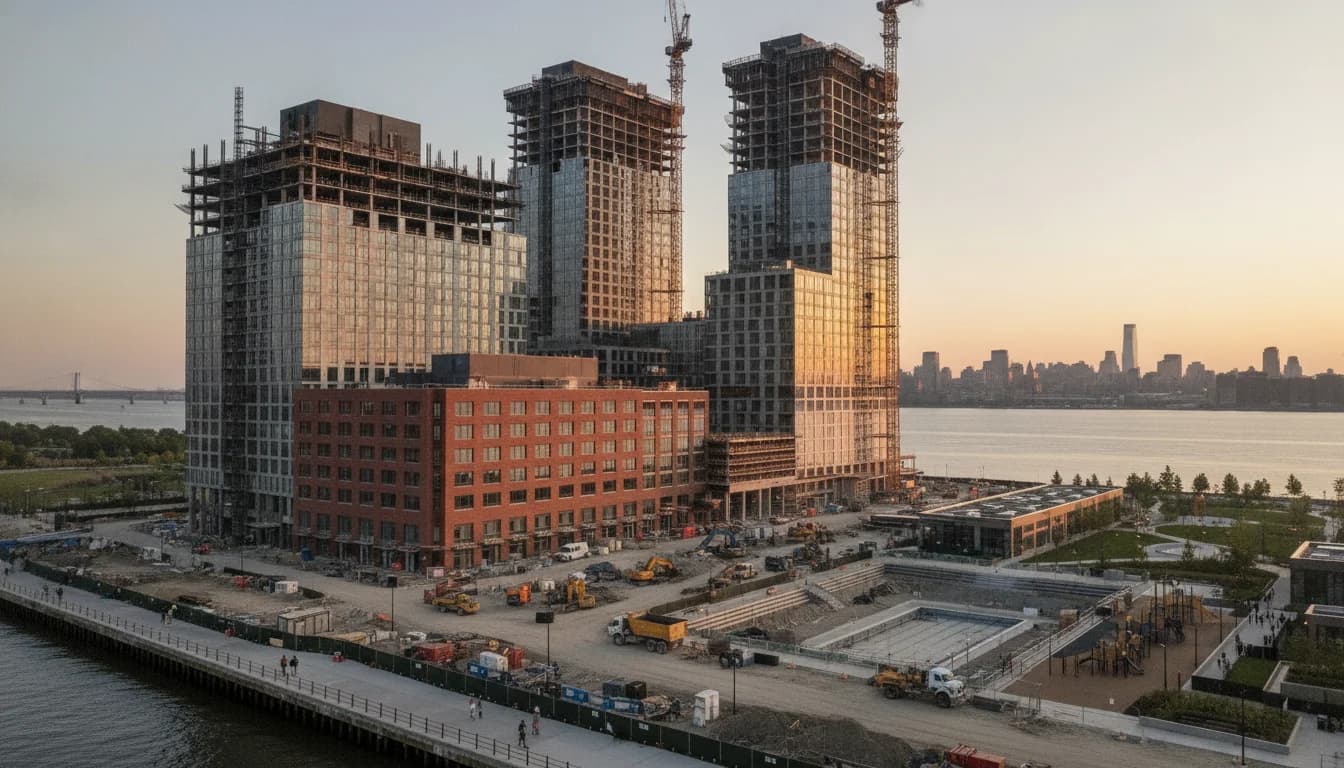
In a move that positions New York City’s ongoing housing push at the center of Queens’ waterfront redevelopment, the New York City Department of Housing Preservation and Development (HPD) on July 29, 2026 announced The Orion, a three-building mixed-use project planned for Hunter’s Point South in Long Island City. The Orion is expected to deliver nearly 1,000 homes across Parcel E, with a substantial portion reserved as affordable housing and a suite of community amenities designed to support families in a high-cost neighborhood. The announcement comes at a moment of intensified focus on near-term housing production in one of Queens’ most visible redevelopment corridors, where transit access, waterfront exposure, and a dense urban footprint shape both opportunity and caution for residents and policymakers. This report draws directly from HPD’s official release and independent coverage to provide a data-driven snapshot of what changes The Orion may bring to the area and to the city’s broader housing strategy. Possible reader search prompts include: HPD Orion July 2026, The Orion Queens development near 1,000 homes, Hunter’s Point South Parcel E Orion. According to HPD’s July 29, 2026 press release, The Orion will deliver approximately 980 new apartments across three buildings on Hunter’s Point South Parcel E, with about 658 income-restricted units. (nyc.gov)
What Happened
Announcement Details On July 29, 2026, HPD Commissioner Dina Levy publicly announced that a long-vacant site in Hunter’s Point South, Queens will be transformed into The Orion, a mixed-use development designed to deliver close to 1,000 homes across three buildings. HPD’s release emphasizes that the project is not only about new residences but also about building a neighborhood with childcare, workforce development, and retail components to support a densely populated urban area. The Orion’s stated goals include two-thirds of the units being affordable for extremely low- to moderate-income households, along with a mix of family-sized units and supportive housing elements. The official release frames The Orion as a signal of public land being leveraged to advance a multi-use community with a strong emphasis on affordability and service provision. The English-language HPD release was published on July 29, 2026. (nyc.gov)
Project Scope and Site Details According to HPD, The Orion will occupy a roughly 70,000-square-foot site known as Parcel E, located at 54-42 Second Street in Queens Community District 2. Marvel Architects is attached as the project’s design firm, with Slate Property Group and The Hudson Companies co-leading the development, and Volunteers of America–Greater New York (VOA-GNY) partnering to deliver supportive services. Local nonprofit Commonpoint will operate a daycare and a workforce development center as well as the community pool portion of the facility. The three-building, mixed-use complex is described as having approximately 980 residential units, with a significant subset designated income-restricted, including around 150 units set aside for supportive housing. The Orion’s ground-floor program includes roughly 8,900 square feet of community facilities and roughly 6,000 square feet of retail space, along with an indoor community pool. (nyc.gov)
Timeline and Development Partners HPD’s press materials indicate that the Request for Proposals (RFP) for Parcel E was issued on June 13, 2025, and that the City subsequently selected Slate Property Group, The Hudson Companies, and VOA-GNY to develop The Orion. Marvel Architects will provide architectural services, and Commonpoint will oversee the daycare and workforce center. This timeline positions The Orion as a milestone within the broader Hunter’s Point South transformation, a 30-acre waterfront redevelopment that has been active for more than a decade across multiple projects and funding cycles. The press release makes clear that the project aligns with city priorities to accelerate affordable housing production on City-owned land, a central pillar of the Mamdani administration’s housing strategy. (nyc.gov)
Assets and Amenities The Orion’s program is designed to combine housing with targeted social infrastructure. HPD notes a daycare center and a workforce development center as core components, with the ground-floor retail complementing the residential uses. The Orion also includes an indoor community pool and a substantial amount of community facility space—near 9,000 square feet—intended to support both residents and the surrounding neighborhood. These elements are framed as essential to ensuring that the development does not merely add housing but also foster a live-work-learn ecosystem in a high-demand area. Details from HPD’s release emphasize the integration of public amenities with the housing component, a hallmark of the city’s approach to large-scale waterfront developments in Queens. (nyc.gov)
Financing and Budget Context While HPD’s release focuses on the project’s housing mix, affordability, and community amenities, it also situates The Orion within a broader city-funded housing production program. The release references Block by Block: The Housing Plan for a New Era, the City’s overarching strategy, and notes significant capital investments over the coming fiscal years intended to accelerate affordable housing on City-owned lands. The plan envisions substantial capital allocation to support development like The Orion, reinforcing the city’s commitment to delivering scale in a single project rather than a string of smaller, incremental starts. The Orion’s cost is further contextualized by independent coverage describing the project as a high-profile, multi-building development with substantial capital requirements to realize a complex program on a waterfront site. (nyc.gov)
Community and Public Feedback HPD’s outreach component for Parcel E’s RFP included community meetings, outreach to Queens Community Board 2, and a citywide online questionnaire designed to gather input on unit mix, building form, and public spaces. The feedback process highlighted residents’ emphasis on family-friendly units and active recreation spaces, which helped shape the Orion’s design and program. Community stakeholders emphasized affordable access for families and the importance of a mix of unit sizes to support households with children. HPD’s press materials recount this input as a guiding force behind the Orion’s emphasis on family-sized apartments and on-site services. The community engagement narrative is reiterated in the agency’s detailing of the RFP process and the project’s public-facing components. (nyc.gov)
Timeline: What Happened and Why It Matters for Now The Orion’s formal announcement on July 29, 2026, marks a concrete step in turning a long-vacant parcel into a working, mixed-income neighborhood. The project’s location in Hunter’s Point South—an area that has been the subject of intense redevelopment planning for years—adds another layer of significance. The Orion’s configuration of nearly 1,000 homes across three buildings positions it as one of the region’s larger near-term housing developments, with a structure intended to bring hundreds of affordable units to a single waterfront site alongside supportive services and commercial space. While the project’s financing and construction timeline remain subject to entitlements, tax credits, private capital, and ongoing regulatory approvals, the official announcement provides a clear signal that the city intends to move forward with a major housing initiative in this corner of Queens. For stakeholders following the Hunter’s Point South transformation, The Orion becomes a pivotal data point in evaluating the pace of development, affordability outcomes, and the effectiveness of public-private partnerships in delivering large-scale, mixed-income neighborhoods. (nyc.gov)
Why It Matters
A milestone in Queens’ housing and neighborhood strategy The Orion is more than a housing project; it’s a test case for how City-owned land can be mobilized to accelerate affordable, mixed-income development with integrated community services. HPD’s description frames the Orion as a practical fulfillment of Block by Block: The Housing Plan for a New Era, which envisions substantial housing production and expanded services as core levers for addressing the city’s affordability crisis. The plan’s emphasis on using public land, paired with private development partners and nonprofit service providers, provides a template that other boroughs may study as they pursue similar forms of development along transit-rich waterfronts. As a major Queens project, The Orion’s near-1,000-home scale underscores both the demand and the constraints of delivering large, affordable, transit-adjacent housing in a high-cost market. (nyc.gov)
Affordability, housing mix, and social infrastructure The Orion’s stated plan to deliver approximately 658 income-restricted units out of ~980 total units signals a strong tilt toward affordability, with an explicit focus on extremely low- to moderate-income households. This mix matters for the neighborhood’s long-term affordability trajectory, especially given the surrounding area’s rising property costs and rental rates. The presence of a daycare center and a workforce development center is also significant, as these services are designed to support families and workers who would rely on new housing while pursuing employment opportunities and early education for children. The Orion’s design and program thus reflect a broader city strategy to bundle housing with social infrastructure as a way to create sustainable, inclusive neighborhoods rather than simply adding density. While the exact balance of affordable to market-rate units will depend on financing layers and regulatory approvals, the project’s stated targets provide a datapoint for assessing the city’s ability to maintain affordability at scale in a high-demand neighborhood. (nyc.gov)
Transit-oriented development and the waterfront renaissance Hunter’s Point South sits along the East River, offering direct access to multiple transit modes and waterfront amenities. The Orion’s location on Parcel E aligns with existing city plans to intensify transit-oriented development along Queens’ waterfronts, including the continued evolution of Long Island City as a dense, mixed-use corridor. The combination of residential units, on-site services, and open space would be expected to influence pedestrian and transit patterns, encourage local commerce, and shape school and public service demand. The Orion’s footprint and amenities are consistent with a broader policy push to marry housing with transit access, climate resilience, and community-serving facilities in a single development package. This alignment with citywide objectives is one reason observers view The Orion as a bellwether project for Queens and perhaps for other waterfront neighborhoods seeking large-scale, affordable housing wrapped with services. (nyc.gov)
What’s Next
Financing, permits, and ground-breaking milestones HPD’s release notes that the Orion will move into the financing stage after the RFP selection, with the project’s predevelopment and entitlement processes continuing in parallel with the pursuit of tax credits and public funding. The project’s timeline will hinge on securing private and public financing, final design approvals, environmental reviews where applicable, and coordination with city agencies to ensure alignment with existing infrastructure plans. The Orion’s three-building form introduces additional complexity—entitlements across multiple parcels, potential air rights considerations, and coordination with community facilities—to the pre-construction phase. The press materials indicate that this process can take place over the next several months to years, depending on the pace of financing and regulatory approvals. Observers should watch for updates on financing closings, groundbreaking dates, and any changes to program mix as the project proceeds from predevelopment into construction. (nyc.gov)
Community outcomes and long-term monitoring Given the Orion’s scale and the presence of supportive housing components, stakeholders will be keen to monitor how the mix of incomes evolves over time, how the on-site services perform in practice, and how the surrounding neighborhood experiences change in terms of infrastructure, small-business development, and public realm improvements. The Orion’s trajectory will likely be influenced by the success (or challenges) of public-private partnerships, the ability to attract and sustain private capital at scale, and the city’s ongoing ability to deploy incentives and subsidies in a way that preserves long-term affordability. In addition, the Orion’s impact on surrounding housing markets, school enrollment, and local employment opportunities will be important to track, particularly for community boards and advocacy groups who have long advocated for more comprehensive, transit-accessible housing in Queens. (newyorkyimby.com)
What Could Influence Change While the official narrative centers on near-term completion of a substantial, affordable housing development, a number of external factors could shape Orion’s ultimate form and timing. Financing markets, fluctuations in tax-credit allocations (e.g., LIHTC), changes to city budget priorities, and shifts in transit planning could alter the pace or structure of the project. Community feedback, too, can influence final design decisions, including unit mix, building massing, open space programming, and how the on-site facilities interact with adjacent parcels. HPD’s ongoing community engagement and the public docket around Parcel E will be essential to understanding how these variables play out and whether adjustments to the plan might occur before groundbreaking or during construction. (nyc.gov)
A Calculated Perspective: A Fresh Look at The Orion’s Affordability Share One original finding derived from the official numbers provided by HPD is that the Orion’s affordability share is substantial when viewed against its total unit count. The HPD release states approximately 980 total units and about 658 income-restricted units, yielding an affordability share of roughly 67.1 percent (658 ÷ 980). This calculation uses the project’s stated totals as reported in HPD’s July 29, 2026 release and is intended as a single, reproducible datapoint for readers assessing affordability outcomes in large mixed-income developments. The interpretation: in a waterfront, transit-adjacent neighborhood with high market pressures, The Orion appears to tilt aggressively toward affordable housing within the overall plan, though the exact timing and percent share will depend on final financing and design decisions. In practical terms, this means about two-thirds of Orion’s homes are planned as income-restricted units, reflecting a deliberate policy orientation toward affordability at scale. Practitioners should view this as a snapshot tied to current filings and subject to later adjustments as the project moves through design and financing. “This level of affordability within a mixed-income framework positions The Orion as a potential replicable model for future city-led shoreline housing,” as one housing analyst might judge, while ultimately the project’s success will hinge on financing certainty and long-term stewardship. (nyc.gov)
Closing
The Orion’s July 29, 2026 announcement represents a critical milestone in the Hunter’s Point South redevelopment and in New York City’s broader housing strategy. By placing a substantial affordable-housing component alongside services and retail in a waterfront, transit-accessible setting, The Orion aims to demonstrate how large-scale development can blend housing, opportunity, and community infrastructure within a single, coherent plan. The project’s trajectory—from RFP publication in 2025 to a financing and construction phase in 2026 and beyond—will be closely watched by policymakers, industry practitioners, and residents who stand to gain from a more predictable, scale-oriented approach to delivering affordable homes in a tight market. Readers seeking ongoing updates should follow HPD’s official channels and local coverage from reputable neighborhood press outlets and independent urban planning analysts. The Orion’s development, if realized as envisioned, could become a landmark example of how public land, private capital, and service-oriented nonprofits work together to expand housing access without sacrificing neighborhood vitality. (nyc.gov)
References and Primary Sources
- HPD press release (English): Mamdani Administration to Transform Long-Vacant Queens Site with Nearly 1,000 New Homes and New Community Amenities, July 29, 2026. https://www.nyc.gov/site/hpd/news/046-26/mamdani-administration-transform-long-vacant-queens-site-nearly-1-000-new-homes-new (nyc.gov)
- HPD press release (Spanish): La administración Mamdani transformará un terreno de Queens, vacío desde hace mucho tiempo, con cerca de 1.000 nuevas viviendas e instalaciones comunitarias, July 29, 2026. https://www.nyc.gov/site/hpd/news/047-26/la-administraci-n-mamdani-transformar-un-terreno-de-queens-vac-o-desde-hace-mucho-tiempo-con (nyc.gov)
- New York YIMBY coverage: Hunters Point — The Orion 980-Unit Three-Building Proposal Revealed, August 1, 2026. https://www.newyorkyimby.com/neighborhoods/hunters-point (specific article: “The Orion” 980-Unit Three-Building Proposal Revealed for in Hunters Point South, Queens) (newyorkyimby.com)