Shared Kitchens and Food Hubs Expand Across the Five Boroughs
A data-driven look at Community Kitchens and Urban Food Hubs NYC, examining technology adoption, funding, and local economic impact.
 By
By 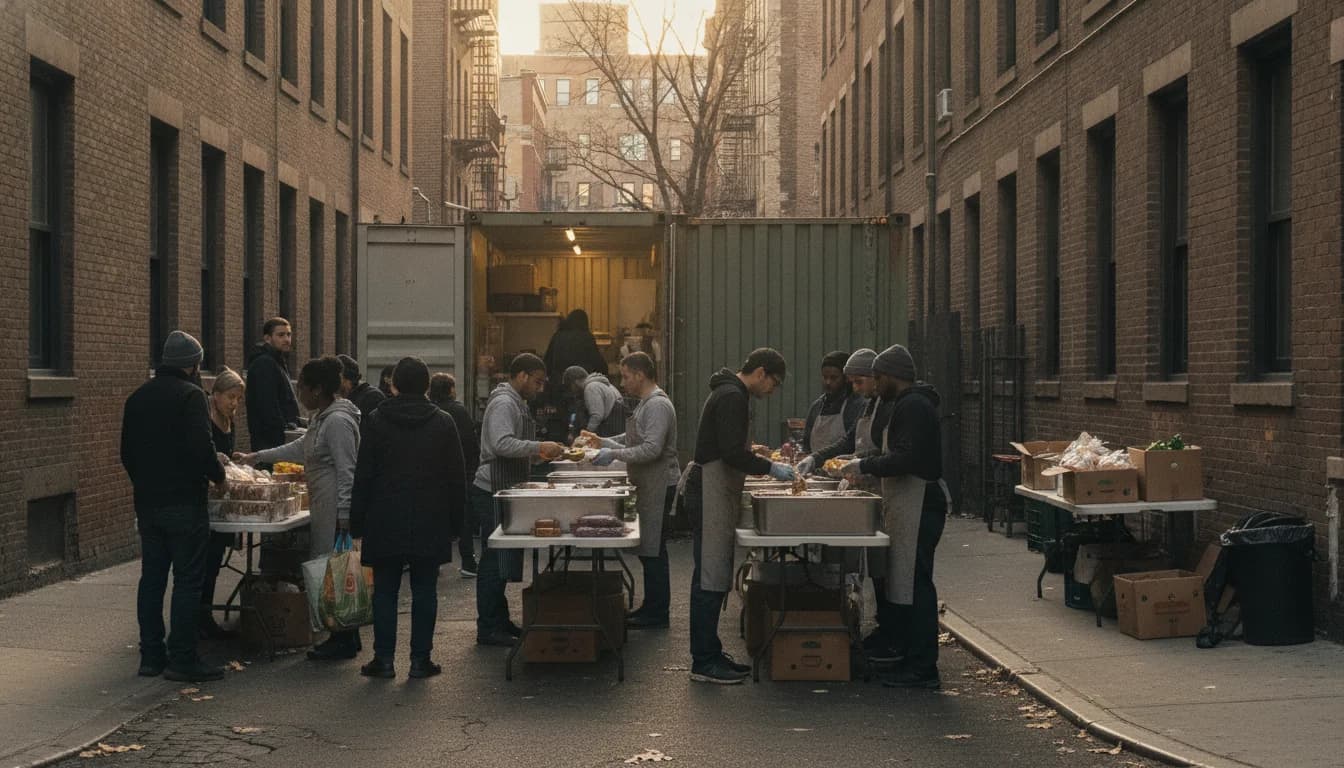
Manhattan Monday brings a data-driven update on Community Kitchens and Urban Food Hubs NYC, outlining how city agencies, nonprofits, and local partners are expanding access to shared kitchens, incubators, and decentralized food-distribution hubs. In recent years, New York City has invested in urban food production, workforce development, and community-based dining ecosystems designed to support small businesses, immigrant-owned enterprises, and residents navigating food security. The latest landscape shows a growing network of community kitchens and urban food hubs that operate across all five boroughs, backed by municipal programs, nonprofit networks, and market innovations. This evolution matters because it aligns technology-enabled operations with neighborhood-level needs—reducing barriers to production, increasing local job opportunities, and broadening access to affordable, nutritious food. As the city’s food system becomes more interconnected, readers can expect ongoing data-driven monitoring, new partnerships, and policy updates that shape how Community Kitchens and Urban Food Hubs NYC function in practice. (nyc.gov)
What Happened
Expanded access to kitchens and a growing network of food hubs In New York City, the movement to expand community kitchens and urban food hubs has intensified through coordinated public-private partnerships and targeted programs. A central part of this expansion is Food Bank For NYC’s Community Kitchen network, which now coordinates with a broad base of partner sites across the city. The organization notes that it operates a wide, deeply embedded footprint—specifically, it reports more than 800 NYC partner sites connected to its programs, including hot meals, food pantries, and related services. This expansive network underpins the city’s ability to reach neighborhoods that have historically faced barriers to consistent, affordable access to food and related services. The scale of the network also illustrates how Community Kitchens and Urban Food Hubs NYC can function as both charitable food distribution points and community anchors with co-located services. The shift toward a market-style distribution at the Community Kitchen site in Harlem further demonstrates how the model is evolving to meet demand in new ways. Beginning January 2026, pantry service was planned to transition to a farmers-market-style distribution at the Community Kitchen site on West 116th Street, offering more choice and a streamlined experience for New Yorkers throughout the week. (foodbanknyc.org)
Neighborhood centers and city-wide programs strengthening kitchens and food hubs The city’s broader ecosystem includes NeON Nutrition Kitchens, a program that directly ties the Department of Probation to food-access efforts by operating five NeON Nutrition Kitchens across the five boroughs. These kitchens provide free groceries, cooking demonstrations, and nutrition guidance, welcoming all community members and serving as accessible food hubs in their districts. The NeON sites are located in Manhattan, Brooklyn, Queens, the Bronx, and Staten Island, emphasizing a concerted effort to distribute nutritious food through neighborhood kitchens while also linking residents with other City services. The NeON initiative demonstrates how Community Kitchens and Urban Food Hubs NYC serve multiple roles: relief, education, and pathways to employment and entrepreneurship through culinary programs. (nyc.gov)
Support for resident-led food businesses and kitchen-ready entrepreneurs NYCHA’s Food Business Pathways program embodies another critical pillar of the movement: turning residents into ready-to-operate food-business operators. The program is a free accelerator designed to help NYCHA residents or NYCHA Section 8 voucher holders start or grow food and dessert businesses, with a clear emphasis on becoming “commercial kitchen ready.” The program maintains a waitlist for 2026, signaling ongoing demand and a structured pipeline for culinary entrepreneurship within the city’s public housing system. The stated goals include mentorship, business coaching, and guidance to obtain licenses, reflecting a data-driven, scalable approach to expanding community-led food ventures through shared or commercial kitchen facilities. (opportunitynycha.org)
Project EATS and Essex Market as live models of urban food hubs Essex Market’s partner offerings highlight the practical side of Community Kitchens and Urban Food Hubs NYC. The market’s Essex Kitchen and its Fresh Bites program deliver cooking classes, nutrition education, and community-fridge initiatives, with partnerships that include Project EATS. Project EATS transforms urban spaces into farms and food hubs, with an urban farm located above Essex Market for youth education on food systems. This arrangement demonstrates how a traditional market environment can host a thriving, education-focused food-hub ecosystem that combines training, production, and retail. It also showcases how public-facing markets can operate as multi-service hubs that connect culinary education, small-business incubation, and direct-to-consumer channels. (essexmarket.nyc)
Official data portals and policy frameworks guiding growth The Mayor’s Office of Urban Agriculture (MOUA) and related NYC agencies have laid the groundwork for data-informed progress. The NYC Urban Agriculture initiative emphasizes climate resilience, workforce development, and food equity, with explicit attention to data portals and dashboards designed to map urban agriculture assets. The Urban Agriculture Data Explorer Hub is an official mapping tool launched to support policy decisions and community planning around urban farming and related food initiatives. This data-driven infrastructure supports ongoing evaluation of where hubs are located, what services they offer, and how communities are being served. (nyc.gov)
Timeline anchors and policy milestones that frame current activity Key policy milestones provide context for the current expansion. The 2023 NYC Food Policy Plan highlighted the city’s commitment to expanding urban food production spaces, improving access to fresh foods, and supporting NYCHA farms and other community-based food initiatives. The plan explicitly mentions Farms at NYCHA and other urban agriculture projects as central to the city’s broader food-security and equity strategy. The 2023 report notes that Farms at NYCHA had grown and that additional sites were planned, illustrating how the city has been embedding kitchen and hub facilities within housing and community settings for several years. (nyc.gov)
Evidence from ongoing programs and market-oriented pilots In addition to the public sector, the private and nonprofit sectors have launched pilots and ongoing programs that reinforce the kitchen-and-hub model. The Urban Design Forum’s Neighborhood Food Hubs project identifies a five-component framework for successful hubs, including a dedicated Community Kitchen and Incubator. The IDF’s work emphasizes how government investment, collaboration with nonprofit grocers and co-ops, and community engagement are essential to expanding access to healthy, affordable food and supporting local entrepreneurship. This perspective helps explain why NYC’s current initiatives emphasize incubators, marketplaces, and training as core features of Community Kitchens and Urban Food Hubs NYC. (urbandesignforum.org)
Why It Matters
Neighborhood-level economic resilience and equitable access The expansion of community kitchens and urban food hubs matters because it strengthens neighborhood economies by creating low-barrier pathways to food entrepreneurship, job training, and local sourcing. The Neighborhood Food Hubs concept—central to the Urban Design Forum’s research—positions community kitchens and incubators as engines for small-business development, with a focus on BIPOC providers and affordable, healthy prepared foods. City-backed investment in such hubs is tied to broader equity goals: reducing barriers to entry for newcomers and residents with limited access to traditional commercial kitchen space, while supporting an ecosystem of vendors and culinary professionals who reflect the city’s diverse communities. (urbandesignforum.org)
Health outcomes and nutrition security Community Kitchens and Urban Food Hubs NYC are also tied to health outcomes and nutrition security. The Food Policy reports and the Urban Agriculture Office frame the work around improving access to nutritious foods, reducing food waste, and supporting climate-resilient food systems. Initiatives like the Community Fridge at Essex Market, Fresh Bites cooking classes, and nutrition education programs contribute to healthier dietary patterns in neighborhoods that historically faced limited healthy options. The city’s approach integrates nutrition education with practical food production and distribution, underscoring a multi-faceted strategy to improve public health through local food systems. (essexmarket.nyc)
Workforce development and realistic pathways to business ownership Programs like Food Business Pathways explicitly connect community kitchens and incubators to real-world economic opportunities. By helping residents become "commercial kitchen ready" and offering mentorship and licensing guidance, the city is creating scalable pathways for residents to start or grow food businesses. The 2026 waitlist indicates both high interest and a structured process, which is essential for ensuring that participants complete the program with tangible outcomes. This approach aligns with the broader economic development goals of supporting small, neighborhood-based food enterprises and building durable local supply chains. (opportunitynycha.org)
Data-driven decision-making and transparency The introduction of data portals, dashboards, and maps for urban agriculture signals a commitment to transparent, evidence-based decision-making. The Urban Agriculture Data Explorer Hub helps identify where hubs exist, what services they provide, and where gaps remain. This level of visibility supports policy adjustments, targeted investments, and stakeholder coordination across city agencies, universities, nonprofits, and community groups. A data-driven framework helps ensure that Community Kitchens and Urban Food Hubs NYC remain responsive to changing neighborhood needs and demographic shifts. (nyc.gov)
What’s Next
Near-term milestones and ongoing expansion Looking ahead, several near-term developments are likely to shape the trajectory of Community Kitchens and Urban Food Hubs NYC:
Continued expansion of Food Bank NYC’s Community Kitchen network, with a potential shift toward more locally tailored services and a refined distribution model. The January 2026 farmers-market-style distribution pilot at 252 West 116th Street demonstrates how the kitchen network can evolve to offer more flexible, consumer-driven experiences while maintaining a strong humanitarian mission. This model could inform future adaptations at other sites as demand and logistics allow. (foodbanknyc.org)
Growth of NYCHA-based entrepreneurship programs, including Food Business Pathways. The 2026 waitlist and ongoing program updates indicate a sustained effort to move residents from training to business operation, with continued emphasis on “commercial kitchen readiness,” licensing, and mentorship. As urban kitchens become a more central element of housing-based economic development, more housing authorities and partners may adopt similar pathways to support micro- and small-business growth. (opportunitynycha.org)
Further integration of Project EATS and Essex Market with youth education and workforce training. The Essex Market program positions the market as a campus for hands-on learning, with youth-focused farming and cooking experiences. As more schools, nonprofits, and market operators align around these goals, expect additional partnerships that blend culinary training, food production, and retail opportunities. (essexmarket.nyc)
Policy and data-driven milestones to watch
The NYC Urban Agriculture data initiatives will continue to evolve, expanding the public-facing portal and maps to include new sites, projects, and outcomes. As more data points populate the Urban Agriculture Data Explorer Hub, policymakers will be better positioned to identify gaps, measure impact, and adjust funding allocations to maximize community benefits. (nyc.gov)
The 2025 Food Policy Report (Food Forward NYC) suggests ongoing investments in urban food production, storage, and distribution systems, with emphasis on reducing waste, improving access, and strengthening supply chains. While the full details are contained in the 2025 report, the 2023 report already highlighted Farms at NYCHA and related expansions, implying that the city intends to maintain momentum on these fronts. Stakeholders should monitor new policy updates, funding announcements, and pilot programs that directly affect community kitchens and food hubs. (nyc.gov)
Market and academic partners will likely continue exploring the embedded role of community kitchens within neighborhood-based food hubs. The Urban Design Forum’s Neighborhood Fare and Neighborhood Food Hubs research illustrate a multi-actor, multi-venue approach to decentralizing food hubs and embedding community kitchens as incubators for entrepreneurship. Expect ongoing case studies and cross-city learnings that influence NYC’s approach. (urbandesignforum.org)
What to watch for and how readers can stay informed
Community Kitchen integrations into housing and market systems: As Food Business Pathways and Project EATS-style models mature, expect more housing authorities and market operators to adopt kitchen incubators and training programs. The pattern in NYC—linking kitchens with education, licensing, and markets—offers a replicable blueprint for other cities and neighborhoods. (opportunitynycha.org)
Data-informed adjustments to program design: With the Urban Agriculture Data Explorer Hub and related dashboards, city agencies are better positioned to identify underserved areas and deploy targeted kitchen spaces, community fridges, and training programs where they are most needed. Readers should monitor city dashboards and agency updates for real-time data on hub locations, program enrollment, and service delivery metrics. (nyc.gov)
Stakeholder engagement and community-led governance: The policy and design work around neighborhood food hubs emphasizes trauma-informed engagement and community empowerment. As NYC continues to refine its approach, residents, small-business owners, and nonprofit partners will be invited to participate in hearings, pilot programs, and local planning efforts that shape where and how Community Kitchens and Urban Food Hubs NYC operate. (urbandesignforum.org)
Closing
The current wave of initiatives around Community Kitchens and Urban Food Hubs NYC reflects a deliberate, data-informed strategy to strengthen neighborhood economies, improve access to nutritious foods, and create scalable pathways for culinary entrepreneurship. By tying together city agencies, nonprofit networks, and market-based operators, New York is building a more resilient urban food system that can adapt to changing demographics, economic conditions, and public health needs. The evidence from Food Bank NYC, NeON Nutrition Kitchens, NYCHA’s Food Business Pathways, Project EATS, and Essex Market demonstrates that the kitchen and hub model is not just about feeding people today; it is about cultivating tomorrow’s local food economy—one shared kitchen, one incubator, and one data point at a time. As the city continues to publish reports, update dashboards, and roll out pilot programs, readers should stay tuned for new announcements, program timelines, and lessons learned from these real-world implementations.
To stay informed, follow NYC’s urban agriculture updates and Food Policy reports, and monitor partner organizations like Food Bank For NYC, NeON programs, NYCHA’s Opportunity initiatives, and Essex Market’s community programs. These sources provide ongoing details about site-specific activities, program enrollments, and anticipated milestones that affect communities citywide. The evolving network of Community Kitchens and Urban Food Hubs NYC represents a collaborative effort to reimagine how neighborhoods access food, create opportunities for local entrepreneurs, and sustain healthier, more vibrant urban communities. (foodbanknyc.org)