Brooklyn Navy Yard Maker Campus Draws Hardware and Biotech Startups
A neutral, data-driven update on the Brooklyn Navy Yard Maker Campus developments shaping the future of tech manufacturing and local job growth.
 By
By 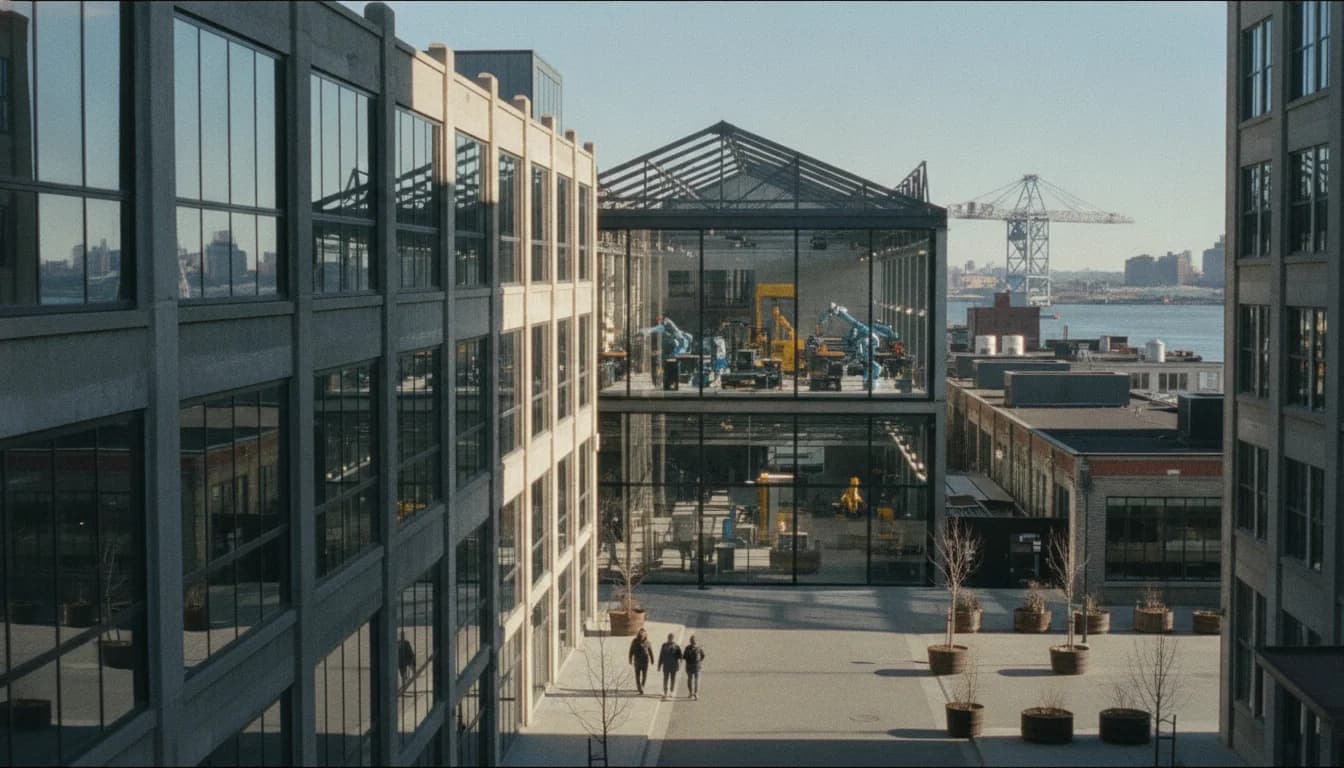
The Brooklyn Navy Yard Maker Campus is rapidly evolving as a hub where hardware prototyping, biotech innovation, and advanced manufacturing converge along New York City’s waterfront. In early 2026, a wave of campus-driven initiatives began to crystallize around a shared goal: turning the Yard into a more integrated, diverse, and resilient ecosystem for makers, startups, and established technology players. The news is not just about spaces; it’s about a recalibration of how urban manufacturing and technology collaboration happen in one of the city’s most storied industrial sites. This shift matters for local jobs, supply-chain resilience, and the broader city strategy to grow high-wage, technology-enabled employment.
One of the clearest signals came from Radical AI, a materials science R&D company, which announced in January 2026 that it would establish New York’s first fully autonomous materials science laboratory at the Brooklyn Navy Yard. The project entails renovating space in Building 20 to create a headquarters and research facility capable of running roughly 100 AI-driven experiments per day, supported by state incentives. The announcement underscores a broader trend: the Yard is becoming a test bed for next-generation research infrastructure, where AI intersects with materials discovery and industrial-scale experimentation. The project is expected to accelerate material breakthroughs while creating high-skill employment in a tightly integrated urban campus environment. “New York is leading the nation in turning cutting-edge research into real-world innovation and good-paying jobs,” Governor Hochul noted in connection with Radical AI’s Brooklyn Navy Yard work. This development is a cornerstone in the emerging Brooklyn Navy Yard Maker Campus narrative. (esd.ny.gov)
Meanwhile, corporate and entrepreneurial activity within the Yard intensified in mid-2026. On June 11, 2026, America's Innovation Corporation (AIC) announced the opening of two new offices—its national headquarters at Dock 72 in the Brooklyn Navy Yard and a West Coast hub in El Segundo, California—signaling a deliberate expansion of the campus’s role as a national node for AI-enabled manufacturing and supply-chain resilience. This move positions the Yard as a dual-port for innovation and a living laboratory for modern manufacturing practices, linking East and West Coast tech ecosystems in a shared mission to modernize critical supply chains. (prnewswire.com)
The Brooklyn Navy Yard’s larger ecosystem—the backdrop for this Maker Campus evolution—already includes a robust mix of world-class facilities and programs designed to accelerate prototyping, pilot testing, and commercialization. Newlab’s presence at the Yard, with an 84,000-square-foot facility dedicated to startups working on city-scale challenges and infrastructure, provides one of the clearest examples of how the campus supports maker-driven innovation at scale. Newlab’s Brooklyn location emphasizes access to prototyping labs, waterborne testing capabilities, and a community of more than 400 member companies—an essential ingredient for a vibrant Maker Campus blueprint. (newlab.com)
Beyond Newlab, the Yard is home to Yard Labs, a biotechnology incubator and pilot-scale maker space that offers roughly 50,000 square feet of state-of-the-art wet and dry labs, with shared pilot/test beds across a 300-acre waterfront campus. This biotech-focused node exemplifies how the Brooklyn Navy Yard Maker Campus blends different domains—biotech, materials science, and hardware—into a single, collaborative environment. The Yard’s capacity to host pilot-scale work and its proximity to other campus tenants create unique opportunities for cross-disciplinary collaboration, supplier development, and talent pipelines. (newyorkbioconnect.com)
The physical scale of the campus itself also reinforces the Maker Campus narrative. A major anchor on the site, Dock 72, is a 675,000-square-foot, waterfront office building that sits within a 300-acre industrial campus. This combination of scale and location is central to the Brooklyn Navy Yard’s ability to attract and retain ambitious makers, startups, and larger tech tenants who benefit from integrated access to production facilities, testing environments, and supply-chain partners—all within a walkable urban campus. (dock72.com)
In addition to the core tenants, the Yard’s broader development activity during 2026 demonstrates a continuing commitment to expanding the campus’s capacity for making, manufacturing, and collaboration. For example, a notable expansion occurred on April 9, 2026, when Duggal Greenhouse and Brooklyn Fish Transfer announced a joint expansion to create a full-campus event venue footprint totaling 65,000 square feet. While primarily an events destination, the expansion strengthens the Yard’s role as a diversified innovation campus—part exhibition space, part testbed for brand experiences, and part community-building venue that brings makers, investors, and public audiences together. This development complements the Maker Campus by increasing engagement channels and public-facing experiences around the Yard’s innovation economy. (prnewswire.com)
As part of the Yard’s ongoing communications efforts, the official Brooklyn Navy Yard media center has highlighted several other 2026 milestones that, collectively, contribute to the Maker Campus narrative. The Yard’s site lists a series of 2026 updates, including the May 20, 2026 Yard Industry Summit and Day, which is framed as a platform for showcasing the future of urban manufacturing, technology, and innovation on the campus. This event lineup helps anchor the Maker Campus story in a broader schedule of public programming, policy engagement, and industry dialogue. In addition, the site notes the Cumberland Street Gate opening on May 5, 2026, as part of a broader effort to enhance campus accessibility and open space, reinforcing the Yard’s mission to connect people with the opportunities within the Maker Campus ecosystem. (brooklynnavyyard.org)
This constellation of developments—Radical AI’s autonomous materials lab, AIC’s Dock 72 HQ, Newlab’s Brookyn presence, Yard Labs’ biotech incubator, and the campus-scale expansions in 2026—collectively advances the Brooklyn Navy Yard Maker Campus from a collection of independent facilities into a cohesive, multi-domain ecosystem. The result is a more integrated, collaborative environment where makers, researchers, investors, and manufacturers can accelerate its growth cycle in visible, tangible ways. It is not just about a set of spaces; it is about a connected environment that enables faster iteration, more opportunities for collaboration, and a stronger pipeline from concept to commercialization. The Yard’s leadership emphasizes that this integrated approach is essential to sustaining high-wage jobs and to supporting a resilient manufacturing economy in New York City. (esd.ny.gov)
Section 1: What Happened
Announcement Overview
The Brooklyn Navy Yard Maker Campus has become a focal point in 2026 for a set of coordinated moves by government partners, private tenants, and incubator operators aimed at strengthening New York City’s urban manufacturing and hardware innovation ecosystem. The January 2026 announcement by Radical AI to establish a fully autonomous materials science lab at the Yard represents a high-profile entry into the campus’s growing portfolio of AI-enabled, materials-focused research activities. By renovating Building 20 to house a new headquarters and advanced AI-driven laboratories, Radical AI signals a broader trend toward integrating artificial intelligence into the core of materials discovery and testing within a city-regulated, accessible campus environment. The project’s stated scale includes running about 100 AI-driven experiments per day, highlighting the pace and scale at which the Yard intends to operationalize research activities. The investment and job implications presented by the project underscore the Yard’s role as a national center for deep-tech and manufacturing innovation. As Governor Hochul framed it, the attempt to host this type of autonomous lab within the Yard is part of a broader statewide strategy to convert research breakthroughs into scaled, high-wage jobs and practical commercial outcomes. (esd.ny.gov)
Timeline of Key Events
- January 27, 2026: Radical AI announces the Brooklyn Navy Yard site plan to establish New York’s first fully autonomous materials science laboratory, including a heavily AI-driven research environment and a renovated headquarters space. The project is supported by state incentives and is positioned to create high-skill jobs within the campus. This event marks a pivotal moment for the Maker Campus by signaling a new level of AI-enabled materials research within the Yard. (esd.ny.gov)
- April 9, 2026: Duggal Greenhouse Expands Event Campus within the Yard to a combined footprint of 65,000 square feet, reflecting the campus’s broader strategy to host not only manufacturing and research tenants but also large-scale experiential events that bring makers, brands, and the public together in a shared space. This expansion illustrates the campus’s multi-use strategy that supports maker culture, industry events, and brand activations that can serve as live demonstrations of making at scale. (prnewswire.com)
- May 20, 2026: Brooklyn Navy Yard highlights the future of urban manufacturing, technology, and innovation at the Yard Industry Summit and Day, a public engagement event that showcases the campus’s capabilities and next-stage opportunities for makers and technology providers. The event schedule helps amplify the Maker Campus narrative by giving stakeholders a structured forum to discuss policy, capital, and partnerships that enable making at scale. (brooklynnavyyard.org)
- June 11, 2026: AIC announces the opening of dual offices—its national headquarters at Dock 72 in the Brooklyn Navy Yard and a West Coast hub in El Segundo—signaling a formal, coast-to-coast presence in the campus’s broader ecosystem. The announcement underscores the Yard’s appeal to national and global players seeking proximity to New York City’s manufacturing and technology talent pools. (prnewswire.com)
- Ongoing 2026 activity: The Yard’s official media center continues to publish updates on capital projects, tenant recruitment, and campus improvements, including the ongoing development of Yard Labs biotech incubator space and other tenant expansions. These updates collectively reinforce the Maker Campus’s growth trajectory in 2026 and beyond. (brooklynnavyyard.org)
Key Facts and Figures
- Radical AI’s project involves renovating Building 20 to create a new headquarters and autonomous labs capable of running approximately 100 AI-driven experiments per day. The state’s Excelsior Jobs program is supporting the project with tax credits, reinforcing the public-private collaboration behind the Maker Campus expansion. The project is described as a multi-million-dollar initiative with a clear focus on high-value, scalable R&D activities. (esd.ny.gov)
- AIC’s Dock 72 HQ and West Coast hub represent a strategic expansion of the campus’s corporate footprint, linking the Brooklyn Navy Yard to national manufacturing and AI-enabled supply chains. The announcement confirms the creation of both a New York-based HQ and a West Coast operation as part of a coordinated growth plan. (prnewswire.com)
- Yard Labs at the Brooklyn Navy Yard provides a dedicated biotech incubator and pilot-scale maker space with 50,000 square feet of wet and dry labs plus office space, enabling startups to iterate quickly and scale within a supportive industrial community. The program’s footprint and capabilities are designed to facilitate prototyping and testing across a diversified life sciences and materials space within the campus. (newyorkbioconnect.com)
- Newlab’s presence in Brooklyn at the Navy Yard is anchored by an 84,000-square-foot facility dedicated to commercializing critical technologies and enabling collaboration among startups, industry partners, and government programs. The space is designed to support prototyping, pilot testing, and industry partnerships that align with the Maker Campus’s goals. (newlab.com)
- The Dock 72 building and the Yard’s broader campus footprint are described as a 675,000-square-foot workspace within a 300-acre campus, offering a significant scale for collaboration, testing, and production—a condition that helps attract a mix of hardware, biotech, and AI tenants. This scale is critical to the campus’s ability to host multiple, concurrent projects and to support cross-disciplinary collaboration among makers. (dock72.com)
Participants and Stakeholders
- Radical AI: A materials science R&D company establishing the first fully autonomous material-lab environment in New York at the Brooklyn Navy Yard. The project is part of a nationwide push to accelerate materials discovery using AI-driven workflows and automated experimentation. The January 27, 2026 announcement underscores a commitment to high-throughput, AI-enabled R&D within a public-private ecosystem that includes state incentives. (esd.ny.gov)
- AIC (America’s Innovation Corporation): The company opened a national HQ at Dock 72 and a West Coast hub in El Segundo on June 11, 2026, signaling a coast-to-coast expansion of its AI-enabled manufacturing strategy within the Yard’s ecosystem. The move indicates a broader trend toward forming a national network of AI-powered manufacturing capabilities anchored by the Yard’s campus. (prnewswire.com)
- Newlab: A leading technology hub that hosts a broad array of startups and projects in critical technologies. The Brooklyn location within the Navy Yard anchors a broader ecosystem that connects hardware prototyping, manufacturing pilots, and industry partnerships to accelerate commercialization. (newlab.com)
- Yard Labs: A biotech incubator and pilot-scale maker space within the Brooklyn Navy Yard, offering 50,000 square feet of lab space and access to a larger, 300-acre campus ecosystem. Yard Labs serves as a practical example of the cross-domain collaboration the Maker Campus aims to cultivate—combining biotech, materials science, and manufacturing in one urban environment. (newyorkbioconnect.com)
- Duggal Greenhouse and Brooklyn Fish Transfer: A major expansion that adds a new, flexible event campus footprint within the Yard, illustrating how the Maker Campus ecosystem also includes spaces for brand activations, demonstrations, and large-scale events that showcase making in action. The expansion to 65,000 square feet was announced on April 9, 2026. (prnewswire.com)
Section 2: Why It Matters
Economic Impact and Job Creation
The Brooklyn Navy Yard Maker Campus is anchored by a portfolio of high-skill tenants and programs designed to catalyze local job growth and deepen resilience in New York City’s manufacturing base. Radical AI’s project, for example, is explicitly framed as a driver of high-paying jobs and AI-enabled manufacturing capabilities in the city. The state’s Excelsior Jobs program (a tax credit program) is supporting the project, underscoring the public policy emphasis on high-wage, knowledge-based employment tied to advanced manufacturing and AI-enabled research. The job creation figure associated with Radical AI’s project—120 or more high-skill roles in an AI-driven materials laboratory—appears in Governor Hochul’s press release as a forward-looking projection of the project’s impact; the precise figure cited in the release is 115 new high-paying jobs. This kind of quantified impact is important for readers who track the economic returns of urban maker ecosystems and the alignment with New York City’s broader workforce and economic development goals. The combination of high-wage roles and a testing-ground for advanced manufacturing supports the Yard’s broader mission to grow a modern industrial base that anchors local talent and attracts new investment. (esd.ny.gov)
The AIC expansion at Dock 72 also has important implications for the local economy. While the press release focuses on corporate footholds, the presence of national headquarters and regional hubs at the Yard enhances the area’s visibility as a national hub for physical AI and manufacturing. The dual-office strategy is not just about corporate footprint; it signals an expansive, distributed model of innovation—one that could attract ancillary businesses, service providers, and talent to the vicinity. The Dock 72 campus is already described as a major development with 675,000 square feet of workspace, which translates into capacity for a broad mix of tenants, from software and hardware startups to established manufacturing and research entities that need access to pilot spaces and supply-chain partners. The Yard’s overall scale—spanning hundreds of acres and hundreds of thousands of square feet of workspace—creates a multiplier effect for regional economic activity, with potential downstream effects on nearby neighborhoods through procurement, housing, and related services. (dock72.com)
Workforce Development and Skills
A core objective of the Brooklyn Navy Yard Maker Campus is workforce development—providing pathways for designers, engineers, technicians, and researchers to move from concept to commercialization within a single ecosystem. The presence of high-caliber labs, makerspaces, and incubators—such as Yard Labs and Newlab—supports hands-on training and real-world prototyping, enabling the local workforce to acquire in-demand skills in biotech, materials science, and AI-enabled manufacturing. The Yard’s ecosystem approach, which intentionally combines tenants from multiple domains, creates opportunities for cross-training and collaboration across disciplines. When combined with state incentive programs and public-sector partnerships, the campus is positioned to be a meaningful contributor to New York City’s talent pipeline and to help address demand for specialized skill sets in AI-driven manufacturing and materials research. The January 2026 official actions and the early-2026 venue programming demonstrate a consistent emphasis on workforce opportunities and industry partnerships that connect academic, governmental, and private-sector actors. (esd.ny.gov)
Real Estate and Urban Context
The Navy Yard’s physical and organizational redesign over the last two decades has shifted the campus from a historic shipbuilding hub to a living, working ecosystem for modern manufacturing and technology. The Yard’s leadership has repeatedly indicated a commitment to removing barriers to collaboration, aligning with a broader city strategy to diversify the economy and expand job opportunities outside traditional finance and services. The 300-acre campus footprint, the presence of large-scale facilities like Dock 72, and the concentration of innovative tenants—all contribute to a real estate and urban development narrative where manufacturing and tech coexist with culture, events, and community engagement. The Dock 72 space’s scale and waterfront location offer a distinctive environment for maker culture to flourish, and the Yard’s event campus expansions demonstrate the synergy between production, demonstration, and public-facing experiences that can attract a broader audience to the Maker Campus ecosystem. (dock72.com)
Broader Industry Context
The Brooklyn Navy Yard is part of a broader trend of urban reindustrialization and the emergence of maker ecosystems on former industrial sites. The presence of Newlab and Yard Labs at the Yard reflects a national pattern of converting legacy manufacturing spaces into multipurpose hubs where hardware, biotech, and AI-driven manufacturing converge. The Yard’s ecosystem aligns with other high-profile media and technology hubs within New York City’s broader knowledge economy, including Steiner Studios and other media campuses that have historically used the Yard’s industrial fabric to create specialized production and innovation environments. While Steiner Studios’ long-standing role in film and media production is distinct from the Yard’s maker ecosystem, the shared thread is clear: repurposing industrial space to support contemporary technology, making, and media. This context provides readers with a framework to understand why the Yard’s Maker Campus is attracting significant attention from policymakers, investors, and companies seeking to locate near a dense cluster of makers, researchers, and production resources. (steinerstudios.com)
Stakeholder Perspectives
- Government and economic development bodies frame these initiatives as essential to maintaining New York City’s competitive edge in advanced manufacturing, AI, and biotech. The Radical AI project—supported by state incentives—illustrates the public sector’s willingness to back high-impact, capital-intensive R&D facilities that can produce durable, high-wage employment. This perspective is reinforced by official statements from Empire State Development that emphasize the role of autonomous materials labs in strengthening New York’s innovation economy. The January 2026 press release from ESD highlights not only the technical ambition of the project but also its anticipated job impact and broader alignment with the state’s strategic priorities. (esd.ny.gov)
- Private-sector tenants view the Yard as a strategic platform for collaboration and scale. AIC’s June 2026 announcement of dual offices at Dock 72 and in El Segundo signals confidence in the Yard as a national hub for AI-enabled manufacturing. The presence of a major AI-accelerator and technology-focused tenants signals to investors and partners that the Yard is a credible, durable ecosystem for long-term projects that require proximity to manufacturing capabilities, supply chain partners, and a talent pool. (prnewswire.com)
- Community and ecosystem observers see the Maker Campus as a way to demystify and democratize access to advanced manufacturing and AI-enabled research. The Yard’s public visibility—through industry summits, public art, and tenant announcements—helps translate complex technology development into accessible stories about local job creation, urban innovation, and opportunities for small businesses and entrepreneurs to participate in the city’s high-growth sectors. (brooklynnavyyard.org)
Section 3: What’s Next
Timeline and Next Steps
Looking ahead, several threads will shape the next phase of the Brooklyn Navy Yard Maker Campus’s evolution:
- Continued tenant diversification and expansion: The Yard’s 2026 activity calendar and press updates indicate ongoing recruitment and capitalization around biotech, AI, and hardware-focused ventures. Expect additional tenant announcements and space expansions across the campus as firms scale from pilot projects to larger production runs. The Yard’s public-facing updates provide a barometer for these developments, including the Yard Industry Summit and ongoing facility updates. (brooklynnavyyard.org)
- Cross-domain collaboration and pilot-to-production pipelines: The presence of multiple high-tech tenants—ranging from autonomous AI labs to biotech incubators and hardware prototyping spaces—creates opportunities for cross-domain pilots and supply-chain partnerships. For example, Yard Labs’ 50,000-square-foot lab space coupled with Newlab’s prototyping and testing capabilities supports a broad range of experiments—from biomaterials to advanced manufacturing processes—under one ecosystem umbrella. These cross-domain collaborations are expected to accelerate the translation of research into real-world products and services. (newyorkbioconnect.com)
- Public programming and community engagement: The Yard’s ongoing event programming—ranging from large-scale events at Duggal Greenhouse to public-facing industry summits—will likely continue to play a role in keeping Maker Campus activities visible and accessible to a wider audience. Public engagement is a deliberate strategy to attract talent, investors, and partners while also highlighting the Yard’s role as a community resource and economic engine. The Yard’s media center calendar provides frequent updates about events and campus milestones as 2026 progresses. (brooklynnavyyard.org)
- Infrastructure and accessibility enhancements: The Yard’s Gate and open-space improvements, including the Cumberland Street Gate opening in May 2026, indicate ongoing efforts to improve campus accessibility and the user experience for tenants, employees, and visitors. These improvements matter for the day-to-day operations of a Maker Campus that relies on easy physical access to facilities, testing spaces, and collaboration areas. (brooklynnavyyard.org)
What to Watch For
- New AI-enabled labs and autonomous materials initiatives: The Radical AI project demonstrates a credible model for AI-driven materials research inside an urban campus. Watch for updates on additional autonomous labs, pilot studies, and potential industry partnerships that leverage the Yard’s testing environments and regulatory context to accelerate discovery timelines. These developments will likely be covered in official press releases and industry analyses as they unfold. (esd.ny.gov)
- Growth of the biotech and life sciences layer: Yard Labs’ 50,000-square-foot lab facility indicates a continuing commitment to biotechnology and materials science on campus. Expect additional sequencing of tenant milestones, pilot programs, and cross-disciplinary collaborations that connect biotech with AI-accelerated manufacturing processes. The lab space’s scale and its access to a larger campus ecosystem suggest substantial potential for growth in this segment. (newyorkbioconnect.com)
- Public-private partnerships and policy support: As the Yard advances its Maker Campus ambitions, public policy and funding programs will likely play a key role in financing new facilities, incentivizing job creation, and supporting workforce training initiatives. The Radical AI project’s reliance on state incentives indicates that policy support will continue to be a meaningful driver of the campus’s long-term trajectory. (esd.ny.gov)
Closing
The Brooklyn Navy Yard Maker Campus is increasingly positioned as a multi-domain, urban-made innovation cluster where AI, biotech, and hardware converge in a single, connected ecosystem. The announcements in early 2026—Radical AI’s autonomous lab, the Yard Labs biotech incubator, Newlab’s Brooklyn presence, and AIC’s Dock 72 expansion—signal a deliberate strategy to knit together research, prototyping, and production within a city-based campus that is capable of delivering high-wrequency, high-value outcomes. The scale of the Yard, its strategic waterfront location, and the ongoing investments in infrastructure and programming collectively create an environment conducive to experimentation, collaboration, and the translational work that moves ideas from bench to marketplace. For readers watching the city’s technology and market trends, the Brooklyn Navy Yard Maker Campus offers a concrete example of how public assets and private investment can co-create a durable, job-rich ecosystem in the heart of New York City.
As this story continues to develop, Manhattan Monday will monitor official milestones, tenant announcements, and public-facing events tied to the Brooklyn Navy Yard Maker Campus. Readers can expect regular updates on who is moving in, what projects are moving to production, and how the campus’s multi-domain approach translates into real economic and community benefits. If you want to stay updated, follow the Yard’s official media center for the latest press releases, and watch for upcoming events and capacity updates that demonstrate the campus’s evolving role as a national maker hub.
In the end, the Brooklyn Navy Yard Maker Campus is more than a collection of spaces; it represents a coordinated effort to fuse cutting-edge research with practical manufacturing capability in an urban context. It is a model that other cities watch closely as they look to retrofit aging industrial sites into productive, job-creating innovation centers, able to attract the talent, capital, and ideas that define the next era of technology-driven economic growth. The path ahead will require continued collaboration among government, private companies, and community stakeholders, but the early 2026 momentum suggests the Brooklyn Navy Yard Maker Campus is well on its way to becoming a defining asset for New York City’s technology and manufacturing landscape.