Bartlett Crossing Affordable Housing Brooklyn Groundbreaking
Get the latest data-driven update on the groundbreaking of Bartlett Crossing, an affordable housing project in Brooklyn's Broadway Triangle.
 By
By 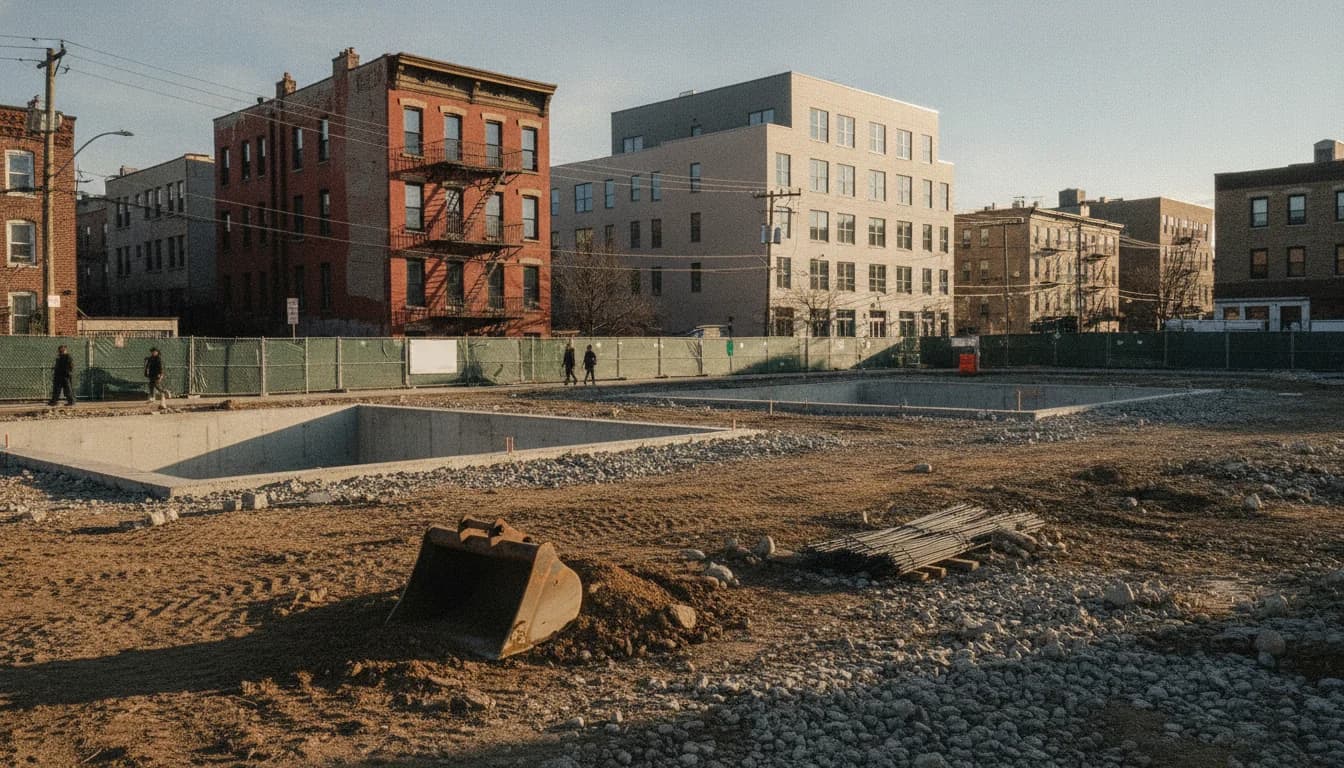
HPD Breaks Ground on Bartlett Crossing in Brooklyn
On July 7, 2026, in Brooklyn’s Broadway Triangle, the New York City Department of Housing Preservation and Development (HPD), together with state officials and community partners, announced the start of construction at Bartlett Crossing, a $71.5 million affordable housing development that will bring 78 affordable homes across two new buildings. The announcement was made as part of a broader, community-led redevelopment plan that aims to transform former city-owned vacant land into a more stable, inclusive, and energy-efficient neighborhood. This is the second phase of a larger Broadway Triangle effort, with a larger vision to deliver hundreds of affordable units over time. The news matters because it signals a concrete, financed step toward expanding deeply affordable housing in North Brooklyn, alongside environmental and transit-oriented development commitments. “Bartlett Crossing transforms vacant land into affordable housing in one of Brooklyn's most vibrant communities,” Governor Hochul stated in the release, underscoring the collaboration between city, state, and local community groups. The groundbreak marks a milestone after years of planning and community organizing, and it positions Bartlett Crossing as a visible example of how public land can be repurposed for housing access and neighborhood vitality. For readers tracking the evolution of housing policy and urban redevelopment, the July 7, 2026 announcement provides a precise date and a clear, public accounting of the initiative’s scale, funding, and partners. HPD’s release also notes that the two buildings will be fully electric and designed to high energy-efficiency standards, aligning with broader state and city decarbonization goals. This project’s funding mix includes HPD’s Extremely Low & Low-Income Affordability Program, city and state financing, and federal tax credit programs, illustrating how multiple funding streams converge to make large-scale affordable housing feasible in dense urban settings. The rollout fits within Governor Hochul’s five-year Housing Plan, which seeks to accelerate the creation or preservation of affordable homes across the state. For readers and researchers, the groundbreak offers a concrete data point in the broader analysis of how city-led development translates into real units and residents’ stability.
What Happened
Announcement Details and Timing
- On July 7, 2026, HPD, together with New York State Homes and Community Renewal (HCR), DEC’s Brownfield Cleanup Program, and partner nonprofits, announced the start of construction for Bartlett Crossing in Brooklyn’s Broadway Triangle. The press release framed Bartlett Crossing as a $71.5 million project delivering 78 affordable apartments across two newly built structures. The project is described as the second phase of a longer, community-led redevelopment plan that ultimately will produce 390 affordable homes on former city-owned parcels in Broadway Triangle. [HPD press release, July 7, 2026; descriptive anchor: HPD press release] (nyc.gov)
- The announcement also situates Bartlett Crossing within a broader trajectory: Phase I, Throop Corners, was completed in May 2025, and Bartlett Crossing represents the continuing implementation of a master plan to redevelop the Broadway Triangle with permanently affordable housing and mixed-use components. This context is noted in the HPD release, which highlights progress across multiple phases and the ongoing collaboration among nonprofit developers, city agencies, and state programs. [HPD press release; lines referencing Phase I completion and overall 390-unit plan] (nyc.gov)
Project Scope, Design, and Funding
- Bartlett Crossing comprises two nine-story buildings designed to be energy-efficient and fully electric, incorporating high-performance systems, energy recovery ventilators, and other green building standards. The HPD release emphasizes the project’s alignment with Enterprise Green Communities Plus standards and ENERGY STAR Multifamily New Construction criteria, reflecting a broader shift toward sustainable, low-emission housing in urban infill developments. [HPD press release; energy standards] (nyc.gov)
- The financing is multi-layered, with HPD providing a substantial allocation through the Extremely Low & Low-Income Affordability Program, additional support from New York City Council and Borough President funds, and state-level tax credit equity and subsidies. The release also notes support from state agencies and the environmental cleanup program, illustrating how a mix of local, state, and quasi-governmental funding can be marshaled for mixed-income, transit-connected housing. [HPD press release; financing details] (nyc.gov)
Project Partners and Governance
- Bartlett Crossing is led by Unified Neighborhood Partners, a joint venture among St. Nicks Alliance, Southside United HDFC–Los Sures, RiseBoro Community Partnership, and United Jewish Organizations of Williamsburg. The HPD press release highlights the strength of this coalition and its track record in delivering deeply affordable housing with supportive services. The press release also lists a broad roster of elected officials and community leaders who expressed support at the groundbreaking event. [HPD press release; partner names] (nyc.gov)
What the Numbers Say in Context
- The project totals $71.5 million in development costs and will yield 78 affordable apartments. That figure places Bartlett Crossing as a mid-to-large infill project within Brooklyn’s Broadway Triangle, a district that has seen extensive public-sector investment and community organizing over several years. The press release also confirms that Bartlett Crossing is the second phase in a broader plan to deliver 390 permanently affordable homes across the Broadway Triangle site, a scale of commitment that distinguishes it from smaller, stand-alone developments. [HPD press release; project cost, unit count, and the 390-unit plan] (nyc.gov)
The Historical and Regulatory Context
- The Broadway Triangle site has a long planning and ULURP history, with the City Planning Commission’s review and approvals for a multi-building, mixed-use redevelopment tied to the designation of the site as an Urban Development Action Area. The 2022 Broadway Triangle decision document details the broader project framework, including the disposition of city-owned land and the ambition to create hundreds of affordable units across multiple buildings. This background helps explain why Bartlett Crossing is positioned as Phase Two in a larger, time-phased redevelopment strategy. [Broadway Triangle – Bartlett Crossing, CPC document; ULURP and UDAA context] (nyc.gov)
Why It Matters
Affordability Scale and Neighborhood Impact
- Bartlett Crossing contributes 78 units to a Broadway Triangle plan that aims for 390 permanently affordable homes, reinforcing a neighborhood strategy to expand affordable housing in North Brooklyn. The project’s scale is significant within the city’s broader housing program, illustrating how targeted site assembly, public land reuse, and coalition-building can translate into concrete unit production in a relatively short timeframe. The HPD release explicitly frames Bartlett Crossing as part of Governor Hochul’s statewide housing effort, tying municipal and state initiatives to a single, measureable outcome: more families with stable homes in a transit-rich area. [HPD press release; background 390-unit plan; state housing strategy context] (nyc.gov)
- The partnership model—St. Nicks Alliance, Southside United HDFC–Los Sures, RiseBoro, and United Jewish Organizations of Williamsburg—illustrates a governance approach that blends community leadership with formal development oversight. This model has implications for other neighborhoods seeking to replicate a similar path to scale, where local organizations anchor the planning, fundraising, and service delivery that accompany new permanent housing. [HPD press release; partner summary] (nyc.gov)
Transit-Oriented Development and Environmental Focus
- Bartlett Crossing’s location near major transit options (e.g., the G line) and its emphasis on energy-efficient building systems align with NYC’s policy emphasis on transit-oriented development and climate resilience. The HPD release notes the buildings will be located within walking distance of multiple subway and bus routes, reinforcing the case that housing supply and accessible transit can work together to reduce transportation-cost burdens for residents. The environmental design features—high-performance envelopes, energy recovery ventilation, and electric systems—support a lower-carbon footprint, a priority for city and state housing policy. [HPD press release; transit proximity and green design] (nyc.gov)
Financing Complexity and Policy Alignment
- The Bartlett Crossing financing narrative demonstrates how city programs (ELI/LI housing funds), state-level tax credits, and federal incentives can synchronize to reduce the overall cost of affordable housing development. The HPD release highlights project-based rental assistance, VIH allocations, and other targeted subsidies, illustrating how a multi-source funding approach can stabilize project viability in a market with rising construction costs. This case offers a concrete example for policymakers analyzing how to structure blended-financing deals for ambitious, multi-building affordable-housing projects. [HPD press release; financing details] (nyc.gov)
Sector-Wide Implications for Brooklyn and Beyond
- The Bartlett Crossing ground-breaking reinforces a broader narrative about the Broadway Triangle redevelopment—an effort that has spanned years and multiple city and state initiatives. The CPC planning document situates the Bartlett Crossing project within a historically complex redevelopment area where urban renewal policy intersected with community, environmental, and housing goals. Observers will be watching how Phase Two translates to units leased, residents served, and sustaining services funded through public-private partnerships. The scale and structure of this project provide a test case for similar initiatives in other Brooklyn neighborhoods and across the city. [CPC document; ULURP context] (nyc.gov)
What's Next
Timeline and Milestones
- Phase Two construction is underway as of July 2026, with completion anticipated in the coming years as part of a phased redevelopment plan that includes Phase I (Throop Corners) already completed in May 2025. The timeline offers a window into the pace of large, publicly supported affordable-housing developments in dense urban settings, where environmental requirements, site remediation, and complex financing must align with construction schedules and lease-up timelines. [HPD press release; Phase I completion note] (nyc.gov)
- The project’s larger masterplan envisions 390 permanently affordable units across Broadway Triangle, a number that will be realized over multiple phases. The 2022 planning document confirms the scale of the overall plan and the municipal intention to redevelop several parcels into cohesive housing, retail, and community facilities. As each phase progresses, observers will track how the units-per-year rate evolves, how occupancy and income-targeting trends hold, and how resident services are integrated into the building programs. [CPC document; Broadway Triangle plan background] (nyc.gov)
Next Steps for Residents, Stakeholders, and Journalists
- Leasing and eligibility processes will be administered through HPD and partner organizations, with units allocated to households within specified income bands (up to 80% of AMI for Bartlett Crossing). Residents and applicants should monitor HPD announcements and Housing Connect updates for leasing timelines, eligibility criteria, and service offerings associated with the project. [HPD press release; unit eligibility notes] (nyc.gov)
- Community organizations involved in Unified Neighborhood Partners will continue to coordinate programming and wraparound services designed to complement housing with supportive resources, job training, and educational opportunities. This integrated approach aims to maximize residents’ long-term stability and economic mobility, in line with the program’s stated goals. [HPD press release; partner descriptions] (nyc.gov)
What to Watch for in the Market and Tech Context
- The Bartlett Crossing effort sits at the intersection of affordable-housing policy, urban revitalization, and climate-smart construction. Observers should watch for how the project’s green-building features perform in practice, how carefully designed energy systems translate into resident cost savings, and how the blended-financing model adapts to changing interest rates, tax-credit equity markets, and potential policy shifts. In a market where construction costs and financing terms can swing with policy signals, Bartlett Crossing’s ability to maintain schedule and unit delivery will be a litmus test for similar developments in New York City and other high-cost urban areas. [HPD press release; financing notes] (nyc.gov)
Closing
Bartlett Crossing’s July 7, 2026 groundbreaking marks a tangible milestone in Brooklyn’s Broadway Triangle redevelopment and a concrete step toward expanding deeply affordable housing in a neighborhood with strong transit access and established community leadership. The project’s 78-unit contribution to a 390-unit master plan demonstrates how city and state resources can be mobilized through inclusive partnerships to deliver stable homes, sustainable design, and coordinated social services. For readers tracking housing, urban policy, or the economics of affordable development, Bartlett Crossing offers a well-documented case study of how multi-stage plans translate into real-world housing outcomes.
As the development moves forward, residents, stakeholders, and policymakers should continue to monitor not only construction progress but also the leasing outcomes, service program outcomes, and the longer-term impacts on the Broadway Triangle’s housing stability, affordability, and community vitality. The next milestones—unit leases, service partnerships, and environmental performance metrics—will shape how this project is perceived as a model for future, similarly scaled efforts in New York City and beyond.