Apollo Theater Renovation Breaks Ground in Harlem
The Apollo Theater has begun a major renovation project in Harlem.
 By
By 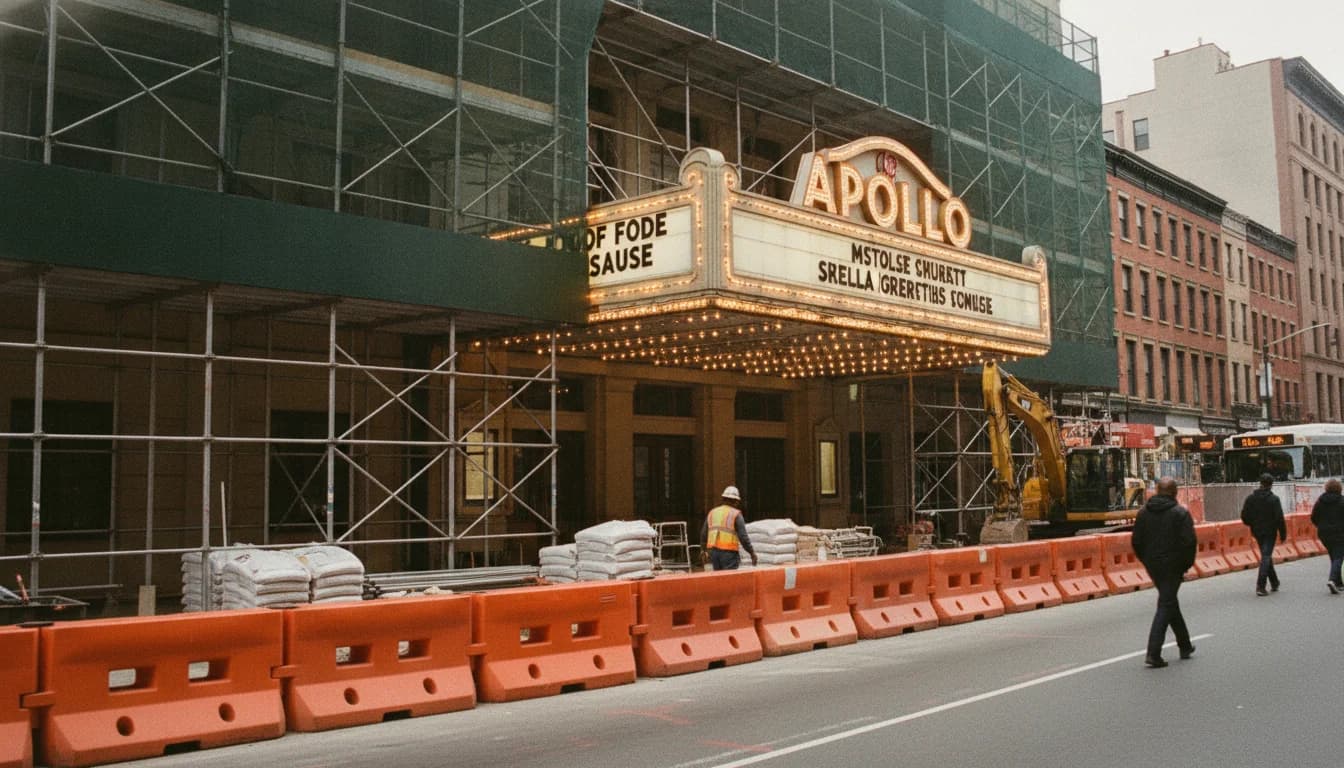
The Apollo Theater Renovation marks a major turning point for Harlem’s iconic venue, with a groundbreaking ceremony held on June 30, 2025. The project, described by The Apollo as the largest restoration, renovation, and modernization of its historic theater in more than 90 years, signals a shift from reverence to renewed relevance for a space that has long been a cultural nerve center of Black artistry. The ceremony, attended by elected officials, community leaders, and more than 200 guests, underscored a commitment to preserving history while embracing modern infrastructure and programming capabilities. As Manhattan Monday reports, the work is expected to unfold in phases, allowing performances to continue at nearby venues during construction and aiming for a reimagined experience for audiences and artists alike. The announcement matters not only for Harlem but for the broader live-arts market, where modernized venues increasingly blend heritage with contemporary technology and community access. (apollotheater.org)
The Apollo’s leadership framed the project as a careful evolution, not a relocation of its core mission. The renovation will expand the lobby, add a café and bar for community gatherings, introduce new and restored seating, upgrade backstage areas for artists, revitalize the marquee, and more. Construction is planned to run through the summer of 2026, with performances continuing across The Apollo’s staging options—its historic theater, the Victoria stage, and partner venues—during the work. The organization emphasizes that the Stages at the Victoria Theater, a recent expansion, will continue to host shows while the Historic Theater undergoes renovations. This approach highlights a hybrid model increasingly seen in major market venues: upgrade while sustaining a live calendar. As one observer noted during the groundbreaking, the project seeks “to elevate it” while honoring its legacy. >Today’s groundbreaking marks the beginning of a new chapter in The Apollo’s journey—a curtain drop in every sense of the word – taking us from a place of reverence to a place of relevance.(apollotheater.org)
The Apollo’s renovation is not just about aesthetics; it’s about capability. The project encompasses a renovated and expanded lobby, a new and brighter entry experience, improved acoustics and stage technology, and enhanced accessibility. The design team is led by Beyer Blinder Belle Architects + Planners, with Charcoalblue handling theater design and acoustics, Flyleaf Creative managing signage, and Consigli Construction serving as the general contractor. The project’s physical footprint includes a widened lobby and a redesigned façade, plus a modernized backstage and production infrastructure. These elements aim to ensure The Apollo remains a premiere performance venue and a catalyst for Harlem’s economy and creative ecosystem for decades to come. The funding tapestry combines public and private support, including a notable New Markets Tax Credits (NMTC) allocation and a slate of city, state, and philanthropic commitments. (apollotheater.org)
What follows is a detailed, data-driven look at what happened, why it matters, and what’s next for The Apollo Theater Renovation as it unfolds in Harlem and the wider performing-arts market.
What Happened
Groundbreaking ceremony and early milestones
The formal kick-off for the Apollo Theater Renovation occurred at a groundbreaking ceremony on Monday, June 30, 2025, in Harlem. The event included remarks from The Apollo’s leadership and a host of partners, elected officials, and invited guests, signaling the start of a multi-year restoration and modernization effort. The theater’s leadership highlighted that the renovation would occur in phases, with continued performances during the work and a reimagined, expanded public-facing experience once complete. The ceremony featured performances by Apollo Amateur Night alumni and remarks from participants across the public and private sectors. The event photo and archival materials indicate a community-centered launch designed to emphasize continuity of programming even as the building itself undergoes transformation. The project is slated to be completed in the summer of 2026, with the broader aim of sustaining The Apollo’s role as a cultural anchor during the upgrade. (apollotheater.org)
Quote from the ceremony captures the momentum: “Today’s groundbreaking marks the beginning of a new chapter in The Apollo’s journey—a curtain drop in every sense of the word – taking us from a place of reverence to a place of relevance.” This sentiment, echoed by Apollo leadership, frames the renovation as a bridge between history and a more outward-facing future. (apollotheater.org)
Designs unveiled and scope clarified
The Apollo revealed design concepts for the full-scale revitalization on August 7, 2024, detailing how the Historic Theater would be renewed while preserving its architectural essence. Beyer Blinder Belle Architects + Planners led the design work, with Charcoalblue, Flyleaf Creative, and Higgins Quasebarth & Partners providing specialized expertise. The announcement outlined a renovated and expanded lobby with a café and bar, new and restored seating, enhanced backstage facilities, and a revitalized marquee—along with digital upgrades to the Wall of Fame and other historic elements. Construction was framed as a phased effort starting in fall 2024 and running through spring 2026, with performances continuing in other spaces (including The Apollo Stages at the Victoria) during the work. (apollotheater.org)
The plan emphasizes both modernization and preservation: the Wall of Fame wall will be digitized and integrated with The Apollo’s archives to offer an interactive guest experience, while classic decorative details and the marquee will be refreshed with modern LED technology and materials that nod to the theater’s historic branding. The six-figure and higher-level commitments from architectural and design partners underscore a balance between historical fidelity and contemporary performance requirements. (apollotheater.org)
Funding and financing milestones
The Apollo Theater Renovation has attracted substantial public-private financing, reflecting a broad coalition of support for Harlem’s cultural infrastructure. A pivotal funding milestone occurred on July 1, 2025, when the New York City Economic Development Corporation (NYCEDC) and its subsidiary, the NYC Neighborhood Capital Corporation, announced a $23 million New Markets Tax Credits (NMTC) allocation to finance the project. This allocation is described as part of a larger financing package designed to support the theater’s first full-scale renovation in its 91-year history and to channel more capital into expanded programming for low-income communities. The NMTC financing is expected to bolster job creation during construction and support ongoing community programming as the renovation progresses. (edc.nyc)
In addition to NMTC support, city and state agencies have provided significant backing. The NYC Department of Cultural Affairs contributed more than $20.7 million in grant commitments drawn from multiple programs between 2020 and 2024, while Empire State Development provided a $10 million grant through the New York Works Economic Development Fund. These commitments are part of a public-sector layer designed to complement private funding and philanthropic contributions across the Apollo Rising 2.0 Capital Campaign. The collaboration between public agencies and private lenders demonstrates a blended-financing approach common to large-scale, heritage-rich urban renovations. (edc.nyc)
Independent financing updates from the National Trust Community Investment Corporation (NTCIC) add another chapter to the funding story. In July 2025, NTCIC announced the closing for the $64.5 million restoration of Harlem’s Apollo Theater, highlighting a combination of Historic and New Markets Tax Credits, as well as debt financing from JP Morgan and other lenders. This closing underscores the reliance on tax-credit equity and debt instruments to support capital-intensive projects that preserve historic venues while expanding their capabilities. The closing also references broader project benefits, including expanded performances, increased educational access, and enhanced community programming. (ntcic.com)
Funding details from the Apollo’s own communications reinforce the scale and scope: the renovation includes new public amenities, exterior façade and marquee repairs, lobby expansion, production-technology upgrades, HVAC and elevator improvements, restroom modernization, and expanded public space. The financial architecture integrates NMTC, state and city grants, philanthropic gifts, and private equity to support these capital improvements and programmatic ambitions. (edc.nyc)
Project scope and partner ecosystem
The Apollo Theater Renovation engages a prominent roster of industry partners to deliver a comprehensive modernization while preserving the venue’s historic character. Beyer Blinder Belle Architects + Planners leads the overall design effort, with Charcoalblue contributing acoustic and theater design, Flyleaf Creative shaping signage and wayfinding, and Consigli Construction serving as the contractor. The collaboration also involves Higgins Quasebarth & Partners for historic preservation and other specialized consultants. The scope covers interior and exterior renovations, upgrades to the historic theater’s soundstage and mainstage, expanded lobby space, updated dressing rooms, and an upgraded, energy-efficient façade to complement a refreshed marquee. This multi-discipline, phased approach is typical for major urban cultural renovations that aim to modernize without compromising heritage value. (apollotheater.org)
In parallel, The Apollo’s Victoria venue—the Apollo Stages at The Victoria—continues to play a critical role in sustaining artistic programming during construction. The Victoria project, designed by Kostow Greenwood Architects (KGA), includes two 199-seat and 99-seat studio venues that offer flexible configurations and a shared lobby, creating an ecosystem of spaces that can host a wide range of performances, rehearsals, and community events even as the Historic Theater undergoes upgrades. This expansion is part of the broader strategy to grow programming capacity and broaden the theater’s footprint in Harlem’s cultural landscape. (apollotheater.org)
Why It Matters
Economic and community impact
The Apollo Theater renovation represents a strategic investment in Harlem’s cultural economy, with ambitious implications for job creation, local business activity, and educational access. The NMTC financing in particular aligns the project with broader community development goals, including increased commercial activity and expanded public spaces that serve residents and visitors alike. NYCEDC’s announcement estimates that the project will support hundreds of jobs in both the private sector and construction, contributing to the neighborhood’s economic vitality during and after the renovation. The combination of NMTC financing and city grants is designed to catalyze private investment while ensuring the theater’s programs reach underserved communities through expanded access initiatives. In this sense, the Apollo renovation acts as a catalyst for inclusive urban renewal, reinforcing Harlem’s role as a global cultural hub while stewarding local economic resilience. (edc.nyc)
NTCIC’s later financing update expands on the community value proposition. The closing for the $64.5 million restoration highlights anticipated increases in annual performances (the project is expected to support more than 150 performances per year) and expanded educational programming (with projected student access rising to about 1,300 annually). The plan also references the theater’s Ticket Access Program, which distributes thousands of free tickets to underserved communities, and initiatives like the Half Off Harlem program to improve affordability for local residents. The environmental and sustainability angle is also noted, with a pathway toward LEED certification. These projections illustrate how a renovated Apollo can influence both cultural access and neighborhood economic activity. (ntcic.com)
Technology upgrades and market trends
A core element of the Apollo Theater Renovation is the modernization of technology and backstage capabilities to meet contemporary production standards. The renovation encompasses upgraded production technology and AV systems for the Soundstage and Mainstage, advanced lighting and acoustics, and enhanced mechanical and HVAC infrastructure. Such upgrades are consistent with industry-wide trends toward flexible, multi-configuration performance spaces that can host a broader spectrum of programming—from live music events to digital-media collaborations and community-facing activities. The project plan calls for a refreshed, LED-powered exterior marquee, a more accessible and energy-efficient façade, and improved circulation within the lobby and public spaces. These elements align with a broader market shift in which aging historic venues adopt modern control systems, digital signage, and energy-efficient hardware to improve audience experience and operating efficiency. (apollotheater.org)
The funder and partner ecosystem signals a blended-finance model increasingly common in major city projects. Public-sector grants (Department of Cultural Affairs, Empire State Development) and NMTC allocations complement private debt and equity, enabling the renovation to progress while maintaining affordability for programming and community access initiatives. The collaboration among public entities, private lenders, philanthropic foundations, and the theater itself demonstrates a blueprint for sustaining urban cultural landmarks in a fiscally responsible way that supports both artistic mission and neighborhood vitality. (edc.nyc)
Cultural significance and accessibility
Beyond the economics, the Apollo renovation reinforces the theater’s role as a cultural anchor and a bastion of Black artistic achievement. The project preserves the venue’s historic identity while expanding its capacity to welcome a diverse, modern audience. Design decisions include maintaining key historic elements of the building, such as the marquee and wall motifs, while incorporating contemporary finishes, accessibility upgrades, and new public amenities that invite visitors to engage with Harlem’s cultural narrative on a year-round basis. The digitization and enhancement of the Wall of Fame offer an interactive way for visitors to connect with the scholars, artists, and performances that shaped The Apollo’s legacy, creating a bridge between past legends and current artists. This approach reflects a broader industry trend toward experiential, archive-rich museum and theater experiences that deepen audience connection to cultural heritage. (apollotheater.org)
Broader context: New York City’s cultural investment landscape
The Apollo renovation sits within a broader pattern of city-led investments in historic arts institutions as engines of economic and cultural growth. The NMTC financing and the range of city and state grants emphasize a public policy stance that supports capital-intensive cultural infrastructure projects as a means to strengthen neighborhoods, expand access to the arts, and attract visitors who contribute to local commerce. The collaboration among government agencies, philanthropic funders, and corporate partners—apparent in The Apollo’s financing stack—serves as a model for other cities pursuing similar strategies for their cultural assets. (edc.nyc)
What’s Next
Phase-by-phase timeline and milestones
Construction on The Apollo Theater Renovation is structured in phases to minimize disruption to ongoing programming. The Soundstage renovation is scheduled to be completed in Summer 2025, at which point work will shift to the Mainstage, lobby, and entrance in July 2025. During this transition, the Soundstage, Stages at the Victoria, and other spaces will continue to host events, ensuring that Apollo’s artistic calendar remains active even as core spaces are upgraded. The Historic Theater’s main auditorium, lobby, and entrance renovation is expected to be completed in Spring 2026, after which the final phases will address remaining infrastructure and public-area improvements. In official communications, The Apollo notes that the project will be completed in phases with careful sequencing to ensure that at least one venue space remains open for programming at any given time. (apollotheater.org)
In parallel with the on-site work, the broader schedule indicates that the Historic Theater will be closed for renovation for roughly 12 months, beginning around July 1, 2025, with a planned re-engagement of the public in late 2026. The “late 2026” reopening window is echoed in The Apollo’s own visitor communications and supporting materials. A longer-term calendar, including a public opening in spring 2027 referenced in some communications, reflects the phased approach and the time needed to complete all interior improvements, technology upgrades, and public-facing upgrades across the overall project footprint. (apollotheater.org)
The culmination of these efforts is expected to provide a dramatically enhanced experience for audiences, artists, and community groups. The historic venue’s expansion of lobby and cafe spaces, along with production upgrades and a refreshed façade, aims to position The Apollo to host a broader array of programming while preserving its historical identity. The funding and design choices also intend to improve accessibility and energy performance, aligning The Apollo with contemporary venue standards and sustainability expectations. (apollotheater.org)
Next steps for the community and readers
As the Apollo Theater Renovation progresses, readers should monitor official updates from The Apollo Theater Foundation and the project’s financing partners for milestone announcements. The Apollo’s renovation page and press releases provide a centralized source of information on phased construction, programming plans during the renovation, and anticipated reopening timelines. Local stakeholders—neighborhood organizations, cultural partners, and tourism operators—will be watching closely for the timetable and the expanded public spaces that are expected to re-activate Harlem’s street life and business ecosystem. In addition to on-site milestones, follow-up reporting on how NMTC and city grants translate into job creation and program expansion will be valuable to readers who rely on data-driven perspectives for understanding the project’s impact. (apollotheater.org)
Looking further ahead, the Apollo’s leadership has indicated that the Victoria opportunity will continue to play a critical role in sustaining creative programming and community engagement during the renovation. The Stages at the Victoria project—an important expansion in its own right—helps to buffer the calendar against the downtime of the Historic Theater and demonstrates a model for multi-venue operations during large-scale renovations. As with any major cultural redevelopment, ongoing reporting will be essential to capture how design decisions translate into audience experience, artist development, and neighborhood outcomes. (apollotheater.org)
Closing
The Apollo Theater Renovation represents a defining moment for Harlem’s cultural infrastructure, combining historic preservation with contemporary production capabilities and expanded public space. Groundbreaking on June 30, 2025 marked the formal start of what the theater describes as the largest restoration, renovation, and modernization in its history, and the phased approach seeks to balance access with construction. As the project unfolds through summer 2026 and beyond, observers will be watching for how the integration of NMTC financing, city grants, private investment, and community programming translates into tangible benefits for artists, audiences, and the Harlem economy. The Apollo’s path—centered on data-driven planning, transparent public messaging, and a commitment to accessibility—illustrates how a storied venue can evolve to meet 21st-century expectations while preserving the heritage that makes it a symbol of Black cultural achievement.
For ongoing updates, readers can follow The Apollo Theater’s official communications, including press releases and renovation updates, as well as coverage from Manhattan Monday. The project’s blended-financing approach, phased construction timeline, and emphasis on expanded public spaces and upgraded technology provide a concrete lens into how large-scale cultural renovations are navigating the modern market, balancing heritage and innovation for the benefit of artists, audiences, and the Harlem community at large. (apollotheater.org)