Vertical Farms and Urban Food Systems NYC 2026

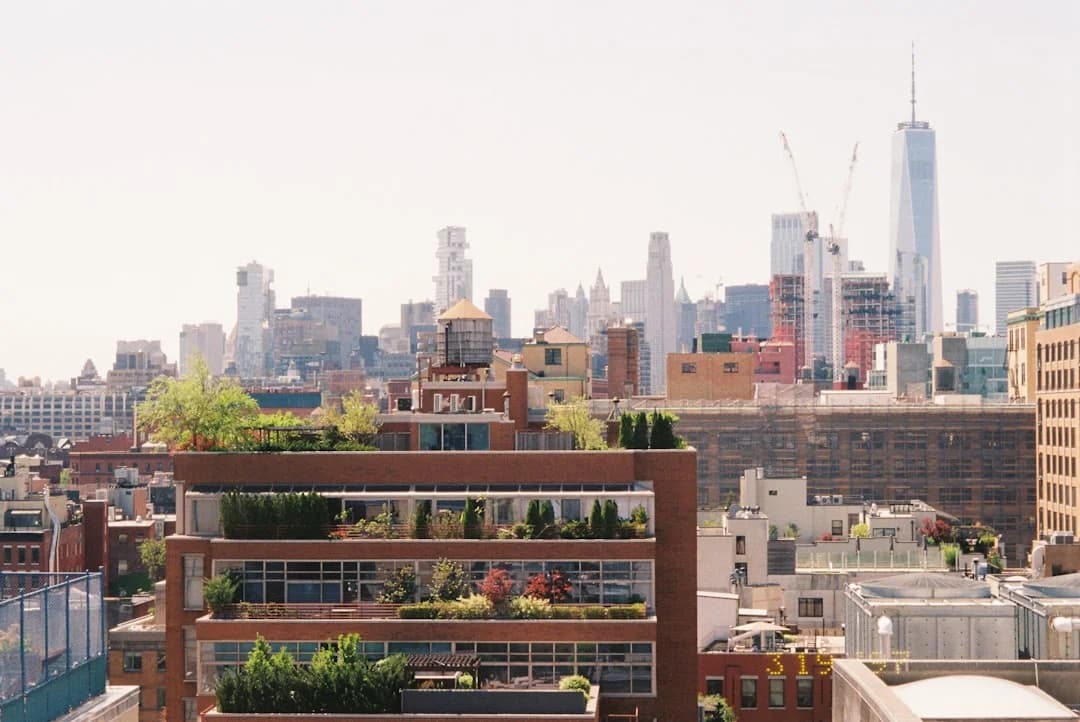
Photo by Karla Arróniz on Unsplash
New York City’s urban agriculture scene in 2026 sits at a pivotal crossroads. Vertical Farms and Urban Food Systems NYC 2026 frames a landscape where data-driven greenhouse operations, rooftop farms, and city policy intersect with investor interest and shifting consumer demand. In the first half of 2026, leaders in the field publicly reaffirmed commitments to local, pesticide-free greens and year-round production, signaling a maturing market where the urban food system can increasingly buffer supply chains against weather volatility and price swings. The most notable developments revolve around Gotham Greens, a long-running pioneer in climate-controlled urban farming, and a broader ecosystem that also includes indoor farms like Farm.One and other players navigating capital cycles that have roiled the sector in recent years. These ongoing changes carry implications for supply resilience, local employment, and the carbon footprint of urban food distribution, all of which matter to New York City residents who rely on city markets and local restaurants for a large share of fresh produce. The events of 2026—ranging from leadership shifts at a flagship urban farming company to continued expansion of rooftop and indoor facilities—underscore that Vertical Farms and Urban Food Systems NYC 2026 is not a single project but a growing portfolio of assets that could reshape the city’s food landscape over the next decade. (globenewswire.com)
What Happened
Gotham Greens leadership refresh and 15th anniversary In a move that signals both continuity and renewal for one of the city’s most prominent urban agriculture brands, Gotham Greens announced a leadership restructuring on April 16, 2026. The press release outlined a change designed to position the company for its next phase of growth as it celebrates its 15th anniversary. Viraj Puri, who co-founded Gotham Greens and has served as CEO since 2008, would assume the role of Executive Chairman, guiding long-term strategy and governance. Craig Stevenson was named Chief Executive Officer, bringing a background in scaling purpose-driven consumer brands to the table. The new leadership structure aims to deepen retail partnerships, accelerate product diversification, and expand distribution across the company’s nationwide network of climate-controlled greenhouse facilities. The announcement framed Gotham Greens’ trajectory as one of sustained growth in year-round, local production and value-added product lines, including salads, herbs, dressings, dips, and cooking sauces. The company positioned the leadership transition as a strategic step to support growth while maintaining its mission of transforming how and where fresh food is grown. (globenewswire.com)
Queens rooftop greenhouse expansion and NYC portfolio growth Gotham Greens maintains a three-location portfolio in New York City that illustrates the city’s rooftop-to-rooftop production model. The company’s fourth NYC location, its Queens greenhouse on the roof of the former Ideal Toy Company factory in Jamaica (Hollis), is a 60,000-square-foot facility that was completed in 2015 and has since become the largest New York City greenhouse in its network. This Queens site has grown into a cornerstone of local supply for millions of heads of leafy greens each year destined for the Tri-State area. Meanwhile, the company’s flagship Brooklyn facility remains a landmark project: the Greenpoint rooftop greenhouse in Brooklyn, opened in 2011, was Gotham Greens’ first commercial-scale rooftop operation. A second Brooklyn greenhouse, atop the Whole Foods Market flagship store in Gowanus, opened in 2013 and measures more than 20,000 square feet. Together, these NYC facilities anchor a national footprint described as a “climate-controlled, automated greenhouse that towers over the Long Island Railroad” in Jamaica, Queens, and a model for urban farming integrated with large retail partners. The company’s own history notes these milestones as part of a deliberate strategy to bring fresh, locally grown greens closer to where people live and shop. (gothamgreens.com)
Farm.One expands to bring NYC chefs closer to source In parallel with Gotham Greens’ expansion, Farm.One—the Prospect Heights indoor farm in Brooklyn—continues to position itself as a hub for ultra-local greens, specialty herbs, and edible flowers grown indoors year-round for NYC chefs and consumers. Farm.One’s facility, located at 625 Bergen Street in Brooklyn, is described as an urban farming space that functions as both a production site and an experiential venue. The site emphasizes vertical farming fed by an indoor environment designed to optimize flavor, texture, and nutritional quality for top-tier restaurants and culinary experiences. The company’s platform highlights not only its greens but also related experiences such as tours, classes, and events, underscoring a broader engagement strategy that ties urban farming to the city’s culinary culture. In 2026, Farm.One’s ongoing operations and events signal that the city’s demand for city-grown produce and knowledge-sharing around cultivation methods remains resilient. (farm.one)
Bowery Farming’s 2024 shutdown sets sector context for 2026 The 2026 landscape for vertical farming in NYC sits against the backdrop of industry volatility in the prior years. Bowery Farming, once a high-profile player in indoor farming, announced that it would cease operations in November 2024 after a period of intense capital needs, rising operating costs, and challenges in securing new financing. The announcement followed a sequence of earlier layoffs and restructuring, and it marked a major inflection point for the sector’s capital intensity and profitability prospects. TechCrunch covered the shutdown, noting that Bowery’s difficulties had been anticipated by observers and that the company had previously undergone rounds of layoffs in 2023 and a Chapter 11 process in the years prior to 2024. The Bankrupt or wind-down dynamics around Bowery in 2024 provide critical context for how NYC players—particularly rooftop and indoor urban farms—navigated capital cycles, energy costs, and competitive pressures in 2025 and 2026. These developments also feed into broader risk analyses for investors and policymakers watching the city’s evolving food system. (techcrunch.com)
New York City policy and procurement context in 2026 Policy context matters for vertical farming growth in NYC. The City’s Office of Urban Agriculture and related procurement policy work reflect ongoing efforts to align food purchasing with sustainability, local economic development, and nutrition standards. A 2026 report from the NYC Mayor’s Office of Urban Agriculture (MOUA) outlines procurement standards and value-aligned approaches, including discussions about plant-forward nutrition standards and the challenges of translating city procurement policy into practical, local supplier opportunities for smaller, hyperlocal farms. The document indicates that while the city has advanced nutrition and sustainability targets, there remain barriers to fully integrating small and micro-local growers into broad city contracts. The 2025-2026 Food Standards update is cited as part of a broader effort to reframe how NYC buys food for publicly funded programs, with implications for local vertical farming supply chains as they scale. This policy backdrop is important for 2026-2027 planning as the city weighs further incentives and requirements for locally sourced, climate-resilient produce. (nyc.gov)
Why It Matters
Local supply resilience and urban markets New York City’s vertical farming ecosystem—anchored by Gotham Greens’ rooftop and indoor facilities and complemented by Farm.One’s city-focused production—addresses a central urban policy objective: reducing supply chain volatility and delivering fresh greens with shorter lead times. Gotham Greens’ expansion in NYC, including a Queens rooftop facility that spans 60,000 square feet and Brooklyn rooftop and warehouse integrations, contributes to a distributed supply network that can lower transportation distances and improve product freshness for restaurants, retailers, and institutions. The company’s growth hints at a broader trend toward decentralized, high-density food production that supports local economies and strengthens resilience to weather disruptions. In 2026, Gotham Greens’ leadership reorganization—along with ongoing product expansion—underscores the durability of this model as a significant factor in the city’s food system. The network’s footprint and the company’s ambitious growth trajectory are supported by the firm’s own disclosures about yield, distribution, and the role of climate-controlled greenhouses in delivering consistent quality. (globenewswire.com)
Environmental and resource considerations Urban greenhouse operations emphasize resource efficiency relative to conventional field farming. Gotham Greens’ practice of climate-controlled indoor farming, with careful water and energy management, has been marketed as using significantly less water and land per unit of output than traditional farming. The company’s reporting and sustainability materials emphasize the environmental advantages of controlled-environment agriculture (CEA), including reductions in water use and land requirements, which translates to a lower ecological footprint per kilogram of greens produced. While exact water- and energy-use metrics vary by facility, the general claim of higher yields per square foot, reduced pesticide reliance, and the potential for renewable energy integration frames the ongoing environmental argument for urban vertical farming in NYC. (gothamgreens.com)
Economic and employment implications The NYC urban farming landscape is intertwined with local job creation, procurement opportunities, and community engagement. Gotham Greens’ footprint in New York City, coupled with its national expansion, points to a pipeline of jobs in design, construction, operations, logistics, and distribution that extend beyond direct farm roles to include engineering, data analytics, and R&D functions. The 2026 leadership announcement—along with Gotham Greens’ continued expansion—signals a long-term investment in urban agriculture as a scalable business model. NYC policy commentary also highlights the potential for value-aligned procurement to support small and minority-owned suppliers, which could increase participation by hyperlocal farms in city contracts. Yet barriers remain, including bid processes that favor larger suppliers and the complexity of integrating hyperlocal farms into large-scale public procurement systems. The policy landscape in 2026 thus influences the pace and modality of future urban farming growth. (globenewswire.com)
Market dynamics and investor sentiment The 2026 market context for vertical farming in NYC is shaped by a mix of growth signals and cautionary tales from the preceding years. Gotham Greens’ leadership transition and anniversary milestone reflect ongoing confidence in the viability of urban greenhouse models, particularly for leafy greens and herbs with stable shelf life and predictable demand across retailers, restaurants, and foodservice. At the same time, Bowery Farming’s 2024 shutdown stands as a stark reminder that the sector remains capital-intensive and exposed to macroeconomic cycles, energy costs, and funding environments. Observers note that the vertical farming space is characterized by rapid technology adoption, automation, and data-driven optimization, but also by fragile capital economics and the need for scalable, sustainable business models. For NYC, these dynamics suggest that the city’s urban farming growth will be highly dependent on access to capital, favorable energy arrangements, and policy support that can translate into reliable local procurement. (globenewswire.com)
Retail and consumer expectations The distribution network for Gotham Greens and similar operators demonstrates how vertical farming is increasingly integrated into mainstream food retail. Gotham Greens’ model—supplying supermarkets, retailers, and restaurants with year-round, pesticide-free greens—shapes consumer access to fresh produce sourced from within the city’s own urban footprint. The company’s press materials emphasize a growing share of shelf space and recurring partnerships with large national retailers, signaling that urban-grown greens can be positioned competitively against field-grown produce, especially when freshness and reduced supply chain complexity are valued by buyers and consumers. Farm.One’s ongoing consumer-facing events and on-site experiences also indicate demand for locally produced, story-rich urban agriculture that connects diners and diners-to-be with the city’s farming narrative. (globenewswire.com)
What’s Next
Near-term milestones to watch Gotham Greens’ leadership shift sets a practical agenda for the remainder of 2026 and into 2027. With Craig Stevenson at the helm as CEO and Viraj Puri transitioning to Executive Chairman, observers will be watching for concrete milestones in retail partnerships, new product lines, and potential facility additions or expansions within the NYC region and across the national network. The company’s stated trajectory emphasizes growth in distribution, an expanded portfolio of fresh foods, and a continued emphasis on sustainability and technology-driven efficiency. In addition, Gotham Greens’ Queens and Brooklyn facilities are expected to continue producing millions of heads of greens annually for the New York Tri-State area, reinforcing the city’s ability to source a significant share of its leafy greens locally. The company’s own timeline and public statements position 2026 as a year of solidifying capabilities and expanding commercial velocity. (globenewswire.com)
Facility-level and ecosystem developments to monitor Beyond Gotham Greens, Farm.One’s ongoing operations at 625 Bergen Street and its community-engagement programs suggest continued momentum in NYC’s indoor farming segment. Farm.One’s dual role as a production hub and event space could help sustain a local culture of urban farming literacy while supporting demand from chefs and culinary institutions for ultra-fresh ingredients. The interaction between Farm.One and Gotham Greens, both operating in Brooklyn and surrounding boroughs, will be telling for how different business models—urban greenhouse farms focused on volume and city-scale supply versus boutique, chef-driven microfarms—coexist and potentially collaborate in a shared urban marketplace. (farm.one)
Policy and market signal watch The 2026 policy environment—particularly procurement standards and nutrition-focused standards updates—will influence future demand for vertical-farmed produce in NYC’s public sector and schools, hospitals, and city agencies. If the city advances more explicit value-aligned procurement criteria and expands opportunities for small and micro-growers, hyperlocal vertical farming operators could gain greater access to stable demand, enabling further scale and investment. Conversely, if procurement remains heavily weighted toward larger vendors or if price differentials persist, smaller urban farms may face headwinds in competing on cost. The 2025 and 2026 updates to NYC’s Food Standards and related procurement policies will thus be critical to monitor as a proxy for how quickly urban farming can translate into widely adopted, city-supported supply chains. (nyc.gov)
Longer-term trajectory and risk considerations Looking further ahead, the 2026 landscape continues to hinge on several interrelated factors: energy costs and efficiency gains from advanced greenhouse technologies; the availability of capital for new builds or repurposed spaces; and the city’s willingness to design procurement mechanisms that accommodate smaller players while remaining financially prudent. The broader market context shows a sector that has proven the viability of urban farming in certain forms, but the economics of large-scale, year-round production remain a central question. Analysts point to a mix of opportunities—local, resilient supply chains; reduced food miles; and the potential for innovative product lines and consumer experiences—as well as risks, including capital intensity, regulatory complexity, and competition for urban land and rooftop space. As NYC presses forward with Vertical Farms and Urban Food Systems NYC 2026, the next several years will reveal which combination of policy support, technology optimization, and market demand delivers durable success in the city’s unique urban environment. (techcrunch.com)
Closing
In 2026, New York City’s urban farming narrative reflects a city that has committed to local, climate-conscious, and technology-enabled food production as part of its core urban resilience strategy. Gotham Greens’ leadership evolution, the expansion of rooftop and indoor facilities, and the presence of chef-driven operations like Farm.One collectively illustrate a diverse and evolving ecosystem that could reshape how NYC feeds itself in the years ahead. For readers and industry watchers, the most reliable signal remains the data: production capacity, distribution reach, and policy alignment. As NYC continues to test and refine its approach to Vertical Farms and Urban Food Systems NYC 2026, updates in corporate leadership, facility investments, and procurement rules will offer a practical read on whether these urban farming strategies translate into a more stable, local, and sustainable food system for the city’s residents and visitors.
In the weeks and months ahead, analysts will be watching for the pace of Gotham Greens’ retail expansion, Farm.One’s community engagement initiatives, and any new rooftop or indoor facilities that appear on the city’s radar. The balance of optimism and caution in 2026 reflects a sector that remains promising but nuanced—one in which measurable gains in local supply, environmental stewardship, and job creation will require continued attention to capital, policy, and market demand. As the city’s farm-forward ambitions mature,Vertical Farms and Urban Food Systems NYC 2026 will continue to unfold in real time, with NYC residents ultimately benefitting from fresher options, more transparent supply chains, and a broader set of choices for healthy, locally produced greens. (globenewswire.com)