Upper East Side Gallery Scene 2026: Data-Driven Trends

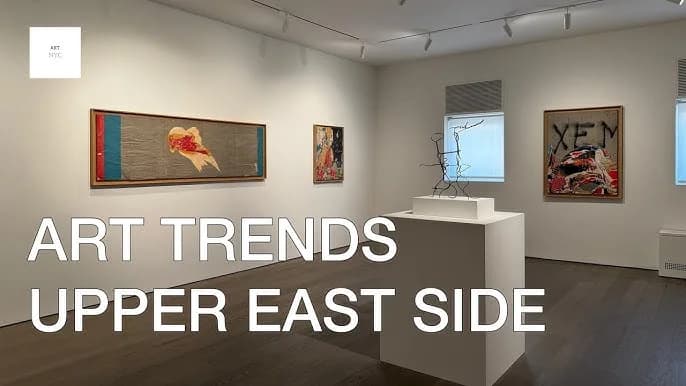
The Upper East Side gallery scene 2026 is shaping up as a microcosm of New York’s broader art-market recalibration. In a year when gallery spaces across Manhattan confront rising operating costs, shifting collector behavior, and a rapidly evolving tech toolkit, the Upper East Side remains a pivotal anchor for blue‑chip presentations while also testing new, nimble formats that promise efficiency and reach. This trend analysis uses current market data, recent closures, and credible industry signals to map what’s driving the scene now and what it could mean for galleries, collectors, and the broader ecosystem in the year ahead. The latest data from late 2025 into 2026 show a market that is more selective and price-conscious, even as high-value sales and strategic openings continue to matter. For context, November 2025 NY auction activity approached record levels, with total NY auction sales around $2.2 billion and bidding vigor signaling growing buyer confidence after a softer 2024–2025 period. (news.artnet.com) The same period also witnessed a wave of high‑profile gallery closures and strategic pivots that reverberated through Manhattan’s gallery map, underscoring a market in transition. (news.artnet.com) As operators recalibrate, the Upper East Side is balancing traditional prestige with new models that leverage technology, partnerships, and curated experiences to sustain relevance in a tightened market.
The conversation around technology and market structure is not abstract here. Industry reporting from late 2025 and early 2026 highlights how downsizing, consolidation, and strategic repositioning are becoming normative rather than exceptional. The Art Newspaper and Artnet News have chronicled a year of closures and organizational pivots—Blum, Venus Over Manhattan, Sperone Westwater, and Stephen Friedman all signaling shifts or exits in 2025–2026—while also chronicling the emergence of nimble, independent fairs and new gallery formats that aim to weather tighter financial conditions. These dynamics are particularly salient for the Upper East Side, where space costs remain elevated and where the density of blue‑chip institutions continues to shape both expectations and opportunities. (theartnewspaper.com)
Trends in the Upper East Side Gallery Scene 2026
Space and Location Dynamics
The Upper East Side remains a magnet for blue‑chip exhibitions, private views, and museum-adjacent programming, yet space economics are redefining what is feasible. Manhattan’s overall inventory contraction in 2025—a reaction to a tighter development cycle and slower new launches—translated into a more selective leasing environment for gallery spaces. Real estate market data indicate that Manhattan contract signings declined and overall inventory shrank, contributing to elevated occupancy costs that challenge mid‑sized spaces and aspiring new entrants. This creates a bifurcated landscape: enduring prestige venues on the Upper East Side can command premium rents, while newer or smaller galleries seek lower-cost consolidations or pop-ups to test markets. In early 2026, market observers note this tension as a defining characteristic of the broader NYC gallery economy. (therealdeal.com)
Case in point: high-profile openings in the neighborhood and nearby corridors continue, but not without caution. The Upper East Side’s gallery network hosts events like the annual Upper East Side Art Walk, where many galleries participate in extended evening programming to sustain visibility in a competitive market. The 2025 edition (and related press coverage) demonstrates sustained local engagement despite wider market pressures, underscoring the area’s role as a hub for curated exhibition programming rather than a purely transactional space. (jillnewhouse.com)
Table: Quick model of space considerations (illustrative, not prescriptive) | Model | Typical Strengths | Principal Risks | Tech/Platform Needs | | Traditional Upper East Side gallery | Prestige, deep collectors network, stable programming | Very high fixed costs, sensitivity to market cycles | Moderate; CRM, email marketing, secure POS | | Independent nimble spaces (shorter leases, pop-ups) | Flexibility, lower overhead, experimental shows | Scheduling, long-term audience building | High; social, online viewing rooms, virtual events | | Online viewing rooms / digital-first approaches | Scale, reach beyond local foot traffic | Sales friction, on-site experience gaps | Very high; e-commerce, virtual tours, data analytics |
Market Consolidation and Gallery Closures
The period leading into 2026 has been characterized by notable closures and strategic reorientations among several New York-based blue-chip players. Artnet News highlighted a wave of mid- to large-scale closures in 2025, framing the moment as part of a structural adjustment rather than a temporary downturn. The trend is continuing into 2026 as galleries reassess operating models, cost structures, and balance sheets in a market that has seen both rising high-end auction totals and persistent overhead pressure. The Sperone Westwater closure on the Bowery, followed by Stephen Friedman’s decision to close the New York program and consolidate in London, illustrate a theater of change across the city’s gallery map. Venus Over Manhattan’ s closure in mid‑2025, reported by industry outlets, further confirms that even once‑stable spaces are vulnerable to macro-market cycles, particularly when investment flows shift and costs rise. For Upper East Side stakeholders, these moves signal both risk and opportunity—risk in terms of competition for a shrinking pool of buyers and opportunities in forming strategic alliances with new entrants or in repurposing space for boutique programs and residencies. (theartnewspaper.com)
“The energy is not positive… there are fewer and fewer collectors who are actively buying.” This Sell‑side sentiment captured in market analyses underscores the urgency of rethinking value propositions, especially for traditional singular‑location galleries in high‑cost neighborhoods like the Upper East Side. (news.artnet.com)
Within this context, the Upper East Side’s resilience will hinge on how galleries adapt—whether by intensifying private-view cycles, deepening relationships with trusted collectors, or embracing curated, multi‑venue collaborations that reduce cost while preserving the aura of prestige. The relocation of some programs to more nimble formats, and the rise of non-traditional fairs and private spaces, point toward a more diversified ecosystem that still relies on the neighborhood’s enduring cachet. The market’s 2025–2026 momentum, including robust auction results and the continued emergence of new formats, supports a cautious optimism for those who align with proven programs and disciplined budgets. (news.artnet.com)
Digital Engagement and New Formats
Even as brick‑and‑mortar real estate remains expensive, technology and new formats are enabling a broader set of engagement options for Upper East Side institutions and satellite spaces. Industry reporting points to a trend toward nimble fairs, smaller‑scale curated programs, and exhibitions designed to maximize impact without the overhead of large‑scale installations. Independent and nimble fairs—such as Esther in Manhattan—demonstrate a successful recalibration of event formats that can supplement traditional gallery calendars. This shift is particularly relevant for the Upper East Side, where institutions can leverage proximity to museums and affluent audiences while experimenting with hybrid events that blend in‑person and digital experiences. (theartnewspaper.com)
In addition, the return of high‑net‑worth participation in auctions in late 2025 and into 2026 signals continued demand for blue‑chip works and select contemporary pieces, a dynamic that Upper East Side dealers can exploit by curating tightly focused, high‑quality programs that complement auction‑driven demand. The momentum in November 2025 NY auctions—totaling around $2.2 billion and marking a significant upswing versus 2024—suggests that a demand tail remains for marquee works, especially when paired with strong provenance and connoisseurship. (news.artnet.com)
Collector Demand and Price Signals
A key data point from late 2025 is the volume and speed of activity at the top end of the market. Auctions in New York posted robust totals, a sign that serious buyers have reengaged after a softer period. But observers emphasize that this demand remains concentrated—high‑value lots selling at premium prices—while the broader market contends with tighter liquidity and more selective buying, particularly for mid‑tier price points. The UBS Global Year in Review for 2025 underscores that while top‑tier benchmarks have seen resilience, the gallery sector faces a more asymmetric recovery, with several notable gallery closures signaling caution in the mid‑level spectrum. This suggests that Upper East Side galleries may increasingly anchor their strategy on curated prize works, collaboration with established collectors, and targeted outreach rather than broad, mass-market campaigns. (ubs.com)
Case Studies: Real‑World Examples of Transition
- Sperone Westwater’s closure after 50 years represents one of the most consequential shifts for New York’s Bowery‑anchored blue chips. The Art Newspaper reported the closure amid a broader cofounder dispute, illustrating how governance and business scale can influence a long‑standing gallery’s viability in a volatile market. The closure not only reshapes the Bowery corridor but also reverberates to neighboring markets, including the Upper East Side, where collaborations and cross‑pollination among venues can create new opportunities for audience development and sales. (theartnewspaper.com)
- Stephen Friedman’s decision to conclude the New York program and consolidate in London signals a strategic recalibration for a dealer with a transatlantic footprint. As London gains momentum, the move highlights how capital, talent, and programming can migrate to where costs and strategic advantages align most effectively. For the Upper East Side, this underscores the importance of unique local propositions—think intimate, highly curated shows or multi‑venue openings that leverage the district’s prestige while minimizing operating risk. (theartnewspaper.com)
Why It’s Happening
Market Forces Reshaping the NYC Art Landscape

The New York gallery market is navigating a confluence of macroeconomic headwinds and opportunity signals. Real estate dynamics in Manhattan, including scarce supply and elevated rents, place pressure on traditional gallery footprints and push operators toward more flexible models or relocation to lower‑cost submarkets or shorter lease terms. The Real Deal’s analysis of 2025 development activity notes that buyers paused on certain projects, causing inventory tightening in Manhattan and a pronounced bar to new, large‑scale launches. For the Upper East Side, this means a more selective leasing environment and greater emphasis on prestige and curated programming rather than expending capital on expansive square footage. (therealdeal.com)
On the demand side, the market has shown resilience at the high end, with November 2025 NY auction totals of about $2.2 billion and robust bidding against a backdrop of historically elevated price expectations. Yet this momentum sits alongside caution in mid‑tier segments, as many galleries report tightened liquidity and a need to prove value quickly. The UBS Year in Review 2025 notes that purse strings tightened for galleries as the broader art market faced structural adjustments, including lower “bought‑in” rates and caution around pricing and supply. Taken together, these data points suggest Upper East Side players must balance the lure of blue‑chip prestige with the discipline of nimble, audience‑driven programming and prudent cost management. (news.artnet.com)
Tech, Fairs, and New Formats as Companions to Brick‑and‑Mortar
Technology and event formats are increasingly central to how galleries reach audiences amid tighter budgets. The rise of nimble, independent fairs and intimate, specialized presentations is a direct response to the need for cost discipline while preserving impact. The Art Newspaper’s late‑2025 coverage of nimble fairs and new formats—brought into focus by Manhattan‑based Esther and similar initiatives—highlights a market shift toward coalition‑building and affordability over sheer scale. This has direct implications for the Upper East Side: galleries in the district can leverage partnerships with contemporary fairs and cross‑venue collaborations to maintain visibility without overreaching on physical space. (theartnewspaper.com)
Additionally, a wave of high‑profile closures across New York in 2025–2026 — including Sperone Westwater, Blum, Venus Over Manhattan, and Stephen Friedman’s New York program—reflects the structural pressures on the traditional model. While openings continue, these closures encourage a rethinking of business architecture: more collaboration, more flexible exhibit formats, and a greater emphasis on audience‑building through veterans’ networks and targeted programming. The data from industry outlets through 2025–2026 consistently point to a market where technology, partnerships, and curated experiences are the levers that may sustain vitality even as fixed costs rise. (theartnewspaper.com)
Industry Factors and the NYC Gallery Map
The broader industry shift toward consolidation and strategic refocusing has ripple effects for the Upper East Side. A notable macro trend is the prioritization of marquee programs and provenance‑driven exhibitions, applied in the context of heightened cost sensitivity. The Art Market Year in Review from UBS emphasizes that while auction markets showed resilience, the gallery ecosystem faced pressures such as higher operating costs and fewer high‑volume sales cycles, reinforcing the calculus that many galleries must perform: maintain art‑adjacent prestige, control overhead, and explore new formats that can scale without commensurate risk. This aligns with observable moves within the Upper East Side and adjacent districts, where galleries emphasize curated, exclusive programming and cross‑institution collaborations. (ubs.com)
What It Means for Business, Consumers, and the Industry
Business Impact: Gallerists and Staff
The 2025–2026 market environment has forced many galleries to reassess staffing, costs, and programming cadence. Several high‑profile closures demonstrate that even storied spaces must adapt to a lower‑growth reality or risk insolvency in the face of sustained overhead. This has practical implications for Upper East Side operators: floor plans may shrink, program calendars may tighten, and staff roles may become more hybrid as galleries blend curatorial duties with front‑line outreach and digital engagement. The UBS check-in on the year confirms structural pressures for galleries and the need for resilient business models, including careful cost control and diversified revenue streams. (ubs.com)
Consumer Effects: Access, Experience, and Value
For collectors and the art‑savvy public, the evolving Upper East Side gallery ecosystem promises more intimate, curated experiences that balance high‑value works with accessible entry points. The move toward smaller, more curated formats and the growth of private viewings can offer deeper engagement for serious buyers, while nimble fair formats broaden exposure beyond the immediate neighborhood. The Upper East Side Art Walk demonstrates that local audiences remain engaged and receptive to high‑quality programming, even as broader market dynamics tighten. This suggests that consumer value in 2026 may hinge on the quality of relationships, the accessibility of exclusive programming, and the strategic use of digital channels to democratize access without diluting brand value. (jillnewhouse.com)
Industry Changes: Fairs, Representations, and the Map
The industry is reconfiguring around a mix of legacy, high‑end galleries and newer formats that promise efficiency and audience reach. The Art Newspaper’s reporting on nimble fairs and the January 2026 iterations underscores a market that is rethinking format and geography—an important signal for Upper East Side players considering cross‑market collaborations or satellite initiatives. Meanwhile, the continued momentum in top‑tier auctions indicates that demand for blue‑chip works remains a pillar of market confidence, even as mid‑tier segments struggle. Taken together, the Upper East Side gallery ecosystem is likely to see a combination of traditional prestige programming, strategic partnerships with other venues, and a growing emphasis on private‑view models and digital engagement to sustain growth. (theartnewspaper.com)
Looking Ahead: 6–12 Month Outlook and Opportunities
Near‑Term Projections
Over the next 6–12 months, the Upper East Side gallery scene 2026 is likely to exhibit continued consolidation, with several mid‑sized players pursuing partnerships or portfolio diversification to manage overhead and risk. The broader market signals—strong but selective auction activity, ongoing gallery closures, and the rise of independent fairs—support a cautious but opportunistic posture for the district. Expect more targeted, invitation‑only exhibitions paired with virtual components to reach a global audience without incurring the cost of full‑scale installations. The Whitney Biennial’s 2026 edition, along with other major NYC exhibitions, will continue to anchor discourse and potentially catalyze attendance and press interest around local programs. (en.wikipedia.org)
The market’s momentum in late 2025 suggests a potential inflection point: buyers who stayed on the sidelines may reenter selectively, while top tier buyers maintain a focus on proven artists, strong provenance, and compelling presentation. As a result, Upper East Side galleries that can deliver tightly curated programs with clear value propositions—paired with strategic digital outreach—stand to gain visibility and sales while controlling costs. (news.artnet.com)
Opportunities for Operators
- Curated cross‑venue collaborations: Pairings with nearby institutions, museums, or private spaces can heighten visibility without absorbing the full burden of new buildouts. The rise of nimble fairs and coalition events described by The Art Newspaper supports this direction. (theartnewspaper.com)
- Deep‑dive programming for core collectors: Programs that offer behind‑the‑scenes access, artist talks, and limited edition releases can sustain high engagement with a smaller audience while maintaining premium pricing and reduced footprint. Oracle market signals show high‑end demand remains alive when provenance and presentation are compelling. (news.artnet.com)
- Digital expansion with high‑touch curation: A hybrid model combining online viewing rooms, virtual tours, and private previews can broaden reach beyond the Upper East Side while preserving the brand’s exclusivity. The broader market’s shift toward digital channels and nimble formats provides a blueprint for selective adoption. (theartnewspaper.com)
Preparation for Gallerists and Collectors
- Cost discipline: With fixed costs under pressure, operators should adopt a leaner operating model, including review of lease terms, staffing models, and programming budgets. UBS’s market check emphasizes operating costs as a central challenge for galleries in a market that remains high‑cost and selective. (ubs.com)
- Audience development: Build and maintain direct channels to collectors through curated events, member programs, and private previews, leveraging the neighborhood’s existing high‑net‑worth and culturally engaged audiences. The Upper East Side’s ongoing art walks and private view initiatives provide a proven template for sustained engagement. (jillnewhouse.com)
- Market monitoring: Keep a close eye on macro signals—auction totals, notable closures, and fair circuit adjustments—to adapt programming and partnerships quickly. The 2025–2026 market coverage from Artnet News and The Art Newspaper provides a framework for interpreting shifts in real time. (news.artnet.com)
Closing: Key Takeaways and Actionable Steps
The data‑driven read on the Upper East Side gallery scene 2026 reveals a district anchored by prestige but under financial and logistical pressure in a broader art market that remains volatile yet capable of generating high‑value sales. The combination of elevated real estate costs, a wave of strategic closures in the industry, and the rapid adoption of nimble formats and digital engagement creates a unique set of both risks and opportunities for Upper East Side galleries. For operators, success in 2026 will hinge on disciplined cost management, meaningful collaborations, and a willingness to blend traditional curatorial excellence with flexible, audience‑driven programming. Collectors and enthusiasts will find value in highly curated experiences that pair exclusivity with accessibility—whether in person or through carefully designed digital channels.
As the market evolves, the Upper East Side gallery ecosystem should view 6–12 months as a window for experimentation — not reckoning — with model diversification that preserves the neighborhood’s iconic status while embracing new configurations that can weather market headwinds. Monitored closely, these shifts can yield a resilient, dynamic scene that remains a north star for New York’s art landscape.