University-Driven Innovation Districts NYC 2026 Update

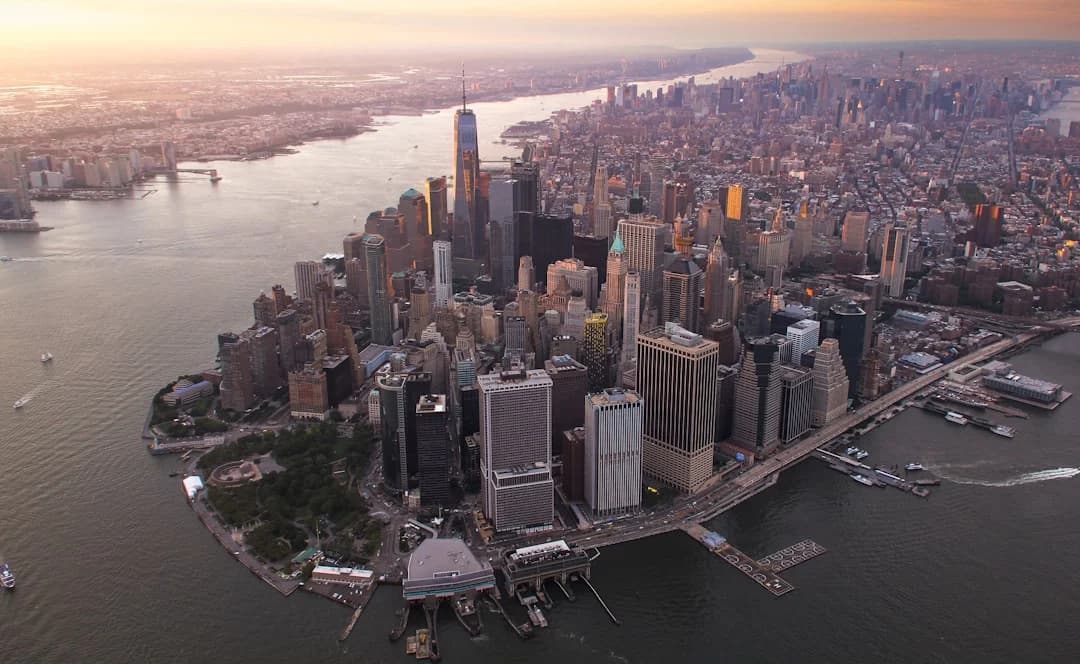
Photo by Brandon Jacoby on Unsplash
New York City in 2026 is seeing a pronounced acceleration of university-driven collaboration across its neighborhoods, signaling a shift in how research, workforce development, and real estate intersect with city-building. The term University-Driven Innovation Districts NYC 2026 captures a growing pattern in which universities anchor neighborhood ecosystems, pair with city agencies, and deploy capital to accelerate innovation as a driver of economic and social outcomes. This year’s announcements, pilots, and investments illuminate a city where academia and government co-create the infrastructure, curricula, and spaces that turn research into tangible urban benefits. The signal is clear: universities are not just educating students in New York City’s tech economy; they are actively shaping the city’s capacity to innovate, build, and compete on a global stage. (news.cornell.edu)
In the first half of 2026, a set of high-visibility actions reinforced this trend. For example, Cornell Tech formalized a model to accelerate urban governance through its Urban Innovation Fellows Initiative, embedding mid-career professionals in New York City agencies to tackle real-world challenges—from sanitation routing to decarbonization planning. The March 4, 2026 report detailing the initiative underscored that the fellows spend four days a week in city agencies and one day per week at Cornell Tech, a structure designed to push city-scale projects forward more quickly and with tighter alignment to agency priorities. This is a practical blueprint for how University-Driven Innovation Districts NYC 2026 can translate campus know-how into city outcomes. (news.cornell.edu)
The spring and summer of 2026 also featured notable public investments that tie university capacity more tightly to workforce development and green economy goals. On April 21, 2026, NYCEDC announced a $7 million capital investment to the City University of New York (CUNY) distributed across six campuses to modernize green training facilities and infrastructure aimed at climate-smart careers. The funding, described as a citywide effort to strengthen the CUNY-to-career pipeline, is expected to benefit thousands of students annually and to support ongoing climate resilience and sustainability initiatives across the five boroughs. The accompanying coverage notes the broader plan to build a more inclusive economy by expanding access to high-quality green jobs through university-led training facilities. This is a central data point for readers tracking University-Driven Innovation Districts NYC 2026, since it operationalizes the link between higher education assets and local labor market needs. (cuny.edu)
A few weeks later, on June 8, 2026, NYU Tandon’s Urban Future Lab-led Offshore Wind Innovation Hub published its 2026 Call for Innovators, expanding industry collaboration with NYSERDA and NOWRDC and signaling a broader ecosystem expansion around climate tech, port operations, and maritime logistics. The announcement also highlighted a move to BATWorks, the Brooklyn Army Terminal climate innovation hub, with a new partnership network and seed funding opportunities. The program’s evolving footprint—alongside renewed partnerships—illustrates how University-Driven Innovation Districts NYC 2026 are not just about space but about a continuous pipeline of startups, pilots, and scale opportunities anchored in university expertise. The hub’s 2026 call for innovators lists a July 27, 2026 deadline, signaling near-term opportunities for founders to engage with a city-backed, university-linked climate economy. (engineering.nyu.edu)
Beyond these 2026 milestones, a landmark life sciences and education hub project in Manhattan continued to shape the city’s innovation landscape. SPARC Kips Bay, a joint city-university initiative, reached a critical milestone with its ground-breaking ceremony on December 23, 2025. The project is designed to deliver a large-scale life sciences and health sciences hub that connects Hunter College, CUNY, and city partners to a pipeline of jobs and economic activity. Officials have framed SPARC Kips Bay as a cornerstone for LifeSci NYC, with projections of substantial job creation and economic impact over the next three decades. As the plans evolved, the project’s footprint—encompassing new academic, health, and research facilities—became a focal point for how University-Driven Innovation Districts NYC 2026 can knit academia, clinical research, and industry into a coherent development strategy. The timeline calls for ongoing deconstruction and rebuilding activity, with the new campus space anticipated to begin taking shape in 2027 and to contribute to the city’s long-range life sciences ambitions. (cuny.edu)
In parallel, an early signal of notable private-public collaboration inside NYC’s university ecosystem came from Vanderbilt University’s announced New York City campus, which was publicly unveiled in November 2025 and slated to open in fall 2026. Located in Chelsea, the campus spans multiple buildings and is designed to host undergraduate and graduate programs, creating a direct pipeline between higher education and New York’s tech, finance, and design communities. The timeline envisions inaugural cohorts in Fall 2026, highlighting a major expansion of a flagship research university into a new urban setting. Vanderbilt’s NYC campus is frequently cited as a high-profile exemplar of University-Driven Innovation Districts NYC 2026 in practice, illustrating how a university’s physical presence in Manhattan can accelerate cross-sector collaboration, talent development, and place-based innovation. (news.vanderbilt.edu)
Even broader ecosystem signals emerged from CCNY’s May 18, 2026 announcements about grant-funded data-driven tools and research support. The Alfred P. Sloan Foundation awarded CCNY’s J. Max Bond Center for Urban Futures a $355,550 grant for a project titled “The Equitable Development Index” (EDI), aimed at transforming a decade of public data into a transparent, data-driven decision-support tool to strengthen equity in housing and land-use review processes. The EDI project, described in CCNY’s press release, represents a concrete instance of how university centers can translate policy-relevant data into civic infrastructure, a core tenet of University-Driven Innovation Districts NYC 2026. Separately, CCNY’s Sloan grant context situates the Bond Center as a hub where urban data, governance, and equity intersect with city-scale development—precisely the kind of cross-cutting activity that urban universities champion in NYC. May 18, 2026 and related CCNY releases provide a window into the data- and policy-driven side of the university-led urban innovation agenda. (ccny.cuny.edu)
The SPARC Kips Bay and SPARC East development itself is a multi-faceted, long-term plan with a rigorous ULURP and public accountability framework. The December 2025 ground-breaking postulates large-scale life sciences and health-care space, and the project’s next steps include deconstructing existing facilities with the 2026 timeline and moving to construction in 2027, aiming to deliver a major new node of urban life sciences activity by the early 2030s. The SPARC East element is positioned to complement SPARC Kips Bay, aligning with LifeSci NYC’s ambition to create tens of millions of square feet of life sciences space and to anchor career pathways for New Yorkers across education and industry. The role of SPARC within University-Driven Innovation Districts NYC 2026 is emblematic: a city-university collaboration designed to produce durable capabilities in research, workforce development, and regional competitiveness. (cuny.edu)
In short, the year 2026 has crystallized a recognizable pattern in New York: universities are not only teaching the next generation of technologists and policymakers; they are actively building the physical and policy infrastructure that enables innovation districts to scale. The investments in green workforce training at CUNY, the Cornell Tech Urban Innovation Fellows program, Vanderbilt’s Chelsea campus development, and NYU Tandon’s Offshore Wind Innovation Hub expansion—all of these are pieces of a broader trend where higher education anchors neighborhood ecosystems, and city agencies and private partners co-create the market for advanced technologies, climate solutions, and equitable growth. As readers, we should view University-Driven Innovation Districts NYC 2026 as a lens on urban strategy—where data-informed governance, industry partnerships, and capital investment converge to shape the city’s long-term resilience and competitiveness. The context, drawn from publicly reported programs and investments, shows a deliberate, data-driven approach to aligning academia with city-building goals while keeping a clear focus on equitable opportunity across all five boroughs. For those tracking the urban tech economy, the year 2026 offers a useful set of reference points for both momentum and accountability. (news.cornell.edu)
Section 1 — What Happened
SPARC Kips Bay Groundbreaking and SPARC East Developments
A milestone for life sciences and urban health infrastructure
The SPARC Kips Bay project marked a major milestone with a December 23, 2025 groundbreaking announcement. The initiative is designed to transform a long-standing block into a world-class life sciences and health sciences hub, bringing together public health institutions, Hunter College, and City University of New York (CUNY) leadership with city partners. The press materials framed SPARC Kips Bay as a diversified ecosystem intended to deliver thousands of jobs, substantial economic impact, and a stronger pipeline from New York City’s schools to its life sciences workforce. The project’s vision emphasizes not just lab space but integrated educational and career pathways, aligning with LifeSci NYC and New York’s broader growth goals. The plan anticipates the transformation of 2 million square feet of space as the core physical backbone for this urban innovation district node. In addition, SPARC’s broader umbrella—LifeSci NYC—tests a model where universities, agencies, and industry co-create spaces that foster research translation, talent development, and regional competitiveness. The timeline calls for deconstruction of existing facilities in 2026, with construction slated to begin in 2027, setting the stage for a major repositioning of East Side life sciences assets in the coming years. This is a pivotal development in the University-Driven Innovation Districts NYC 2026 narrative. (cuny.edu)
The SPARC East component and public collaboration
The SPARC East strand, located at 455 First Ave., is described as a complementary phase that will replace the current Public Health Lab with a new life sciences hub. The project’s current timeline calls for demolition to occur in 2026, after the New York City Department of Health and Mental Hygiene vacates, and for construction to begin in 2027. The SPARC initiative—driven by state and city leadership in collaboration with Hunter College and CUNY—illustrates the city’s approach to knitting together education, research, and public health in a shared, place-based district. The SPARC program is a critical node in LifeSci NYC’s ambition to create 10 million square feet of life sciences space and to anchor a robust workforce pipeline across the health, science, and education ecosystems. (cuny.edu)
Cornell Tech and Urban Innovation Fellows Initiative
A new model for university-city co-government
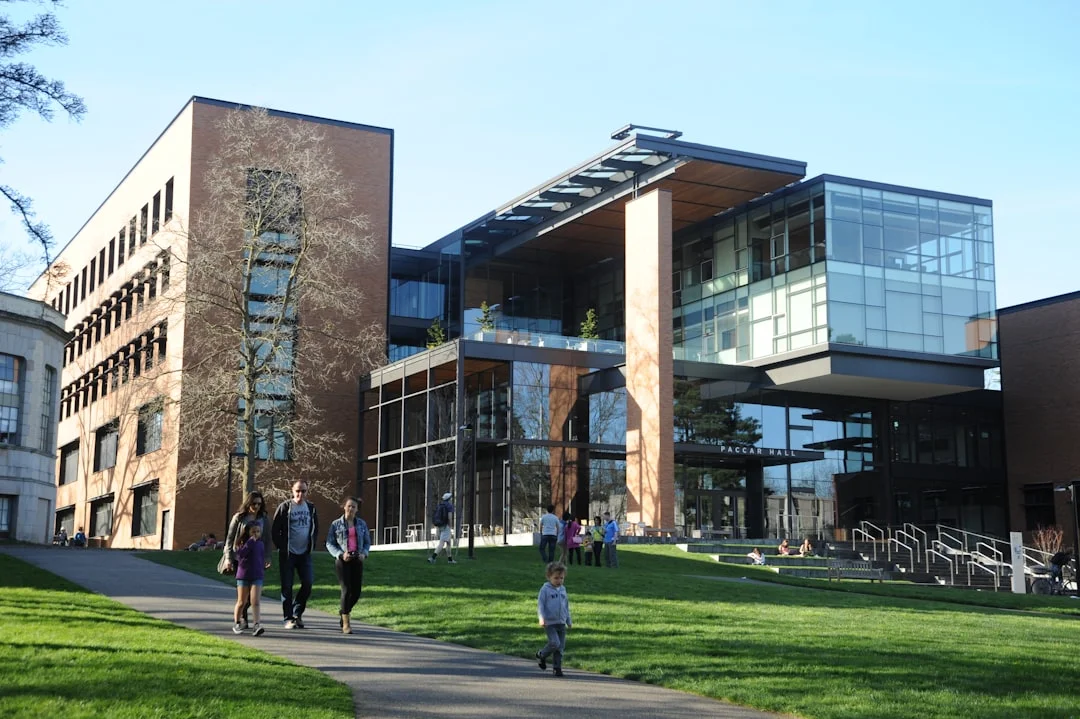
On March 4, 2026, the Cornell Chronicle ran a feature about the Urban Innovation Fellows Initiative, a two-year program launched in 2024 by the Urban Tech Hub at Cornell Tech with Bloomberg Philanthropies support. The project embeds mid-career professionals—data scientists, urban planners, designers, and entrepreneurs—in New York City agencies to accelerate critical city projects. The article highlights that the fellows work four days per week at their assigned agency, and one day per week at Cornell Tech to share insights and build linkages with campus resources. The program is designed to amplify city capacity, improve procurement and decarbonization processes, and provide a scalable blueprint for other cities seeking to leverage university talent to solve municipal problems. This model aligns with the core thesis of University-Driven Innovation Districts NYC 2026: that universities can serve as organizational engines for city-scale innovation by pairing academic capabilities with public sector needs. The article notes the fellows’ work across housing, transportation, water, decarbonization, and economic development, reflecting a broad portfolio of city priorities. (news.cornell.edu)
The broader implication for NYC’s innovation economy
The Cornell Chronicle profile also quotes university and city leaders emphasizing that the public-private collaboration can drive innovation at scale. As one official notes, “This model works because all the projects are driven by the agencies, and the innovation comes from the fellows having skills that’s matched to the agency’s needs.” Such statements underscore a governance approach that relies on targeted talent placement and cross-agency collaboration—an operational pattern that is central to University-Driven Innovation Districts NYC 2026. The initiative has already yielded tangible outcomes in the form of improved data integration and better-informed decision-making around critical city services. (news.cornell.edu)
NYCEDC and CUNY Green Workforce Investment
A multi-campus capital program to accelerate climate-ready skills
On April 21, 2026, NYCEDC announced a $7 million capital investment to CUNY across six campuses, intended to modernize green infrastructure and expand climate-smart workforce training. The press release emphasizes that the funding will support new and upgraded facilities, including specialized labs and equipment, with a projected impact on nearly 6,000–6,000+ students annually across several campuses. The investment connects directly to New York City’s broader climate and workforce goals, and it is framed as a strategic move to strengthen the city’s talent pipeline in climate resilience, sustainable building practices, offshore wind, and related sectors. This investment is a concrete example of how University-Driven Innovation Districts NYC 2026 translate research into a scalable local workforce evolution, and it reflects ongoing city-level commitments to aligning higher education assets with job creation and equity objectives. The following day, CUNY issued further coverage on the city’s green economy investments and the role of campuses in delivering climate-ready skills across boroughs. (cuny.edu)
Offshore Wind Innovation Hub Expansion and BATWorks
A climate-tech ecosystem expands its footprint in NYC

On June 8, 2026, NYU Tandon’s Offshore Wind Innovation Hub published its 2026 Call for Innovators, signaling a broader expansion of climate tech programming in partnership with NOWRDC, NYSERDA, and NYCEDC. The program is entering its fourth year and now includes an enhanced partnership network, new seed grants, and a revamped headquarters at BATWorks in the Brooklyn Army Terminal. The hub’s leadership frames the expansion as a continued effort to connect climate technology startups with the local ecosystem, thereby accelerating pilots and commercialization in New York and beyond. Timelines and program milestones—such as the July 27, 2026 application deadline—provide readers with concrete, near-term milestones to watch as part of University-Driven Innovation Districts NYC 2026. The relocation to BATWorks anchors the initiative in a dedicated climate-innovation campus, enhancing proximity to industry partners and local talent. (engineering.nyu.edu)
The BATWorks expansion and community impact
Commercial Observer’s reporting on April 15, 2026, confirms that BATWorks will host a temporary space at the Brooklyn Army Terminal as the climate hub’s development proceeds, with a permanent campus planned to cover approximately 130,000 square feet and to be completed in 2028. The piece emphasizes the collaboration among CCNY and NYU in delivering what NYC officials describe as the largest green energy workforce development facility in the city. The BATWorks development represents a pivotal real-world manifestation of University-Driven Innovation Districts NYC 2026, illustrating how university-led climate and energy programs can leverage public land assets to create jobs and accelerate industry formation in climate tech. (commercialobserver.com)
Vanderbilt University’s New York City Campus
A flagship urban campus in Chelsea opening Fall 2026
In November 2025, Vanderbilt University announced its expansion into New York City with a campus in Chelsea. The project is designed to host Undergraduate Semester Program activities and a Master of Science in Business and Technology program, integrating Vanderbilt’s engineering and business traditions with New York’s technology and finance ecosystems. The Chelsea campus is described as spanning nearly a block and featuring 13 buildings, with the inaugural programs slated to begin in Fall 2026 and applications for the Fall 2026 cohort opening in January 2026. Vanderbilt’s NYC campus is a high-profile example of how a university can establish a fixed, place-based footprint to accelerate collaboration across academia, industry, and civic life, reinforcing the University-Driven Innovation Districts NYC 2026 thesis. (news.vanderbilt.edu)
CCNY, The Bond Center, and Data-Driven Urban Innovation
Building the tools to govern equitable growth
CCNY’s May 18, 2026 Sloan Foundation grant for the J. Max Bond Center for Urban Futures underscores the importance of data-centric governance in the university-driven urban innovation agenda. The center’s Equitable Development Index (EDI) aims to synthesize public data sources—such as Environmental Impact Statements—and community data to produce community-inclusive, data-driven rankings for development trade-offs. CCNY’s release frames EDI as a tool to improve transparency, equity, and shared governance in New York City’s housing and land-use processes. This initiative aligns with the broader University-Driven Innovation Districts NYC 2026 objective to couple research with practical urban policy tools that improve decision-making and demonstrate tangible improvements in neighborhood outcomes. The Sloan Foundation’s support, described in CCNY’s piece, highlights the role of university-based centers in translating public data into civic infrastructure. May 18, 2026 serves as a concrete data point for readers tracking how academic initiatives feed into city planning and equity goals. (ccny.cuny.edu)
Section 2 — Why It Matters
The Economic and Employment Impacts
A new tier of city-building that blends research, policy, and labor markets
The SPARC Kips Bay and LifeSci NYC initiatives illustrate how a major urban area can convert university research into tangible economic magnetism. The SPARC project’s public-facing milestones describe a plan to bring over 2 million square feet of life sciences and health sciences space to a concentrated neighborhood, with projected job creation in the tens of thousands and a multi-decade economic impact in the billions. That scale—paired with the SPARC East transition and the life sciences space growth—positions New York City as a leading example of how university-led innovation districts can become engines for high-value sectors and stable, middle-class work opportunities. The combination of space, research, and workforce pipelines is central to University-Driven Innovation Districts NYC 2026, and it aligns with city and state forecasts about life sciences capacity and regional competitiveness. (cuny.edu)
The green economy investments at CUNY—capital projects across six campuses—underscore a parallel track: universities as training hubs for climate and resilience industries, with the potential to scale across the five boroughs. The NYCEDC’s $7 million allocation is explicitly tied to climate-forward career pathways, modernized facilities, and new labs. Combined with the CCNY Sloan-supported EDI project, these actions demonstrate that New York’s innovation districts are measured not only by lab benches and research outputs but also by the ability to translate public dollars into workforce readiness and inclusive growth. In short, University-Driven Innovation Districts NYC 2026 are part of a broader strategy to align capital, curricula, and community need in a way that yields durable economic gains for a wide cross-section of New Yorkers. (cuny.edu)
Talent Pipelines and Educational Alignment
Universities as active architects of labor-market transitions
The Cornell Urban Innovation Fellows program and Vanderbilt’s NYC campus expansion point to a shared objective: produce graduates and fellows who can immediately contribute to complex urban systems. Cornell Tech’s model—placing fellows in city agencies and providing structured campus collaboration—creates a direct channel from academia to city operations, enabling pilots and innovations to scale within government processes. The program’s emphasis on real-world impact—such as improving street-level data systems and decarbonization strategies—highlights how universities can serve as practical accelerators for city-scale policy delivery. In an era when cities face persistent demand for STEM talent, University-Driven Innovation Districts NYC 2026 illustrate a concrete path to sustaining a robust talent pipeline. (news.cornell.edu)
The NYU Tandon Offshore Wind Hub’s expansion—and the associated BATWorks relocation—demonstrates how university-affiliated programs can anchor new industry clusters in climate tech and energy, linking research, startups, and public programs with local workforce needs. The 2026 Call for Innovators, together with seed grants and a centralized climate hub, signals that New York is building a ready-to-scale talent and entrepreneurship environment, anchored by a university ecosystem. The Vanderbilt NYC campus adds another dimension: a massing of academic programs in a dense urban setting that can accelerate collaboration across finance, technology, and life sciences, while offering students real-world exposure to New York’s markets. Taken together, these moves show a mature approach to talent development that integrates academia, industry, and city governance. (engineering.nyu.edu)
Real Estate, Real Value, and Neighborhood Impacts
The premium and resilience of university-anchored districts
Real estate and retail markets increasingly reflect the value of university anchors as talent magnet and knowledge center. The JLL report on University-Anchored Innovation Districts shows that submarkets with university anchors tend to outperform broader local markets, often commanding rent premiums and stronger retail demand. This trend underpins how University-Driven Innovation Districts NYC 2026 can shape not just offices and labs, but the surrounding neighborhoods—affecting transit investment, housing affordability considerations, and activations in arts and culture. For real estate and development stakeholders, the evidence points to prioritizing or at least evaluating opportunities in submarkets that feature established university anchors, given the observed resilience and growth patterns. While NYC-specific numbers require ongoing data, the study’s findings offer a useful lens for readers to interpret the emerging university-led clusters in Manhattan and broader NYC neighborhoods. (jll.com)
Closing
In 2026, University-Driven Innovation Districts NYC 2026 are not a single program or a single campus; they are a tapestry of institutional partnerships, city commitments, and private-sector collaborations that together are reshaping how New York builds, educates, and grows. From SPARC Kips Bay’s groundbreaking to CUNY’s green-workforce investments, Cornell Tech’s Urban Innovation Fellows, Vanderbilt’s Chelsea campus, and NYU Tandon’s Offshore Wind Hub expansion, these developments illuminate a shared framework: universities anchored in the city’s fabric can catalyze durable growth, equitable opportunity, and a climate-conscious future. As readers follow the next rounds of funding, construction milestones, and program rollouts, the core narrative remains clear: in NYC, higher education is not just a source of knowledge—it is a strategic partner in urban innovation, economic vitality, and the city’s ongoing transformation into a more resilient, inclusive, and prosperous metropolis. Stay tuned to Manhattan Monday for continued coverage of these critical developments, with regular updates on program milestones, capital investments, and new campus initiatives that will define the trajectory of University-Driven Innovation Districts NYC 2026 and beyond. (cuny.edu)