Transit-Accessibility Upgrades NYC 2026: Access and Impact
Transit-Accessibility Upgrades NYC 2026 update outlines new projects, timelines, and neighborhood effects with data-driven context.
 By
By 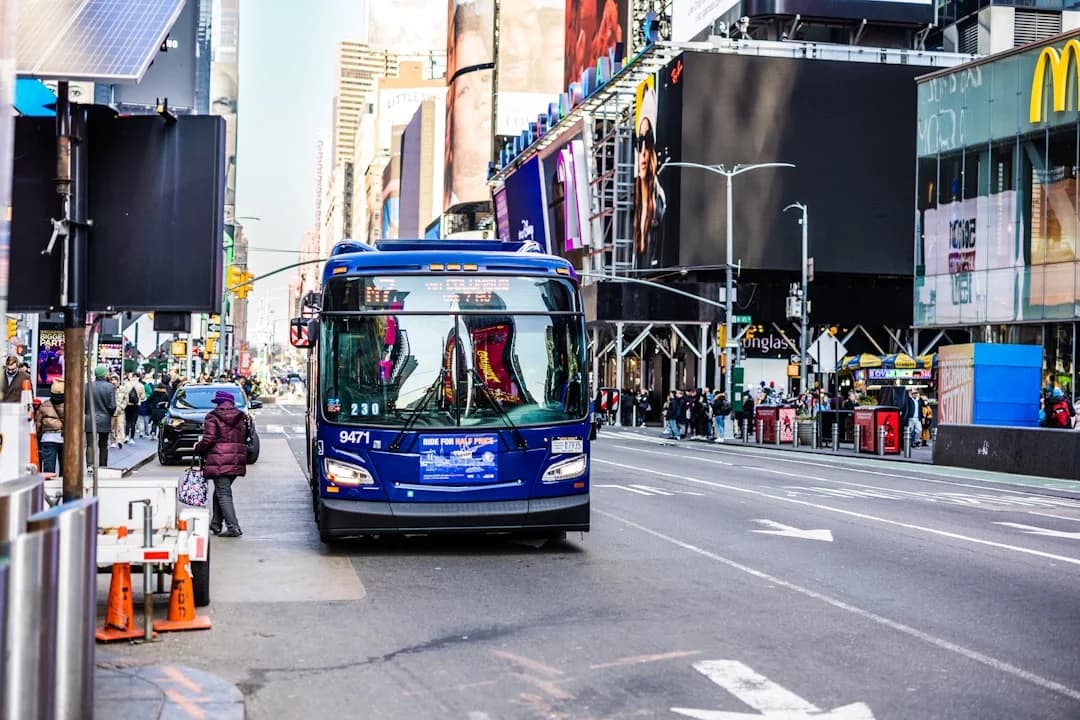
The news is unfolding around Transit-Accessibility Upgrades NYC 2026 as the MTA expands its systemwide accessibility push with new elevators, ramps, and improved station design. On April 7, 2026, the agency reported a targeted wave of upgrades at four high-traffic stations in Manhattan and Brooklyn, signaling both the pace and the scale of this ongoing effort. The four stations—14th Street-Union Square, DeKalb Avenue, 145th Street, and Lexington Avenue-63rd Street—received elevator or escalator replacements and other improvements designed to restore reliable access for riders with mobility needs, parents with strollers, and travelers navigating busy transfers. This milestone is part of a broader, multi-year plan to modernize aging infrastructure while expanding ADA accessibility across the system. The MTA emphasized that these upgrades are essential to improving reliability and rider experience, and they come as the agency continues to execute the 2025-2029 Capital Plan, which prioritizes accessibility upgrades at dozens more stations. (spectrumlocalnews.com)
Beyond the April 2026 upgrades, officials and planners are framing Transit-Accessibility Upgrades NYC 2026 within a longer arc of modernization. The MTA’s current capital plan contemplates making at least 60 subway stations fully accessible during the 2025-2029 period, with 30 stations advanced for accessibility improvements and another 30 to be named later after additional public engagement. The plan also calls for ongoing replacement of elevators to keep accessibility reliable, and for investments in next-generation fare gates and customer information displays to improve the rider experience systemwide. These elements form a coordinated program to raise accessibility while enhancing service reliability and information clarity for riders across five boroughs. (mta.info)
The momentum is also visible in the Bronx, Brooklyn, Queens, Manhattan, and beyond, where the MTA points to a broader investment cadence that will shape neighborhoods and real estate markets as access to transit improves. In late 2025, Governor Hochul announced a deepened funding commitment to accessibility, noting that the 2025-2029 Capital Plan includes at least 66 station accessibility projects and highlighting a year of record elevator replacements and new accessible stations. The governor described accessibility upgrades not only as equity-driven, but as a driver of system resilience and long-term growth, with completion timelines tied to congestion-relief funding and private-sector partnerships. The announcements underscored a multi-agency effort to accelerate access while maintaining fiscal discipline. (governor.ny.gov)
Section 1: What Happened
Recent upgrades roll out at key stations
The first major news headline of 2026 for Transit-Accessibility Upgrades NYC 2026 centers on a tangible, systemwide upgrade wave. On April 7, 2026, the MTA announced elevator and escalator replacements and related access improvements at four busy stations: 14th Street-Union Square (Manhattan), DeKalb Avenue (Brooklyn), 145th Street (Manhattan), and Lexington Avenue-63rd Street (Manhattan). The upgrades include replacing street-to-mezzanine and mezzanine-to-platform elevators and replacing an escalator in active service. MTA officials framed these four projects as part of a broader strategy to reduce outages and improve reliability for riders who rely on accessibility features as a daily necessity. This wave is part of an expanded accessibility program that aligns with the agency’s push to modernize core infrastructure while advancing ADA compliance across the network. The Spectrum News report on the four-station upgrades corroborates the targeted works and emphasizes the agency’s intent to pair upgrades with planned outages to minimize unplanned service disruptions. (spectrumlocalnews.com)
The Middletown Rd project signals a major bundle of upgrades in the Bronx
Looking toward the fall of 2025 and into 2026 and 2027, progress at Middletown Rd (Pelham Bay) illustrates the scale and sequencing of ADA upgrades under the 2025-2029 Capital Plan. The MTA announced a groundbreaking for the Middletown Rd station accessibility project in the Bronx in October 2025. The project, which is part of ADA Bundle 6, includes two new street-to-platform elevators, two new street-to-control-area stairs, track improvements, and street-level utility upgrades. The Middletown Rd package also involves curb extensions and a package of related improvements across five stations (Norwood Av, Burnside Av, Myrtle Av, Avenue I, and Middletown Rd). The project is funded through a mix of federal dollars (including All Stations Accessibility Program funds) and Congestion Relief- mode funding, demonstrating how Congestion Relief tolling money helps accelerate accessibility work. The anticipated completion date for Middletown Rd is Summer 2027, illustrating the multi-year horizon for even high-priority upgrades. This project marks the first completed phase of ADA Bundle 6 under the broader 2025-2029 plan and signals the pace at which new elevators and ramps will come online across the system. (mta.info)
Funding and policy context: accessibility at the core of the capital plan
The capital plan framework for Transit-Accessibility Upgrades NYC 2026 rests on a multi-source funding strategy that blends federal dollars, state investments, city support, and private-sector collaboration. The 2025-2029 Capital Plan outlines an aggressive program to add or upgrade elevators at at least 60 subway stations, with continued investments in escalator and elevator replacements to maintain a state of good repair. The plan’s investments also include modernization of signaling, introduction of next-generation fare gates, and upgrades to passenger information displays to improve the overall rider experience. The document explicitly identifies funding from multiple streams and outlines a staged implementation that names 30 initial stations to be upgraded with accessibility improvements and reserves the rest for later prioritization. In 2025, Governor Hochul highlighted that the capital program includes at least 66 station accessibility projects, with hundreds more elevator upgrades funded by Congestion Relief tolling and related state funding streams, reinforcing accessibility as a central pillar of system modernization. (mta.info)
Section 2: Why It Matters
The rider impact: expanding access and reliability

The most direct impact of Transit-Accessibility Upgrades NYC 2026 is felt by riders who rely on elevators and ramps to navigate the subway. The MTA’s ongoing accessibility investments in the 2020-2024 Capital Program, which targeted nearly $6 billion to make 67 stations newly ADA-accessible and to modernize 78 elevators, illustrate the scale and ambition of the modernization push. As of 2026, the system is moving toward broader accessibility with a long-term commitment to ensure that no rider is more than a short distance from an accessible station. The 2025-29 Capital Plan further expands the scope, aiming to make at least 60 stations fully accessible and to replace or upgrade dozens more elevators, signaling a sustained emphasis on reliability and user experience. This transition is supported by the MTA’s ongoing station accessibility projects page, which tracks progress, timelines, and the stations currently under upgrade, including stations in the Bronx, Brooklyn, Manhattan, Queens, and Staten Island. (mta.info)
The 2025-29 Plan’s accessibility commitments are reinforced by the governor’s announcements highlighting a year of record elevator replacements and openings in 2025, and the expectation that the momentum continues into 2026 and beyond. The plan’s expanded scope—labeled in agency documents as the ADA Upgrade program—emphasizes the practical effect of making many more stations accessible, with a specific focus on geographic coverage, high-ridership corridors, and key transfer points. In addition to elevator and ramp work, the plan calls for upgrading public-address systems and customer information screens, which improves reliability and wayfinding for riders with disabilities and those who depend on wayfinding aids. This holistic approach reflects how accessibility upgrades intersect with broader technology modernization that enhances the overall rider experience. (governor.ny.gov)
Neighborhood and market implications: how accessibility shapes place
The expansion of transit accessibility can influence neighborhood dynamics and real estate markets over time. When more stations become accessible, commuters gain more predictable access to transit options, which can affect residential desirability and nearby commercial activity. The 2025-29 Capital Plan’s geographic coverage and the Bronx-focused investments highlighted in the Middletown Rd project indicate a strategic push to connect underserved areas to larger employment hubs via accessible access points. The Bronx, in particular, is highlighted as a region with significant investment, which aligns with policy goals to promote equitable mobility and support local economies through improved transit access. The governor’s December 2025 briefing on completed accessibility projects emphasizes broader system-wide momentum, which can influence developers’ site selection and the pricing dynamics of surrounding real estate as access quality improves. (mta.info)
Beyond real estate, accessibility upgrades interact with broader technology trends in transit. The plan includes next-generation fare gates and enhanced passenger information systems, which can improve efficiency and reduce dwell times at stations. In practice, these upgrades support better crowd management and more consistent service experiences for riders who rely on accessible facilities. The inclusion of ITS (intelligent transportation systems) elements aligns with industry norms for transit modernization, where accessibility and digital information are increasingly integrated to deliver more reliable, predictable journeys. The 2025-29 plan’s emphasis on upgrading passenger information screens and other customer-facing technologies reflects this convergence of accessibility with digital transformation. (mta.info)
Technology and market trends: signaling, cars, and customer experience
A core aspect of Transit-Accessibility Upgrades NYC 2026 is the interplay between accessibility and technology modernization. The 2025-29 Capital Plan notes investments in signals modernization (CBTC upgrades), which enable more reliable and frequent service, complement elevator and ramp work by reducing train separation times and improving safety during outages. The plan also calls for next-generation fare gates and enhanced customer information systems, which together with elevator upgrades, create a more user-friendly system for riders with mobility challenges. The plan’s detail on these investments shows a clear alignment between accessibility goals and broader innovation efforts, signaling a market trend toward integrated infrastructure upgrades that combine physical accessibility with digital user experiences. (mta.info)
As the MTA continues to implement its capital program, the agency is increasingly partnering with the private sector through initiatives such as Zoning for Accessibility (ZFA). ZFA engagement helps accelerate accessibility at specific stations by leveraging private developers to fund and construct accessible entrances and elevators, while ensuring ongoing maintenance. This model supports rapid expansion of accessibility while delivering value to developers who gain density incentives. The 2020-2024 period includes notable ZFA projects, and the 2025-2029 plan continues to elevate this approach as part of a broader accessibility strategy. The MTA has explicitly used ZFA to complement traditional capital investments, highlighting a broader trend toward public-private collaboration in mass transit modernization. (mta.info)
Section 3: What’s Next
Upcoming milestones and timeline
Looking ahead, Transit-Accessibility Upgrades NYC 2026 is positioned as a multi-year program with a clear sequence of events and deliverables. The Middletown Rd project in the Bronx provides a concrete example of the pipeline: the project’s completion is targeted for Summer 2027, and it represents the first of multiple packages (ADA Bundle 6) beginning construction as part of a broad set of improvements across five stations. The project’s scope includes two new street-to-platform elevators and other enhancements designed to improve accessibility and station operations. The schedule illustrates that key upgrades will continue to unfold through 2027 and beyond, with multiple stations anticipated to join the list of accessible facilities in the 2025-2029 Capital Plan. (mta.info)
The MTA’s ongoing public engagement around the 2025-2029 Capital Plan remains an important signal for timing and priorities. The agency has hosted public forums and open houses to solicit input on accessibility priorities, with communications indicating that at least 60 stations will be made accessible as part of the plan and that additional stations will be named through ongoing updates and community engagement. This process suggests that readers should expect updates to the list of targeted stations as the plan evolves and as engineering and construction progress. (mta.info)
What to watch for next: policy and implementation signals
Several near-term signals will help readers understand how Transit-Accessibility Upgrades NYC 2026 will unfold. First, the continued rollout of elevator upgrades and station improvements—especially at busy interchanges—will be essential for rider confidence and system reliability. The April 7 upgrades demonstrate that the MTA is pursuing a high-visibility, multi-station upgrade cadence, with the expectation of more stations added to the accessible list in the coming months. The MTA’s Station Accessibility Upgrades page notes ongoing implementation through the 2020-2024 plan era and beyond, with continued progress into the 2025-2029 capital period and potential expansion through Congestion Relief and ZFA programs. (mta.info)
Second, the continued integration of technology modernization with accessibility—such as upgraded public-address systems, real-time information, and next-generation fare gates—will shape rider experiences and system efficiency. The 2025-29 Capital Plan’s explicit investments in fare gates and information screens underscore this alignment between accessibility and digital modernization. The plan’s detailed programmatic goals show how a modern transit network seeks to deliver universal access while leveraging data and customer interfaces to improve daily ridership outcomes. (mta.info)
Third, funding dynamics and multi-agency collaboration will play a critical role. The 2025-29 plan relies on a combination of federal and state funding, Congestion Relief tolling proceeds, and public-private partnerships. Governor Hochul’s year-end 2025 update highlights the capital plan’s funding scope, including Congestion Relief revenues and the ZFA program, which are designed to accelerate accessibility work while staying on budget. Riders should monitor these funding developments, as changes could influence timing and station prioritization. (governor.ny.gov)
What’s next for riders and communities is a continued sequence of station openings, elevator replacements, and accessibility upgrades tied to a multi-year capital agenda. The MTA’s ongoing progress—cited in official releases and in capital plan documents—suggests that 2026 and 2027 will bring a steady cadence of new accessible entrances, reinforced by technological upgrades and improved wayfinding. The agency’s public communications emphasize the goal of a more accessible subway system that serves every New Yorker, with a long-range commitment to 95% accessibility by 2055. While that horizon is far, the near-term steps—four-station upgrades in April 2026, the Middletown Rd groundbreaking, and the broader 60-station accessibility target—offer a clear window into how Transit-Accessibility Upgrades NYC 2026 will unfold in the months and years ahead. (spectrumlocalnews.com)
Closing
As the city moves through 2026, Transit-Accessibility Upgrades NYC 2026 stands as a defining element of New York’s transportation modernization. Officials emphasize a measured, data-driven approach that combines capital investments, private-sector collaboration, and technology modernization to deliver a transit system that is more accessible, reliable, and user-friendly. The four-station upgrades in April 2026 and the Middletown Rd project’s progress signal that the path to broad accessibility is underway and accelerating. Readers should stay informed through MTA press releases, the Station Accessibility Upgrades page, and NYC DOT progress reports to understand specific station-by-station updates and the evolving timetable for accessibility improvements across the network. The long-term goal remains clear: a transit system where accessible stations and reliable service are the norm, not the exception, and where all riders can count on safe, inclusive, and efficient travel every day. (spectrumlocalnews.com)

Photo by Samuel Isaacs on Unsplash