Staten Island Cultural Revival 2026: a New Arts Wave
Photo by Lemon Ruan on Unsplash
Staten Island is at the center of a broader citywide push to make arts and culture more expansive, accessible, and sustainable in 2026. As New York City channels record levels of public funding into cultural programs, Staten Island’s own cultural ecosystem is expanding in distinctive ways that researchers, policymakers, and residents are watching closely. The pulse of Staten Island cultural revival 2026 is visible in the borough’s revived venues, new collaborations with hospitals and universities, and participation in citywide initiatives designed to broaden access to art, history, and performance. This moment matters not just for artists and institutions, but for neighborhood economies, local education, and the way residents experience culture in daily life. In a year that has seen a wave of municipal and nonprofit investments in the arts across all five boroughs, Staten Island’s story offers both a microcosm of larger trends and unique local dynamics that could shape the borough’s cultural profile for years to come.
The year began with a citywide funding surge that has direct implications for Staten Island. On February 26, 2026, the New York City Department of Cultural Affairs (DCLA) announced a historic $74.3 million in Cultural Development Fund (CDF) grants spread across 1,171 cultural organizations citywide. The awards mark the largest annual allocation for the CDF and the broadest reach of grantee organizations in the program’s history, with a focus on multi-year awards, equity, and accessibility. The agency emphasized that more than 84% of applicants received awards, and that 96% of grantees provide free or subsidized programming to improve affordability for New Yorkers. This funding framework is critical for Staten Island’s arts organizations and for citywide initiatives that influence the borough’s cultural environment, from museums and theaters to community arts programs and public art commissions. (nyc.gov)
In parallel, Staten Island’s local arts community has detailed its own near-term opportunities and milestones for 2026. Staten Island Arts, the borough’s dedicated arts funder and grant administrator, notes that its Fall 2026 project grants cycle is closed, while Spring 2026 opportunities opened on June 1, 2026, with a deadline of June 30, 2026. The grants—designed to support individual artists, small collectives, and neighborhood-based programming—draw on funding from the City’s Cultural Development Fund and the New York State Council on the Arts, among other sources. This schedule underscores both the ongoing need for local support and the growing pipeline of Staten Island-based cultural activity ahead of summer programming and year-end exhibitions. (statenislandarts.org)
The citywide funding surge is complemented by important institutional expansions that affect Staten Island directly. In late September 2025, Mayor Adams and the DCLA announced the largest expansion of the city’s Cultural Institutions Group (CIG) in nearly five decades, adding five new members to the CIG—BRIC, Bronx Children’s Museum, Louis Armstrong House Museum, Noble Maritime Collection, and Pregones/Puerto Rican Traveling Theater. This milestone raises the number of CIG members to 39 and delivers a stable operating subsidy to each member, ensuring greater programmatic capacity and more predictable access to city-backed support. The Noble Maritime Collection, housed at Snug Harbor Cultural Center on Staten Island, stands to benefit from longer-term planning, expanded hours, and strengthened educational programming as part of the CIG network. The broader implications for Staten Island include enhanced visibility for the Snug Harbor site, expanded cross-borough collaboration, and more opportunities to host free or low-cost programming sourced from a larger, city-backed cultural system. (nyc.gov)
A concrete local success story that has become a touchstone for Staten Island cultural revival 2026 is the revival of the St. George Theatre in St. George. In a piece published on June 8, 2026, Industry Magazine chronicles how three Staten Island women—Rosemary Cappozalo, Doreen Cugno, and Luanne Sorrentino—led a nonprofit effort to save the vaunted venue, which reopened in a form that preserves its historic character while expanding its role as a community hub. The article highlights a deep, ongoing collaboration with Staten Island University Hospital (SIUH), including a Summer Arts Intensive program for local youth that blends performance training with health education and life skills. The St. George Theatre example embodies the convergence of culture, community health, and neighborhood renewal, illustrating how Staten Island’s cultural revival 2026 is not only about galleries and galleries but about experiential, community-centered offerings that anchor local life. The revival story also signals how philanthropic leadership, citizen advocacy, and hospital partnerships can transform aging cultural assets into active engines of local renewal. (industrym.com)
Beyond formal venues and institutional tied funding, cultural events across Staten Island and the city illustrate the borough’s vibrant engagement with global and immigrant cultures, a hallmark of 2026 activity. The 4th annual Albanian Picnic at Wolfe’s Pond Park—documented by Staten Island Advance coverage and mirrored by the New York State Senate newsroom on June 1, 2026—drew more than 8,000 attendees, turning Wolfe’s Pond Park into one of Staten Island’s largest cultural celebrations. The presence of elected officials at the event underscores the political and community support for immigrant and heritage programming as part of Staten Island’s cultural revival 2026. While not the sole driver of the broader trend, such large-scale cultural gatherings illustrate the borough’s continued diversification of its cultural portfolio and audience reach. (nysenate.gov)
At the same time, the World Cup 2026 wave of citywide cultural engagement provides a macro backdrop for Staten Island’s 2026 cultural activity. The May 2026 NYC Mayor’s Office rollout of the NYC Neighborhood Passport, a citywide initiative coordinated with Team Wonder and partners like Neurun, created a digital map and stamp-based passport program to guide residents and visitors through hundreds of cultural institutions and community events during the World Cup period. Among the participating organizations listed for Staten Island are the Staten Island Museum and the Staten Island Children’s Museum, signaling that the World Cup moment is being used to spotlight Staten Island’s cultural assets on a global stage. The Passport program illustrates how technology-enabled, city-led cultural marketing can expand the reach of Staten Island’s institutions and attract diverse audiences during a high-profile citywide event. (nyc.gov)
The broader trend of cultural investment is reinforced by ongoing city and state collaboration with arts funders and cultural venues on Staten Island and beyond. The NYC DCLA grants program, which funds a wide range of urban cultural projects—from libraries and museums to education-focused arts initiatives—remains a powerful signal of sustained city commitment to cultural life in 2026. The FY26 awards represented a milestone for the CDF, and the FY27 cycle opened in early 2026 with applications due in April, emphasizing the continuity of municipal support and the emphasis on equity, access, and resilience in the arts sector. The combination of citywide funding, local grant opportunities, and iconic revival projects like St. George Theatre points to a multi-layered Staten Island cultural revival 2026, driven by both public policy and community leadership. (nyc.gov)
Section 1: What Happened
Citywide funding push and the scale of change
A historic CDF allocation and its implications

Photo by Stephen McFadden on Unsplash
The February 26, 2026 DCLA announcement of $74.3 million in Cultural Development Fund grants covers 1,171 organizations citywide. The press release emphasizes multi-year awards, equity initiatives, and accessibility aims, including a dedicated Safety Net fund to preserve programming continuity for long-standing grantees. The numbers are striking: more than half of the recipients are in multi-year cycles, and a large share of applicants benefit from funds aimed at language access, disability inclusion, and equity-focused allocations across neighborhoods. These structural changes create a more stable, inclusive, and scalable funding environment that can support Staten Island’s cultural organizations as they plan multi-year programs. In practical terms, this means longer programming horizons for museums, galleries, performing arts groups, and community-based cultural projects, including those on Staten Island. (nyc.gov)
Local actors leveraging city funding
Staten Island Arts’ 2026 grant cycle schedule demonstrates a connected city–borough ecosystem for arts funding. The organization’s Spring 2026 cycle, opening June 1 and due June 30, aligns with the broader city calendar, ensuring local artists and small organizations can tap into the same citywide funding framework while maintaining local eligibility requirements. The Fall 2026 cycle remains a separate window, reinforcing the seasonal rhythm of grant-making and the need for local applicants to plan accordingly. This arrangement enables Staten Island-based artists to apply for grants that support community programs, neighborhood-based exhibitions, and youth arts initiatives—an essential component of Staten Island cultural revival 2026. (statenislandarts.org)
Enduring venues, renewed ambitions
The St. George Theatre’s revival as a symbolic anchor
The St. George Theatre revival story embodies a broader pattern of civic courage and cultural investment on Staten Island. The 2004–2026 arc—from a near-ruin to a functioning cultural anchor—illustrates how local leadership and philanthropy can transform a neighborhood’s identity. The theater’s partnership with Staten Island University Hospital and its expansion of the Summer Arts Intensive program demonstrate how cultural infrastructure can intersect with education, health, and youth development to generate measurable community benefits. The revival is not simply about saving a historic venue; it is about reanimating a neighborhood’s social and economic ecosystem, drawing residents to arts programming, and creating spillover effects for nearby businesses. (industrym.com)
Noble Maritime Collection and the Snug Harbor complex
As part of the 2025 CIG expansion, Noble Maritime Collection was designated a Cultural Institutions Group member, anchoring Staten Island’s profile within the city’s premier network of cultural venues. The designation is paired with a commitment to annual operating subsidies and expanded access to programming, with ambitions to increase attendance and extend hours. The Noble Maritime Collection’s focus on the working waterfront, maritime history, and related public programming aligns with Snug Harbor’s broader mission to serve as a multidisciplinary cultural campus. This development is both a symbolic milestone for Staten Island’s cultural legitimacy and a practical lever for growing programming and audience reach. (nyc.gov)
Community culture as a strategic asset
Immigrant heritage and large-scale cultural events
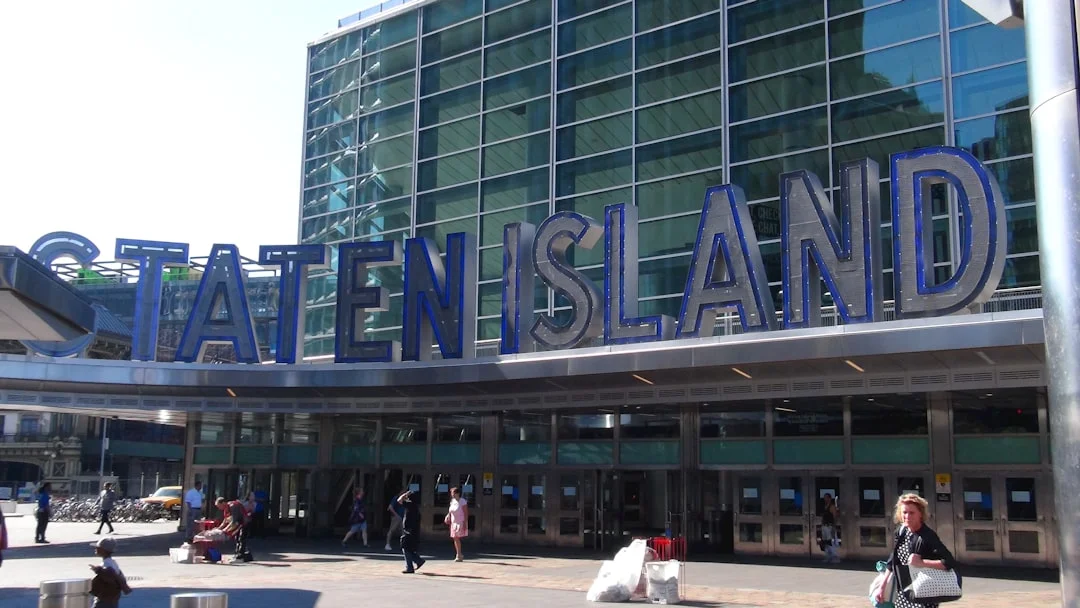
Photo by Janne Simoes on Unsplash
Staten Island’s Albanian Picnic at Wolfe’s Pond Park (June 1, 2026) is a prominent example of heritage programming becoming a vehicle for broad community engagement. With more than 8,000 attendees and participation from local officials, the event underscores the borough’s cultural diversity and the role of public spaces in hosting large-scale cultural experiences. Heritage festivals like this contribute to the local economy through tourism, food, and vendor activity, and they help sustain cultural knowledge across generations. (nysenate.gov)
Citywide cultural mobility during World Cup 2026
The NYC Neighborhood Passport program—particularly its Staten Island entries—demonstrates how technology-enabled cultural exploration can drive cross-neighborhood attendance and cross-cultural exchange. By linking hundreds of cultural institutions and community events via a digital map and stamped passport, the program encourages residents and visitors to engage with diverse cultural ecosystems in a time-bound window created by the World Cup. Staten Island’s inclusion of institutions like the Staten Island Museum and the Staten Island Children’s Museum signals a deliberate strategy to elevate local assets within a dynamic, citywide cultural narrative. (nyc.gov)
Section 2: Why It Matters
Economic and social ripple effects
Funding stability enables long-term programs
Photo by Nikita Kuzin on Unsplash
The multi-year grant structure and enhanced baseline funding for cultural institutions provide a predictable financial environment for Staten Island arts organizations. This stability reduces program risk, enables more ambitious residencies and collaborations, and helps venues plan capital improvements and audience development initiatives. The citywide expansion of the CIG and the elevated baseline for cultural programming reinforce the idea that arts and culture are essential public goods with tangible economic and social returns. The Noble Maritime Collection’s city-backed support is a concrete example of how a Staten Island entity can benefit from broader city policy shifts, bolstering access, capacity, and audience reach. (nyc.gov)
Equity, access, and inclusion as program design
The DCLA press materials emphasize equity components—Disability Forward Fund, Language Access Fund, and the Equity Fund—which target underserved communities and neighborhoods with lower median incomes. This framework reinforces a larger industry trend toward culturally inclusive programming that serves diverse audiences. For Staten Island, where neighborhoods vary in access to arts infrastructure, these funds can help create more inclusive art experiences—ranging from interpretations in multiple languages to accessible venues and programs designed with universal design in mind. The data presented with the FY26 awards—such as the 283 grantees in 24 neighborhoods receiving additional equity funding—illustrate a citywide intent to broaden cultural participation beyond traditional cultural districts. (nyc.gov)
The tech layer: digital access and audience development
Public-facing digital platforms and citywide engagement
The NYC Neighborhood Passport program exemplifies how technology can amplify cultural reach. By offering stamps from participating cultural sites across the five boroughs and by using a digital map to highlight accessible programming, the city is turning culture into a navigable, family-friendly experience. Staten Island’s institutions linked to the Passport—such as the Snug Harbor complex and the Staten Island Museum—illustrate how borough-based venues can leverage citywide digital ecosystems to attract new audiences, increase dwell time, and encourage repeat visits. This is a key lever in Staten Island cultural revival 2026, combining public investment with modern audience-building tools. (nyc.gov)
Public art and placemaking through city programs
Public art initiatives—like the Willets Point project in Queens cited in Related press materials and the broader City Canvas program—signal an alignment of culture with urban development and economic activity. While not exclusively Staten Island-based, these citywide programs create a cultural economy that Staten Island venues can plug into, whether through temporary installations, cross-borough collaborations, or joint grant proposals. The endgame is an arts-led placemaking approach that connects cultural venues with commercial districts, parks, and waterfronts in a way that benefits both residents and visitors. (related.com)
Cultural revival 2026 and the borough’s identity
The local revival narrative in context
Staten Island’s cultural revival 2026 is characterized by revived venues, expanded institutional affiliations, and robust public engagement. The St. George Theatre revival is a high-profile example, but it sits within a constellation of developments: increased grant funding for local artists, strategic partnerships with health institutions (e.g., SIUH), and the activation of public spaces for heritage events and family programming. The combination of city policy changes, local leadership, and community energy creates a milieu in which cultural activity can thrive, diversify, and scale. However, observers caution that growth should be matched by sustained funding, robust audience development, and equitable access to ensure the gains are durable and inclusive. The ongoing dialogue about culture as an economic and social asset will continue to shape Staten Island’s trajectory through 2026 and beyond. (nyc.gov)
Who it affects
- Artists and cultural workers: Benefit from more stable funding, multi-year grants, and new partnerships with institutions within the CIG framework.
- Museums, galleries, and performing arts centers on Staten Island: Gain from expanded operating subsidies, longer hours, and opportunities to collaborate across boroughs.
- Neighborhoods and residents: Access to more free or subsidized programs, education, and community engagement that integrate arts with health, education, and social services.
- Students and youth: Programs like the St. George Theatre Summer Arts Intensive offer skill-building, mentorship, and exposure to professional practice in performance, production, and related disciplines.
- Local businesses and tourism: Cultural events and increased visibility for Staten Island venues contribute to local commerce and the borough’s profile as a destination for arts and culture. (industrym.com)
Section 3: What’s Next
Near-term milestones and signals to watch
Spring 2026 and Fall 2026 grant activity
Staten Island Arts’ Spring 2026 funding window opens June 1 and closes June 30, with follow-up cycles in the Fall. This schedule indicates a steady stream of opportunities for local artists and small organizations to secure funds for projects, residencies, and community programs. As the city’s larger grant ecosystem continues to unfold, the next wave of awards could further expand Staten Island’s programmatic capacity, support new experimental work, and seed collaborations with hospitals, schools, and cultural institutions. (statenislandarts.org)
St. George Theatre and campus synergies
With the St. George Theatre’s ongoing revival and its educational partnerships, expect further programming that couples the arts with health, education, and community wellness. The Summer Arts Intensive model provides a blueprint for scalable programs that can be extended to other venues across Staten Island, creating a network of youth-focused opportunities that leverage local expertise and institutional partnerships. The campus-level potential for increased cross-use—from performances to workshops to community events—could become a signature of Staten Island cultural revival 2026. (industrym.com)
NYC World Cup-related cultural activity
The NYC Neighborhood Passport and associated World Cup programming are time-bound, but they offer a template for leveraging major events to highlight local culture. For Staten Island, continued participation in the Passport program and the consolidation of neighborhood-level events during peak tourism periods could yield longer-term audience gains, future collaborations, and a model for how cultural programming can ride the wave of major citywide events to broaden impact. (nyc.gov)
Long-term outlook and potential challenges
- Sustained funding and policy support: The scale of the 2026 funding push sets a high benchmark, but long-term viability will depend on continued political will, budget cycles, and the ability to translate city dollars into measurable community outcomes. The 2025 CIG expansion and the 2026 FY27 cycle are signals, but ongoing advocacy will be needed to keep momentum.
- Equity and access across the borough: Although funds emphasize equity and access, actual program design must remain attentive to the varied needs of Staten Island’s diverse communities, ensuring language access, disability-friendly venues, and inclusive programming that reaches underrepresented groups.
- Capacity constraints: As venues grow programming and audience reach, staffing, facilities, and volunteer networks must scale accordingly to maintain quality and safety, particularly in venues with historic or architectural sensitivity.
- Collaboration and competition for attention: A crowded citywide cultural calendar can strain audiences. Staten Island’s strategy will benefit from clear branding, distinctive programming, and cross-borough partnerships to differentiate its offerings while benefiting from the citywide cultural ecosystem. (nyc.gov)
Closing
Staten Island cultural revival 2026 stands at a pivotal junction: a confluence of citywide funding, local leadership, and a renewed sense of shared purpose around arts, culture, and community well-being. From the St. George Theatre’s revival to the Noble Maritime Collection’s CIG integration, and from the Albanian Picnic at Wolfe’s Pond Park to the World Cup-era Neighborhood Passport, 2026 is shaping Staten Island’s cultural life with velocity and intentionality. For readers seeking the most current developments, the cadence of grants, exhibitions, and community programs will continue to evolve through the summer and into the year’s latter half. Local residents, artists, and institutions should watch for grant announcements, new collaborations, and mid-year programming that will collectively define Staten Island’s cultural identity in 2026 and beyond. As always, the borough’s cultural journey will be shaped by the people who care enough to build, participate, and advocate for the arts in their own neighborhoods and across the city.
Quick reads for staying informed: check Staten Island Arts’ grant portal for Spring 2026 opportunities and follow the City’s cultural development announcements for updates on the Cultural Institutions Group and related city-funded programs. Local stakeholders should remain attentive to hospital-arts partnerships, neighborhood events, and cross-borough collaborations that amplify Staten Island’s cultural voice in 2026. By combining public investment with community leadership and innovative programs, Staten Island can sustain the gains of this year’s cultural revival and set a durable course for future growth.