NYC Flood Resilience Street-level Green Infrastructure 2026

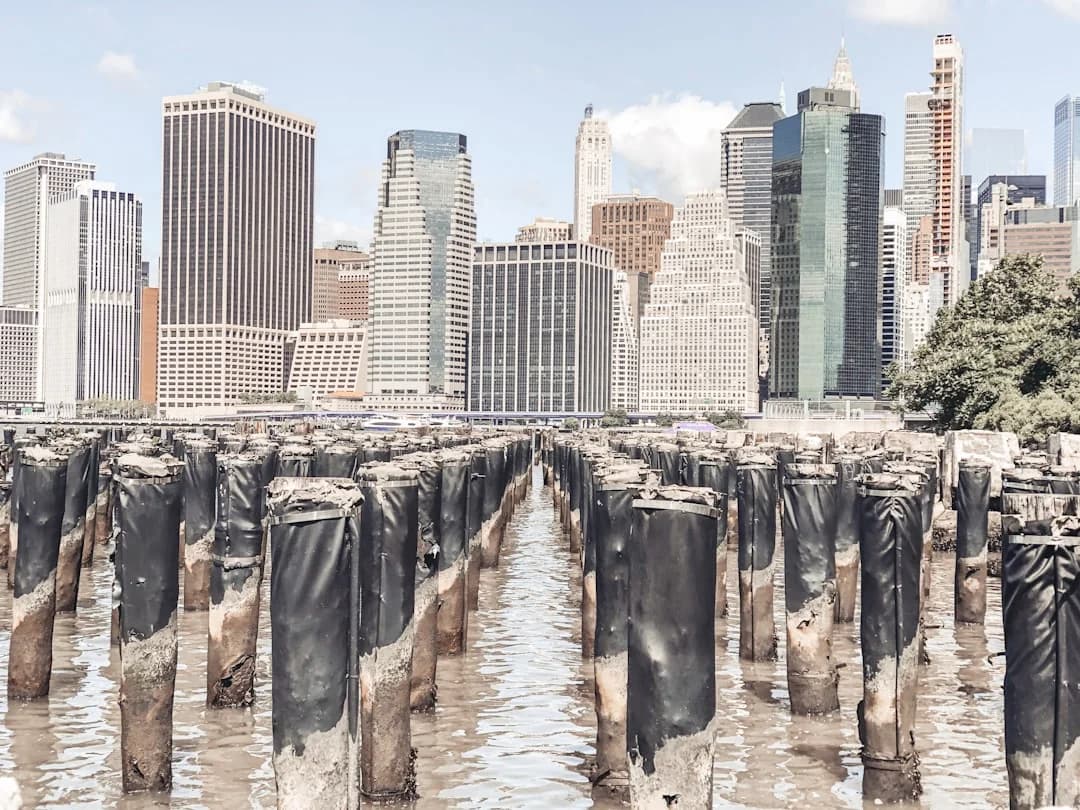
Photo by Michelle Tresemer on Unsplash
The City of New York is pressing forward with a wide-scale deployment of street-level green infrastructure as a core component of its flood resilience strategy for 2026. In April 2026, city leaders announced a bold, citywide push that couples capital projects with nature-based solutions to manage stormwater, reduce flood risk, and improve water quality. The initiative centers on street-level green infrastructure—think rain gardens at curbsides, permeable pavements that infiltrate runoff, and green streets that double as public spaces—gearing up to address increasingly intense downpours and rising precipitation. This is not just a municipal experiment; it is a market signal. With nearly 2.5 million New Yorkers living in the 100-year floodplain and with climate projections showing more frequent cloudbursts, the city frames street-level green infrastructure as a practical, scalable tool for resilience in dense urban environments. The DEP’s Green Infrastructure Program has already built thousands of assets citywide, and the 2025 Annual Report signals continued momentum into 2026, with detailed plans to expand the program and its funding channels. (nyc.gov)
The push comes amid a broader state and city financing wave aimed at accelerating nature-based solutions. In March 2026, Governor Kathy Hochul announced nearly $100 million in climate resiliency grants across New York State, designed to support green infrastructure, including rainwater management and flood-risk reduction projects. The funding programs—Resilient Watersheds Grants and Coastal/ Inland Flooding Grants—are open to municipalities and nonprofits through the Consolidated Funding Application portal, with deadlines including June 26, 2026. The combination of city-scale capital projects and state-level grants creates a multi-layered funding ecosystem that could drive substantial private-sector participation and rapid implementation in 2026 and beyond. This is a key moment for the NYC flood resilience street-level green infrastructure 2026 narrative, as projects advance from planning into construction and operation. (governor.ny.gov)
Section 1: What Happened
Cloudburst projects redefine street-level flood management in Brooklyn
On April 30, 2026, New York City Mayor Zohran Kwame Mamdani, together with DEP Commissioner Lisa F. Garcia, Parks Commissioner Tricia Shimamura, DOT Commissioner Mike Flynn, and School Chancellor Kamar Samuels, announced a $95 million Cloudburst project in Homecrest, Brooklyn. The plan leverages a neighborhood-scale network to move stormwater off streets during intense, short-duration rain events without overwhelming the sewer system. DEP projects to install porous pavement on city streets and underground storage on public land are expected to manage an estimated 30 million gallons of stormwater annually, targeting flooding hotspots across a 350-acre area. The initiative is designed to reduce flood risk, improve water quality in nearby waterways such as Coney Island Creek, and expand the resilience of local neighborhoods to increasingly common cloudburst events. The Cloudburst concept aligns with DEP’s ongoing Cloudburst Management Program, which began in 2023 and has since driven multiple projects citywide. > The Homecrest Cloudburst project is a major step forward in protecting this community from the kind of extreme rainfall we know is becoming more common. By capturing and storing stormwater before it overwhelms local streets and sewers, we’re reducing flood risk, improving water quality, and building the resilient infrastructure New Yorkers deserve. (nyc.gov)
Battery Park City resilience project moves from design to construction
Even as Homecrest advances, other high-profile resiliency efforts are transitioning to delivery. Arcadis reported in February 2026 that Battery Park City North/West Resiliency (BPCR)—a roughly $1.7 billion project delivering flood barriers, green spaces, and drainage upgrades along a 1.5-mile stretch of Lower Manhattan—has moved into full-scale construction. The BPCR package includes not only physical barriers and pump capacity but also integrated green spaces and stormwater improvements designed to manage sea-level rise, storm surge, and heavy rainfall. The BPCR effort builds on a decade of prior coastal protection investments and is positioned as a model for urban stormwater and waterfront resilience nationwide. The project is being delivered by a Turner SPC joint venture in collaboration with architects and engineers, reflecting the city’s emphasis on multi-disciplinary, public-private collaboration for climate resilience. The scale and timeline of BPCR illustrate how large, complex urban resiliency projects are stacking up alongside smaller, street-level GI installations to form a comprehensive resilience backbone. Arcadis’ involvement and the BPCR’s scope highlight the market demand for integrated infrastructure firms capable of delivering modern, climate-adaptive solutions in dense urban contexts. (stormwater.com)
State and city funding blends climate resilience with street-level green infrastructure
In late March 2026, Governor Hochul announced nearly $100 million in new climate resiliency funding tied to the Environmental Bond Act of 2022. The funds, channeled through the DEC/EFC Resilient Watersheds Grants and the DOS Coastal Rehabilitation and Inland Flooding Grants, are designed to reduce flood risk, improve water quality, and expand nature-based solutions across communities. Applications are due by 4 p.m. on June 26, 2026, via the Consolidated Funding Application (CFA) portal, with a webinar to assist applicants scheduled for April 7. This allocation complements the city’s ongoing green infrastructure investments and is expected to support a pipeline of capital projects that dovetail with NYC’s street-level GI initiatives. The timing matters: it broadens the funding base available to municipalities and nonprofits implementing rain gardens, permeable pavements, and other street-scale green infrastructure projects, potentially accelerating rollouts in 2026 and 2027. (governor.ny.gov)
DEP 2025 Annual Report confirms momentum and 2026 outlook
The DEP’s 2025 Green Infrastructure Annual Report—presented in late 2025 and highlighted on the Green Infrastructure page—lays out the program’s achievements through 2025 and outlines what is in store for 2026. The report underscores that green infrastructure installations have been deployed citywide and points to a continuation of private-property retrofits and public-right-of-way improvements as central to New York City’s flood resilience strategy. The report also emphasizes ongoing programs such as the Green Infrastructure on Streets and Sidewalks initiative, the Green Infrastructure Grant Program for private roofs, and public-property retrofits, all of which connect directly to the city’s street-level resilience goals. The “in store for 2026” language signals a year of amplified installations, more robust monitoring, and expanded public engagement in GI siting and maintenance. (nyc.gov)
Public data and mapping as transparency tools
DEP maintains an Interactive Map of Green Infrastructure Projects to showcase completed and planned installations, a resource cited in DEP’s Green Infrastructure materials. The map helps residents and businesses understand where rain gardens, permeable pavements, and other GI assets exist or are planned, supporting transparency around the NYC flood resilience street-level green infrastructure 2026 efforts. This map, along with the Green Roof Inventory surveys and other data portals, is part of a broader push toward data-driven decision-making and community engagement around resilience investments. (nyc.gov)
Section 2: Why It Matters
Strengthening streets, sewers, and waterways through green infrastructure

Photo by Florian Wehde on Unsplash
NYC’s flood resilience strategy treats street-level green infrastructure as a frontline defense against today’s more extreme rainfall, urban flooding, and sewer overflows. Green infrastructure that captures and infiltrates rainfall at the curb, in planted medians, or within permeable paving reduces the volume of stormwater that would otherwise overwhelm the combined sewer system during cloudbursts. The DEP notes that green infrastructure collects stormwater before it enters the sewer system, helping to prevent CSOs and improve local water quality. The city-wide rollout of street-level GI assets is therefore a practical approach to reduce flooding impacts, protect vulnerable neighborhoods, and improve environmental health in coastal and inland flood-prone communities. The approach is explicitly designed for dense urban environments where space is at a premium and conventional gray infrastructure alone cannot provide sufficient resilience. (nyc.gov)
Economic scale, job opportunities, and market signals
The Homecrest Cloudburst project and Battery Park City resilience initiative illustrate the scale of investments flowing into NYC’s resilience agenda. The Homecrest project involves $95 million in DEP funding for a neighborhood-scale solution, while BPCR represents a $1.7 billion, multi-year program to deliver a coastline-wide risk-management system with flood barriers, drainage upgrades, and green space restoration. The magnitude of these projects signals significant market demand for engineers, landscape architects, construction firms, and green infrastructure technology providers capable of delivering integrated solutions in a dense urban setting. The private-sector participation implied by these public investments may spur innovation in porous pavement, underground stormwater storage, and deployable flood barriers, potentially lowering costs and shortening deployment timelines as more pilots prove effective. The industry implications extend beyond NYC, offering a potential blueprint for other coastal cities seeking scalable, nature-based flood mitigation strategies. (nyc.gov)
Equity, resilience, and community benefits
City leaders emphasize that investments in street-level green infrastructure are not just technical upgrades; they are essential components of equitable, climate-resilient neighborhoods. Quotes from Mayor Mamdani highlight resilience as a central civic value, with infrastructure that serves schools, parks, and streets while improving safety and quality of life. DEP’s projects often include improvements to public spaces and schoolyards, ensuring that resilience benefits reach diverse communities, not just wealthier districts. This emphasis on equity is reinforced by state funding programs that prioritize vulnerable communities and by the ongoing practice of integrating GI into public spaces that residents use daily. The combination of local and state funding signals a broad commitment to ensuring resilience investments benefit a wide cross-section of New Yorkers, including those historically underserved by climate adaptation efforts. > Climate change is real. Once-in-a-century storms are happening with increasing frequency, and investments like Cloudburst projects rebuild our city with the green infrastructure that will keep us safe during storms. This sentiment from the Brooklyn context underscores the intent to deliver durable, equitable protection against flooding. (nyc.gov)
Risks, maintenance, and long-term reliability
While the momentum is clear, the implementation of street-level GI must contend with practical challenges: maintenance, land-use conflicts, and coordination across multiple agencies. The NYC rain garden brochure lays out the maintenance responsibilities and the process for selecting sites, which includes systemic testing of soils and coordination with utility providers to avoid service disruptions. Regular maintenance work—seasonal planting, weed control, litter removal, and structural repairs—will be critical to sustaining performance. If not properly maintained, the effectiveness of rain gardens, permeable pavements, and other GI assets can degrade, undermining resilience gains. The DEP’s ongoing emphasis on standards, guidelines, and protections for GI design suggests a robust approach to addressing these maintenance and performance uncertainties. (nyc-prda-web.nyc.gov)
Section 3: What’s Next
Near-term milestones in 2026
The year 2026 is framed as a critical transition year—from planning and pilots to large-scale implementation. The Homecrest Cloudburst project proceeds as a primary example of city-led, street-level resilience in action, with construction planning and site preparations continuing through 2026 and beyond. BPCR’s construction phase marks a separate but parallel track of resilience, illustrating how multiple green infrastructure and flood-management efforts can run in concert along Manhattan’s waterfront and in adjacent boroughs. In parallel, the Hochul administration’s $100 million in climate resiliency funding adds a statewide dimension to NYC’s local efforts, supporting green infrastructure projects that can be deployed across New York City and nearby communities. Taken together, these initiatives create a robust pipeline of public works that will keep contractors, designers, and engineers busy in the near term. (nyc.gov)
Longer-term outlook for 2026–2027 and beyond
Beyond the immediate construction activities, DEP’s 2025 Annual Report signals ongoing expansions in street-level GI, public-right-of-way retrofits, and private-property incentives (such as rain gardens in the right-of-way and green roofs) that will continue into 2026 and 2027. The interactive GI map and related data portals are expected to become even more central to decision-making, helping communities monitor progress and participate in siting discussions. The BPCR and Cloudburst projects provide working models for how coastal and inland areas can be integrated into a single resilience strategy, with green infrastructure playing a core role alongside hard infrastructure elements like flood barriers and pump stations. The state-level grant programs will likely influence project selection criteria, targeting neighborhoods with the greatest flood exposure and the least current resilience capacity. Overall, the 2026–2027 horizon looks to accelerate not only installation counts but also the sophistication of GI technology and data-driven design methodologies that guide siting, performance metrics, and maintenance planning. (nyc.gov)
How readers can stay updated and participate
New Yorkers and stakeholders can stay informed about NYC flood resilience street-level green infrastructure 2026 through DEP’s Green Infrastructure pages, the GI Annual Reports, and the interactive map of projects. These resources provide up-to-date project locations, design standards, and performance metrics, enabling communities to understand where investments are being made and how they affect local streetscapes and waterways. State-level funding news, announced grants, and application deadlines (such as the CFA portal due date of June 26, 2026) offer additional channels for involvement, particularly for municipalities and nonprofit organizations seeking to implement neighborhood-scale resilience projects. The ecosystem—encompassing public agencies, private designers and constructors, and community groups—appears positioned to accelerate the adoption of street-level green infrastructure as a central element of New York City’s flood resilience playbook. (nyc.gov)
Closing
As New York City advances the NYC flood resilience street-level green infrastructure 2026 agenda, the city is turning a wide array of data, design standards, and capital commitments into a tangible, street-tested resilience footprint. The Homecrest Cloudburst project and Battery Park City’s resiliency work illustrate how street-level GI, when paired with robust drainage upgrades and flood barriers, can mitigate flood risk while enhancing urban life. State grants and city programs are expanding the funding landscape, creating a more dynamic market for green infrastructure technologies and services. For residents, this means clearer information about where improvements are visible on their blocks and better protection when storms arrive. For businesses and professionals, it signals a growing demand for integrated GI solutions—from rain gardens and permeable pavement to underground storage and deployable barriers—delivering opportunities to innovate, build, and scale resilience across New York City’s complex urban fabric. The city’s ongoing commitment to data transparency, through maps and performance reporting, will help ensure that these investments yield measurable benefits and that the public can track progress over time. As climate pressures intensify, the convergence of public funding, private-sector expertise, and community engagement will be essential to sustaining NYC flood resilience street-level green infrastructure 2026 and beyond.
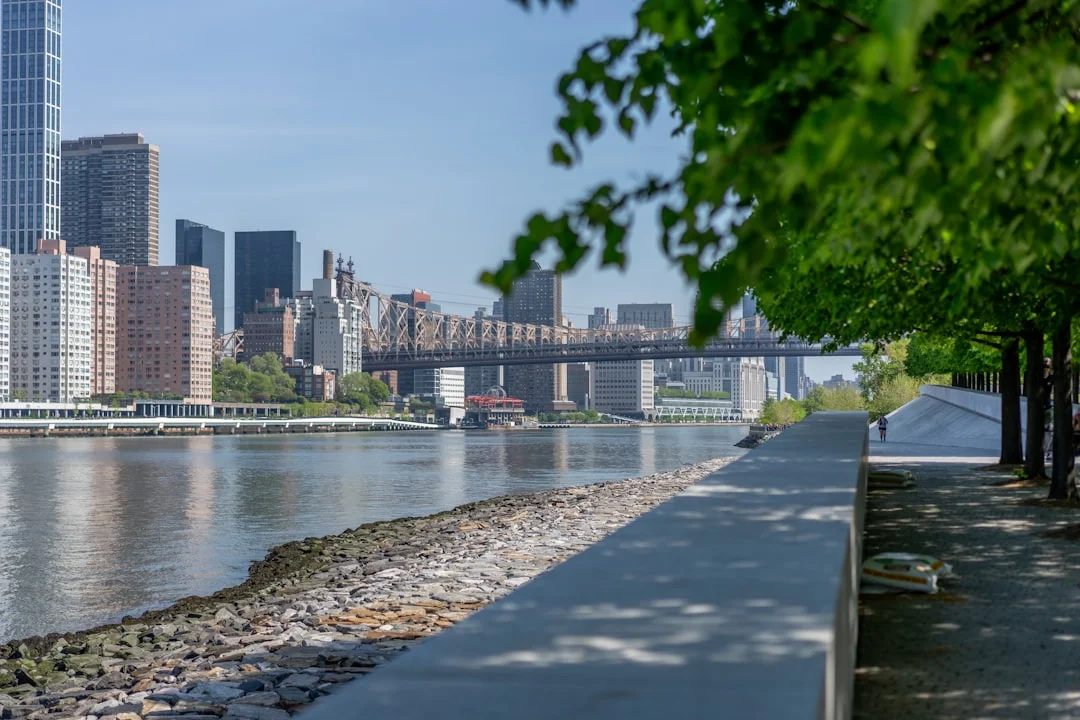
Photo by Baron Alloway on Unsplash