NYC Waterfront Redevelopment & Climate Resilience 2026

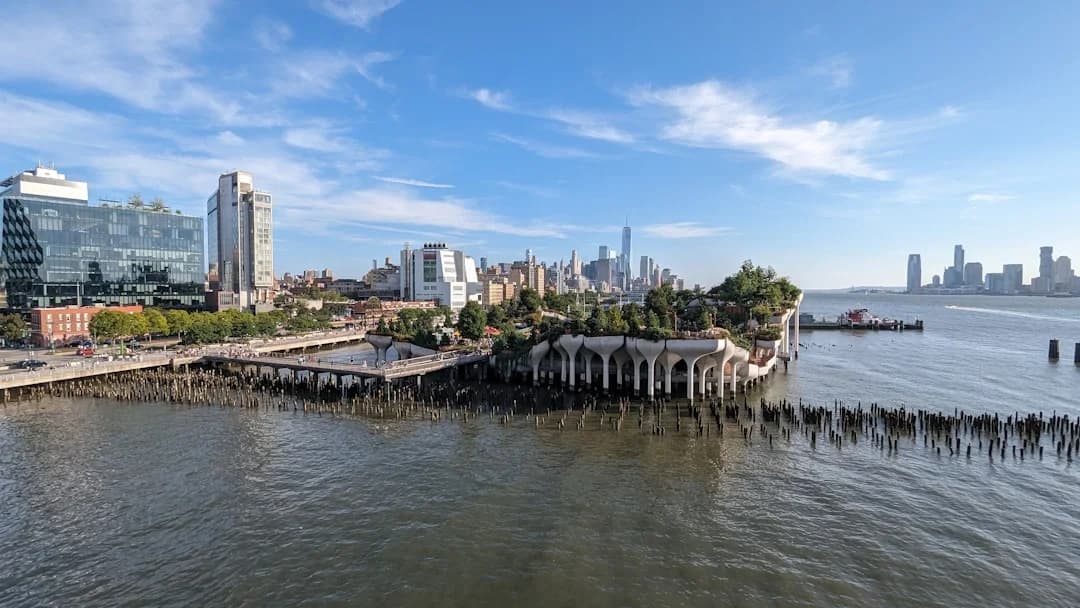
Photo by Mohammadreza Mousavi on Unsplash
The city’s waterfront edge is again in the spotlight as New York City advances its long-running effort to blend redevelopment with climate resilience. On the latest update cycle, officials outlined how the FiDi-Seaport Climate Resilience Plan is progressing toward substantial protections for Lower Manhattan while expanding public access along the East River and nearby shores. The emphasis is squarely on data-driven planning, phased implementation, and funding strategies designed to sustain a rapidly changing coastline. The broader context remains clear: the initiative is a centerpiece of New York City’s effort to maintain economic vitality and public safety at the edge of the water through 2026 and beyond, with multiple projects moving at different paces along a shared resilience corridor. This update centers on concrete milestones for 2026 and the role of technology in accelerating implementation, reflecting the overarching aim of the New York City waterfront redevelopment and climate resilience 2026 to marry public space, transportation, and flood defense into a single, future‑proofed shoreline. (edc.nyc)
The immediate impact for residents, workers, and maritime users is tangible. City agencies have confirmed that the FiDi-Seaport Plan has reached a critical design milestone — 30 percent design for flood-defense infrastructure — while preparing the ground for environmental review along a shoreline that stretches from The Battery to the Brooklyn Bridge. The upgrade envisions a multilevel defense system integrated with new public esplanades, drainage improvements, and resilient ferry facilities, intended to shield Lower Manhattan from daily tidal flooding and more intense coastal storms. The plan also explicitly aims to preserve and enhance public space, ensuring access and usability for people of all ages and abilities. As officials emphasize, the next design phases will test the feasibility and cost-effectiveness of the flood-defense alignment while seeking funding mechanisms that can sustain the project through permitting and construction. The plan’s refinement follows extensive stakeholder engagement and technical studies, underscoring the data-driven approach that defines the 2026 trajectory for the city’s waterfront redevelopment and climate resilience. (edc.nyc)
Section 1: What Happened
Announcement Overview
The FiDi-Seaport Climate Resilience Plan, released as the master blueprint for protecting Lower Manhattan’s shoreline, was first introduced as a collaborative effort between NYCEDC and the Mayor’s Office of Climate Resiliency. The December 2021 release characterized the plan as a forward-looking, multimodal defense that would extend the East River shoreline to accommodate flood defenses while reconfiguring the waterfront for public use and maritime activity. The plan’s design philosophy centers on multilevel flood walls, redesigned drainage systems, resilient ferry terminals, and accessible public spaces, framed by a long-term, citywide resilience strategy. The master plan for Lower Manhattan is designed to be a model for other cities confronting rising seas and stronger storms. “There is no threat more existential to the future of New York City, or the world, than that posed by the climate crisis,” officials proclaimed at the release, highlighting the urgency and scale of the effort. (fidiseaportclimate.nyc)
The Financial District and Seaport Master Plan remains at the core of the Lower Manhattan Coastal Resiliency (LMCR) strategy, with a stated project footprint covering nearly one mile of waterfront from The Battery to the Brooklyn Bridge. The City has repeatedly described the plan as a blueprint for a resilient waterfront that balances protection with access, mobility, and economic vitality. In reiterating the plan’s goals, NYCEDC and MOCR framed resilience not only as a protective measure but also as an accelerator of public realm improvements, waterfront access, and climate-smart infrastructure. As part of the ongoing dialogue, the 2021 Master Plan was positioned as a living document that evolves with technical assessments, cost analyses, and community input. The news release also signaled a multiagency and public-engagement approach intended to secure public buy-in and align funding strategies with ambitious timelines. (fidiseaportclimate.nyc)
Timeline and Key Facts
Progress since the 2021 Master Plan has centered on translating strategy into implementable design, with several critical steps completed or underway. The official plan page notes that the design has advanced to a 30 percent level for flood-defense infrastructure, signaling that technical feasibility, cost optimization, and constructability have been thoroughly assessed and refined. The footprint of the East River component has been finalized to enable environmental review and permitting, a crucial step toward construction. The timeline is inherently multi-phased: environmental reviews, permitting, and long-lead financing come before full-scale construction, and the plan explicitly recognizes that funding and governance structures require careful sequencing to ensure delivery. The FiDi-Seaport Master Plan’s progress highlights are: 30 percent design completed; concept design for southern flood-defense alignment through the Battery; environmental-review footprint established; and ongoing development of funding and governance strategies. These milestones reflect the City’s commitment to a data-informed, incremental approach to a large-scale coastal defense program. (edc.nyc)

In parallel, the Seaport Coastal Resilience (SPCR) and the broader LMCR program are moving forward with distinct but connected design objectives and funding streams. SPCR focuses on the Seaport neighborhood’s immediate risk profile, proposing elevating the water’s edge to 11 feet above sea level and reconstructing key piers and public spaces to function under higher flood conditions. The SPCR plan is designed to complement the FiDi-Seaport Master Plan by delivering shorter‑term, localized protection as the broader master plan matures. SPCR’s approach includes both hard infrastructure and public realm improvements, with attention to maintaining public access and urban vitality in a sector that houses critical economic activity. This layered strategy—long-term master planning plus near-term SPCR protections—illustrates how the city is deploying a phased, risk-based pathway to resilience while preserving waterfront usability and commerce. (nyc.gov)
Funding and Governance
Financing the LMCR portfolio has remained a central capability challenge for New York City, given the scale and complexity of waterfront protection. The FiDi-Seaport Master Plan has consistently underscored the need for innovative funding and financing strategies to close gaps between design, permitting, and construction. In late 2021, City officials cited a potential project cost in the multi‑billion-dollar range and emphasized that securing federal support would be a critical step toward implementation. Since then, the City has continued to articulate a funding strategy that blends city capital, state and federal grants, and private participation where feasible. The master plan’s governance framework emphasizes interagency coordination across NYCEDC, MOCR, DEP, DDC, Parks, and other agencies, with public input integrated through the Climate Coalition for Lower Manhattan and ongoing community engagement. The 2021 press release highlighted the necessity of "strong partnerships at all levels of government" to translate vision into action. (fidiseaportclimate.nyc)
In more concrete terms, the LMCR portfolio has already benefited from sizable capital commitments across related resilience programs citywide. DEP’s resilience portfolio, part of the city’s broader climate adaptation investments, includes dedicated funding for ESCR, BMCR, and SPCR projects. The department’s 2024–2025 reporting highlights show targeted investments in flood protection, stormwater infrastructure, and blue-green infrastructure that support the LMCR strategy. Notably, BMCR’s construction schedule targets completion in 2026, a milestone that aligns with the broader resilience timetable for Lower Manhattan. The Battery Coastal Resilience project’s $200 million investment is designed to shield lower Manhattan’s commercial core and residential areas that collectively house tens of thousands of residents, workers, and businesses. The funding plan and capital commitments reflect a layered approach to resilience, combining near-term protections with longer-term capital-intensive works. (nyc.gov)
Important: this update also foregrounds the role of technology and innovation in funding and delivery. NYCEDC’s ongoing push for tech-enabled infrastructure planning includes the Tech Innovation for Waterfront Mapping RFP, which seeks pilot contracts to collect and analyze waterfront data to guide maintenance, inspection, and future capital decisions. The RFP documents, released in late 2025 and updated through early 2026, indicate a deliberate program to leverage drones, robotics, and data analytics to shorten design cycles, improve maintenance, and reduce lifecycle costs for waterfront infrastructure. This tech-forward stance is a clear signal that the city intends to use data intelligence to accelerate and de-risk the 2026 milestones while expanding the capacity to monitor and manage the waterfront in real time. (edc.nyc)
Section 2: Why It Matters
Resilience and Public Safety
The core reason behind the FiDi-Seaport and LMCR efforts is to reduce the city’s exposure to coastal flooding and storm surge, ensuring that Lower Manhattan remains an operational hub even as climate conditions intensify. The SPCR plan explicitly targets Seaport’s vulnerability to frequent tidal flooding, with design goals emphasizing protection against 2100 sea-level rise within the project area, improved drainage, and enhanced waterfront access and public realm. The plan recognizes that the Seaport district is among the city’s most at-risk waterfront neighborhoods due to elevation and footprint, necessitating both structural defenses and civic benefits. In parallel, BMCR, ESCR, and Battery Park City projects form a connected line of protection that helps keep critical infrastructure, housing, and economic activity functional during flood events. DEP’s 2024 progress report highlights the scale of this effort, noting that ESCR has completed the first phase ahead of schedule and under budget, while BMCR remains on track for 2026 completion. The comprehensive resilience strategy thus blends flood defense with green infrastructure, water management, and public access, a combination designed to minimize disruption to daily life and economic activity while raising urban resilience. These elements are essential for the city’s ongoing adaptation to climate risks and for maintaining investor and resident confidence in Lower Manhattan’s long-term viability. (nyc.gov)

The financial ecosystem underpinning resilience also matters for market stability and investment confidence. The integration of flood defenses with public spaces has implications for shoreline property values, corridor access for commuters, and the ability to attract and retain businesses in a high-density urban core that has historically faced congestion and environmental risk. The FI/Seaport master plan’s public amenities—expanded esplanades, resilient ferry terminals, and accessible parks—are designed to improve quality of life while reducing long-term risk, which in turn can influence market perceptions around waterfront property and development feasibility. The 2021 master plan materials and subsequent updates emphasize that resilience investments can preserve existing economic activity by reducing flood-related disruption and enabling more predictable planning cycles for developers and lenders. While precise market metrics are still evolving, the alignment of resilience capital with public realm improvements positions Lower Manhattan to retain its competitiveness in the longer term. (fidiseaportclimate.nyc)
Economic and Market Impacts
The LMCR program’s scale reflects New York City’s broader commitment to climate resilience as a strategic economic asset. The Master Plan’s footprint covers a corridor that, in aggregate, supports a high concentration of employment, residential units, and transit connectivity. The 2021 release highlighted that nearly one million people work in, live in, or commute through the Financial District and Seaport neighborhoods, underscoring the stake that the plan has in protecting an economically vital slice of the city. The public realm upgrades proposed in the FiDi-Seaport Plan are intentionally designed to support pedestrian and transit flows, improve waterfront access, and increase event programming opportunities, all of which have potential to boost commercial activity and tourism in the long run. The city’s resilience measures are thus not only about protecting property but also about sustaining and expanding the district’s role as a premier financial, cultural, and lifestyle corridor. (fidiseaportclimate.nyc)
From a financing perspective, the plan relies on a mix of sources, including federal support and city capital allocations. The SPCR and LMCR projects are part of a broader funding narrative that includes HUD grants and other federal, state, and local investments. The Battery and BMCR projects are cited as high-priority investments with defined cost envelopes—BMCR at about $350 million and Battery Resilience at $200 million—reflecting a staged approach to capital-intensive resilience work. The DEP progress report highlights that a substantial portion of resilience funding complements other critical infrastructure investments citywide, including stormwater upgrades and blue-green infrastructure, which support not only flood protection but public health and environmental goals. The combined effect of these investments is a city that can deliver safer neighborhoods with higher degrees of climate preparedness, a crucial signal to financial markets about New York City’s resilience planning discipline. (nyc.gov)
Community Engagement and Equity
The FiDi-Seaport resilience program has consistently positioned community engagement as a core component of its implementation strategy. The 2021 master plan release was accompanied by the establishment of the Climate Coalition for Lower Manhattan, a stakeholder group designed to promote inclusive dialogue, gather input from residents and businesses, and foster collaborative problem solving. The engagement framework continues to guide subsequent design updates and environmental reviews, with ongoing opportunities for public input embedded in the project timeline. This emphasis on inclusive planning matters for equity considerations, ensuring that waterfront improvements serve diverse communities, address access concerns, and provide public benefits beyond flood protection. The FE/Seaport plan updates include detailed community engagement metrics and opportunities to participate in workshops and review sessions, reflecting a data-driven approach to balancing risk reduction with public access and social equity. The master plan’s engagement section explicitly references “Building a Shared Vision” as a central objective, underscoring the project’s commitment to transparent, participatory design and implementation. (edc.nyc)

Section 3: What’s Next
Upcoming Milestones
Looking ahead, the FiDi-Seaport plan’s near-term milestones center on environmental review initiation, permitting, and funding arrangements that will unlock construction of the core flood-defense system and related infrastructure. The 30 percent design milestone represents a substantial technical achievement, but it is a stepping-stone toward environmental review and permitting processes that will require state and federal coordination. The environmental review is a pivotal gatekeeper: it determines whether the proposed flood-defense alignments, waterfront esplanade expansions, and marine facilities can proceed in compliance with environmental protections and community needs. The plan’s implementation roadmap explicitly calls for advancing funding strategies and governance structures in parallel with design work, a strategy that aims to minimize portfolio risk and accelerate project delivery. The city has indicated that the 2025–2026 period will be crucial for securing funding, finalizing regulatory approvals, and initiating early construction packages that can be launched ahead of full-scale deployment. (edc.nyc)
In parallel, SPCR’s near-term activities focus on securing design approvals, community input, and demolition/renovation work associated with the New Market Pier and related waterfront components. The SPCR is designed to deliver tangible improvements for the Seaport neighborhood in a time horizon that complements the longer master-plan timeline. The Seaport page emphasizes engagement opportunities and ongoing public input opportunities, which will be critical as environmental-review findings guide further design iterations and permit readiness. Together, these tracks demonstrate the city’s intention to maintain momentum on resilience while ensuring that neighborhoods can participate in the planning process and that projects reflect local priorities. (nyc.gov)
Watch This Space in 2026
As 2026 unfolds, observers should monitor several indicators that will signal real-world progress. First, environmental reviews for the FiDi-Seaport flood-defense alignments are expected to proceed, with permitting and regulatory approvals shaping the pace of construction. Second, ongoing public‑private collaboration and funding announcements will influence project phasing and the credibility of the scaled implementation plan. Third, the SPCR and BMCR efforts will continue to progress along their respective timelines, with BMCR targeting completion in 2026 and SPCR providing nearer-term protections for the Seaport area. The DEP’s resilience portfolio provides a complementary lens on the city’s broader approach to climate adaptation, including flood-protection measures, blue-green infrastructure, and stormwater management that together support the LMCR framework. As the city positions 2026 as a milestone year, the public can expect periodic updates on design refinements, environmental decisions, and fiscal appropriations that determine the pace of waterfront redevelopment and climate resilience. (nyc.gov)
What to watch for in 2026 includes: (a) the initiation of environmental reviews for the East River footprint and the southern Battery alignment; (b) the first wave of early-contracting packages tied to design‑build pilots, potentially including maintenance mapping and data-driven inspection pilots tied to the Tech Innovation for Waterfront Mapping RFP; (c) continued public engagement sessions as community groups, neighborhood associations, and business districts weigh in on the plan’s balance of protection and access; and (d) updated cost projections and funding allocations that reflect the evolving scope of the resilience program. These factors will collectively determine whether the 2026 targets for the FiDi-Seaport Plan, SPCR, and LMCR portfolio can be realized on the proposed timeline, and whether the city can demonstrate tangible resilience gains alongside enhanced waterfront vitality. (edc.nyc)
Closing New York City’s waterfront redevelopment and climate resilience 2026 strategy is more than a collection of protective barriers and public spaces; it is an integrated plan that links flood defense with public access, transit efficiency, and waterfront vitality. The FiDi-Seaport Plan’s 30 percent design milestone marks a concrete step toward a more resilient Lower Manhattan, while the SPCR and broader LMCR initiatives illustrate a phased approach designed to deliver near-term protections while laying the groundwork for long-term coastal defenses. The combination of high-stakes infrastructure, data-driven planning, and continuous community engagement points to a future in which the city can maintain economic momentum and livability at the water’s edge even as climate risks intensify. For residents, workers, and visitors, the changes are a reminder that climate resilience and urban renewal are not isolated projects but an ongoing, collaborative effort to redefine how New York City negotiates its relationship with the coastline. Readers and stakeholders should stay attuned to forthcoming environmental reviews, funding announcements, and design updates as 2026 unfolds, with official channels and community workshops continuing to shape the trajectory of the city’s waterfront redevelopment and climate resilience journey. (edc.nyc)