New York City Public Art Programs 2026: Data-Driven Update
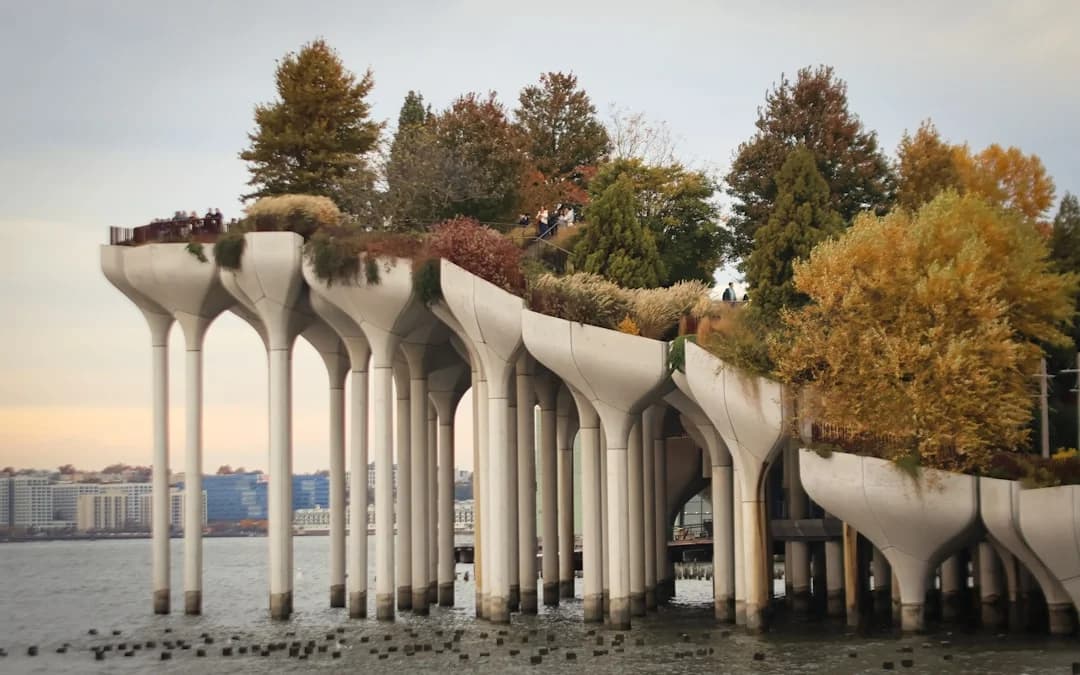
Photo by Structural Photography on Unsplash
In 2026, New York City public art programs 2026 are shaping how New Yorkers experience culture in everyday life. Across city agencies, nonprofit partners, and public schools, a wave of initiatives is expanding access to art, embedding creative works into public infrastructure, and anchoring cultural activity in communities large and small. This is not a single project but a coordinated push that blends infrastructure, education, and community engagement with a data-driven approach to funding and outcomes. As the city enters the new year, officials and cultural leaders describe a framework where art is not only decorative but civic, educational, and economically meaningful. The timing is purposeful: 2026 marks a moment of record investment and a recalibration of how public art is funded, commissioned, and evaluated. New York City public art programs 2026 are thus both a continuation of long-standing traditions—like the Percent for Art program that has anchored city building design since 1982—and a modernization of processes to bring more communities into the artistic conversation. (nyc.gov)
The newly announced fiscal reality underpins this momentum. In February 2026, the NYC Department of Cultural Affairs (DCLA) announced a historic $74.3 million in Cultural Development Fund (CDF) grants to 1,171 cultural organizations citywide for Fiscal Year 2026. The announcement framed the FY26 awards as the largest ever funding allocation for the CDF and the broadest reach in the program’s history, with multi-year awards expanding stability for many grantees. The announcement also highlighted investments that prioritize equity, multilingual access, and safety nets for longtime partners, reinforcing the idea that New York City public art programs 2026 are designed to be durable and inclusive. The agency noted that more than 84% of applicants received awards and that the program includes dedicated funds for borough arts councils and equity initiatives. (nyc.gov)
At the same time, the city’s ongoing commitments to place-based art in transportation corridors, schools, and public spaces continue to expand. The Department of Transportation (DOT) Art program, through its Community Commissions, is returning to city streets with five temporary, site-specific public artworks in each of the five boroughs. In a June 2025 press release—well within the window of 2026’s coverage—the agency detailed the rollout of artworks including Aunties in Harlem, Limes in Brooklyn, and works across the Bronx, Queens, and Staten Island. Community Commissions are designed as temporary interventions, displayed on DOT infrastructure for up to 11 months, with artists selected through an open call process tied to partner organizations. This approach demonstrates how New York City public art programs 2026 blend community partnerships with street-level aesthetics to activate public space. (nyc.gov)
The Public Art for Public Schools (PAPS) program, a collaboration between the NYC Department of Cultural Affairs and the NYC School Construction Authority, continues to place high-profile public artworks in school settings. A January 2026 press release celebrated five new permanent installations completed in 2025 across five city schools, reinforcing the role of Percent for Art and PAPS in shaping the daily experiences of hundreds of thousands of students. The installations, integrated into new school buildings, are positioned as long-term assets that combine pedagogy with place-making, underscoring the educational mission embedded in New York City public art programs 2026. (nyc.gov)
The narrative of 2026 is also framed by Public Art Fund's ongoing programming in the city’s public realm. Public Art Fund’s 2026 season—advertised as a mixed program of temporary exhibitions, site-responsive installations, and long-term commissions—speaks to a broader ecosystem in which city-supported art coexists with private philanthropy and institutional support. The 2026 program includes exhibitions across neighborhoods and transit hubs, including major sites like Brooklyn Bridge Park and City Hall Park, and features a roster of internationally renowned and emerging artists. For New York City public art programs 2026, Public Art Fund’s calendar provides a complementary layer to government-funded initiatives, offering a broader platform for public-facing art across multiple city spaces. (publicartfund.org)
Opening the aperture to the broader context, the city’s cultural infrastructure is also expanding in ways that reflect a data-driven strategy for equity and access. The Percent for Art program, which has long required that one percent of eligible city-funded construction budgets be spent on public artwork, anchors the public-art economy in a legal and institutional framework. The program’s public-facing materials emphasize a diverse roster of artists and works that integrate with built environments, while DOT Art and the related Community Commissions emphasize how streets and public infrastructure can transform civic experience. Taken together, these elements illustrate how New York City public art programs 2026 are part of a broader plan to weave art into daily life, urban design, and educational spaces. (nyc.gov)
Section 1: What Happened
NYC DOT Community Commissions: Five Boroughs, One Citywide Initiative
A Return to Street-Level Public Art
The Community Commissions initiative is a flagship NYC DOT Art program that partners with local organizations to commission site-specific artworks on DOT infrastructure. The program has historically displayed works in medians, triangles, sidewalks, and asphalt, with exhibits running for up to 11 months per site. The June 2025 press release confirms that five artworks were planned for each of the five boroughs in this cycle, marking a deliberate re-emphasis on street-level art as a component of everyday civic life. The featured works span a diverse set of neighborhoods, from Harlem to Brooklyn to the South Shore, illustrating how public art can reflect local identity while validating the city’s broader cultural commitments. The selection process was based on merit and a strong connection to the site and partner organization’s mission, with community organizations chosen from a 2023 RFP to ensure continuity and legitimacy. In practical terms, the program’s timeline involved mockups, fabrication, and installation in late 2024 through 2025, with ongoing displays through 2026 in some locations. This structure demonstrates how New York City public art programs 2026 are built on a multi-year, community-driven pipeline that aligns art with streetscape improvements. (nyc.gov)
The Projects and Their Local Significance
The five boroughs hosted a constellation of projects including:
- Staten Island: Public Access by Mollie Hosmer-Dillard, focused on accessibility and disability pride within a pedestrianized asphalt space.
- Manhattan: Aunties by Fitgi Saint-Louis, a Harlem-centered homage to community organizers and cultural mentors, displayed on Lenox Avenue through April 2026.
- Brooklyn: Limes by Alumbra, a project designed to transform Washington Empire Plaza into a gathering space reflecting Caribbean identity, on view through April 2026.
- The Bronx: Weaving the Future: A Vessel of Water, Roots, and Community by Yafatou Sarr, a six-foot-tall crochet-embellished structure celebrating resilience and intergenerational storytelling, on display through June 2026.
- Queens: About a Living Culture by IMAGINE (Sneha Shrestha), a nearly six-foot arch sculpture inviting passage and contemplation, with engagement rooted in Nepali and broader diaspora communities. These installations illustrate how the Community Commissions program uses art to address neighborhood histories, cultural identities, and social narratives while integrating with infrastructure. The program’s schedule and the explicit end dates for each installation (e.g., Aunties through April 2026; Weaving the Future through June 2026) provide a concrete timeline that readers can track. (nyc.gov)
Open Calls and Partner-Driven Selection
The Community Commissions model relies on open calls and a partner-organization-driven selection process. The NYC DOT Art program states that “Artists were selected through the Community Commissions open call based on artistic merit” and emphasizes the role of community partners in shaping proposals. The program’s reliance on a 2023 RFP for partner organizations ensures a continuity of collaboration and allows communities to have a say in how public art appears in their spaces. For readers following New York City public art programs 2026, this emphasis on community co-creation signals a continuing trend toward participatory approaches to art in public space. (nyc.gov)
Percent for Art and Public Schools: Integrating Art into City Construction and Education
A Longstanding Framework With 2026 Momentum

The Percent for Art program has long been a fixture in the city’s public-art ecosystem, requiring that one percent of the budget for eligible City-funded construction projects be spent on public artwork. The program is presented as an ongoing mechanism that introduces artists into the design process for city facilities, including schools and public buildings. The 2026 landscape continues to rely on this foundational policy to seed new works and ensure that art remains embedded in civic infrastructure. The program’s public-facing materials highlight a wide range of media and contexts, underscoring the diversity of approaches to public art in New York City. (nyc.gov)
Five New Installations in NYC Public Schools (Completed in 2025)
In January 2026, DCLA and SCA highlighted five new permanent art installations completed in 2025 within NYC public schools. These works, integrated into new school buildings, were part of a broader collaboration between Percent for Art and Public Art for Public Schools (PAPS). The installations—spanning Queens, Staten Island, and the Bronx—were designed to enrich learning environments and enable cross-disciplinary engagement. The projects join a long-standing collection of more than 2,000 artworks in the NYC Public Schools portfolio, underscoring the scale and depth of the city’s public-art footprint in education. The projects’ design and installation outcomes reflect a joint effort to blend aesthetics, pedagogy, and community identity within school spaces. (nyc.gov)
The Educational and Civic Rationale
Public schools are a central arena for public art in New York City, with the PAPS program serving as the sole program in the United States dedicated to public art in K–12 schools. The January 2026 press release emphasizes how these commissions promote curiosity, identity, and equitable access to art across all five boroughs. The alignment of Percent for Art with PAPS—and the fact that these works contribute to a living gallery within schools—illustrates how the city’s art program strategy is not isolated to galleries or museums but embedded in the city’s daily fabric. This approach, embedded in New York City public art programs 2026, has implications for curriculum development, school culture, and community engagement, reinforcing the idea that art can be a driver for social and educational outcomes. (nyc.gov)
Citywide Grants and Systemic Investment: A Grounded, Data-Driven Approach
The Cultural Development Fund as a Strategic Lever
The February 2026 DCLA press release foregrounds the Cultural Development Fund as a critical mechanism for citywide cultural vitality. With $74.3 million distributed to 1,171 cultural organizations, the FY26 allocation represents a significant scale-up from prior years and signals a shift toward broader, multi-year funding for stable, long-term programming. The release highlights how the expanded eligibility for multi-year awards, the increase for borough arts councils, and targeted funds (Disability Forward Fund, Language Access Fund, and Equity Fund) work in concert to broaden access to cultural activity and support the sustainability of diverse cultural ecosystems. In sum, the city’s investment framework—presented as a data-informed, equity-first approach—serves as a backbone for New York City public art programs 2026. (nyc.gov)
Equity, Accessibility, and Multiyear Stability
The numbers behind the FY26 awards underscore a broader policy objective: expand access to culture, reduce barriers to participation, and provide more predictable support for grantees. The DCLA press release notes that 283 grantees located in 24 neighborhoods received additional funding through the Equity Fund, and that more than half of CDF recipients are in multi-year cycles, delivering long-term stability to the city’s cultural landscape. The data emphasize the city’s intent to use art and culture as levers for social and economic vitality, including outreach to non-English-speaking audiences and communities with high poverty rates. For readers tracking New York City public art programs 2026, these data points illustrate how public funding shapes not only art production but access and inclusion in cultural life. (nyc.gov)
The Role of City Agencies and Public Libraries
Beyond DCLA, the city’s cultural ecosystem includes collaborations with agencies like the New York Public Library system and, in some cases, major municipal design initiatives that integrate art into public-facing projects. The press releases and program descriptions from DCLA, SCA, and DOT collectively reveal an interagency approach to public art, one that merges capital construction, school modernization, and public space activation. The result is a public-art economy that spans schools, libraries, parks, transit hubs, and streets—an ecosystem designed to reach New Yorkers where they live, work, and commute. The cross-agency coordination is a notable feature of New York City public art programs 2026, illustrating how art policies are implemented at scale. (nyc.gov)
Section 2: Why It Matters
Impact on Communities: Access, Equity, and Place-Macing
Access for All and the Role of Free Programming

A central takeaway from the 2026 data is that a large share of cultural programming remains accessible at low or no cost. The FY26 CDF reporting indicates that 96% of grantees offer free or subsidized programs, reinforcing the idea that public funding is instrumental in maintaining affordability and broad participation. This has concrete implications for school communities, neighborhood residents, and visitors who might otherwise face barriers to cultural experiences. For readers seeking a data-driven understanding of New York City public art programs 2026, the emphasis on accessibility is a signal of policy priorities that prioritize equity and inclusion as core principles of the city’s public-art strategy. (nyc.gov)
Public Art in Schools as a Civic Asset
The five 2025 installations in five NYC public schools, funded in part by Percent for Art and Public Art for Public Schools, underscore the idea that school spaces can function as public art venues, connecting education to daily life. The NYC Public Schools collection now exceeds 2,000 artworks, reflecting an expansive commitment to embedding art in the educational experience. The presence of these installations in schools—from Queens to the Bronx—also helps diversify who encounters public art and how students perceive their own communities. In the 2026 context, these installations act as living pedagogy, inspiring curiosity and identity formation among a broad cross-section of students and families. (nyc.gov)
Neighborhood Identity and Cultural Representation
The Community Commissions projects across Harlem, Brooklyn, the Bronx, Queens, and Staten Island illustrate how public art programs 2026 are designed to reflect neighborhood histories, languages, and cultural practices. Aunties, Limes, Weaving the Future, and About a Living Culture each foreground community voices and cultural legacies—whether Caribbean, African diaspora, Nepali, or Harlem-based cultural workers. This approach aligns with a broader mission to use public art as a vehicle for storytelling, social cohesion, and cultural validation, especially in a city as diverse as New York. The open-call selection and partner-led framework amplify locally meaningful narratives, broadening the set of artists who can participate in city-sponsored public art. (nyc.gov)
Economic and Civic Value: Public Art as Infrastructure
Public Art as a Catalyst for Civic Pride and Data-Informed Investment
Public art programs 2026 also operate as a signal that culture is a foundational component of urban vitality. Large-scale funding, multi-year grant structures, and interagency collaboration indicate a sophisticated approach to public-art policy that recognizes art as infrastructure—comparable to transit, housing, and education investments. The FY26 funding that reaches more than 1,000 organizations is not only a cultural investment but also an economic one, supporting jobs, vendor ecosystems, and community organizations that help maintain vibrancy in neighborhoods citywide. Read in this way, public art becomes part of the city’s competitive positioning, talent retention, and tourism appeal. (nyc.gov)
Public Art Fund as a Complementary Channel
Public Art Fund’s 2026 program demonstrates how non-profit and philanthropic support complements government funding, expanding the reach and variety of works accessible to the public. While government programs provide structural funding and policy guidance, cultural institutions and foundations contribute to experimentation, cross-disciplinary collaboration, and international visibility for New York City public art programs 2026. The presence of major exhibitions at City Hall Park, Brooklyn Bridge Park, and transit-linked sites underscores the city’s role as a global stage for public art, while also enabling residents to encounter contemporary art in unexpected places. This layered ecosystem helps sustain a vibrant public-art economy that extends beyond a single agency’s remit. (publicartfund.org)
Equity, Inclusion, and Community Engagement
Focused Support for Underserved Communities

A recurring theme in the year’s programmatic materials is a commitment to equitable access. The Equity Fund within the Cultural Development Fund expands funding in neighborhoods with lower median incomes and higher poverty levels, reflecting a deliberate attempt to correct disparities in access to cultural assets. The data show that hundreds of grantees in diverse neighborhoods benefit from targeted support designed to uplift communities that have historically been underrepresented in funding flows. For readers evaluating New York City public art programs 2026, these figures illuminate how city policy translates into tangible neighborhood-level benefits. (nyc.gov)
Multilingual and Disability-Focused Outreach
The 2026 CDF release highlights specific programs to increase accessibility, such as the Language Access Fund and the Disability Forward Fund. These initiatives acknowledge that art must be accessible to speakers of multiple languages and to people with disabilities, ensuring that cultural programming reaches broader audiences. This alignment with equity objectives is central to the city’s public-art strategy and illustrates how data-driven policy is used to shape program design in real time. (nyc.gov)
What Readers Should Watch For: News Signals and Milestones
Near-Term Milestones and Timelines
A key near-term milestone in 2026 is the Culture Development Fund’s FY27 cycle, with applications for the next round opening February 23, 2026 and closing in early April. This timeline signals ongoing opportunities for artists, organizations, and community partners to participate in the city’s public-art ecosystem. For reporters and readers monitoring New York City public art programs 2026, these application windows are critical, as they often precede a new slate of commissioned works across multiple disciplines and sites. (nyc.gov)
Ongoing Exhibitions and New Commissions
Public Art Fund’s 2026 exhibitions, including Woody De Othello’s installation at Brooklyn Bridge Park and Genesis Belanger’s work at City Hall Park, illustrate a continuing cadence of openings through 2026 and into 2027. The scale and geographic spread of these exhibitions demonstrate how public art programs 2026 are designed to engage residents in multiple neighborhoods while also attracting visitors from across the region. The combination of city-funded, school-integrated, and publicly funded nonprofit projects creates a multi-layered programmatic environment for public art in New York City. (publicartfund.org)
Chinatown Gateway and Open Calls as Indicators of Future Direction
The 2025 Chinatown Welcome Gateway example, arising from an open call for artists and resulting in a design partnership with the Chinatown community, highlights a model that NYC agencies continue to pursue. The announcement underscores the role of open calls in widening participation and ensuring that public art reflects community identities. As 2026 unfolds, similar open-call initiatives and community-design processes are likely to appear in other neighborhoods, suggesting that readers should watch for new commissions, gateway installations, and other high-profile public artworks linked to Percent for Art projects or public-school partnerships. (nyc.gov)
Closing
New York City public art programs 2026 present a citywide mosaic of funded projects, school-based commissions, street-facing interventions, and high-profile museum-adjacent programming. The data-driven approach—elevating multi-year funding, equity measures, and multilingual access—indicates that public art is increasingly integrated into the city’s core policy framework, not treated as a peripheral amenity. For readers and stakeholders, the year promises numerous opportunities for artists, educators, community organizations, and residents to engage with art in ways that are both visible in public space and meaningful in everyday life. As these programs mature through 2026 and beyond, expect continued reporting on funding levels, project timelines, and community impact, with NYC agencies and partner organizations offering regular updates through official channels. The combination of DOT, DCLA, SCA, and Public Art Fund activity will shape a dynamic, accessible, and economically meaningful public-art landscape across all five boroughs, reinforcing the city’s identity as a global hub for art in public space. If you want to stay informed, monitor press releases from the NYC Department of Cultural Affairs, the NYC Department of Transportation, the School Construction Authority, and trusted cultural news outlets that cover urban policy, arts funding, and public space design. (nyc.gov)