New York City Nightlife Policy Innovations 2026

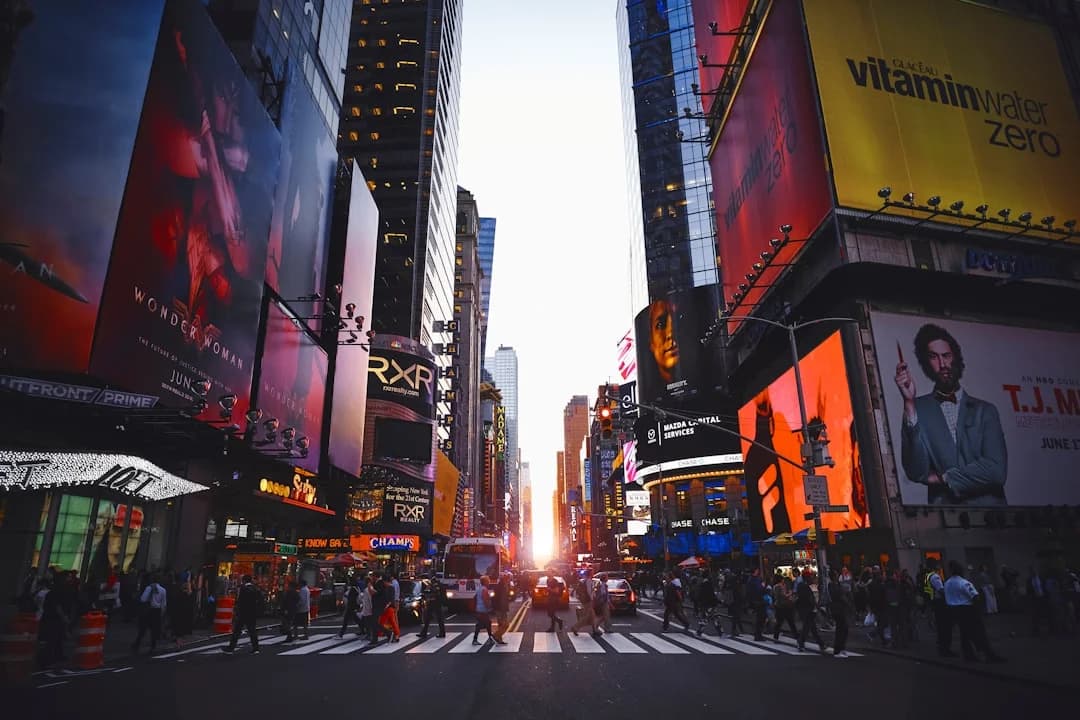
Photo by Luca Bravo on Unsplash
New York City nightlife policy innovations 2026 are unfolding at a rapid pace as the city leans into a data-driven approach to balance lively, culturally vital venues with neighborhood quality of life. In late 2025, the city rolled out the FY26 Nightlife Grant program and began reporting on a broad set of coordinated initiatives designed to support nightlife businesses while reducing conflicts with residents. The confluence of grant funding, new enforcement collaboration protocols, and welfare-oriented support services signals a deliberate shift toward a more strategic, less adversarial model of nightlife governance. This is not just a policy shift; it’s a clear signal that New York is treating its nightlife economy as a core piece of urban infrastructure—one that requires careful design, ongoing evaluation, and visible benefits for communities and visitors alike. The year 2026 is shaping up as a fulcrum moment for how the city governs, funds, and studies its night-time economy, with explicit emphasis on data, equity, and scalable impact. As part of these changes, the Office of Nightlife (ONL) has begun detailing program outcomes, and city agencies are coordinating across borders to address safety, sound management, and corridor-level planning in a way that can be measured and refined over time. The focus on New York City nightlife policy innovations 2026 is not merely aspirational; it is anchored in concrete actions, dates, and deliverables that readers can track as the year unfolds.
The city’s nightlife ecosystem is a major economic and cultural engine, supporting hundreds of thousands of workers and generating tens of billions in economic activity. ONL reports that nightlife in New York City employs more than 300,000 people and contributes over $35 billion in economic impact annually, underscoring why policy designers emphasize both growth and safeguards for residents. These numbers are not abstract; they drive decisions about where to invest, how to coordinate enforcement, and which corridors most need supportive programming. In 2026, that data-driven stance is reflected in grants, coordinated enforcement reforms, and new mediation and health programs designed to reduce friction between venues and neighbors while expanding opportunities for cultural expression. (nyc.gov)
What Happened
FY26 Nightlife Grant: A coordinated investment in vitality and vitality’s safeguards In 2026, the City of New York is rolling out the FY26 Nightlife Grant program as a centerpiece of its nightlife policy innovations for 2026. The Office of Nightlife (ONL) is administering a grant program intended to strengthen nightlife business vitality within commercial corridors, with awards to nonprofit organizations that implement projects aligned with four core objectives: local promotion and commercial visibility; retail retention and industry capacity; promoting safe, inclusive, and sustainable nightlife districts; and preserving and supporting nightlife culture. The ONL described this as a “Designated Service Area” approach, where grant work is concentrated in targeted corridors to maximize local impact. Grants are awarded through a competitive process, and successful proposals must be completed by a firm deadline of June 30, 2026. Applications for the FY26 Nightlife Grant closed on October 15, 2025, signaling a rapid move from planning to on-the-ground implementation. (nyc.gov)
In November 2025, SBS and ONL announced the first-ever NYC Nightlife Grants, a milestone in the city’s approach to structured, grant-based support for nightlife ecosystems. Grants of up to $40,000 were awarded to a dozen nonprofits with projects intended to strengthen resiliency, equity, and vitality of New York City’s nightlife and its commercial corridors. The announcement emphasized outcomes such as operational improvements at venues, increased foot traffic, workforce development, harm-reduction efforts, and broader cultural visibility for nightlife. The grantee list spanned multiple boroughs, including East New York (Queer Nightlife Community Center) and Richmond Hill (Caribbean Equality Project), among others. The event highlighted that the grants were designed to complement enforcement and regulatory coordination rather than replace them, with completion targets set for mid-2026. The total program funding announced in that release was $350,000, illustrating the city’s willingness to pilot corridor-specific, community-led initiatives. These early grant activities constitute a central element of the 2026 NYC nightlife policy innovations. (nyc.gov)
Coordinated enforcement and safety reform: The CURE framework and prevention-first posture A cornerstone of the 2026 policy shift is the Coordinating a United Resolution with Establishments (CURE) framework, which requires city regulatory agencies—including NYPD, FDNY, DOB, DOHMH, and DEP—to engage with the ONL before pursuing enforcement actions. This education-first posture is designed to reduce unnecessary penalties and to give establishments a clearer path to compliance, while preserving enforcement for cases of non-cooperation or flagrant violations. The CURE approach represents a deliberate departure from legacy models that relied on large-scale, surprise inspections and emphasizes direct engagement, documentation, and follow-up support. The initiative is designed to dovetail with the ONL’s broader mission to coordinate city services and push prevention and problem solving over punitive measures. (nyc-business.nyc.gov)
In 2025 ONL began implementing a comprehensive set of public-safety and quality-of-life programs that are carried forward into 2026, including the MEND NYC mediation program and an expanded focus on sound management and neighbor relations. The annual report released in May 2026 documents the four main focus areas—Support Business Development, Improve Quality of Life, Promote Safety, Equity, and Harm Reduction, and Elevate Nightlife Culture—and notes ongoing interagency coordination with NYPD and DEP to address sound concerns and reduce community tensions. The report highlights that ONL continued to connect venues with resources such as NYC BEST (Business Express Service Team), MEND NYC mediation, OutSmartNYC bystander intervention training, and safety-focused webinars. In this period, ONL also formalized the commitment to an education-first approach, which is intended to reduce recidivism and enforcement actions and to build a more resilient nightlife ecosystem. (nyc.gov)
Sound management, noise control, and corridor-based planning: The practical rules of engagement The city’s approach to nightlife policy innovations 2026 includes a practical emphasis on sound management and sound policy as a part of corridor planning. ONL’s cooperation with DEP explicitly targets sound concerns as venues and neighborhoods negotiate closer, more predictable interactions. The annual report describes sound management as a core component of reducing complaints and improving neighborhood relations, with a framework that includes training, mediation, and sensible architectural and operational improvements. The city also notes that it will explore corridor-based approaches to late-night activity, including the possibility of concentrated, well-served districts where late-night activity can be managed more effectively. This aligns with a broader public-safety and quality-of-life strategy and reflects the city’s willingness to experiment with new models of urban nightlife governance. (nyc.gov)
Operational details, case studies, and the real-world impact The Nightlife Grant cohort includes a diverse set of partners working across borough lines to implement practical, locally tailored strategies. In East New York, the Queer Nightlife Community Center is pursuing the East New York Nightlife Initiative along the Industrial Business Zone and Van Sinderen Avenue corridor; in Queens, the Caribbean Equality Project is leading the Carnival After Dark: Safe, Seen, and Sound program along Liberty Avenue and Lefferts Boulevard. Other grantees include Harlem Late Night Jazz, Pratt Center, OutSmartNYC, and Queer Nightlife Community Center, among others. The grants’ focus on outcomes such as safety training, workforce development, and cultural programming demonstrates a deliberate attempt to connect policy objectives with tangible community benefits. The 2025 grant round’s roster and neighborhood footprints illustrate how the city intends to build capacity at the local level, while the 2026 deadlines and deliverables place the onus on accountability and measurable results. (nyc.gov)
Why It Matters
Economic and cultural significance: Nightlife as urban infrastructure New York City nightlife policy innovations 2026 are rooted in the recognition that nightlife is a critical driver of economic activity and cultural exchange. The ONL highlights that nightlife is a “core part of the city’s cultural and economic life,” underpinning hundreds of thousands of jobs, significant tax revenue, and ongoing cultural production across all five boroughs. The city’s approach in 2026 emphasizes not just safety and compliance but the preservation and promotion of nightlife culture as a public good. This framing matters because it reframes how policymakers view nighttime economy risks and opportunities, linking outcomes like job growth, tourism, and neighborhood vibrancy to policy design and funding decisions. The 2025 grant announcements and the 2026 annual report reiterate that the city sees nightlife as infrastructure that deserves coordinated support, accountability, and opportunities for community-led innovation. (nyc.gov)
Designated Service Areas and corridor planning: Targeted impact in neighborhoods A key structural element of the 2026 policy approach is the Designated Service Area concept, which concentrates grant-supported activities in corridor-focused geographies. By directing resources to specific commercial corridors, the city aims to bolster small businesses, attract foot traffic, and coordinate safety, health, and neighborhood engagement initiatives along defined routes. The ONL page describes the approach and its alignment with program objectives, and the 2026 annual report underscores that corridor-based planning is central to long-term system improvement. This is not an anecdotal tactic; it is a deliberate, data-informed method to produce scalable outcomes across diverse neighborhoods, from Harlem to the outer boroughs. (nyc.gov)
Challenges and longer-term policy considerations: Licensing, insurance, and governance Even as policy innovations advance, the annual report and ONL materials acknowledge persistent challenges. Venues face licensing limitations, rising insurance costs, and complex regulatory interpretations that can hamper survival and growth in a crowded, high-cost environment. The policy roadmap explicitly calls for clearer licensing pathways, better guidance, and more predictable regulatory interactions, indicating a broader move toward administrative simplification and better access to support services. These concerns are not mere footnotes; they shape how quickly venues can open, expand, or innovate, and they inform the design of grant programs, mediation services, and safety training that aim to reduce friction rather than merely respond to problems after they occur. (nyc.gov)
Policy direction: 24-hour activity districts and future governance Perhaps the most forward-looking element in the 2026 policy discourse is the recommendation to explore 24-hour activity districts as a long-term governance framework. The idea is to concentrate late-night activity into well-served corridors, paired with appropriate safety, transportation, and noise-mitigation infrastructure. The annual report explicitly calls for this kind of planning, signaling a shift toward strategic, city-wide long-range visions for nightlife rather than a patchwork of ad hoc interventions. If pursued, such districts would require coordinated investment in transit, policing, health and safety services, and community engagement to ensure neighborhoods retain balance and resilience even as activity proliferates across hours. The articulation of this concept in the 2026 policy dialogue reflects a sophisticated, data-driven approach to urban nightlife governance. (nyc.gov)
Neighborhood-level outcomes and representative case studies The grant program’s neighborhood-level focus offers concrete case studies of how policies translate into action. In East New York, the Queer Nightlife Community Center’s Nightlife Initiative aims to strengthen local culture while improving safety and workforce opportunities within the Industrial Business Zone. In Richmond Hill, the Caribbean Equality Project’s Carnival After Dark program seeks to combine safety training with cultural programming and a “Safer Spaces” certification, alongside workforce development strategies. These examples illustrate how policy innovations for 2026 are designed to yield measurable improvements in both safety and economic vitality, and they demonstrate the city’s commitment to equity by supporting programs that address barriers faced by immigrant-owned venues and LGBTQ+ communities. The grantees’ profiles are documented in the November 2025 announcement. (nyc.gov)
What’s Next
Next steps for ONL, grant recipients, and city agencies Looking ahead, ONL’s 2026/2027 trajectory centers on completing the Nightlife Grant projects by the June 30, 2026 deadline and assessing the programs’ impact on safety, attendance, and neighborhood vitality. The grants’ outcomes—practical venue improvements, increased foot traffic, workforce development, and enhanced safety and inclusivity—will feed into subsequent policy adjustments and potential scaling of successful models. The annual report also highlights that ONL will continue to publish semi-annual reports on CURE-related inspections and expand access to related resources, training, and mediation services to venues and neighborhoods that need them most. The aim is to translate grant-driven learning into scalable citywide practices while preserving the distinctive character of New York City’s nightlife ecosystems. (nyc.gov)
What to watch for: Budget timing, regulatory updates, and data-driven evaluation Several concrete milestones remain on the horizon. The 2026 budget context will shape ongoing investments in safety, public health, and quality-of-life initiatives that intersect with nightlife—whether through additional grant cycles, expanded mediation programs, or new corridor-based interventions. The ONL’s ongoing collaboration with DEP, NYPD, and other agencies will continue to refine sound-management protocols and enforcement pathways, with the CURE framework providing a model for how agencies coordinate before taking action. Citywide reporting and data-collection efforts will be essential to determine which aspects of the 2026 innovations deliver the strongest return on investment and how to replicate successful corridors in other neighborhoods. (nyc.gov)
Closing
The momentum around New York City nightlife policy innovations 2026 reflects a city committed to balancing two interwoven priorities: protecting residents’ quality of life and ensuring New York remains a global capital for culture, music, and nightlife entrepreneurship. The year’s actions—grant funding to bolster neighborhood vitality, a coordinated enforcement and mediation framework, and explicit attention to corridor planning and sound management—signal a mature, data-informed approach to governance that aims to produce measurable gains for workers, venues, and neighbors alike. As the ONL and its partner agencies continue to publish results, each corridor, grant cohort, and mediation outcome will contribute to a broader understanding of how a world-class nightlife economy can operate alongside thriving, livable neighborhoods. For readers who track policy developments, the city’s nightly economy story is increasingly a data story—one where each datum point helps city leaders decide what works, what doesn’t, and how to scale proven approaches to benefit more communities across New York City.
If you’re seeking updates about New York City nightlife policy innovations 2026, follow the Office of Nightlife and SBS for ongoing program reports, grant announcements, and upcoming workshops or mediation sessions. The city’s approach emphasizes practical support, education-first engagement, and ongoing dialogue with venues, residents, and industry advocates, all designed to keep New York’s nightlife vibrant, safe, and inclusive. Staying engaged means watching corridor developments, grant cycles, and the evolving enforcement framework as New York City continues to refine its nighttime economy for a 21st-century metropolis.
Notes and key sources for readers who want to dive deeper
- NYC Office of Nightlife (ONL) overview and FY26 Nightlife Grant details, including grant objectives, Designated Service Areas, and completion deadlines. (nyc.gov)
- NYC SBS press release announcing the first NYC Nightlife Grants (November 24, 2025), including grant amounts, recipient list, and program goals. (nyc.gov)
- NYC Office of Nightlife Annual Report 2026 (covering through April 30, 2026) with sections on CURE, Nightlife Grant, MEND NYC, sound management, and policy direction including 24-hour district exploration. (nyc.gov)
- CURE Initiative details and process (coordinating agency engagement before enforcement). (nyc-business.nyc.gov)
- State-level context: May 2026 policy from Governor Hochul eliminating outdated dancing restrictions, illustrating complementary policy momentum at the city and state levels. (governor.ny.gov)