Midtown Transit-oriented Development 2026: Data Trends

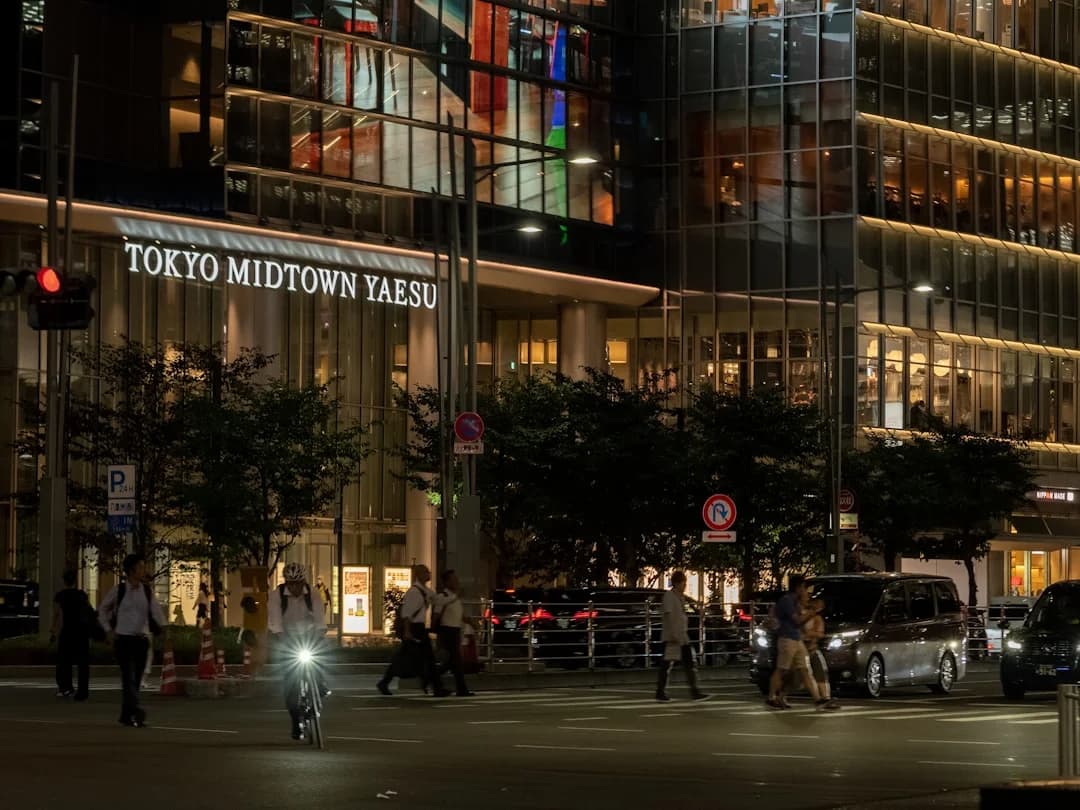
Photo by Gabriel Francesco on Unsplash
The news today centers on Midtown transit-oriented development 2026 as New York City moves to reshape a central slice of Manhattan through a major zoning and land-use initiative. In mid-2025, the City Planning Commission advanced the Midtown South Mixed-Use Plan, a comprehensive rezoning effort covering 42 blocks in Midtown South that seeks to convert underused manufacturing zones into dense, mixed-use districts anchored by transit access. The plan, part of a broader City of Yes for Housing Opportunity initiative, aims to unlock thousands of new homes and jobs near major transit hubs, with a particular emphasis on creating a more transit-forward, 24/7 neighborhood fabric. The immediate news for developers, residents, and local businesses is that the proposal has cleared significant procedural hurdles and is moving toward official council consideration, marking a pivotal moment for Midtown transit-oriented development 2026 and the way Manhattan integrates housing with rail, bus, and pedestrian networks. This matters because it signals a measurable shift in how zoning can align housing production with transit capacity, potentially altering price dynamics, construction timelines, and the rhythm of daily life in one of the city’s busiest corridors. (nyc.gov)
As of June 2025, the Midtown South Mixed-Use Plan (MSMX) is positioned as a landmark TOD strategy for Midtown Manhattan. The plan envisions replacing parts of existing manufacturing districts with high-density mixed-use districts, establishing a new Special Midtown South Mixed-Use District (MSX), and applying Mandatory Inclusionary Housing (MIH) standards to deliver a substantial share of income-restricted homes. The environmental review culminated in a Final Environmental Impact Statement issued on June 6, 2025, and the zoning actions were slated for formal consideration by the City Planning Commission on June 18, 2025, with a path to City Council action thereafter. The net effect is a potential redefinition of the neighborhood’s skyline, housing stock, and street life, anchored by the region’s transit network. The plan emphasizes how TOD can unlock housing and jobs around transit stations, a model that aligns with broader regional shifts toward transit-centric growth. (nyc.gov)
Opening Paragraphs: Midtown transit-oriented development 2026 in Context
-
The Midtown South Mixed-Use Plan’s framework rests on a simple reality: transit-oriented development is a powerful lever for housing, labor markets, and urban form in dense cities. The plan’s scale—an area roughly bounded by West 23rd to West 40th Streets and Fifth to Eighth Avenues—contemplates nearly 9,700 dwelling units, including up to 2,890 permanently affordable homes, across the rezoned blocks. These numbers, conveyed in official planning documents, illustrate the scale of the TOD opportunity in Manhattan’s core and set expectations for how Midtown’s transit access could translate into housing supply and long-run market stability. As NYC planners note, the MSMX framework would enable a mix of manufacturing-to-residential transitions with high-density residential floors and adjusted floor-area ratios to accommodate growth near subway lines and bus routes. The environmental and community processes reflect a careful balancing act between housing growth, neighborhood character, and transit system capacity. (nyc.gov)
-
The immediate market implications are complex and evolving. On the one hand, TOD can attract capital looking for proximity to multiple subway lines, reducing reliance on car dependence and potentially boosting property values near stations. On the other hand, the local reception has been nuanced: while many in the developer and investor community see opportunity in a larger, transit-accessible population base, community boards have raised questions about the pace of change, the distribution of affordable units, and the preservation of neighborhood amenities. The Midtown South Mixed-Use Plan’s progression to final Council consideration in mid-2025—following formal board and committee reviews—signals that Midtown transit-oriented development 2026 will unfold under heightened public scrutiny. The City’s zoning text amendments and related actions aim to align housing production with a transit-rich future, a dynamic that urban policy researchers anticipate could reshape housing affordability, commuter patterns, and local business ecosystems over the next decade. As the plan progressed, the conversation shifted from theoretical TOD benefits to tangible policy steps and a defined construction horizon. (nyc.gov)
Section 1: What Happened
Zoning changes and the Midtown South Mixed-Use Plan
Scope and proposals
- The Midtown South Mixed-Use Plan (MSMX) represents a zoning text amendment (N 250186 ZRM) and a zoning map amendment (C 250185 ZMM) designed to create a Special Midtown South Mixed-Use District (MSX) across 42 blocks in Manhattan Community Districts 4 and 5. The proposed actions would replace portions of the existing M1-6 and M1-6D manufacturing districts with high-density mixed-use districts identified as M1-9A/R12, M1-8A/R12, and M1-8A/R11. The framework aims to support up to 9,676 dwelling units, including 1,940 to 2,890 permanently affordable homes, and to apply MIH requirements citywide within the rezoning area. This is a foundational element of Midtown transit-oriented development 2026 in Manhattan, tying housing growth to transit accessibility and urban-scale development. (nyc.gov)
Public process and environmental review
- The planning and PID (Planning) process for MSMX included formal public review by Manhattan Community Boards 4 and 5, with a March 2025 notice and hearings. The design and feasibility analysis were informed by SEQRA, with a Final Environmental Impact Statement issued on June 6, 2025, marking a major milestone in clarifying environmental impacts and mitigation measures. The NYC Department of City Planning (DCP) described the environmental work as integral to understanding how new density and land-use changes interact with traffic, public spaces, and transit operations. The public record demonstrates the depth of review and the transparency of the process for Midtown transit-oriented development 2026. Still, not every community stakeholder agreed: Manhattan Community Board 4 initially voted to deny ULURP N250186ZRM, signaling that the path forward would require continued negotiations and modifications to address local concerns about infrastructure, school capacity, and neighborhood character. (nyc.gov)
Council action and current status
- By mid-June 2025, the NYC City Planning Commission approved the MSMX proposals in a formal decision, moving the plan toward the City Council for a full vote. The council’s consideration reflected both the housing imperative and the broader policy question of how Midtown’s transit capacity and street grid can accommodate higher densities. The council vote, anticipated in June 2025, would mark a watershed moment for Midtown transit-oriented development 2026, with implications for housing supply, affordable housing delivery, and transit-oriented growth across Manhattan. The plan’s approval and forthcoming council review were reported in contemporaneous coverage, underscoring that the project’s fate hinged on a balance of housing needs, infrastructure readiness, and political support. (politicsny.com)
Section 2: Why It Matters
Housing supply and affordability implications
The scale of new housing
-
The MSMX plan’s projected 9,676 dwelling units, including a substantial portion designated as permanently affordable, represents a meaningful expansion of Midtown’s housing stock. For a neighborhood historically dominated by office and high-rise commercial development, this shift toward mixed-use, vertically integrated living spaces could alter the supply-demand calculus, potentially slowing rent and price growth in a market that has long grappled with affordability pressures. The MIH component signals a deliberate attempt to distribute benefits of density more broadly, aligning with policy goals to increase affordable housing near transit corridors. The plan’s numbers—9,676 units with 1,940 to 2,890 affordable—are explicitly stated in the official MSMX documentation, and they anchor the project’s affordability commitments as it advances through the ULURP (Uniform Land Use Review Procedure) process. (nyc.gov)
-
As the plan moves through legislative and administrative channels, observers are watching how the city will implement the MIH requirements and whether the scaled housing target can be delivered in a way that remains financially viable for developers while meeting community needs. The exact distribution of affordable units across the rezoning blocks will likely emerge through the final ULURP actions and related environmental and financing decisions, but the baseline numbers provide a clear signal about the scope of Midtown transit-oriented development 2026’s housing impact. (nyc.gov)
Transit access, mobility, and neighborhood vitality
-
The MSMX framework is rooted in transit accessibility. The plan’s design aims to convert density into real mobility benefits by locating a large share of new housing near stations and major bus corridors, with the expectation that residents can rely on transit rather than single-occupancy vehicles. The planning documents emphasize “transit-rich, job-accessible” neighborhoods as a core ethos, suggesting a potential rebalancing of street space, pedestrian environments, and ground-floor retail to support a 24/7 urban living pattern. This alignment between housing and transit capacity—one of TOD’s central promises—could bolster job access for residents and expand the lunchtime-to-nightlife economy around Midtown stations. The MSMX materials explicitly describe the transit-oriented logic behind the density and mix, which is why stakeholders in finance, development, and public policy are watching closely. >transit-rich, job-accessible neighborhood< is a phrase found in the plan’s development narrative, illustrating how planners frame the TOD benefits. (nyc.gov)
-
The broader regional context reinforces Midtown TOD’s significance. While the specific Midtown-South plan targets a Manhattan corridor, the TOD trend in 2026 continues to gain attention in national and regional discourse as a mechanism to house more people near high-capacity transit. A 2026 Forbes analysis of TOD growth highlights how transit-oriented housing remains on track for continued momentum in high-density urban areas, including near regional transit hubs that connect to New York City’s core. Though the article discusses TOD momentum beyond New York, the underlying logic—more housing and jobs near transit—resonates with the MSMX approach in Midtown. This alignment of housing policy with multi-modal mobility is precisely the value proposition that Midtown transit-oriented development 2026 seeks to operationalize. (forbes.com)
Community impact, equity considerations, and local concerns
- The MSMX process has spotlighted a classic TOD trade-off: how to balance the benefits of new housing and improved transit connectivity with concerns about disruption, gentrification, and the pace of change. The Manhattan Community Board 4’s initial vote to deny ULURP N250186ZRM underscores that some local voices sought additional safeguards or adjustments to the plan’s approach to infrastructure, schools, and neighborhood amenities. While the council ultimately advanced the plan, the episode illustrates how a data-driven TOD strategy must confront equity considerations and infrastructure readiness alongside market dynamics. The public record shows a nuanced set of responses from local stakeholders, with planning officials and developers continuing to negotiate improvements and mitigations as part of the final package. (cbmanhattan.cityofnewyork.us)
Broader context: Midtown TOD in the city’s housing and transportation policy
- Midtown transit-oriented development 2026 sits at the intersection of housing affordability agendas, climate-conscious urban planning, and a shifting transit policy environment in New York City. The MSMX plan’s emphasis on MIH and mixed-use zoning reflects a broader citywide push to leverage density near transit to advance housing goals while reducing reliance on long commutes by car. The plan is part of a larger narrative about how the city can use zoning reform to deliver more housing near public transit—and how such reforms interact with urban design, street networks, and the lived experience of residents and workers in Midtown. For context, the public review and environmental analysis documented in the MSMX records illustrate the level of scrutiny that accompanies large TOD steps in a dense metropolis, emphasizing that TOD is as much about process and policy as it is about towers and block plans. (nyc.gov)
Who is affected and how different stakeholders view Midtown transit-oriented development 2026
-
Developers and investors are watching the MSMX timeline closely because zoning changes can unlock higher density and mix, creating opportunities for new residential, office-to-residential conversions, and mixed-use retail. The MSMX plan is designed to enable dense, transit-accessible development that aligns with the city’s housing and economic growth objectives. In practical terms, this can translate into new construction programs, revenue opportunities, and diversified investment vehicles that look for proximity to mass transit as a resilience factor in real estate markets. Expectations around project financing, which often hinges on density bonuses, MIH compliance, and tax incentives, are central to how Midtown TOD projects proceed into 2026 and beyond. The plan’s published housing totals and MIH framework provide a basis for lenders and developers to model risk and yield scenarios within the TOD context. (nyc.gov)
-
Community groups and residents have articulated a range of views about the TOD process and its outcomes. While the plan promises more housing and enhanced transit accessibility, questions about traffic patterns, school capacity, park space, and the long-term maintenance of public realm improvements will shape discussions as construction phases approach. The MSMX record includes community feedback, formal recommendations from Manhattan Community Board 4, and ongoing engagement with neighborhood associations to ensure that the final package reflects a balance of interests and mitigations. This dovetails with a broader discourse on how TOD strategies must deliver not only housing but also sustainable mobility, public space improvements, and equitable access to opportunity. (cbmanhattan.cityofnewyork.us)
-
The public sector’s role remains pivotal. NYC Planning and City Council are the primary arbiters of how Midtown transit-oriented development 2026 takes shape in law and practice. The zoning text amendments, MIH provisions, and related actions will determine the final distribution of housing, the character of blocks affected by the MSX designation, and the sequencing of capital investments in transit and streetscape upgrades. The records show a deliberate, multi-step process designed to ensure accountability and public transparency as the plan moves from proposal to reality. This is consistent with how large TOD initiatives are managed in major cities, where policy, finance, and community planning must converge for successful implementation. (nyc.gov)
Section 3: What’s Next
Timeline and next steps for Midtown transit-oriented development 2026
Key decision points and milestones
- The MSMX plan’s immediate milestones, as captured in the official documents, include City Planning Commission certification and the City Council’s final vote. The CPC’s June 18, 2025, hearing and vote established the formal planning direction, with the FEIS already issued on June 6, 2025, to frame environmental considerations and mitigation strategies. The next steps involve the City Council’s up-or-down vote to approve or modify the zoning actions, followed by any required administrative rules, land-use approvals, and financing arrangements that would enable construction and program delivery. The timeline reflects a deliberate sequencing approach—first policy, then implementation—consistent with best practices for TOD projects of this scale. For Midtown transit-oriented development 2026, the critical window is 2025–2026 as policy moves from plan to procurement and construction. (nyc.gov)
Construction and delivery outlook
- While exact construction start dates depend on a multitude of factors—final zoning approvals, market conditions, project-by-project financing, and infrastructure readiness—the MSMX documents imply a phased approach to development. Some blocks may begin near-term construction as land-use changes receive final approvals, while others may wait for infrastructure improvements or favorable market conditions. The plan’s emphasis on MIH and high-density districts near transit suggests a long horizon in which early phases could emphasize housing units that anchor new transit-accessible neighborhoods, while later phases expand to related retail, offices, and community facilities. Analysts and developers will be watching the 2026 market environment to gauge the pace of delivery and the alignment of project timelines with transit improvements and roadways, including pedestrian-oriented streetscapes and bus-stop upgrades that are often part of TOD capital programs. (nyc.gov)
What to Watch for in 2026
-
Regulatory clarity and final approvals: By 2026, the Midtown South Mixed-Use Plan could be fully enacted in municipal law if City Council approvals are completed as anticipated in mid-2025. Legislative language, zoning text, and the MIH framework will determine the exact distribution of housing and the types of development permitted, affecting developers’ capital strategies and potential affordable housing pipelines. (nyc.gov)
-
Infrastructure and transit investments: TOD relies on surrounding transit and infrastructure upgrades. In Midtown, upgrades to subway access, bus facilities, pedestrian streetscapes, and potentially station-area improvements can affect both construction schedules and neighborhood livability. Planners and public agencies are expected to coordinate around transit service plans and capacity enhancements to support the density proposed in MSMX. The plan’s transit-forward logic is central to the 2026 outlook for Midtown TOD, with an emphasis on leveraging existing and planned transit assets to support the new population mix. (nyc.gov)
-
Market performance and affordability outcomes: Real estate markets respond to policy signals as much as to macroeconomic conditions. The 2026 phase will reveal how the market values are priced in proximity to transit nodes and how MIH could impact long-term affordability. Market participants will track new housing starts, absorption rates, rent trajectories, and the performance of ancillary commercial spaces tied to the new residential growth. Analysts may compare Midtown’s TOD trajectory with other TOD programs nationwide to assess the efficiency of density, transit usage, and ancillary amenities in supporting sustainable growth. The MSMX numbers provide a concrete baseline for such analysis. (nyc.gov)
-
Community engagement and governance: Even with approvals, community engagement will continue as developers submit project-by-project proposals, responding to feedback from Community Boards, residents, and business owners. The Midtown plan’s public-review history demonstrates that governance and neighborhood input remain central to TOD implementation. Observers should expect ongoing public sessions, rezoning refinements, and potential amendments aligned with evolving transit usage and neighborhood needs. (cbmanhattan.cityofnewyork.us)
Closing: Staying Informed on Midtown Transit-Oriented Development 2026
-
Midtown transit-oriented development 2026 embodies a data-driven approach to unlock housing near transit while preserving the city’s character and mobility. The MSMX plan’s core numbers—roughly 9,676 dwelling units with up to 2,890 permanently affordable homes, across 42 blocks—frame the magnitude of Midtown Manhattan’s TOD opportunity. The process has already produced tangible milestones: a Final Environmental Impact Statement in June 2025, a City Planning Commission vote, and a path to City Council action, with the potential to alter the neighborhood’s housing supply, street life, and commute patterns for years to come. As this once-in-a-decade shift unfolds, readers should monitor official NYC Planning Department releases and City Council proceedings for updates on final approvals, implementing regulations, and construction schedules. For ongoing coverage, Manhattan Monday will track 2026 developments, publish data-driven analyses, and provide readers with timely context on how Midtown TOD aligns with the city’s broader housing and transportation goals. (nyc.gov)
-
To stay ahead of Midtown transit-oriented development 2026 news and data, readers can follow the City Planning Commission summaries, the Midtown South Mixed-Use Plan project page, and updates from local community boards. Given the scale of the rezoning and the significance of MIH commitments, the policy framework will likely shape investment and development timelines in the near term, while transit service and mobility improvements will influence the neighborhood’s long-term livability. In a city where transit access is a primary driver of real estate value, Midtown’s TOD trajectory could become a benchmark for how density, housing affordability, and rail access intersect to rewire urban growth. This is where data, policy, and market forces converge to define Midtown transit-oriented development 2026 and its impact on Manhattan’s core. (nyc.gov)