Manhattan Waterfront Cultural Pavilions 2026
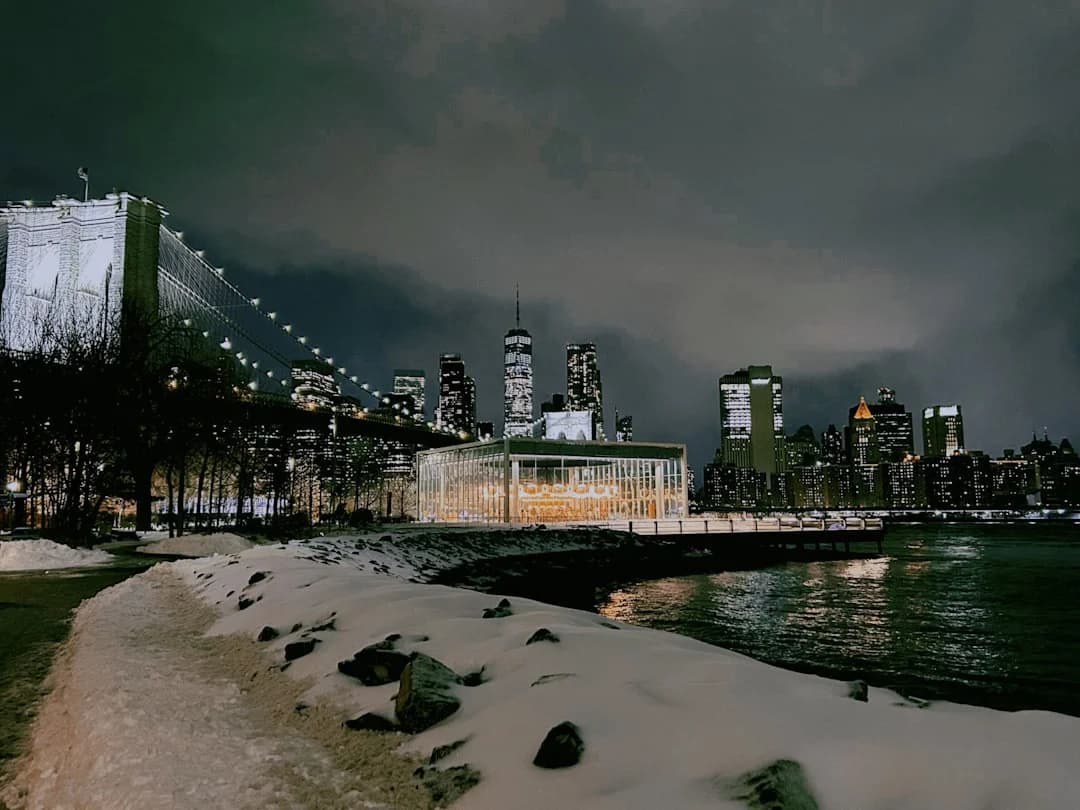
Photo by Rui W on Unsplash
Manhattan is entering a new era for its riverfront as cultural programming folds more deeply into the city’s resilience and waterfront redevelopment. The Wagner Park Pavilion in Battery Park City stands at the center of this shift, with phased openings during late 2025 and 2026 that bring public spaces, classrooms, and a forthcoming dining venue into a single, highly visible urban edge. This development is not just about aesthetics; it’s part of a broader Lower Manhattan Coastal Resiliency effort designed to protect communities while expanding public access to the harbor. The announcement and subsequent openings mark a practical manifestation of Manhattan’s approach to blending culture with climate adaptation on the water, a model that other New York neighborhoods have begun to watch closely. The project underscores how Manhattan’s waterfront spaces are being recast into permanent civic infrastructure that can host performances, exhibitions, and community gatherings even as they shield the city from rising seas. The Wagner Park initiative is a prime example of Manhattan’s evolving waterfront strategy in 2026, reflecting a deliberate integration of culture, design, and public safety. (media.bpca.ny.gov)
This year, the Wagner Park Pavilion is both a symbol and a functioning platform for cultural life along the harbor. The Battery Park City Authority (BPCA) has described the Pavilion as the centerpiece of the North/West Battery Park City Resiliency Project, a component of the broader LMCR program intended to reduce flood risk in Lower Manhattan while expanding public spaces. The rooftop garden and entry scales are designed to offer uninterrupted harbor and Statue of Liberty views, an intentional move to anchor cultural activity in a waterfront setting that is simultaneously more resilient and more inviting to residents and visitors alike. The integration of a classroom space and a forthcoming restaurant signals that Manhattan’s waterfront pavilions 2026 are intended to be long-running, multi-use venues rather than temporary showpieces. (media.bpca.ny.gov)
Section 1: What Happened
Wagner Park Pavilion Opens in Phases
In November 2025, the Wagner Park Pavilion’s rooftop garden opened as a publicly accessible feature that frames sweeping views of the Statue of Liberty, Ellis Island, and the Hudson River. This rooftop component is part of a staged reopening of Wagner Park itself, which had been rebuilt as a climate-resilient edge along Battery Park City after the South Battery Park City Resiliency Project. The campus-like design places the Pavilion as a formal gateway to the harbor, with arched vaults and an entry plaza that visually connect parkland, water, and skyline. The opening marked a milestone in a multi-year public investment intended to harden infrastructure while reimagining public space as a cultural venue. The release also noted that the park’s resilience upgrades include a buried floodwall and rainwater reuse systems designed to withstand a 100-year storm and future climate scenarios. The project is designed to achieve ILFI Net-Zero Carbon Certification, underscoring a serious commitment to sustainability alongside the cultural program. (media.bpca.ny.gov)

Time-based milestones followed in the months after the rooftop debut. The BPCA and its partners indicated that the Wagner Park Pavilion would continue to open in phases, with a classroom- and programmatic space slated to debut within the pavilion in late 2025 or early 2026 and a dining venue to follow in Summer 2026. The official materials describe the Pavilion as the central feature of Wagner Park’s reinvention, with the public welcome extended through a combination of open spaces, classrooms, and an eventual restaurant—an arrangement designed to sustain year-round programming. This phased approach aligns with the city’s broader resilience investments in Lower Manhattan and provides a clear, near-term schedule for the cultural use of the waterfront. (media.bpca.ny.gov)
Seated within the same reopening timeline, the Classroom—an indoor 1,200-square-foot space designed for performances, meetings, and art programming—began to take shape in late 2025 and into early 2026. By late March 2026, local outlets reported that the Classroom had already opened to public use, with opportunities for neighborhood meetings, private rentals, and public programming. The Classroom’s design emphasizes adaptability, with modular seating, AV systems, and flexible configurations to host a wide range of events as part of the Wagner Park Pavilion complex. While the finalized schedule for the classroom varied slightly across official documents and media reports, the consensus is that this space became a functional public venue within the Wagner Park project’s broader phased rollout. (media.bpca.ny.gov)
The Classroom Debuts and Public Programming Expands
The Classroom’s introduction is widely described as a deliberate step to fill a long-standing gap in indoor programming along Manhattan’s waterfront. Local coverage highlights the space’s design as a “waterfront living room,” with large windows offering views of the harbor and sunset, and a layout that supports a broad mix of activities—from artist talks to exhibitions and community gatherings. The Classroom’s debut is paired with ongoing collaborations with cultural partners and programming allies, signaling a broader commitment to using the Pavilion to host a continuous calendar of events in a waterfront context. The latest reporting confirms ongoing partnerships and a growing schedule of events that leverage the Pavilion’s location for daylight and evening programming, underscoring the Wagner Park Pavilion as a long-term cultural asset rather than a single-season venue. (timeout.com)
A New Dining Destination: Restaurant Coming to Wagner Park
Parallel to the Classroom’s emergence, a dining venue is planned to occupy the Wagner Park Pavilion, replacing the long-standing Gigino restaurant that historically occupied the site. Official materials and press coverage indicate that the restaurant is expected to launch in 2026, with a public-facing dining operation that will help extend the Pavilion’s hours and support a year-round public life along the water. The timeline has seen some adjustments in public-facing documents, but a mid-2026 restaurant opening remains the target described by BPCA documents and journalistic reporting. The concerted shift toward a multi-use waterfront pavilion—kombining a rooftop, classroom, and dining component—illustrates a strategic move to create a sustainable cultural hub that can attract visitors and support local programming while advancing climate resilience. (media.bpca.ny.gov)

A related planning document from BPCA, issued in early 2026, confirms 2026 as a pivotal year for Wagner Park’s dining component, noting “restaurant turn-over mid-March, 2026” as part of the park’s phased delivery schedule. In parallel, Time Out and 6sqft were reporting that a new restaurant is anticipated within the Pavilion later in 2026, reinforcing the sense that Wagner Park Pavilion will become a multi-use cultural and dining destination through the year. The convergence of planning documents and independent media coverage provides a robust timeline for the public-facing dining component within the Manhattan waterfront cultural pavilions 2026 narrative. (media.bpca.ny.gov)
Sustainability and Resilience Features: A Waterfront Culture, A Resilient Edge
The Wagner Park project is built on a resiliency-first premise. The rooftop garden and the restrooms are part of a broader effort to deliver a publicly accessible, climate-ready waterfront edge that blends everyday life with flood protection. The Pavilion’s Net-Zero ambitions are supported by features such as geothermal heating and cooling, stormwater reclamation, LED lighting and occupancy sensors, efficient glazing, and a highly insulated building envelope. The project’s design integrates flood barriers and water-reuse systems into the landscape, turning vulnerability into a public amenity rather than an obstacle to gathering and programming along the harbor. This approach illustrates a key trend in Manhattan’s waterfront development: cultural spaces that are simultaneously venues for artistry and infrastructure that protects neighborhoods from climate risks. (media.bpca.ny.gov)
The public-facing value of these measures is reinforced by independent analyses and city planning documents that highlight the practical benefits of waterfront esplanades and cultural pavilions as part of a comprehensive approach to urban resilience. The East River Waterfront Esplanade, for example, is described as a transformative, public-facing asset designed to weave waterfront access, recreation, and cultural programming into a continuous, protective ribbon along Lower Manhattan’s East River edge. This broader context helps explain why Manhattan’s waterfront cultural pavilions 2026 are receiving investments that combine aesthetics, accessibility, and climate defense in a single program. (nycrc.com)
What’s more, the Linden- and ILFI-certified sustainability targets for Wagner Park align with a growing trend in New York City where public projects aim to achieve higher environmental standards while delivering cultural value. The BPCA materials emphasize Net-Zero Certification, a signal to residents and visitors that the waterfront’s cultural life can thrive in a space designed to minimize its carbon footprint. This alignment of cultural and environmental objectives reflects a broader city-wide ambition to create resilient, inclusive, and vibrant waterfront districts that function as political and social hubs as well as art spaces. (media.bpca.ny.gov)
Section 2: Why It Matters
Impact on Public Life and Cultural Access

The Wagner Park Pavilion project is not only about infrastructure; it’s about expanding opportunities for public encounter with the waterfront and with arts programming. The Classroom, with its flexible configuration and harbor-facing vantage, is designed to host panel discussions, performances, and community meetings in a space that ties the harbor to daily civic life. The initial reactions from local officials and civic organizations emphasize the Pavilion’s potential to anchor a more inclusive, accessible cultural ecosystem on Manhattan’s edge. The Classroom is positioned as a platform for neighborhood engagement and partnerships with cultural organizations, which could broaden access to artistic programming and attract a wider cross-section of residents and visitors to Battery Park City and the Financial District. Critics and advocates alike view these changes as essential tests of whether a resilient waterfront can also be a thriving cultural and social space. (hoodline.com)
Cultural access is not an isolated objective; it’s part of a larger urban strategy to bring arts programming closer to the public and to the water. The East River Esplanade’s development, for example, is framed around expanding waterfront access and public enjoyment—elements that parallel the Wagner Park initiative in terms of public life and cultural activity. The esplanade’s opening and expansion are tied to a longer-term vision of a continuous waterfront greenway that integrates parks, pavilions, and cultural programming across neighborhoods. This is a crucial element of Manhattan’s waterfront strategy, and it demonstrates how public space design is increasingly read alongside cultural policy and economic vitality. (nycrc.com)
Economic and Tourism Context
The economic dimension of waterfront pavilions is increasingly intertwined with tourism, local business vitality, and civic life along the harbor. The East River Esplanade’s development, with its public spaces, restrooms, and pavilion concept, is intended to support a more active waterfront economy by increasing foot traffic, encouraging events, and extending the hours during which people can enjoy the water. The esplanade’s phased completion has been tied to broader economic and recreational objectives, including year-round usage and the potential for food and beverage operations to serve visitors and workers in the area. This context is important for understanding why Manhattan’s waterfront cultural pavilions 2026 are positioned as both cultural and economic drivers for Lower Manhattan. (nycrc.com)
Moreover, contemporary reporting about Wagner Park situates the Pavilion within a larger narrative of climate resilience delivering tangible public benefits—reduced flood risk, enhanced public spaces, and a more inviting harborfront that can host concerts, talks, and visual arts. Time Out’s coverage of the rooftop, the Classroom, and the forthcoming restaurant underscores a practical expectation: a resilient waterfront can also be an economic asset when it hosts a diverse calendar of events and dining experiences that draw both locals and visitors. This synergy between resilience and cultural life is a hallmark of Manhattan’s 2026 waterfront strategy. (timeout.com)
Public Policy and Planning Context
The Wagner Park project sits within a suite of city planning and resilience initiatives designed to protect Lower Manhattan from flooding and sea-level rise while expanding public access to the waterfront. The Lower Manhattan Coastal Resiliency (LMCR) program, as reflected in city planning documents and BPCA materials, emphasizes a combination of hard infrastructure and resilient public spaces. Wagner Park’s phased reopening, its flood defenses, and the new Pavilion are presented as a single, integrated component of this policy framework. The East River Esplanade and other waterfront projects discussed in planning documents illustrate a broader city strategy to weave cultural life into climate adaptation, thereby aligning public safety, quality of life, and economic activity along Manhattan’s riverfront. (media.bpca.ny.gov)
Experts and civic leaders have framed this approach as a model for urban waterfronts more broadly. The integration of a classroom, a potential restaurant, and the Pavilion’s public spaces into a climate-resilient, aesthetically compelling landmark shows how municipal agencies can coordinate with private partners to deliver spaces that are both culturally meaningful and practically protective. The result, if sustained through the 2026 timeline and beyond, could influence how other cities plan for waterfront resilience while nurturing a robust cultural economy. (media.bpca.ny.gov)
What It Means for Manhattan’s Riverfront Identity
Manhattan’s riverfront identity has long been defined by public access to water, parks, and a slate of cultural institutions along the water. The Wagner Park Pavilion project, with its emphasis on public access, harbor views, and public programming, reinforces a continuity of use at the water’s edge—now reinforced by climate resilience and a more explicit cultural mission. In practice, this means that residents can expect more frequent outdoor programming, a broader calendar of events connected to community needs, and a dining and classroom ecosystem that supports ongoing cultural exchange along the harbor. The evolving riverfront narrative—bridging resilience with culture—reflects a broader shift in how New York City interprets waterfront space: not merely as scenic backdrop, but as a living, breathing place where people gather, learn, and create. (timeout.com)
Section 3: What’s Next
Timeline, Milestones, and Next Steps
Looking ahead, the Wagner Park Pavilion program has several high-visibility milestones in 2026 and beyond:
-
Restaurant opening: The plan calls for a new dining venue within the Pavilion, with mid-2026 as the mid-point target per official planning documents, though public reporting has varied on exact timing. The March 2026 board update notes that the restaurant turn-over is anticipated in March 2026, and Time Out and 6sqft repeatedly describe a 2026 restaurant opening. The alignment of these sources points to a Summer 2026 window as the most likely, pending final operator contracting and construction completion. (media.bpca.ny.gov)
-
Classroom operations and program expansion: The Classroom’s development timeline indicates late 2025 completion with continued use through 2026 and beyond. The BPCA board update marks the Classroom as a late-2025 feature, with public-facing availability anticipated in early 2026. Media coverage in March 2026 confirms ongoing programming and use of the space for community and cultural activities. As a result, 2026 is expected to be a pivotal year for the Classroom’s role in the Pavilion’s programming calendar. (media.bpca.ny.gov)
-
Public events and partnerships: The Wagner Park Pavilion and The Classroom are designed to host a growing roster of cultural activities in 2026, with partnerships that may extend to local arts organizations, schools, and community groups. Time Out’s reporting of the rooftop and classroom as platforms for performances, sunset programming, and civic events illustrates the practical plans for broad public programming. The evolving calendar is likely to include a mix of performances, panels, exhibitions, and family-friendly activities designed to leverage waterfront access and harbor views. (timeout.com)
-
Complementary waterfront development: The Wagner Park Pavilion’s trajectory sits within a broader NYC waterfront strategy that includes East River Esplanade phases and related public spaces along the East River and Hudson River waterfronts. The East River Esplanade project underscores the city’s intention to connect neighborhoods, enhance circulation, and create multi-use waterfront terraces that can host cultural activities and markets. In 2026, these developments are expected to complement Manhattan’s riverfront pavilions and expand opportunities for outdoor programming across neighborhoods. (nycrc.com)
How Local Stakeholders Are Watching 2026
Local stakeholders—from the Battery Park City Authority to neighborhood community boards and cultural partners—are watching the Wagner Park Pavilion’s 2026 milestones closely. The combination of public safety enhancements, climate resilience, and cultural programming creates a test case for how the city can deliver a waterfront experience that is both protective and engaging. The Pavilion’s progress, including progress updates from BPCA and independent coverage, provides a concrete measure of whether these types of projects can sustain long-term operations and community use. The 2026 timeline will be watched for operator selection, lease terms for the restaurant, and the ongoing curation of programming in the Classroom and Pavilion spaces. (media.bpca.ny.gov)
Lessons for Other Manhattan Waterfront Initiatives
The Wagner Park Pavilion demonstrates how public-private partnerships and coordinated planning can deliver a multi-use cultural hub that aligns with climate resilience. For planners and developers considering Manhattan’s future waterfront pavilions 2026, the Wagner Park model offers several takeaways:
-
Phased openings can manage risk and public expectations while delivering visible benefits to communities in stages. The rooftop, Classroom, and dining venue were rolled out in phases that matched construction milestones and public engagement opportunities. (media.bpca.ny.gov)
-
A multi-use approach—combining outdoor space, indoor programming, and a dining component—can extend the life and relevance of a waterfront venue, creating ongoing demand for partnerships and sponsorships while providing steady revenue streams for maintenance and programming. Public-facing documents and press coverage show a deliberate strategy to pair cultural programming with a resilient, climate-adaptive infrastructure. (media.bpca.ny.gov)
-
Sustainability credentials add credibility and long-term value. The Pavilion’s Net-Zero Certification plan and energy-water management features illustrate how cultural spaces along the waterfront can model sustainable design while hosting public programs. (media.bpca.ny.gov)
-
Alignment with broader city plans helps ensure funding and political support. Wagner Park’s inclusion in the LMCR framework and the East River Esplanade’s ongoing development show how waterfront cultural projects fit into comprehensive resilience and public space initiatives that extend beyond a single building. (nycrc.com)
Closing
As Manhattan continues to reshape its riverfront, the Wagner Park Pavilion and its accompanying Classroom and dining venue illustrate a broader trend: cultural life on the water is being treated as a critical component of urban infrastructure, public safety, and economic vitality. The combined emphasis on resilience, accessibility, and public programming positions Manhattan’s waterfront pavilions 2026 as a defining feature of the city’s approach to a warmer, wetter future while ensuring a dynamic, inclusive platform for the arts and community life. The coming months will reveal the exact pace of the restaurant launch and the Classroom’s full slate of programming, but the trajectory is clear: Manhattan’s waterfront is becoming a living, adaptable stage for culture, connection, and climate-conscious urban life. (media.bpca.ny.gov)
Stay tuned to city and BPCA channels for updates on gallery talks, performances, and school outreach programs tied to the Wagner Park Pavilion and its surrounding waterfront improvements. As Manhattan’s riverfront spaces grow more complex and more public, observers should expect a richer calendar of events, a stronger sense of place along the harbor, and a model of waterfront redevelopment that blends culture with climate action in a way that serves residents, workers, and visitors alike. The ongoing 2026 rollout will continue to shape how New York City experiences its own waterfront life, with the Wagner Park Pavilion acting as a focal point for a broader conversation about culture, resilience, and urban vitality on Manhattan’s edge along the water. (media.bpca.ny.gov)