Manhattan Trophy Real Estate Deals 2026: Market Update

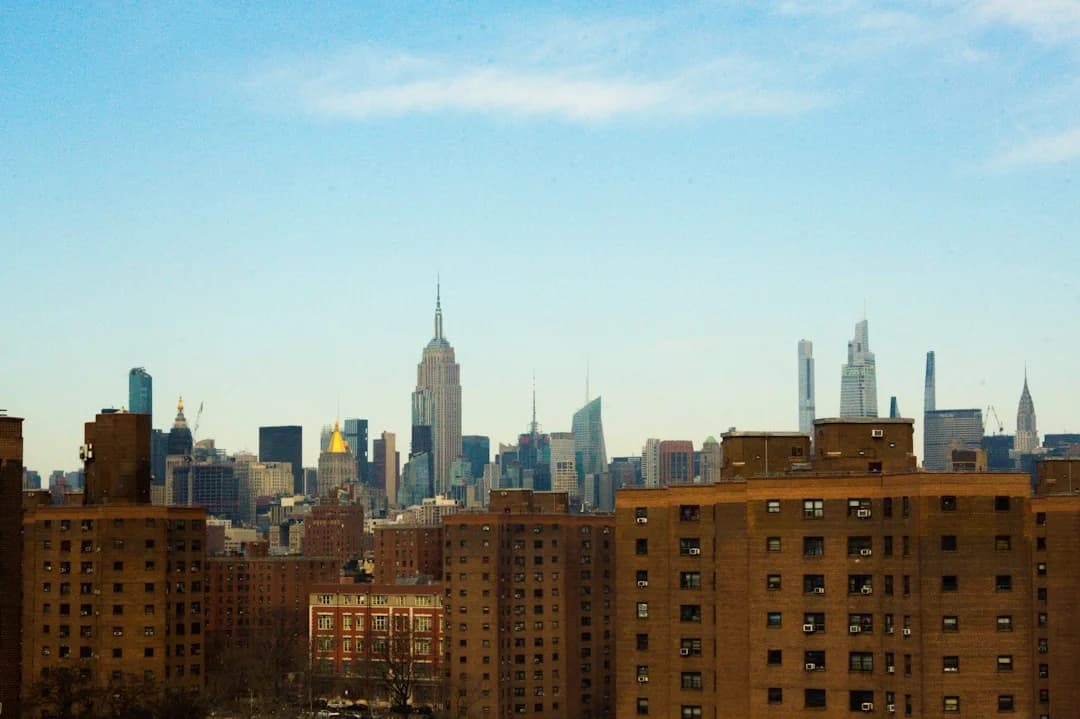
Photo by Matthew Moloney on Unsplash
The phrase Manhattan trophy real estate deals 2026 has begun to define the conversation around New York City’s most exclusive addresses. In early 2026, the Manhattan luxury market kicked off with record-setting activity at the very top end, underscoring a market that remains resilient even as broader economic conditions evolve. A penthouse at 1122 Madison Avenue on the Upper East Side moved into contract for $89.5 million—the year’s priciest residential deal to date—while other trophy properties such as a full-floor unit at 432 Park Avenue initiated or advanced multi‑million-dollar transactions. This robust start signals ongoing demand for landmark addresses, large-scale luxury spaces, and properties with exceptional amenities and Central Park proximity. The latest data from industry trackers and major outlets show a pattern of strong buyer interest, with a notable fraction of purchases occurring all cash and a steady stream of high‑net‑worth buyers pursuing trophy properties in Manhattan's most coveted submarkets. These developments matter because they illuminate where wealth is converging in real estate, how developers price and position ultra-luxury product, and what the market expects for the balance between supply, financing, and investor confidence in 2026. As one industry observer noted, the market’s vigor at the top end reveals a broader willingness to invest in long-horizon assets whose value is tied to location, prestige, and irreplaceable views. (wsj.com)
Opening data points and early-month momentum reinforce a broader narrative: Manhattan trophy real estate deals 2026 are shaping up to be a watershed year for ultra-luxury acquisitions, with a mix of newly launched developments and legacy trophy towers driving deal velocity. For instance, the Upper East Side project at 1122 Madison Avenue—developed by Legion Investment Group in partnership with Nahla Capital—launched sales in January 2026 and quickly moved to a high absorption pace. By late January, the building had 18 of 26 units under contract, and a duplex penthouse on the 18th floor was under contract for about $39 million at one point before recording a unit-level price of $89.5 million as the top line of the week. This figure set a neighborhood and city benchmark for 2026 so far and highlighted the depth of demand for new, thoughtfully designed trophy residences in Manhattan. (wsj.com)
In parallel, landmark transfer activity around 432 Park Avenue—the Billionaires’ Row clock‑tower of Manhattan real estate—continued to shape the top end of the market. Two units at the upper echelons of the building—units 78A and 78B that together form a full 78th-floor footprint—were reported to be under contract for roughly $53 million, a figure that reflects both the residual allure of the building and the ongoing disputes surrounding ownership and control there. The Real Deal reported that the deals involve a complex chain of ownership and lender arrangements following prior disputes, illustrating how trophy assets can still transact in a climate of legal and financing complexity. This kind of activity underscores that even in high‑profile properties with elevated risk and public scrutiny, buyers remain willing to transact if the price and the asset’s perceived value align. (therealdeal.com)
Beyond these headline transactions, other high‑profile deals continued to roll through Manhattan’s luxury market in early 2026. A notable contract in West Village’s 140 Jane Street—the building marketed with bespoke Leroy Street Studio architecture and river views—illustrated continued demand for smaller, sophisticated trophy units as part of a broader shift toward West Side and NoMad markets alongside the traditional Upper East Side. CityRealty’s weekly market notes captured the momentum, with multiple $4 million+ contracts and several properties topping $10 million in a single week, highlighting a robust high-end market that remains active even as some segments cool. (cityrealty.com)
The trophy universe in Manhattan isn’t confined to residential towers alone. Office trophy plays—while not the focus of this particular residential-centric update—also moved in the background in 2025–2026, with large-scale asset plays and portfolio transactions underscoring a broader appetite for prime trophy assets across asset classes. For readers tracking the overall trophy real estate ecosystem in Manhattan, the office market commentary suggests a possible halo effect on premium residential product, as institutional capital remains attracted to iconic addresses and “best-in-class” assets. (credaily.com)
What Happened
1122 Madison Ave tops Manhattan luxury contracts
A record-setting Upper East Side debut
Just a week after Legion Investment Group and Nahla Capital launched sales at 1122 Madison Avenue, the Upper East Side condo project claimed a commanding position in Manhattan’s luxury market. The development’s first phase of sales quickly captured a leading contract count, with Unit No. 11 North listed at $14.6 million and several suites already under contract. Reports from The Real Deal captured the momentum, noting that the project clocked 23 luxury contracts in its first week of reporting, outpacing competing high-end properties and signaling a crowded field for future closings. The pace would evolve as more data emerged, but the early numbers positioned 1122 Madison as the standout debut of 2026 in Manhattan trophy real estate deals. The project’s architecture by William Sofield and its Central Park-adjacent setting have been consistently cited as differentiators in a market where location and design carry outsized weight. “Just a week into its sales launch, Legion Investment Group and Nahla Capital’s Upper East Side development snagged the top spot in Manhattan’s luxury market,” CityRealty noted in its weekly wrap, underscoring the immediate market reception. (therealdeal.com)
The scale of absorption and pricing signals
By late January and into February, Olshan Realty’s weekly luxury market reports documented a surge in activity around $4 million and up, with the January 2026 period marking the strongest month for luxury contracts since 2022. The 1122 Madison project’s absorption of 50% of its units within weeks of launch stands as a tangible data point illustrating the appetite for new, high-design, Central Park-adjacent living in the current cycle. This data was echoed by CityRealty’s weekly market notes, which showed a surge in signed contracts for trophy units across multiple buildings, including the West Village and Midtown East, with weekly totals exceeding $500 million in aggregate contract value during peak weeks. The implication is clear: despite macro headwinds in broader markets, the luxury segment’s top tier remains vibrant, with buyers willing to commit to large-ticket purchases rapidly when product quality and location align. (cityrealty.com)
A neighborhood‑defining deal in the making
The 1122 Madison Avenue project has continued to generate headlines beyond its initial week of sales. By late January, industry coverage highlighted the momentum around floor-through layouts and the potential for impressive interiors, with the development expected to deliver approximately 9,350 square feet of interior living space across select units and a sizeable outdoor component. The press materials and coverage describe the penthouse as a flagship residence with significant indoor-outdoor living, a centerpiece of the project’s marketing narrative. This kind of product design—paired with a proven luxury location—explains why the market responded with such immediacy and why 1122 Madison quickly became a litmus test for the year’s trophy deals in Manhattan. The Wall Street Journal’s reporting on the deal framed it as the year’s strongest residential sale so far and highlighted the project’s amenities and the broader market context, including quarter-to-quarter sales momentum in late 2025 and early 2026. “This deal highlights strong demand in Manhattan’s luxury real estate market,” the WSJ observed, underscoring the significance of the milestone. (wsj.com)
432 Park Avenue: high-profile contracts amid ownership questions
A complicated but active trophy setting

Photo by Frolicsome Fairy on Unsplash
432 Park Avenue continued to be a focal point for trophy real estate activity in 2025–2026, with negotiations and contracts that reflect both demand for premium units and the complexities of ownership change in a high-profile tower. The Real Deal reported that two 78th-floor units—spanning 8,300 square feet on a single floor—entered into contract for approximately $53 million, a sum that would have been among the year’s top Manhattan deals had it closed at the stated price. The catch: the seller is tied to CIM Group, and the sale unfolds within a broader context of prior disputes and foreclosures related to Macklowe’s original ownership. The headline contract value demonstrates continued appetite for full-floor or multi-floor combinations in iconic towers, even as the legal and financial landscape around these properties remains intricate. For readers tracking trophy real estate deals 2026, this development offers a concrete data point about how even disputed assets can attract high bids in a market that prizes visibility, scale, and architectural signature. (therealdeal.com)
Why this matters for the trophy market
The 432 Park Avenue activity illustrates a broader truth about trophy properties: demand is not deterred by controversy if the perceived value and potential for eventual resolution align with buyer expectations. In a market where a single address can carry outsized symbolic value, the ability to translate that value into a contract—especially for a full‑floor or multiple units—remains a defining feature of Manhattan’s top tier. The Real Deal’s reporting on the Macklowe-related contract demonstrates how trophy assets continue to transact in 2026, even amid the building’s ongoing public narrative and legal complexity. As buyers weigh risk, the price and terms of such deals—when they close—serve as benchmarks for other ultra-luxury offerings in the pipeline. (therealdeal.com)
140 Jane Street and West Village momentum
A West Village trophy entry rises to the top
In the same period, 140 Jane Street’s unit 4N drew substantial traction, underscoring a shift in trophy demand toward West Village confections that combine expansive layouts, river views, and refined architectural language. CityRealty’s weekly market notes captured 140 Jane Street’s profile among the top contracts in the city, with the unit among the week’s strongest performers and a reflection of the broader appetite for West Side trophy living. This dynamic is important because it signals geographic diversification in trophy demand, complementing the Upper East Side’s long-standing dominance in the ultra-luxury segment. (cityrealty.com)
The broader pattern: no single block owns the trophy narrative
Taken together, the 1122 Madison Avenue launch, the 432 Park Avenue contracts, and the 140 Jane Street activity illustrate a broader pattern: Manhattan trophy real estate deals 2026 are not confined to a single neighborhood or building. Rather, buyers are pursuing multiple addresses that offer unique combinations of views, scale, and lifestyle. This diversification—across the Upper East Side, Midtown’s Billionaires’ Row, and the West Village—helps explain why overall luxury contract volume remains robust and why monthly data show multiple props crossing the $10 million threshold in a single week. For readers and investors who track trophy activity, the takeaway is that the luxury market’s top tier has become more porous—more places to deploy capital into iconic assets—than in prior years. (linkedin.com)
Other notable transactions and off-market signals
Beyond the marquee public deals, off-market transactions and nearby related activity continued to shape a broader narrative about Manhattan trophy real estate deals 2026. Notably, a penthouse at Deutsche Bank Center (formerly Time Warner Center) sold for $50.7 million in what Mansion Global reported as opening 2026 with a bang for the city’s luxury market. While the identity of the buyer remained private in public records, the sale underscores ongoing appetite for ultra-premium air rights and trophy exposure at premier urban podiums. The presence of such off-market deals, while not always captured in weekly contract tallies, signals that the upper end of the market remains active even when public marketing cycles are in flux. (realtor.com)
Section 2: Why It Matters
Why the trophy segment remains resilient in 2026
Demand fundamentals at the top end

Photo by Koushalya Karthikeyan on Unsplash
The early 2026 data points align with a longer-run trend: Manhattan’s luxury segment has demonstrated resilience through a mix of all-cash purchases, portfolio diversification strategies by buyers, and sustained demand for residences with extraordinary scale and amenities. A broader market view from early 2026 and late-2025 shows that a sizeable portion of ultra-luxury transactions have been cash-based, a dynamic that can insulate deals from rising mortgage rates and financing frictions that typically dampen more leveraged segments. This cash preference aligns with the observed pace of absorption at new trophy projects like 1122 Madison and the ongoing activity around 432 Park Avenue, as well as the West Village and NoMad trophy plays. Market observers have noted that cash buyers often pursue trophy properties for prestige, diversification, and a long-horizon view of appreciation in a limited-supply market. This combination of factors helps explain why Manhattan trophy real estate deals 2026 could sustain strong activity even as broader macro conditions shift. (danielkaufmanreal.estate)
"The ultra-high-end market has been supported by cash buyers and portfolio diversification strategies, underscoring renewed confidence among luxury buyers," as reported in industry coverage of the broader Manhattan luxury market. (danielkaufmanreal.estate)
Geographic diversification and the return to core districts
The trophy narrative in 2026 is increasingly geographic, not purely location-driven by a single block. While the Upper East Side remains a staple for grand-scale trophy purchases, West Village, NoMad, Midtown East, and other premium corridors have emerged as magnets for new trophy product and new-money buyers seeking distinctive layouts, river or park views, and building pedigrees. CityRealty’s weekly reports repeatedly highlighted a mix of deals across 432 Park Avenue, 140 Jane Street, and 1122 Madison Avenue, reinforcing that buyers are looking for differentiated product rather than chasing a single neighborhood’s market pulse. The broader market context—anchored by strong office leasing activity and a high concentration of wealth in the city—helps explain the geographic breadth of trophy demand in early 2026. (cityrealty.com)
The role of iconic addresses and design-led offerings
The trophy tier’s appeal continues to hinge on architectural pedigree, interior design, and the sense of owning a piece of a city’s history. 1122 Madison Avenue’s design-forward approach, with spaces described as both refined and expressive by its developers, highlights how new trophy product competes with historic and iconic buildings for buyer attention. In parallel, 432 Park Avenue’s legacy status and its dramatic full-floor configurations illustrate the market’s preference for scale and drama in the city’s skyline. The combination of location, design, and scale—along with marketing that emphasizes lifestyle, amenities, and privacy—provides a powerful engine for trophy deals in Manhattan. (therealdeal.com)
The broader market context: office trophy plays and cross-asset signals
Even as residential trophy activity dominates headlines, the broader trophy market across Manhattan—particularly in Class A office towers—remained active in late 2025 and early 2026. Large-scale office trades and portfolio dispositions in towers like 590 Madison Ave, 1211 Avenue of the Americas, and Starrett-Lehigh reflect a capital market that continues to chase trophy-grade real estate across asset classes. While the primary focus here is residential, the office market’s momentum serves as a complementary signal that principal capital remains confident in Manhattan’s long‑term value proposition, particularly for assets that carry iconic status, premium submarket dynamics, and income resiliency. (credaily.com)
Who is affected and what this means for readers
Buyers and developers
For buyers, the early 2026 data implies a continued willingness to commit to integrated live‑work‑play environments that offer scale, privacy, and access to cultural and lifestyle amenities. Developers like Legion Investment Group and Nahla Capital have demonstrated the ability to capitalize on this demand with projects that emphasize floor-through layouts, outdoor space, and oversized interior living areas. For developers, this signals a need to balance ambitious design with the realities of market absorption at the speed required to achieve optimal pricing across different submarkets. The 1122 Madison Avenue trajectory—launched in January 2026 and moving into a mid-2027 completion window—offers a template for how to structure a trophy project’s marketing and sales cadence in a way that accelerates absorption while preserving price integrity. (therealdeal.com)
Investors and institutions
Institutional capital remains active in Manhattan trophy real estate deals 2026, particularly in the form of limited partnerships and joint ventures that can leverage diversified portfolios, financing arrangements, and asset-level value add. Reports of large office deals and cross-asset investments indicate that investors are viewing trophy properties as core infrastructure for wealth preservation and income generation in a high-barrier market. For readers tracking investment implications, the cross-asset trophy momentum suggests a broader risk-adjusted return narrative that favors high-quality, well-located assets with robust leasing and resale dynamics. (forbes.com)
Market analysts and brokers
Brokerage and advisory firms—alongside independent analysts—are likely to monitor the weekly Olshan Luxury Market Reports, which track contracts signed at $4 million and above. The January 2026 data showing a strong trajectory and the presence of multiple $10 million+ contracts signal ongoing momentum for price discovery and market depth at the very top of the market. CityRealty’s weekly market notes will continue to serve as a critical barometer for trophy activity, including updates on top contracts, price per square foot, and absorption rates across key neighborhoods. For professionals, the takeaway is to maintain close watch on deal cadence, buyer profiles, and the evolving competitive landscape among trophy offerings. (cityrealty.com)
Notable quotes and expert perspectives
- “Just a week into its sales launch, Legion Investment Group and Nahla Capital’s Upper East Side development snagged the top spot in Manhattan’s luxury market.” This line from CityRealty underscores the immediacy of demand for new trophy product on Madison Avenue. (therealdeal.com)

Photo by Greg Botwinick on Unsplash
- “This deal highlights strong demand in Manhattan’s luxury real estate market.” The Wall Street Journal framed the 1122 Madison Avenue milestone as a marker of citywide luxury vigor, anchoring the narrative for trophy deals in 2026. (wsj.com)
- On the larger trophy ecosystem, industry commentary notes that cash buyers and diversification strategies have supported the ultra-high-end segment, reinforcing the idea that trophy markets in 2026 remain robust even as financing markets shift. (danielkaufmanreal.estate)
What’s Next
Timeline and upcoming milestones to watch
- 1122 Madison Avenue completion timeline: The development’s completion is expected in mid-2027, with construction already advancing and sales momentum persistent through early 2026. This timeline underscores a multi-year horizon for trophy projects, where completion risk and absorption pace are essential to price realization and marketing strategy. The developer press materials and industry reporting place mid-2027 as the completion target, which implies several quarters of closings, post-sale construction progress, and potential price re‑price opportunities as the project nears delivery. (mannpublications.com)
- 432 Park Avenue post‑Macklowe transactions: The Macklowe-linked units at 432 Park have moved into contract territory at around the $53 million level, suggesting continued demand for the tower’s signature floorplans and dramatic views. If these contracts close, they would reinforce 432 Park’s continued relevance in the trophy segment, even as other legal and ownership complexities unfold. Watch for official closings and any related lender/ownership announcements in early to mid‑2026. (therealdeal.com)
- West Village and NoMad trophy activity: The West Village’s 140 Jane Street contract activity and similar trophy plays in NoMad are likely to persist through 2026, with weekly contract data from Olshan Realty and CityRealty providing near‑term visibility into absorption velocity and price discipline. Expect quarterly snapshots and price-per-square-foot comparisons to guide expectations for new trophy launches in these submarkets. (cityrealty.com)
What to watch in the broader market
- Contract velocity and top-end price trends: Weekly Olshan reports and CityRealty market notes will be critical for gauging whether the early 2026 momentum sustains across the year. A continuing string of $4 million+ deals, with occasional $10 million+ milestones, would confirm a healthy trophy pipeline and support for higher pricing across new developments and legacy towers. (cityrealty.com)
- Cash vs. financing mix in trophy deals: The degree to which cash transactions remain prevalent at the top end will inform expectations for financing risks and pricing discipline in the trophy tier. If cash shares stay elevated, buyers may remain insulated from rising interest costs, preserving bid momentum for top-tier properties. (danielkaufmanreal.estate)
- Legal and title risk in marquee towers: As exemplified by 432 Park’s ongoing ownership and litigation narratives, trophy deals can carry elevated risk awareness around governance, maintenance, and future capital requirements. Monitoring court filings, lender communications, and official closings will be essential to understanding the risk-adjusted outlook for these assets. (therealdeal.com)
Closing
Manhattan trophy real estate deals 2026 are shaping up to be a defining chapter for the city’s luxury market. Early 2026 data show a persistent appetite for top-tier addresses, new development that emphasizes scale and design, and a geographic spread that moves beyond the traditional trophy corridors. From the $89.5 million penthouse at 1122 Madison Avenue to the $53 million 78th‑floor units at 432 Park Avenue, buyers are signaling a willingness to invest in assets whose value is anchored in location, pedigree, and the prospect of lasting cultural and economic relevance. For readers and market participants, the key takeaway is clear: the trophy tier remains a focal point of Manhattan’s real estate narrative in 2026, with a need for careful due diligence, ongoing observation of contract velocity, and an eye toward how macro conditions intersect with a supply-constrained, high-value market. Staying informed through reliable sources—The Real Deal, CityRealty, The Wall Street Journal, Forbes, CNBC, and related market trackers—will be essential to navigating Manhattan’s trophy deals landscape as the year unfolds. (therealdeal.com)
Readers seeking the latest in Manhattan trophy real estate deals 2026 should keep an eye on weekly contract data and new development launches, as well as the evolving narratives around ownership structures, financing availability, and regulatory or litigation developments in the city’s most iconic properties. The market’s momentum suggests continued interest in trophy properties, particularly those that combine architectural distinction with storied locations and expansive living spaces.