Manhattan real estate trends 2026: Preview and implications

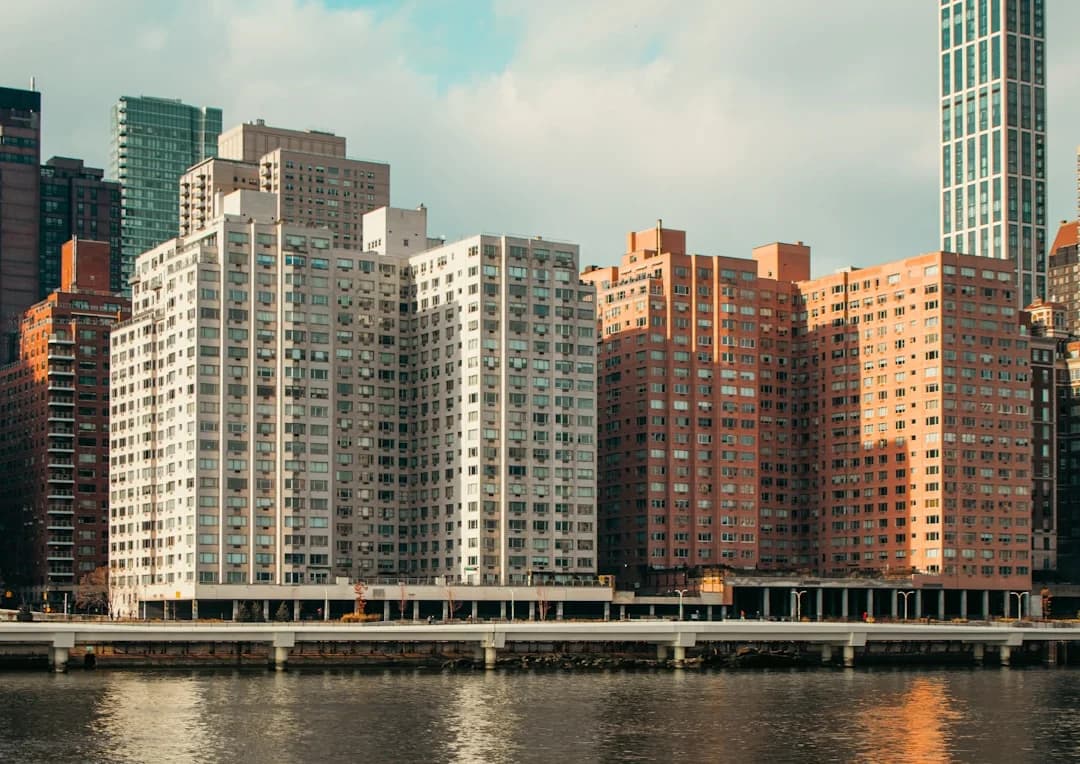
Photo by Zoshua Colah on Unsplash
Manhattan real estate trends 2026 are unfolding with a clear split: a buoyant luxury market riding strong buyer demand and a wave of adaptive reuse converting office space into housing, all within a broader context of tight inventory and rising rents. As observers monitor the data from late 2025 through early 2026, the picture is less a single trajectory and more a bifurcated reality where trophy properties and high-end leases are reaching new pinnacles even as traditional office stock undergoes rapid transformation. This situation matters because it signals how the core of Manhattan’s economy — its financial services, media, and tech-adjacent industries — is financing both a gilded present and a speculative, long-term urban reshaping. In 2025, luxury sales alone approached notable levels, while overall investment and office/leasing activity kept the market in motion into 2026. (forbes.com)
For readers watching Manhattan real estate trends 2026, the near-term numbers illuminate a tension: rents remain elevated and scarce housing continues to constrain supply, but the city is gradually reconfiguring its built environment to accommodate growth. January 2026 data from Corcoran shows median Manhattan rents near historic highs, with the median for new leases around $4,695 and doorman buildings approaching $5,295 per month, underscoring ongoing affordability pressures even as buyers gain more negotiating power in some segments. Meanwhile, a robust office-to-residential conversion trend — accelerated by policy incentives and market dynamics — points to a future where hundreds of thousands of square feet of office space could reemerge as housing over the next few years. These dynamics collectively shape the implications for buyers, sellers, investors, and policymakers throughout Manhattan. (inhabit.corcoran.com)
The outlook for 2026 from industry analysts frames a cautious optimism. Cushman & Wakefield’s 2026 outlook emphasizes clearer visibility, stabilized fundamentals, and improved liquidity in the capital markets, supported by a shift from resilience to optimism as interest rates trend lower and AI-driven growth spurs investment. The firm frames this year as a potential turning point for market sentiment and transaction velocity across major asset classes — a context that directly affects Manhattan real estate trends 2026. A short, data-backed note from Cushman highlights the expectation that debt availability and pricing will continue to improve, while leasing fundamentals stabilize after a volatile 2025. This backdrop matters because it helps explain why Manhattan remains a sought-after core for both domestic and international capital. “If 2025 was a test of resilience, 2026 has real potential to reward it,” a Cushman economist noted in their release. (cushmanwakefield.com)
Investment activity in 2025 also provides a crucial anchor for Manhattan real estate trends 2026. NYC-wide investment sales reached substantial levels in 2025, with Ariel Property Advisors reporting $33.5 billion in citywide volume and noting a continued flight to quality toward Class A assets. A closely watched Manhattan subset of that data shows the resilience of demand for premier properties and the ongoing appeal of multifamily investments in a market with limited new supply. These numbers contextualize why market participants remain focused on urban core fundamentals as they plan for 2026. (arielpa.nyc) In a parallel lens, Forbes’ February 2026 analysis highlights Manhattan as a “crown jewel” of real estate activity, pointing to a roughly $22.8 billion dollar volume in Manhattan in 2025 across all asset classes and underscoring the category leadership of the borough in the city’s broader comeback. While some figures reflect different measurement scopes (Manhattan-only vs. citywide), the convergence around strong dollar volume reinforces the market’s momentum through 2025 and into 2026. (forbes.com)
As readers digest these numbers, it’s important to note the supply-side constraints that continue to shape Manhattan real estate trends 2026. Office-to-residential conversions, long a feature of adaptive reuse in New York, have surged in recent years due to vacancies, shifting valuations, and conducive incentives. Cushman & Wakefield’s 2025 analysis documents an accelerating conversion momentum — rising from 1.6 million square feet in 2023 to 4.1 million square feet converted by August 2025, with an additional 8.8 million square feet in the pipeline. This trend is not just a short-term blip; it reflects a structural response to a citywide housing shortage and a reconfiguration of land use that could materially affect Manhattan’s density, housing stock, and affordability over the coming decade. The trend line is reinforced by policy signals and tax incentives that have accelerated project viability and reduced the friction inherent in large-scale adaptive reuse. (cushmanwakefield.com)
Opening the door to deeper context, the rental market in January 2026 reveals that high prices and tight supply persisted in core Manhattan submarkets, even as year-over-year rent growth moderated in some segments. The Corcoran Inhabit report for January 2026 shows a median Manhattan rent of $4,950 per month, with doorman buildings at a record-high median of $5,295. Active listings stood at 5,496, while the vacancy rate hovered near the mid-1s percent, underscoring a market that remains expensive for renters but shows early signals of inventory normalization that could gradually improve affordability for qualified buyers. These numbers are essential for investors and homeowners alike as they weigh the relative attractiveness of renting versus buying in the current environment. (inhabit.corcoran.com)
What’s driving these movements in Manhattan real estate trends 2026? A critical factor is the continued flow of high-quality capital into the New York City market, particularly into free-market multifamily assets, alongside cautious but improving debt access for buyers. Forbes’ 2026 analysis notes that investment in Manhattan multifamily remains robust as cap rates compress and demand for well-located, high-quality assets persists. The article frames this as part of a broader, city-wide trend in which capital favors assets with favorable operating fundamentals and growth potential, even as the market recalibrates around rent stabilization and regulatory changes. This dynamic matters because it influences price discovery, cap rates, and financing terms for new projects throughout 2026. (forbes.com)
Section 1 — What Happened
Luxury Market Momentum and Demand
Manhattan’s luxury sector has continued to outperform many other price bands, supported by global capital and a shortage of trophy inventory. In 2025, luxury sales across Manhattan reached nearly $12 billion, spread across more than 1,400 contracts, representing an impressive year-over-year gain of about 11%. This momentum spilled into early 2026, with ongoing activity and a broad sense that ultra-luxury properties and high-end conversions remain a magnet for global buyers and domestic investors alike. The market’s strength in this segment underscores the enduring appeal of iconic neighborhoods, high amenity offerings, and the shrinking inventory of truly trophy properties. “The luxury tier is driving a large portion of activity and price discovery in Manhattan,” one market observer noted, consistent with the broader data set from Ariel Property Advisors’ 2025 year-end review. (forbes.com)
While many observers watch the luxury segment, it’s important to separate headline-grabbing contracts from sustained market health. In the broader luxury landscape, asset-level dynamics, foreign capital flows, and exchange-rate considerations contribute to a resilient demand base, even as more modestly priced segments experience their own cycles. The data from reputable brokers and industry research providers indicates a robust, albeit selective, year for high-end sales, with market participants repeatedly pointing to scarcity as a key driver of ongoing price resilience for prime Manhattan addresses. (forbes.com)
Office-to-Residential Conversions Accelerate
A defining structural feature of Manhattan real estate trends 2026 is the acceleration of office-to-residential conversions. The shift from office to housing is not merely a response to near-term vacancies; it reflects a strategic reimagining of how downtown and Midtown spaces can contribute to housing supply, density, and urban vitality. Cushman & Wakefield’s 2025 analysis documents a sharp rise in conversions, with 4.1 million square feet converted as of August 2025 and 8.8 million square feet in the conversion pipeline ahead. Policy incentives, zoning flexibility, and evolving market economics have all played roles in expanding the viability of adaptive reuse. This momentum has several practical implications: it can alter the fabric of neighborhoods, influence transit-oriented development, and reshape affordability dynamics as more housing emerges from former office towers. The trend lines and policy context are well captured in Cushman & Wakefield’s assessments and subsequent 2026 outlook, which frame conversion activity as a defining feature of the city’s evolution. (cushmanwakefield.com)
The scale of the conversion push is noteworthy: 1.6 million square feet converted in 2023, 3.3 million in 2024, and 4.1 million by August 2025 are numbers that suggest a sustained acceleration rather than a one-off spike. The climate for adaptive reuse has been reinforced by a mix of incentives, including targeted tax programs and regulatory adjustments that have lowered some conversion barriers, making it feasible for developers to reposition aging office assets as residential product. As Manhattan real estate trends 2026 unfold, these conversions are expected to contribute meaningfully to the borough’s housing stock in the coming years, potentially affecting neighborhoods that historically leaned heavily on office tenants. (cushmanwakefield.com)
Investment Flows and Market Health
Across 2025, investor activity in Manhattan and Greater New York remained highly pronounced, underpinned by confidence in the city’s core economic hubs and the ongoing demand for high-quality assets. Ariel Property Advisors’ year-end data highlighted a strong NYC investment sales cycle, with total NYC volume at $33.5 billion in 2025, representing an 18% YoY increase. Within that mix, Manhattan-based transactions — especially in Class A office and high-quality rental developments — formed a substantial share of the city’s activity, reinforcing Manhattan’s status as a premier investment axis. This context matters for Manhattan real estate trends 2026 as buyers, lenders, and developers weigh risk, pricing, and exit strategies in a market that remains sensitive to macroeconomic shifts but anchored by strong fundamentals in core submarkets. (arielpa.nyc)
Forbes’ February 2026 analysis adds another layer of granularity, detailing a $22.77 billion comeback in Manhattan-related real estate during 2025, with a focus on capital flowing into multifamily assets and high-end office transactions. The article underscores the diversity of activity across sectors, including the office, multifamily, and retail subsegments, and emphasizes that strong fundamentals supported a broad-based rebound in the borough’s real estate economy. While citywide and borough-level metrics can diverge depending on the data source, the overall message aligns with a Manhattan that remains highly liquid and strategically important to global buyers. (forbes.com)
Rent and inventory dynamics in 2026 reinforce the nuanced reality of Manhattan real estate trends 2026. The January 2026 Corcoran market report shows a median Manhattan rent of $4,950 and a doorman median rent of $5,295, signaling ongoing affordability pressures in a market where demand continues to outstrip supply in prime submarkets. Active listings at 5,496 and a vacancy rate around 1.9% to 2% illustrate a still-tight market, though early indicators point toward a potential easing of some constraints as more product comes online and conversions reshape supply. These rental metrics, while not the sole predictor of market direction, help explain why price discipline and selective bidding remain central to Manhattan’s 2026 narrative. (inhabit.corcoran.com)
Section 2 — Why It Matters
Implications for Buyers, Sellers, and Investors
The evolving mix of luxury strength, adaptive reuse, and capital flows in Manhattan real estate trends 2026 has direct implications for market participants. For buyers, a bifurcated market implies that opportunities can be concentrated in well-located, value-add opportunities in both the condo and rental sectors, with a premium on properties that offer resilience against rising financing costs and regulatory considerations. For sellers and developers, the continued appetite for trophy acquisitions and premium development sites reinforces the potential for outsized returns in top neighborhoods, while the conversion-driven supply expansion can moderate pricing pressure in mid-market segments. The market’s pace and pricing will continue to hinge on interest rates, inflation expectations, and the pace at which new product reaches the market. The 2025–2026 data suggest that the path to balanced conditions remains data-driven and dependent on macroeconomic stability. (forbes.com)
From an investment perspective, the data reinforce Manhattan’s central role in the city’s recovery arc. The surge in investment sales volume in 2025, particularly in Class A assets and multifamily, signals that capital is recalibrating toward high-quality assets with strong operating fundamentals. For investors, this means ongoing diligence around submarket dynamics, lease-up velocity, and cyclicality in office markets that influence conversion timing and yields. The reporting from Ariel Property Advisors and Forbes highlights the appetite for risk-adjusted opportunities in the borough, even as long-term structural shifts in use and density continue to unfold. (arielpa.nyc)
Policy and urban-design context also matters for Manhattan real estate trends 2026. The rise of office-to-residential conversions is closely linked to zoning incentives and regulatory frameworks that shape the feasibility, scale, and pace of adaptive reuse. Cushman & Wakefield’s analyses emphasize how policy changes and market conditions interact to accelerate conversions, with a potential long-term impact on housing supply and affordability in key neighborhoods. Understanding these policy levers helps explain not just what happened, but why the market is scoring a different mix of outcomes across condo, co-op, rental, and development pipelines. The strategic takeaway for policymakers and developers is to monitor conversion momentum, ensure housing quality in repurposed assets, and balance density with neighborhood livability. (cushmanwakefield.com)
Neighborhood-level and market-wide dynamics also shape the Why It Matters dimension. The Corcoran rental data, for example, highlight enduring demand in prime submarkets and the risk of a widening affordability gap if new supply under delivery does not keep pace with demand growth. While high-end neighborhoods continue to attract substantial interest from international buyers and domestic institutions, mid-market and outer-borough segments may benefit from the new supply coming online and from continued improvements in transit and amenities. In this sense, Manhattan real estate trends 2026 are not just about prices; they are about the city’s ability to balance competitiveness with quality of life as the urban core evolves. (inhabit.corcoran.com)
Section 3 — What’s Next
Near-Term Milestones to Watch
Looking ahead, several near-term milestones will be critical for Manhattan real estate trends 2026. First, the pace and mix of new development entering the market will influence price pressure and absorption, particularly in luxury and trophy submarkets. Given the tight inventory described in January 2026 data, even modest increases in new supply could meaningfully affect the competitive landscape for condos and rental towers, while maintaining the premium status of core neighborhoods. Second, the continued momentum of office-to-residential conversions will manifest in more housing units, redefined skylines, and a shift in neighborhood identities as a portion of formerly office-dominant districts transition toward mixed-use or residential-first orientations. Cushman & Wakefield’s forward-looking commentary stresses that policy shifts and market confidence will be key catalysts for these conversions and for overall market velocity in 2026. (cushmanwakefield.com)
Additionally, the capital markets backdrop will shape the speed and structure of transactions. Cushman & Wakefield’s 2026 outlook anticipates that debt availability and pricing will improve, which could translate into higher volumes of acquisition activity and financings for large-scale development and redevelopment projects. Observers should monitor debt markets, lender risk appetites, and the spread between bid-ask expectations as closer-to-realized rates emerge in 2026. The takeaway is that Manhattan real estate trends 2026 are likely to reflect a more stabilized but still dynamic environment, with capital returning to core assets and a cautious but confident approach to new product in key nodes like Midtown, the Financial District, and hot West Side corridors. (cushmanwakefield.com)
What to watch in the leasing market? January 2026 data show elevated rents and low vacancy, signaling continued demand at the high end. A broader interpretation suggests that while the luxury segment remains robust, rental market strength could diverge across submarkets depending on supply timing and the delivery of new units. Industry observers will be watching to see how rent momentum evolves as more developments come online and as conversions convert office inventory into housing, potentially increasing rental competition in some districts while relieving pressure in others. The Corcoran/Inhabit data provide a timely benchmark for this evolving balance in Manhattan real estate trends 2026. (inhabit.corcoran.com)
The timeline of 2026 for Manhattan real estate trends thus hinges on several interlocking threads: high-end demand, adaptive reuse, and capital market dynamics. If 2025’s performance is any guide, the year ahead could see continued resiliency in transactions and price discipline in core segments, with a notable caveat that policymakers and market participants must manage affordability and livability as supply shifts toward housing through conversions. The practical implications for readers are straightforward: expect further clarity on pricing discipline in trophy neighborhoods, a growing pipeline of repurposed assets, and ongoing competition for well-located, amenity-rich homes and rentals in Manhattan. (forbes.com)
Closing
As Manhattan real estate trends 2026 unfold, the city’s real estate ecosystem remains both resilient and adaptive. The luxury market’s strength provides a ballast for overall market confidence, while office-to-residential conversions promise to reshape how and where housing is built across the borough. Investors and residents alike should keep a close eye on the pace of conversions, the cadence of new supply in key submarkets, and the evolving credit environment that underpins transactions. By staying attuned to the data, industry forecasts, and policy signals, stakeholders can navigate a year that promises to be as data-rich as it is consequential for Manhattan’s urban future.
Readers who want to stay updated on Manhattan real estate trends 2026 should track quarter-by-quarter data releases from Cushman & Wakefield and Ariel Property Advisors, as well as ongoing market reporting from Corcoran and leading citywide analysts. The next few quarters will reveal how quickly supply grows, how rents respond to new product, and whether the luxury market’s momentum broadens to support a more balanced, sustainable trajectory for the entire Manhattan real estate landscape. In the meantime, the news cycle continues to confirm that Manhattan remains a dynamic, high-stakes market at the heart of New York City’s economy and culture.