Manhattan Mixed-use Redevelopment 2026: Trends and Winners

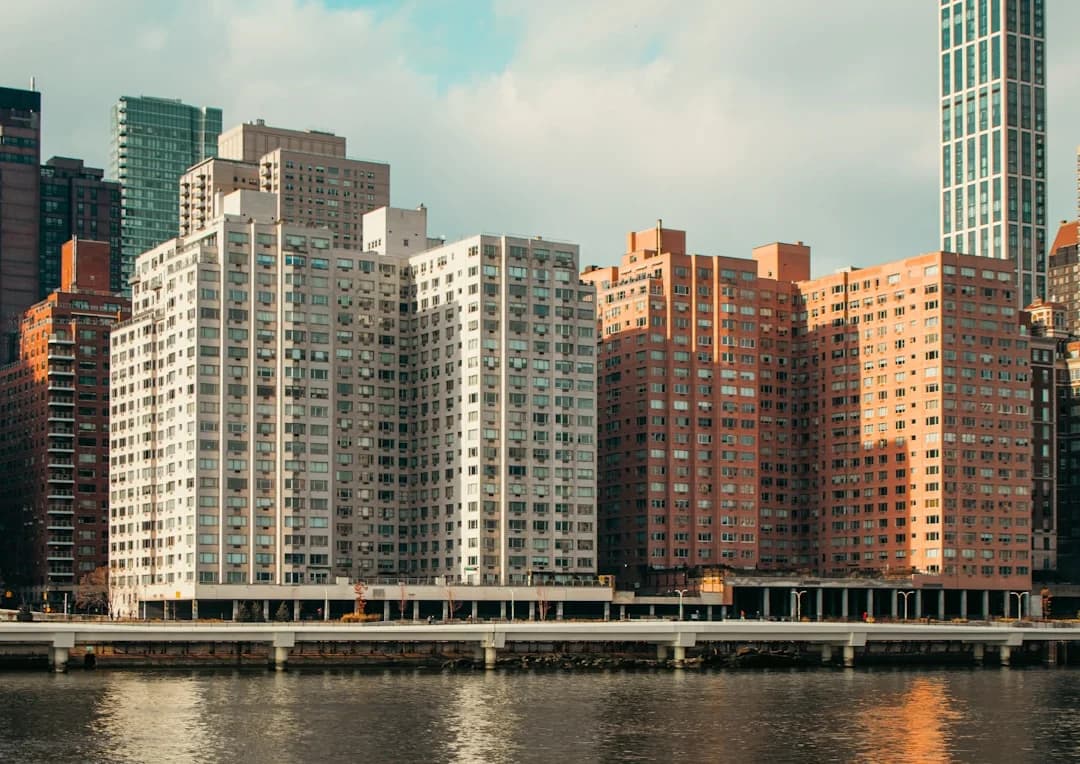
Photo by Zoshua Colah on Unsplash
Manhattan is at a pivotal moment in 2026 as the city accelerates a broad wave of mixed-use redevelopment. This trend, framed by a growing appetite for adaptive reuse, is reshaping two of the city's most dynamic corridors—the Financial District and Midtown South—while reverberating across housing supply and local economies. The data points are clear: a substantial backlog of aging office space is being repurposed into rental housing and ground-floor retail, supported by policy changes, financing commitments, and a clearer pathway for developers to unlock value from underutilized properties. For readers tracking technology- and market-driven coverage, this year’s developments reinforce the working hypothesis behind Manhattan mixed-use redevelopment 2026: adapt, not abandon, aging assets to meet contemporary commuting patterns, housing demand, and neighborhood vitality. (comptroller.nyc.gov)
In the first months of 2026, high-profile financing announcements and project timetables have signaled a deeper, more rapid shift. In the Financial District, RXR Realty and One Investment Management closed on more than $500 million to convert 61 Broadway, a 33-story office tower, into 796 mixed-income units with about 40,000 square feet of amenities. The project is moving toward construction readiness and expects the first residential units to arrive in the first half of 2028. Separately, GFP Real Estate secured approximately $191.5 million in construction financing in February 2026 for the conversion of 40 Exchange Place, a 20-story tower built in 1893, into roughly 382 mixed-income apartments with ground-floor retail. And in the same corridor, the long-trailing SoMA project at 25 Water Street was completed in 2025 as a landmark example of a large-scale office-to-residential conversion, delivering about 1,320 units across 1.1 million square feet of former office space. These financing milestones underscore the momentum behind Manhattan’s office-to-residential trend, a central element of the broader Manhattan mixed-use redevelopment 2026 narrative. (multihousingnews.com)
Beyond individual towers, market data and city policy collectively point to a coordinated, sector-wide transition. The Office of the New York City Comptroller emphasizes that, driven by policy changes implemented since 2024, Manhattan’s post-pandemic pipeline for office-to-residential conversions is sizable: roughly 12.2 million gross square feet in Manhattan south of 59th Street could start renovations by the end of June 2026, yielding about 14,500 apartments, including around 3,600 income-restricted units. The analysis notes a potential present-value impact ranging into the billions due to new tax exemptions and the lifting of certain land-use constraints. In short, 2026 is a hinge year for conversion activity, underpinned by both market demand and policy incentives designed to accelerate redevelopment. (comptroller.nyc.gov)
In parallel, policy signals from City Hall and the City Council are elevating mixed-use redevelopment as a strategic urban-form objective. The Midtown South Mixed-Use Plan, which seeks to rezone 42 blocks in Midtown South to create a vibrant, walkable mixed-use district, has been described by City leaders as a pathway to nearly 10,000 new homes, along with enhanced commercial floors and transit-oriented development. While approvals and timelines remain subject to study and public review, the plan illustrates a deliberate attempt to channel redevelopment toward livable neighborhoods with ground-floor retail and office-to-residential transitions at scale. The initiative is complemented by tax-incentive programs that aim to balance market viability with affordability, further shaping the 2026 outlook for Manhattan’s mixed-use transformation. (nyc.gov)
What Happened
FiDi Conversions Bring Major Financing Milestones
61 Broadway: A landmark office-to-residential conversion gains traction
- RXR Realty and One Investment Management have secured more than $500 million in financing to convert 61 Broadway, a 33-story tower in Manhattan’s Financial District, into 796 mixed-income residential units. The project includes roughly 40,000 square feet of amenities and aims to deliver the first apartments in the 2028 timeframe. The financing package includes a $420 million construction loan from Apollo and a $55 million tax equity investment from JPMorgan; JLL Capital Markets organized the deal. The building, constructed in 1913 and listed on the National Register of Historic Places, is positioned to capitalize on the 467-m conversion program, which reserves 25 percent of units for affordable housing under rent-stabilized terms. This transaction illustrates how flagship assets are being reimagined to anchor new mixed-income communities in FiDi. (multihousingnews.com)
40 Exchange Place: Historic tower reimagined for residents
- GFP Real Estate’s February 2026 financing for 40 Exchange Place signals a continuing push to convert historic office properties in FiDi into mixed-income housing. The project, a 20-story structure with a storied past, is slated to deliver a significant number of new rental units while preserving the building’s exterior character. As part of the broader 467-m program, the project leverages tax incentives designed to promote affordability alongside market-rate units, aligning with the city’s goal of adding density and vitality to a neighborhood with robust transit access and downtown infrastructure. The combination of historic preservation and modern residential use exemplifies the core strategy behind Manhattan mixed-use redevelopment 2026. (multihousingnews.com)
80 Broad Street: A premier FiDi office-to-residential example
- 80 Broad Street represents another high-profile conversion in the Financial District, where a 37-story office tower is being transformed into a 326-unit residential building. Reported plans indicate the project will convert roughly 360,000 square feet of office space into about 323,000 square feet of residential use, with approximately 12,000 square feet reserved for commercial use. The initiative underscores the scale at which lower Manhattan’s office stock is being repurposed to meet contemporary housing demand, while preserving neighborhood amenities and transit connectivity. The project’s location, scale, and mix of uses highlight the FiDi corridor’s central role in the Manhattan mixed-use redevelopment 2026 story. (fnyr.com)
SoMA and the Broader Conversion Wave
SoMA at 25 Water Street: A milestone in large-scale conversion
- SoMA, GFP Real Estate’s marquee project on 25 Water Street, completed in 2025 as one of the country’s largest office-to-residential conversions, delivering 1,320 rental units across roughly 1.1 million square feet of former office space. The project’s scale demonstrates the viability of large adaptive reuse in the heart of FiDi, supported by the 467-m program and a favorable financing environment. The SoMA success provides a blueprint for future towers in Lower Manhattan, including near-term candidates like 61 Broadway and 40 Exchange Place. (multihousingnews.com)
Policy and Economic Context
Midtown South Mixed-Use Plan: A zoning-driven growth engine
- City officials have signaled clear support for Midtown South’s intended conversion of office-to-residential stock through a comprehensive rezoning strategy. The plan, which encompasses 42 blocks, aims to create a thriving, 24/7 mixed-use district with a robust pipeline of housing and retail. While the precise timing of formal approvals remains a function of environmental reviews, community input, and legislative action, the announced objective—significantly increasing the housing supply in a central Manhattan corridor—frames the near-term horizon for Manhattan mixed-use redevelopment 2026. (nyc.gov)
The 467-m Conversion Program: A fiscal accelerant with broad reach
- NYC’s 467-m property tax exemption, enacted in 2024, has become a central driver of office-to-residential conversions citywide. The policy provides targeted tax relief and requires that a portion of units be income-restricted, creating a balance between market viability and affordability. In the Comptroller’s analysis, roughly 12.2 million gross square feet in Manhattan south of 59th Street could qualify for exemptions by mid-2026, translating into thousands of new apartments and substantial fiscal implications for city revenues. The note underscores how policy instruments are shaping both project economics and city finances as Manhattan mixed-use redevelopment 2026 unfolds. (comptroller.nyc.gov)
Marketplace Signals and the Scale of Change
Housing supply expansion and unit mix
- The conversion wave is poised to deliver tens of thousands of new apartments across Manhattan, with a meaningful share designated as affordable under the 467-m program. The Comptroller’s analysis points to more than 14,000 units emerging from the near-term pipeline, with roughly 3,600 income-restricted units. In practical terms, this means a substantial increase in housing density across FiDi and adjacent districts, potentially altering commute patterns, retail mixes, and neighborhood amenities in ways that technology-driven stakeholders and market analysts are watching closely. (comptroller.nyc.gov)
Economic and tax implications
- The fiscal note from the NYC Comptroller paints a nuanced picture: while 467-m incentives drive housing production and help preserve affordability, they also imply a measurable reduction in city property tax revenues over the long run. The analysis estimates a present-value impact of billions in tax expenditures, offset by rent discounts and affordability outcomes. This calculus matters for city budgeting, financial markets, and developers who are weighing the political economy of large-scale mixed-use projects in Manhattan. The numbers highlight a central tension in Manhattan mixed-use redevelopment 2026: accelerate housing and neighborhood vitality while managing public revenue and infrastructure demands. (comptroller.nyc.gov)
Urban form and community outcomes
- The physical transformation of FiDi and Midtown South—ground-floor retail, pedestrian-friendly streetscapes, and denser residential nodes—appears aligned with broader urban planning objectives that seek to reduce the “office-heavy” identity of secondary downtowns and foster 24/7 neighborhoods. The ongoing projects, including 61 Broadway, 80 Broad Street, and SoMA, illustrate how large-format towers can be repurposed to deliver housing, retail, and amenities in a single circuit of development. These outcomes matter for residents, workers, and local businesses who rely on integrated, mixed-use environments for daily life. (multihousingnews.com)
Risks, uncertainties, and the road ahead
- While the momentum is evident, the Manhattan mixed-use redevelopment 2026 story is not without risks. Financing markets can shift, zoning approvals can encounter political and community scrutiny, and the pace of delivery for large conversion projects can be sensitive to macroeconomic conditions. Industry observers also point to a potential mismatch between ambitious rezoning plans and on-the-ground execution if market demand softens or construction costs rise. Analysts and reporters will be watching the near-term pipeline’s ability to convert into actual completed units, particularly the trajectory of milestone projects like 61 Broadway and 40 Exchange Place toward mid-to-late 2020s delivery. For broader context, 2024-2025 conversions and ongoing policy efforts already show a doubling trend in NYC office-to-residential activity, underscoring a structural shift in the city’s development paradigm. (planetizen.com)
What’s Next
Near-Term Milestones and Timelines
Milestones to watch in 2026
- A core near-term milestone is the June 2026 window for the first wave of eligible conversions to qualify for 467-m exemptions as outlined by the NYC Comptroller. This deadline will influence project financing needs, construction start dates, and the expected delivery of new apartments in FiDi and surrounding neighborhoods. The pipeline’s scale—approximately 12.2 million gross square feet across 44 conversions—sets a tempo for permitting activity, construction schedules, and occupancy outcomes in the second half of 2026 and into 2027. The policy backdrop’s influence on these projects—through tax incentives and regulatory adjustments—will shape a large portion of the market’s activity over the next several quarters. (comptroller.nyc.gov)
Ongoing projects and anticipated completions
- 61 Broadway’s 796-unit program is advancing toward construction onset, with first deliveries anticipated in 2028, marking a tangible milestone for the FiDi redevelopment narrative. 80 Broad Street’s conversion remains a major element of the FiDi pipeline, with a similar window for completion likely in the late 2020s given the scale of the project. SoMA’s completion in 2025 provides a blueprint for what successful, large-scale office-to-residential conversions can achieve in terms of unit count, affordability through 467-m, and diversified amenity offerings. These case studies inform investor expectations and municipal planning efforts as the year unfolds. (multihousingnews.com)
Policy developments and rezoning decisions
- In Midtown South, rezoning decisions and the pace of public review will be focal points for developers, community groups, and city administrators. The plan’s aim to redefine 42 blocks as a dense, mixed-use corridor raises questions about infrastructure capacity, transit improvements, and school and park space. Observers expect continuing updates through 2026 and into 2027 as environmental reviews, community input sessions, and legislative actions shape the final form of the policy. The Midtown South Mixed-Use Plan stands as a barometer for how citywide zoning changes can catalyze a shift in Manhattan’s development pattern toward more housing and more integrated uses. (nyc.gov)
What to Watch for in the Market
- Financing flows and credit availability will be a key determinant of the speed at which these conversions occur. The $500 million-plus financing package for 61 Broadway demonstrates the scale of capital already targeting large office-to-residential conversions. Watch whether more deals materialize in 2026 and 2027 as lenders weigh risk, rent stability, and project diversification. The rise of mixed-income units alongside market-rate units will remain a critical variable in underwriting and COSO risk assessments for lenders and sponsors alike. (multihousingnews.com)
- The density and amenities of repurposed towers will shape neighborhood experience. The 40 Exchange Place and 61 Broadway visions include significant amenity packages, which is a notable trend in the market’s shift toward “full-service” living offerings embedded in downtown districts. If these amenities become standard, it could influence resident expectations, retail tenancy decisions, and the broader walkability and vitality of FiDi blocks. (multihousingnews.com)
- Housing affordability and equity considerations will continue to drive policy conversations. The 467-m program’s requirement for income-restricted units will be a central aspect of how developers price and market units, as well as how the city allocates tax incentives and manages the longer-term revenue trade-offs. The Comptroller’s projections highlight both the potential scale of new units and the fiscal implications for city budgets, reinforcing the need for ongoing transparency and data-driven oversight as projects advance. (comptroller.nyc.gov)
- The Midtown South rezoning effort will determine the region’s long-term density and land-use mix. If the plan proceeds to formal approvals, it could unlock a substantial housing pipeline in a key Manhattan corridor, with cascading effects on traffic, transit demand, and commercial activity. Stakeholders should monitor public-review milestones, board votes, and any amendments to the plan that may affect timeline and density. (nyc.gov)
Closing
The Manhattan mixed-use redevelopment 2026 narrative is unfolding in a way that blends policy design, financing capability, and market demand into a coherent transformation of downtown living and work. The FiDi conversions exemplify how opportunistic reuse can unlock tens of thousands of residential units from aging office inventory, while a policy framework like Midtown South’s rezoning plan provides a long-range pathway to create a more integrated, livable urban environment. The near-term horizon—anchored by a June 2026 milestone for 467-m eligibility and 2028 delivery timelines for flagship towers—offers a clear, data-driven vantage on where Manhattan’s neighborhoods are headed in the coming years. For readers seeking continued updates on this evolving story, the city’s official statements, major development releases, and independent market analyses will remain essential sources of insight.
As these projects advance, stakeholders—from tenants and residents to investors and city planners—will be watching how the housing mix, affordability targets, and retail ecosystems evolve in tandem with the region’s infrastructure and transit investments. The core takeaway remains consistent with the data: Manhattan mixed-use redevelopment 2026 is not a transient trend but a strategic adjustment to a changing urban market, guided by policy supports, substantial private capital, and a growing appetite for dense, connected, and livable downtown districts. The coming quarters will reveal how these pieces align to redefine the city’s skyline, street life, and neighborhood identities for years to come. (comptroller.nyc.gov)