Manhattan Luxury Real Estate January 2026 Benchmarks

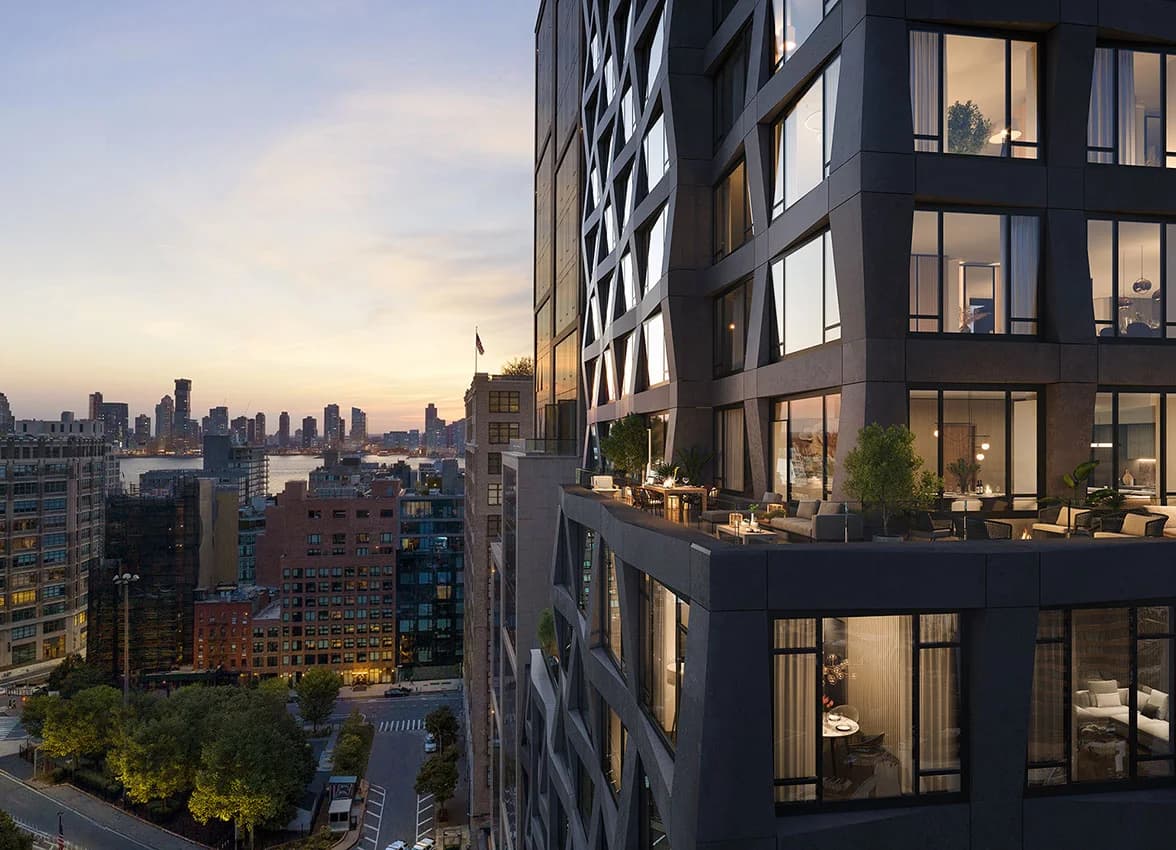
The Manhattan luxury real estate landscape in January 2026 presents a data-driven story of resilience, calendar-driven momentum, and tight supply. Early 2026 data affirm that the top end of Manhattan’s market remained active, with buyers demonstrating notable commitment even amid broader macro headwinds. According to Corcoran’s Inhabit report on January 2026 luxury activity, 69 contracts over $5 million were signed, marking January as the second-strongest such month in a decade and underscoring sustained demand at the trophy tier. This was paired with a continued narrowing of inventory and meaningful shifts in pricing dynamics that merit close attention from investors, developers, and lenders alike. (inhabit.corcoran.com)
Beyond the headline contracts, the data paint a broader picture of a calendar-driven market where pace and price signals are revealing how buyers allocate capital in a high-cost, low-inventory environment. Active listings for $5M+ fell to 732 in January, the lowest January tally since 2013, while the average asking price per square foot rose to $3,442, up about 16 percent year over year. The same period also saw days-on-market compress by roughly one-third, a clear sign that motivated buyers were converting more quickly as valuations and construction timing aligned with demand. Taken together, these indicators imply that January 2026 was less about broad affordability resets and more about selective, high-net-worth participation with a preference for newer construction and premium locations. These insights align with contemporaneous market commentary that described buyers returning with clarity and “checkbooks,” signaling renewed confidence at the top of the market. (inhabit.corcoran.com)
What data are included, where they come from, and how you should use this resource
This Manhattan luxury real estate January 2026 benchmarks hub consolidates publicly available, broker-driven data into a single, decision-ready resource for practitioners and investors. The primary data points come from reputable market reports and weekly luxury market digests, including Corcoran’s Inhabit luxury update (which tracks $5M+ activity), Olshan’s weekly luxury market reports (cited by independent observers), and supplementary analyses from market researchers and analytics practitioners who publish weekly or monthly summaries. The goal is not to replace vendor-specific databases but to provide a cross-verified, apples-to-apples view of what the January 2026 data imply for strategy, pricing, and timing. Where multiple sources exist, this resource triangulates to present a conservative, practice-focused interpretation. For readers who want deeper dives, the methodology section at the end explains the data sources, the calculation methods, and the limitations that readers should keep in mind as they apply these benchmarks to their own properties or portfolios. (inhabit.corcoran.com)
If you are a buyer, seller, developer, or broker, use this hub to benchmark your own performance, sanity-check pricing, and time-market expectations against January 2026 realities. For example, if your property is priced around $5 million and you’re aiming for rapid traction, the January 2026 data suggest that trophy-level activity remains robust, but supply is critically tight and days-on-market compress quickly when a listing is compelling and well-located. If you’re a developer marketing a new project, the data point that new development contracts were achieving elevated price-per-square-foot levels (over $4,000/sf on some transactions) offers a signal about product mix, location strategy, and the importance of high-end amenities. The broader takeaway is that the market’s top tier remains active, but the window for transaction momentum is highly selective and highly data-driven. (inhabit.corcoran.com)
Section 1: Key Benchmarks
This section presents core metrics for Manhattan’s luxury segment in January 2026, organized into data tables that are easy to scan and compare against historical baselines and other market slices.
Table 1 — January 2026: Key luxury benchmarks (5M+ contracts)
| Benchmark (5M+ Segment) | January 2026 Value | YoY Change | Notes / Source |
|---|---|---|---|
| Contracts signed over $5M | 69 | +3% | Second-strongest January in 10 years; top-end activity remains resilient. (inhabit.corcoran.com) |
| Active listings (5M+) | 732 | -17% | Lowest January total since 2013, highlighting tight supply. (inhabit.corcoran.com) |
| Average asking price per sf (5M+) | $3,442 | +16% | Indicates pricing power at the trophy tier. (inhabit.corcoran.com) |
| Days on market (5M+) | down ~33% | — | Faster absorption for high-end properties due to demand. (inhabit.corcoran.com) |
| Notable product mix | New development contracts at >$4,000/sf | — | Strong price signals from new developments driving the top-end psf. (inhabit.corcoran.com) |
| Market positioning | January 2026: 2nd strongest January in 10 years | — | Confirms a robust start to the year for luxury in Manhattan. (inhabit.corcoran.com) |
Table 2 — Luxury activity for $4M+ contracts across the late 2025 to January 2026 window
| Window | Estimated Contracts (4M+) | Average Weekly Pace | Source |
|---|---|---|---|
| November 2025 to January 25, 2026 (12 reporting weeks) | ~288 | ~24 per week | Based on Olshan weekly luxury reports aggregated and reported by independent observers. (kellyrobinsonnewyork.com) |
Table 3 — Weekly luxury market snapshot (week ending January 18, 2026)
| Metric | Value | Source / Context |
|---|---|---|
| Contracts signed at $4M+ in week | 21 | Weekly pace data for luxury segment; top contract reached $30M. (newyork.ravarealty.com) |
| Weekly volume (asking-price sales) | $200.885M | Reflects total weekly activity in high-end market. (newyork.ravarealty.com) |
| Median asking price for signed contracts (week) | $6.1475M | Indicates the mid-point high-end price level for that week. (newyork.ravarealty.com) |
| Average discount from original to last asking price | 6% | Typical negotiation dynamic in the luxury market. (newyork.ravarealty.com) |
| Market Pulse (short-term market sentiment score) | 0.6 | Slight tilt toward sellers but generally neutral. (newyork.ravarealty.com) |
Table 4 — Narrative context: broader 2025-2026 luxury market performance
| Metric / Narrative Element | Value / Insight | Source |
|---|---|---|
| 2025 luxury contracts (overall, $4M+) | 1,436 signed; up 11% YoY | Dylan Hoffman, The Monthly Update, January 2026 (data through 2025) (dylanhoffman.com) |
| 2025 Manhattan luxury dollar volume | ~$22.8B; up ~45% YoY | Ariel Property Advisors via Forbes perspective on Manhattan market rebound (2025 data) (forbes.com) |
| Ownership mix insight | Condos favored; 3:1 condo-to-coop pace in luxury sales; new development share rising | Corcoran / Inhabit synthesis via Olshan weekly reports; corroborated by market commentary (inhabit.corcoran.com) |
Notes on interpretation and context
- The 69 contracts over $5M in January 2026 are a direct indicator of intensified buyer interest at the trophy tier, even as overall market activity tempered in other segments. The January result sits as the second-strongest January for this price tier in a decade, signaling that buyers with substantial capital remained active when properties met their criteria. (inhabit.corcoran.com)
- Inventory dynamics at the top end remained tight, with a 17% year-over-year decline in 5M+ active listings, reinforcing the idea that supply constraints are disproportionately impacting high-end segments and contributing to psf price strength. (inhabit.corcoran.com)
- The psf pricing signal at the top end (approx. $3,442/sf for 5M+ properties) reflects ongoing willingness of buyers to pay a premium for location, scale, and project amenities, particularly in new development assets that can command higher per-square-foot pricing. The 16% YoY rise highlights that price discipline is channeling buyer demand toward assets with modern conveniences and premium finishes. (inhabit.corcoran.com)
- The weekly luxury market snapshot provides a granular view of activity in mid-January, illustrating that even within a volatile macro environment, demand can be episodic and concentrated around standout listings (e.g., a $30M contract). This snapshot also demonstrates the ongoing influence of calendar effects on luxury activity. (newyork.ravarealty.com)
- For broader context, the 2025 performance and 2025–2026 trajectory point to a market that has rebounded from the earlier-pandemic era highs, with Manhattan remaining a premier destination for ultra-luxury buyers. The Forbes piece synthesizes the 2025 rebound as a durable milestone for the market, while the ongoing January 2026 data provide a forward-looking signal for the tail end of 2026. (forbes.com)
Section 2: Trends Over Time
Trend analysis helps translate the January 2026 data into actionable expectations for the year ahead. The following trend analyses synthesize the January snapshot with recent historical data to illuminate direction, momentum, and potential inflection points.
Trend 1 — Demand momentum remains concentrated at the top end
-
Observation: The January 2026 data show 69 contracts over $5M, marking January as the second-strongest January in a decade for trophy-level activity. This underscores persistent demand among ultra-high-net-worth buyers who value Manhattan’s trophy assets, even as broader markets experience price and liquidity adjustments. The top-end momentum is reinforced by the continued presence of sizable single-property contracts (e.g., bids around $30M observed in weekly snapshots). This pattern aligns with a broader narrative of luxury resilience in Manhattan, supported by other market analyses that note Manhattan as a leading ultra-luxury hub. > “buyers back with clarity and checkbooks” in January 2026, per luxury market commentary. (inhabit.corcoran.com)
-
Implications for strategy: For sellers and developers, securing pricing discipline and targeted marketing in premier neighborhoods and new developments remains critical. For buyers, opportunities exist where quality, location, and construction standards align with long-term value, particularly in the condo and new development sectors. The pace at the upper end also suggests that marketing windows may be narrower, with strong interest for well-located, amenitized products.
Trend 2 — Inventory tightness drives pricing power and faster absorption
-
Observation: Active listings for $5M+ fell 17% YoY to 732, the lowest January level since 2013. Coupled with a 33% reduction in days on market, the data indicate that a lack of supply is amplifying demand signals and enabling price power, particularly for well-located, high-quality units. The combination of scarce supply and robust demand supports higher psf pricing at the top end. (inhabit.corcoran.com)
-
Implications for strategy: For owners considering listing, timing becomes crucial—delay may reduce responsiveness to market windows, while early-year listings that meet buyer expectations can achieve strong absorption. For buyers, inventory scarcity reinforces the importance of diligence and readiness to act quickly when a suitable listing appears.
Trend 3 — New development activity shapes top-end pricing dynamics
-
Observation: New development contracts are reported to command psf prices above $4,000 in some cases, contributing to the elevated average psf observed in January 2026. This pattern highlights the incremental price premium associated with modern construction, sophisticated amenities, and premium locations that new developments often offer relative to resale stock. (inhabit.corcoran.com)
-
Implications for strategy: Developers and investors should weigh the mix of new development versus resale stock in marketing plans. The data suggest that a well-curated new-development pipeline, with compelling amenities and maintenance expectations, can influence pricing power and buyer enthusiasm at the top of the market.
Trend 4 — Calendar effects and the pace of luxury activity
-
Observation: The window from November 2025 through January 2026 shows a concentrated burst of activity, with approximately 288 contracts signed at $4M+ across 12 reporting weeks, implying an overall seasonal acceleration that aligns with year-end confidence and new-year demand reopeners. The weekly pace (~24 contracts per week) provides a practical benchmark for evaluating ongoing market tempo. This calendar-driven pattern suggests strategy considerations around marketing pushes, open houses, and private previews during peak weeks. (kellyrobinsonnewyork.com)
-
Implications for strategy: Brokers and owners should align listing campaigns with peak weeks, leveraging the data-driven understanding that luxury buyers in Manhattan often respond to curated, timely marketing that presents a compelling narrative around location, amenities, and development style.
Trend 5 — Contextual backdrop for 2026: a market returning to trajectory
-
Observation: The broader 2025 performance, with Manhattan luxury real estate reaching multi-year highs and a substantial jump in total luxury dollar volume, remains an important backdrop for 2026. The 2025 year-end data emphasize that the luxury market has rebounded strongly and maintained momentum into 2026, even as rates and macro conditions require careful navigation. (forbes.com)
-
Implications for strategy: Long-horizon investors can interpret January 2026 activity as part of a durable shift toward high-value, quality-driven assets in Manhattan. This has implications for capital allocation, debt financing terms, and portfolio strategy focused on trophy assets, well-located neighborhoods (e.g., Upper East Side and other premium pockets), and high-end new development opportunities.
Section 3: How You Compare
To turn these benchmarks into practical guidance, use a simple, repeatable framework to evaluate your own property or portfolio against January 2026 data. The goal is to help you assess relative performance, identify gaps, and align pricing and strategy with observed market dynamics.
Benchmarking framework (step-by-step)
- Define your market slice
- Price tier: 4M+ vs 5M+ contracts as the primary frame for comparison.
- Property type: condo vs coop vs new development; premium vs standard luxury.
- Neighborhoods or submarkets: map to the strongest performing pockets (e.g., areas with high amenities, city-view appeal, and proven demand).
- Gather your internal metrics
- Time on market (days)
- List price vs sale price (discount to last asking)
- Price per square foot (psf) for the unit
- Time-to-contract (weeks)
- Number of contracts signed (monthly, quarterly)
- Benchmark against January 2026 data
- Use the 5M+ metrics as anchor points: 69 contracts in January 2026; 732 active listings; 16% YoY psf increase to $3,442; -33% days on market YoY. For the 4M+ segment, use the reported 288 contracts across 12 weeks of late 2025–January 2026 as a pace proxy. For weekly tempo, use the Jan 18 snapshot showing 21 contracts in the week, top deal at $30M. These numbers provide a plausible benchmark for timing and pricing discipline in your segment. (inhabit.corcoran.com)
- Interpret with a simple calculator (example framework)
- Define your annualized pace target for a comparable segment (e.g., if you sell 24 contracts per week across 12 weeks, you’re looking at roughly 1,248 contracts per year in that period; recent data suggest 1,436 contracts year-to-date for 2025–2026 in the $4M+ space). Your pace should be compared to this benchmark to assess relative market strength for your asset class and price tier. Benchmark pace (BP) ~ 24 contracts/week for $4M+ space; Annualized BP ~ 1,248 contracts/year. If your property family is performing at 1,000 contracts/year, you’re at ~80% of BP (Score = 80). If you’re at 1,500, you’re at ~120% of BP (Score = 120). The exact interpretation depends on your asset mix and market window. Sources: weekly Olshan luxury metrics and year-to-date 2025–2026 totals. (kellyrobinsonnewyork.com)
- Contextual interpretation tips
- Price per square foot: In January 2026, 5M+ properties averaged $3,442/sf, up 16% YoY. If your listing is in that band, compare your psf to the high-end trajectory, and consider whether the unit’s attributes (new construction, views, layout, amenities) justify a psf premium aligned with or above the market signal. (inhabit.corcoran.com)
- Inventory impact: With 5M+ listings down 17% YoY, a seller’s advantage increases when the asset is highly differentiated. If you’re a buyer negotiating in this space, expect faster turnaround on attractive listings and maintain readiness to act quickly. (inhabit.corcoran.com)
- Week-to-week context: The 21 contracts in the week ending January 18, 2026, demonstrates that even within the monthly cadence, there are burst periods of high activity. If you’re planning a marketing push, align it with weekly market tempo signals to maximize exposure during peak weeks. (newyork.ravarealty.com)
Example: hypothetical value proposition for a 5M+ condo listing in January 2026
- Scenario: A 5.3M condo with premium amenities, 2,800 sf, located in a top neighborhood, newly renovated.
- Benchmark comparison:
- Target psf: benchmark around $3,442/sf (January 2026 5M+ segment). If your unit is in the 2,800 sf range, target total price near 9.63M baseline (2,800 x 3,442). In practice, negotiation should reflect premium attributes and market sentiment.
- Time-on-market expectation: with 5M+ inventory down YoY and absorption improving, a well-prepared listing should aim for shorter cycles, ideally under 60–90 days, with a strategic price positioning and staged showings.
- Pace expectation: if the market is pacing toward ~24 contracts per week in the 4M+ space, a 5M+ condo may experience slower or faster absorption depending on location and product differentiators; use this as a directional guide rather than a hard rule.
- Conclusion: A data-informed strategy would emphasize precise pricing, standout marketing, and a curated showing plan to leverage tight inventory and high buyer demand at the top end. The January 2026 data suggest that the top-tier market remains robust when assets are compelling and properly positioned. (inhabit.corcoran.com)
Section 4: Methodology & Sources
Data sources
- Corcoran Group’s Inhabit luxury report for January 2026 (5M+ contracts, 5M+ active listings, price per sf, days on market). This source provides critical top-end metrics and a direct January snapshot. (inhabit.corcoran.com)
- Olshan’s weekly luxury market reports (aggregated by independent observers in blogs such as Kelly Robinson’s). Used to derive 4M+ contract counts across the November 2025–January 2026 window and to corroborate pace signals. (kellyrobinsonnewyork.com)
- Manhattan Market Pulse (Rava Realty) for weekly snapshots in January 2026, including luxury contract counts, top contracts, and sentiment indicators (Market Pulse score). Useful for mid-month cadence and weekly context. (newyork.ravarealty.com)
- The Monthly Update (Dylan Hoffman) for year-to-date 2025–2026 luxury contract counts and total luxury dollar volume. Provides a broader runtime view of the luxury market trajectory beyond January. (dylanhoffman.com)
- Additional context from Forbes coverage of Manhattan’s 2025 luxury market rebound (Ariel Property Advisors), to situate January 2026 facts within a longer-term trajectory. (forbes.com)
Calculation methods and definitions
- YoY changes are calculated as (January 2026 value − January 2025 value) / January 2025 value, expressed as a percentage. Where January 2025 values are not explicitly available in the source material, the stated YoY percentage is used as reported by the source.
- Data scope is focused on the luxury segment defined by price tiers (notably $4M+ and $5M+ contracts) and includes both resale and new development activity when reported by the sources.
- Active listings, days on market, and price-per-square-foot metrics are used where reported for the top-tier segment in January 2026. Weekly and 12-week windows provide cadence context for pace-based benchmarking.
Sample sizes and limitations
- The January 2026 top-end metrics (5M+) are derived from Corcoran-Inhabit data, with a February 2026 release date; as with all broker-driven market reports, there is a degree of day-to-day variation and regional emphasis (neighborhood-specific performance may differ). The data are best used to inform directional expectations and relative performance rather than exact, universal predictions across all buildings. (inhabit.corcoran.com)
- The 4M+ pace across late 2025–January 2026 is based on Olshan-aggregated data reported by market observers; the exact weekly mix of condo vs coop vs new development is not always fully disaggregated in every source. Cross-referencing multiple sources helps mitigate over-interpretation of any single dataset. (kellyrobinsonnewyork.com)
- The weekly Market Pulse data from Ravarealty provide a highly detailed snapshot but reflect a single market-tracker approach; these numbers should be triangulated with other sources for a full-month or quarterly view. (newyork.ravarealty.com)
Closing
The January 2026 benchmarks for Manhattan luxury real estate underscore a market that remains high-touch, selective, and data-driven. Buyers continue to pursue trophy assets with scale, amenities, and new-construction advantages, while sellers and developers with strong positioning can capitalize on tight supply and a favorable psf dynamic at the top end. As you apply these insights, remember that market conditions can shift with macro factors and local inventory movements; continuous data updates and regular benchmarking are essential to maintain an accurate view of the January 2026 trajectory and beyond. This resource will be updated as new data are released, with the aim of keeping practitioners informed about evolving benchmarks, trends, and comparative frameworks across the Manhattan luxury real estate landscape.
If you’d like, I can tailor the benchmark tables to a specific neighborhood, building type, or price tier you care about (for example, Upper East Side new developments vs. established luxury co-ops) and re-run the calculator with your inputs.