Manhattan Circular Economy and Repair Hubs 2026: News Update
A data-driven report on Manhattan circular economy and repair hubs 2026, highlighting new hubs, impacts on residents, and market trends shaping NYC.
 By
By 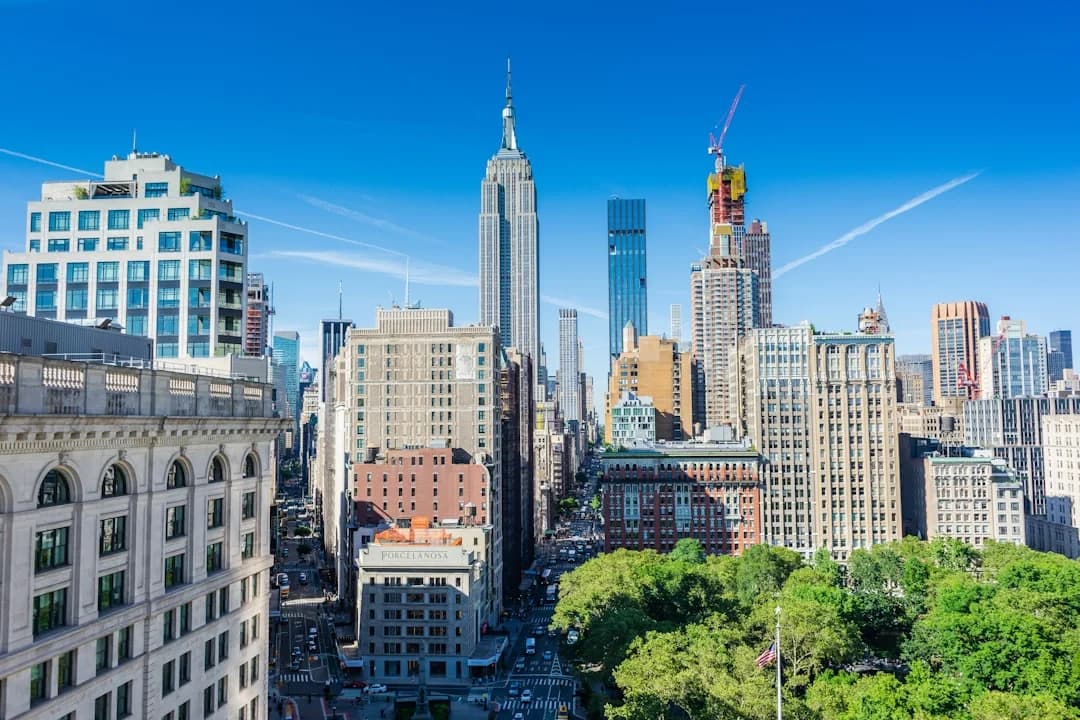
A landmark development is unfolding in Manhattan as city agencies, labor organizers, and nonprofit partners move to embed repair-minded infrastructure into the urban fabric. On April 7, 2026, a newly renovated hub in City Hall Park opened to the city’s roughly 80,000 delivery workers, offering rest space, 24/7 e-bike charging, and a small-scale repair operation. The site—renovated from a vacant newsstand—serves as the nation’s first federally funded deliverista hub and signals a broader push toward a more resilient, circular economy at the street level. The project was fast-tracked with federal support, including $1 million secured by U.S. Senator Chuck Schumer and visible backing from Mayor Zohran Mamdani, underscoring a growing alignment between labor, urban mobility, and climate-focused policy. As Tricia Shimamura, NYC Parks Commissioner, put it, the hub is “a place where delivery workers can rest,” a sentiment echoed by workers’ advocates who framed the project as a long-awaited upgrade to infrastructure that supports critical city logistics. (nbcnewyork.com)
This initiative is one of several urban experiments shaping Manhattan circular economy and repair hubs 2026. By combining practical services with a physical repair capability, the City Hall Park Deliverista Hub sits at the intersection of worker welfare, safer last-mile logistics, and a broader cultural shift toward repair, reuse, and local sustainability. Early reporting and coverage emphasize both the immediate utility for workers and the emblematic potential of such hubs to catalyze a network of repair-oriented spaces across Manhattan and beyond. The Deliverista Hub’s emergence follows a path of municipal pilots and private-sector collaborations designed to reframe how goods move through a crowded cityscape, with microhubs piloted on the Upper West Side in 2025 as a foundational model for scale. The broader urban narrative is clear: Manhattan circular economy and repair hubs 2026 are not just conceptual; they are being deployed with concrete facilities, staffing, and financing, creating a visible ecosystem that ties together labor rights, waste reduction, and smarter urban logistics. (patch.com)
Earth Day 2025 marked an early milestone in this journey, when NYC DOT announced the city’s first microhubs to shift deliveries from trucks to safer, more sustainable modes on the Upper West Side. The pilot program, which targeted three initial microhubs on Amsterdam Avenue at West 73rd and West 85th Streets, and Broadway at West 77th Street, was designed to reduce truck trips, cut emissions, and improve street safety by consolidating deliveries before they reach residential and commercial blocks. Although microhubs serve a different scale than a neighborhood repair hub, they form part of the same infrastructure logic: create centralized, efficiency-enhancing nodes that support a circular approach to last-mile logistics—an approach now visible in Manhattan’s repair ecosystem as well. The program is planned to expand toward 36 locations over a multi-year horizon, reflecting a citywide commitment to rethinking freight, curb use, and urban mobility as components of climate resilience. (nyc.gov)
In parallel, Manhattan’s ongoing energy retrofit and adaptive reuse activity in 2026 provides a complementary backdrop to the repair-hub story. A recent analysis highlights how Local Law 97 and the Climate Mobilization Act are accelerating energy upgrades in tall buildings and repurposing office stock for housing and mixed-use functions, with a broader aim of building resilience and reducing emissions. While not solely a circular-economy initiative, these retrofit programs bolster the city’s capacity to sustain repair-oriented, local-circular practices by improving building-level efficiency, reducing waste, and enabling longer asset life. The trend is part of a larger data-driven urban strategy in which policy, financing, and technology converge to enable sustainable urban living without sacrificing density or economic vitality. (manhattanmonday.com)
Section 1: What Happened
Opening day and location
The City Hall Park Deliverista Hub opened on Tuesday, April 7, 2026, marking a milestone as the first federally funded delivery workers hub in the United States. The project’s public unveiling was followed by a broader communications push from city officials and labor advocates who described the hub as a practical increase in dignity and safety for delivery workers who move millions of packages through Manhattan each week. The site, renovated from a long-vacant newsstand, provides rest spaces, charging stations, and a codified space for basic bike maintenance. The opening drew notable public and private sector support, including remarks from U.S. Senate leaders and labor organizers who framed the hub as a proof point for a more humane and efficient urban logistics system. (nbcnewyork.com)
Funding, governance, and scale
A defining feature of this launch was the level of federal backing and cross-sector coordination. Senator Chuck Schumer helped secure $1 million in funding to accelerate the project, while Mayor Mamdani and partner organizations emphasized the hub’s potential to become a model for future sites. The Deliverista Hub’s governance includes collaboration among the city’s parks department, the Department of Transportation, and labor groups such as the Workers Justice Project, reflecting a multi-stakeholder approach to urban repair and mobility. The hub is designed to serve the city’s approximately 80,000 delivery workers, with a five-day-a-week staff presence and 24/7 access to certain facilities, including e-bike charging and safety guidance. This level of staffing and funding signals an intent to scale: the DOT’s broader microhubs program envisions up to 36 locations citywide, and the city is actively looking for opportunities to replicate successful models in other neighborhoods. (nbcnewyork.com)
Core features and immediate impact
At the heart of the hub’s trip is a combination of rest, charging, and repair capabilities. The site features dedicated areas for rest, basic bike repair, and educational resources related to rider safety, wage protections, and app deactivations. One of the hub’s most notable technical features is the presence of 40 battery charging cabinets designed to support the city’s growing e-bike fleet and to help reduce power-related safety incidents on the street. In addition, a mini repair shop is planned to provide quick tune-ups and flat-tire fixes—an important practical service for riders who rely on bicycles for last-mile deliveries. The hub’s interior is being equipped to facilitate a positive worker experience, with comfortable seating and climate-controlled spaces designed to encourage longer, healthier shifts and reduce fatigue. This combination of services is intended to transform a previously underused street space into a functional node in a circular, repair-oriented economy. (planetizen.com)
Context within a growing repair and circular economy ecosystem
The City Hall Park Deliverista Hub is not an isolated project. It sits within a broader pattern of repair- and reuse-oriented activities across Manhattan and New York City. For example, NYC Fix It Shop, a nonprofit initiative incubating repair skills and community repair events in lower Manhattan and across the city, lays out a blueprint for a repair-centered ecosystem that complements municipal programs. The Fix It Shop emphasizes a mission to reduce waste, build local skills, and create a city-wide map of repair resources, signaling community-level participation in the urban repair economy. Meanwhile, Precious Plastic NYC showcases a different angle of the circular economy by organizing workshops and popups that convert waste plastic into usable materials, products, and design objects, underscoring a localized, community-driven repair-and-reuse narrative. Taken together, these efforts illustrate how the Manhattan repair-hub strategy is evolving from a single pilot into a mosaic of interconnected spaces that enable repair, reuse, and skill-building as core urban activities. (nycfixitshop.org)
Timeline and next steps in the urban repair network
The Deliverista Hub’s opening cadence is part of a wider timeline of urban logistics and repair-related investments in Manhattan. The DOT’s microhubs pilot, announced in 2025, established a blueprint for centralizing deliveries and then redistributing them via smaller, safer transport modes. With the microhubs program planned to scale to 36 locations, officials expect a staged rollout over the next several years, with ongoing evaluation of traffic, emissions, safety, and neighborhood impact. As these pilots mature, the city intends to integrate them with a broader freight strategy that includes water-based freight corridors, refrigerated micro-distribution, and expanded loading zones. These steps collectively contribute to a Manhattan circular economy and repair hubs 2026 narrative that treats maintenance, repair, and modularity as essential urban services rather than optional add-ons. (nyc.gov)
Section 2: Why It Matters
Labor, safety, and mobility implications

Photo by Florian Wehde on Unsplash
The Deliverista Hub’s immediate impact is centered on worker welfare and street safety. By offering a staffed, supervised space that includes charging infrastructure and education resources, city officials and labor advocates argue that the hub helps address systemic risks associated with high-volume delivery networks. The hub’s design—especially the 24/7 charging capabilities and repair capability—addresses a set of safety concerns frequently raised by rider organizations and regulators. In public statements, labor leaders highlighted the importance of infrastructure in protecting workers and ensuring a more predictable, humane work environment. The hub also reflects a broader policy thrust to modernize urban logistics, reduce on-street congestion, and align last-mile operations with climate goals. In practical terms, these changes could influence rider behavior, shift patterns, and the allocation of curb space in Lower Manhattan and beyond. (nbcnewyork.com)
Circular economy and repair culture: a city-wide shift
Beyond the immediate workforce benefits, the hub resonates with a wider circular-economy impulse in Manhattan and New York City. The existence of repair-focused spaces—ranging from NYC Fix It Shop’s community repair network to Precious Plastic NYC’s plastic-reuse activities—signals a citywide push to extend asset life, reduce waste, and re-skill residents. The idea that a city can weave repair services into daily life—whether through a neighborhood hub, a repair café, or youth-oriented repair education—becomes an operational pillar of the urban circular economy. While one hub cannot erase the city’s waste and emissions footprint alone, it functions as a scalable prototype that can be replicated in other districts, generating local jobs, keeping materials in use longer, and creating tangible, hands-on pathways to a more resilient urban economy. (nycfixitshop.org)
Policy and city-strategy alignment
Manhattan’s repair-hub developments tie into larger city policies and programs designed to accelerate a circular economy. The Earth Day microhubs program demonstrated a willingness to reorganize deliveries in a way that reduces truck trips and emissions, while the ongoing energy retrofit and adaptive-reuse agenda strengthens the city’s infrastructure for repair and maintenance as a core function of urban vitality. The convergence of these initiatives—labor-focused repair hubs, municipal logistics pilots, and energy-efficiency programs—creates a consistent, data-driven framework for measuring progress, identifying best practices, and allocating resources where they yield the greatest social and environmental benefits. Policymakers have signaled ongoing support for such integrated approaches, with public administrations emphasizing scalable pilots, transparent performance metrics, and opportunities for public-private partnerships. (nyc.gov)
Public perception and potential challenges
As with any ambitious urban program, the repair-hub strategy faces questions about scalability, funding continuity, and long-term community benefits. While early coverage focuses on the hub’s concrete facilities and immediate utility for workers, observers will be watching for metrics on usage, safety outcomes, and neighborhood impact, including curb-space management and pedestrian experiences. Critics may push for more explicit transparency around funding mixes, maintenance responsibilities, and integration with other city services. The presence of multiple actors—city agencies, labor groups, nonprofits, and private sector partners—creates a robust verification environment but also requires careful coordination to maintain accountability and prevent scope creep. In a city with a dense network of repair- and reuse-related initiatives, the risk of fragmentation exists; the antidote is a clearly published set of performance indicators, governance protocols, and cross-agency collaboration that can be audited publicly. (nbcnewyork.com)
Broader climate and economic context
Within the broader climate and economic context of Manhattan, the hub program reflects a pragmatic approach to decarbonization—prioritizing interventions that cut emissions, reduce waste, and improve urban life without compromising density or housing availability. The energy retrofit and adaptive-reuse narrative, as documented by Manhattan Monday and city sources, emphasizes a data-driven path toward sustainable urban growth, where circular economy principles inform decisions about building efficiency, materials reuse, and the lifecycle of urban assets. In this sense, the Deliverista Hub and related repair-and-circular initiatives are not isolated cultural shifts; they are practical components of a citywide climate strategy that aligns with regulatory timelines and market realities. (manhattanmonday.com)
Section 3: What’s Next
Expansion and replication of repair hubs
Looking ahead, the city’s repair-hub strategy is likely to unfold in several parallel tracks. First, the Deliverista Hub model is expected to be evaluated for adaptation to other neighborhoods and districts, leveraging lessons learned about staffing, security, accessibility, and integration with rider-support services. Second, the DOT’s microhubs program, which remains a critical backbone for sustainable deliveries, will continue to scale toward the planned 36 locations, supported by ongoing pilot results and stakeholder feedback. This expansion will be watched for how it influences last-mile efficiency, emissions, and local traffic patterns. Third, nonprofit and community groups—such as NYC Fix It Shop and Precious Plastic NYC—will likely broaden their geographic reach and programmatic offerings, introducing repair cafés, repair academies, and material-reuse initiatives in more neighborhoods. Together, these threads shape a more resilient Manhattan repair ecosystem that is as much about social equity and workforce development as it is about circular logistics. (patch.com)
Metrics, monitoring, and anticipated milestones
To ensure accountability and informed decision-making, city agencies are expected to publish performance metrics and program evaluations. Potential measures include the rate of hub usage by delivery workers, frequency and types of repairs performed, battery safety incidents, energy-use reductions resulting from microhubs and hub-based charging, and changes in curb-space utilization. The DOT’s microhubs pilot already frames a three-year timeline with a staged expansion, which means milestones for 2026–2028 will be critical for understanding the pipeline of replication, the impact on congestion, and long-term emissions trends. The energy-retrofit narrative adds another data pillar: as building performance improves, opportunities may emerge for “repair-friendly” retrofit strategies that enable more resilient tenant experiences and longer asset lifespans. (nyc.gov)
What to watch for in Manhattan’s circular economy and repair hubs 2026
Readers should watch for a few concrete signals over the coming months and quarters:
- The City Hall Park Deliverista Hub’s operation metrics: occupancy, rest-space utilization, repair-shop throughput, and rider safety outcomes. These data points will help determine the hub’s scalability prospects and inform potential expansions to other neighborhoods. (nbcnewyork.com)
- The expansion cadence of microhubs on the Upper West Side and other boroughs, including newly announced locations, partnerships with delivery firms, and any shifts in local traffic patterns. (nyc.gov)
- The integration of repair and circular-economy programs with broader climate policies, including LL97-aligned retrofit schedules and performance assessment tools managed by NYC Accelerator and city agencies. (manhattanmonday.com)
- Community engagement and workforce-development components, such as Repair Academy programs, repair cafés, and open workshops linked to NYC Fix It Shop and Precious Plastic NYC, which will be essential to sustaining consumer and resident participation in repair-oriented activities. (nycfixitshop.org)
Closing
Manhattan is actively testing a practical approach to a circular economy and repair hubs in 2026—where a city-funded Deliverista Hub at City Hall Park serves as a proving ground for rest, repair, and safe charging for thousands of delivery riders, while parallel initiatives in microhubs and retrofit programs lay the groundwork for a broader, citywide network. The convergence of labor advocacy, municipal policy, and community-led repair efforts signals a deliberate shift toward keeping assets in use longer, reducing waste, and making urban life more livable without compromising the city’s economic dynamism. As Manhattan’s repair and circular-economy agenda unfolds, residents and workers alike will be watching to see whether these pilot efforts translate into lasting improvements in transportation safety, material reuse, and the daily lives of people who power the city’s bustling economy.

Photo by Udayaditya Barua on Unsplash
Readers who want to stay informed can follow official updates from NYC DOT and the Mayor’s Office, which are expected to publish milestone reports and expansion plans as the 2026–2027 period progresses. Local reporting from outlets such as NBC New York and Patch will continue to document on-the-ground developments, while planning-oriented coverage from Planetizen and related urban-technology outlets will provide broader context about how Manhattan’s model compares with similar initiatives in other cities. As the city tests, learns, and scales, Manhattan circular economy and repair hubs 2026 will continue to shape a practical blueprint for urban circularity—one that foregrounds workers, repair skills, and neighborhood resilience as vital components of a future-ready metropolis. (nbcnewyork.com)