Harlem Neighborhood Development 2026: Data-Driven Outlook

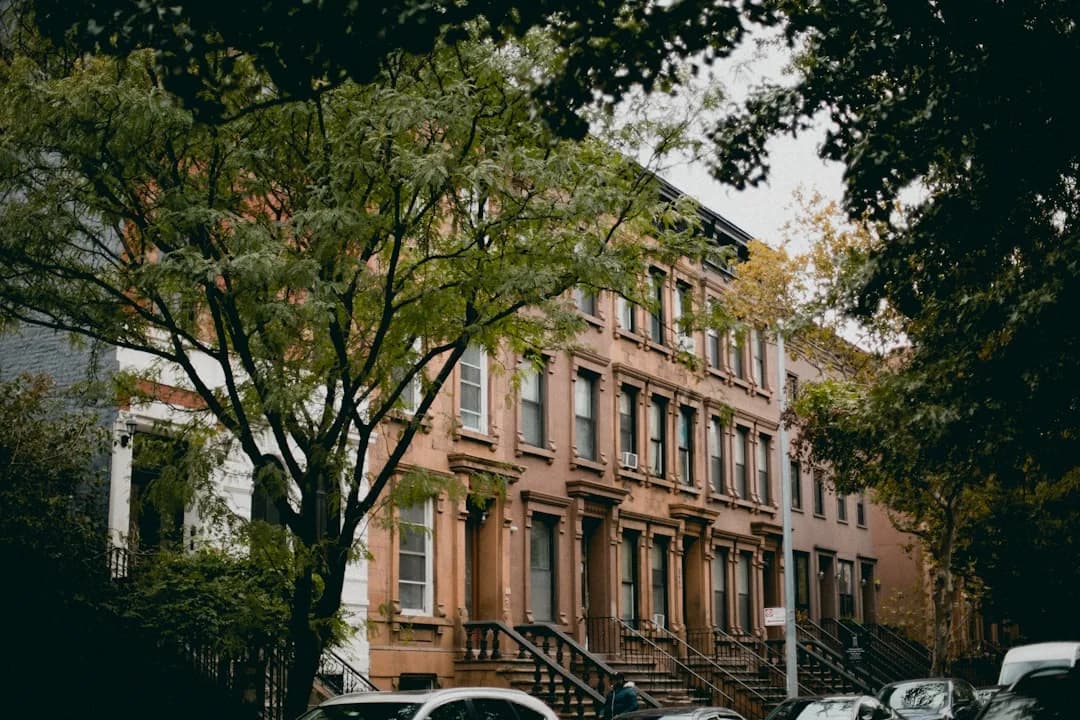
Photo by Rachel Martin on Unsplash
Harlem is entering 2026 at a pivotal moment for neighborhood development, with a cluster of high-profile projects moving beyond planning into construction and program delivery. In East Harlem and the broader Harlem corridor, city and state agencies, community groups, and private developers are coordinating on a slate of initiatives designed to expand housing, open space, and local business vitality while addressing affordability and resiliency. The headline for Harlem neighborhood development 2026 is not a single project but a spectrum of coordinated investments that blend transit access, waterfront access, cultural institutions, and new commercial districts. The immediate impact for residents includes new jobs, more affordable housing opportunities, upgraded parks and esplanades, and a more connected public realm, even as concerns about displacement and affordability remain central to public discourse. This article synthesizes the latest, sourced data and official announcements to outline what happened, why it matters, and what to watch next in Harlem’s 2026 development arc.
In particular, a 2025 decision to establish the East Harlem 125th Street Business Improvement District (BID) signals a formal, ongoing commitment to stabilizing and marketing commercial corridors in Harlem. The mayor’s office signed the legislation to create the BID on June 22, 2025, illustrating a clear step toward structured neighborhood development in Harlem that will help coordinate sanitation, beautification, programming, and business assistance. The BID’s creation aligns with broader city strategies to boost neighborhood economies through place-based investment, and it provides a governance framework for ongoing investments along East Harlem’s commercial corridors. (nyc.gov)
Meanwhile, major infrastructure and open-space projects are breaking ground and moving toward completion in 2026 and beyond. The Manhattan Greenway Harlem River project—stretching along the Harlem River between East 125th and East 132nd Streets—was a centerpiece of East Harlem waterfront revitalization. The project is a $353 million initiative that will deliver seven acres of waterfront parkland, pedestrian and bicycle pathways, and amenities intended to connect East Harlem to Randall’s Island and the South Bronx while elevating the shoreline to bolster resiliency. City officials announced funding and design details, with a mixture of city and state support (approximately $310 million from city funds and a $43 million NYS Environmental Bond Act grant) to deliver this long-awaited link in the Manhattan Greenway. Construction kicked off with a public breakthrough in October 2025, marking a significant milestone for Harlem’s waterfront and broader regional greenway connectivity. (newyorkyimby.com)
In parallel, Harlem’s cultural and housing development story deepened with the Urban Civil Rights Museum project, anchored by the Urban League Empowerment Center. The museum, planned as New York City’s first dedicated civil rights museum focusing on the North, will sit within a broader $300 million development that includes 170 units of affordable housing, minority-owned business space, and the Whitney M. Young Center for Leadership. Public reporting indicates the museum is scheduled to open in 2026, aligning with national milestones and positioning Harlem as a center for history, culture, and inclusive development. This integrated approach—combining housing, culture, and economic space—signals a deliberate effort to fuse Harlem’s past with its future in a way that aims to benefit residents and visitors alike. > quote from Marc Morial in Axios highlights the museum’s significance as a model of inclusive development. (axios.com)
At the same time, specific neighborhood projects along East Harlem’s corridors advanced. One major example is the Malcolm Shabazz Market site near 116th Street, where the market’s long-standing footprint is being reimagined as part of a larger affordable-housing plan led by the Masjid Malcolm Shabazz House of Worship and its affiliated development corporation. Vendors were temporarily relocated in January 2026 to pave the way for the new, two-building, mixed-use development that will include 108 affordable (100% AMI) units and 123 affordable units set aside for households at different AMI levels, with a ground-floor community facility dedicated to the renewed Malcolm Shabazz Harlem Market. The move and the ULURP process, which began with a 2024 approval by Harlem’s Community Board 10, reflect the neighborhood’s careful balancing act between preserving cultural assets and delivering housing and commercial space. The relocation occurred in late January 2026, with subsequent financing and construction timelines indicating a multi-year build-out. (amsterdamnews.com)
Additionally, East Harlem’s rezoning and related infrastructure initiatives continue to shape the development outlook for Harlem neighborhood development 2026. The East Harlem rezoning proposal, which seeks to apply the Mandatory Inclusionary Housing (MIH) program and to adjust Urban Renewal Plans in the district, demonstrates the city’s ongoing effort to align zoning with neighborhood growth and affordability goals. The plan contemplates site-specific actions, including the Sendero Verde initiative and other housing-affordability measures, and has been codified in public-facing documents that outline the scope of rezoning, urban renewal amendments, and related environmental reviews. These actions, while rooted in 2017 EHNP discussions, continue to influence public and private investment decisions in Harlem by clarifying density, land use, and community benefits. (council.nyc.gov)
Looking ahead, several additional developments are expected to unfold in 2026 that will further shape Harlem’s development trajectory. The city’s broader plan to relocate the Public Health Lab to Harlem as part of the SPARC East urban health hub is slated to achieve completion in 2026, marking a milestone in Harlem’s role as a life sciences and public-health corridor. This relocation is part of a larger life sciences and health-care ecosystem strategy that Mayor Adams and partners discussed in the SPARC Kips Bay announcements, illustrating how Harlem could benefit from spillover effects and workforce opportunities tied to life sciences and health education. The plan has been activated through joint city-state efforts, and the public health relocation is expected to be completed in 2026 as construction and deconstruction activities proceed in phases. This example underscores how Harlem’s development agenda integrates housing, health, and economic opportunity to build a more resilient neighborhood. (nyc.gov)
What happened, in short, is a coordinated push: a new BID to bolster the East Harlem commercial corridor; a multi-hundred-million-dollar waterfront greenway breaking ground to reconnect Harlem to its riverfront; a culturally anchored housing strategy that relocates a historic market and advances affordable homes; rezoning and urban renewal actions intended to guide density and housing mix; and a health-and-education hub that could anchor Harlem’s next wave of innovation. Each of these elements contributes to Harlem neighborhood development 2026 as part of a broader, data-driven agenda aimed at balancing growth with affordability, accessibility, and cultural continuity. The following sections provide deeper context, implications, and forward-looking indicators drawn from official documents, credible local reporting, and city-led plans.
What Happened
Major announcements and milestones
East Harlem 125th Street BID formation and funding commitments
The formal creation of the East Harlem 125th Street BID, signed into law on June 22, 2025, marks a milestone in organizing and financing neighborhood improvement efforts. The legislation, Intro. 1219, enables a dedicated entity to coordinate sanitation, streetscape improvements, and business development across East Harlem’s commercial corridors. The BID’s steering committee and Uptown Grand Central had worked toward this outcome for years, and the city’s move to commit new grant funding signals a durable public-private partnership model for Harlem neighborhood development 2026. The city’s press release emphasizes ongoing support for BIDs citywide and highlights a range of grant programs designed to revitalize commercial corridors and strengthen small businesses. (nyc.gov)
Harlem River Greenway Groundbreaking and design progress
The Harlem River Greenway project, a cornerstone of East Harlem waterfront redevelopment, reached a major milestone with groundbreaking in October 2025. The project represents a joint effort among NYC Parks, NYCEDC, and NYCDOT, with support from state agencies, and aims to deliver seven acres of waterfront parkland, a continuous greenway link between Randall’s Island and the Harlem River edge, and a pair of distinct pedestrian and bike paths that will connect Harlem to the broader Manhattan Greenway network. Project design and cost details were outlined in the city’s planning and design documents, including the inclusion of a flood-resilient shoreline elevation and extensive tree-planting for stormwater management. The project’s estimated cost stands at $353 million, with $310 million funded by the city and a $43 million grant from the New York State Environmental Bond Act. The public-groundbreaking event and subsequent updates signal Harlem neighborhood development 2026 will be characterized by increased outdoor spaces and enhanced mobility options. (newyorkyimby.com)
Cultural and housing anchor projects emerge
The Urban Civil Rights Museum, a centerpiece of Harlem’s cultural-lifework, is slated to open in 2026 as part of the Urban League Empowerment Center. The museum’s public-facing narrative positions Harlem as a national center for civil rights memory and history, with the Empowerment Center housing 170 affordable housing units and spaces for minority-owned business incubators and leadership programs. Axios reporting from December 2025 frames the museum as a pillar of inclusive development, drawing on partnerships with Local Projects for exhibition design and linking museum programming with community-led economic opportunities. (axios.com)
Malcolm Shabazz Market’s relocation to enable housing
The Malcolm Shabazz Harlem Market—an institution on 116th Street—began a strategic relocation in January 2026 to a temporary site at Malcolm X Boulevard, clearing the way for a two-building, 108-unit affordable-housing component integrated with a ground-floor community facility. The project—led by the Masjid Malcolm Shabazz House of Worship and the Malcolm Shabazz Development Corporation (MSDC)—is the latest in a string of market-driven redevelopment efforts in Harlem that aim to preserve neighborhood character while expanding housing options. The market’s ULURP history, including a 2024 community board resolution and the 2026 construction financing, underscores the careful navigation of community input and municipal approvals in Harlem neighborhood development 2026. (amsterdamnews.com)
EH rezoning and Sendero Verde
Harlem’s rezoning agenda—deliberated through the East Harlem rezoning process and associated urban renewal plan amendments—continues to influence development in the district. The East Harlem rezoning package contemplates MIH application in key blocks, potential special permits for hotel-related uses, and adjustments to land-use boundaries to accommodate neighborhood-scale growth and housing diversity. The Sendero Verde project and related components illustrate how zoning changes are anticipated to unlock affordable housing and mixed-use opportunities within East Harlem. Public-facing city documents detail the zoning text amendments, environmental reviews, and recommended council actions that accompany these moves, reflecting the city’s ongoing approach to align development with community benefits. (council.nyc.gov)
Public health and life-sciences acceleration
Beyond housing and open space, Harlem neighborhood development 2026 is also tied to health and life-sciences infrastructure. A notable development is the relocation of the Public Health Lab to Harlem as part of SPARC East’s broader health-education ecosystem. The deconstruction and replacement of facilities in SPARC Kips Bay—coupled with Harlem’s evolving health-education infrastructure—aim to create a pipeline linking public schools, universities, and local health research, with completion targeted for 2026. The executive brief confirms that the relocation of the Health Lab to Harlem will be finished in 2026, reflecting a broader strategy to anchor health-related employment and research opportunities in Harlem. (nyc.gov)
Why It Matters
Economic implications for Harlem and Upper Manhattan
Harlem neighborhood development 2026 is anchored by substantial public and private investments designed to stimulate job growth, business activity, and tax revenue that can support long-term neighborhood services. The East Harlem BID formation and associated SBS grant commitments illustrate the city’s tactic of mobilizing capital to improve street life, retail vitality, and the local tax base. The BID’s focus on sanitation, storefront activation, lighting, and district branding supports higher commercial corridor performance and better visitor experiences, which in turn can attract new tenants and sustain existing small businesses. The city’s Avenue NYC programs have delivered targeted grants to East Harlem and other neighborhoods, highlighting a policy approach that uses competitive, results-driven funding to catalyze neighborhood commercial corridors and small-business resilience. This is part of a broader citywide effort to reinvest in corridors and district economies, which has historically translated into localized employment opportunities and increased vibrancy for neighborhood businesses. (nyc.gov)

The Harlem River Greenway project compounds these economic signals by delivering a high-profile physical asset that can attract visitors, support recreation-based businesses, and increase nearby real estate values. The seven-acre waterfront park and its accompanying greenway link will connect Harlem to the city's broader waterfront network, creating opportunities for parks programming, concessions, and small-scale retail, while improving climate resilience and flood mitigation for the corridor. While the capital cost is substantial, the city and state funding packages underscore the expected long-run economic and public-health benefits of the project. The scale of the investment—hundreds of millions of dollars—also signals confidence from public authorities in Harlem’s growth potential and the importance of the corridor as a model for equity-focused urban development. (newyorkyimby.com)
Housing affordability and supply implications The housing elements of Harlem neighborhood development 2026 are central to the debate about how to balance growth with affordability. The One45 zoning amendment—discussed in May 2025 during a City Council hearing—highlights the challenges of delivering a large, multi-building project in a historically affordable neighborhood. The plan’s 291 affordable units, with the MIH framework, and the accompanying questions about unit mix and subsidy levels reflect the ongoing tension between maximizing developable density and ensuring truly affordable homes for Harlem residents. On the other hand, the Malcolm Shabazz Market redevelopment emphasizes a different affordability pathway: a mixed-use development with a ground-floor community facility and 123 affordable units targeted at a range of AMI levels. The contrast between these two housing approaches—one emphasizing a mix of market-rate and affordable housing through MIH, the other building dedicated affordable units within a market context—captures a broader national conversation about “the middle,” affordability bands, and the evolution of Harlem’s housing stock. Both cases illustrate the city’s attempt to mainstream inclusionary housing into major neighborhood-scale projects while engaging with community concerns about displacement and the neighborhood’s cultural fabric. (amsterdamnews.com)
Open space, transit, and resiliency as growth multipliers The Harlem River Greenway is a clear example of a growth multiplier for Harlem neighborhood development 2026. Open space investments, combined with transit and bike infrastructure, create a more accessible urban environment that can support adjacent housing and commercial activity. East Harlem’s DRI plans, which include public realm improvements, a new waterfront park, and enhanced safe routes to schools and transit hubs, amplify the potential benefits by aligning land-use decisions with climate resilience and health outcomes. The public-drawn plans emphasize not only the physical space but also the services and programs that help residents access opportunity—an approach designed to ensure that neighborhood growth translates into improved daily life for residents rather than just higher property values. The DRI documentation and related planning materials underscore the intent to integrate park space, transportation improvements, and community facilities as part of Harlem neighborhood development 2026. (ny.gov)
Cultural heritage, memory, and community life Harlem’s development story is not solely about housing and green space; it also centers cultural memory and community life. The Urban Civil Rights Museum and the Empowerment Center project demonstrate how cultural institutions can anchor neighborhood development by attracting visitors, supporting small business tenants, and facilitating leadership development within the local community. The Axios reporting confirms that the museum aims to open in 2026 and that the broader Empowerment Center will provide 170 affordable housing units along with space for minority-owned business incubation, all of which positions Harlem as a center of culture, history, and opportunity. This cultural layer is essential for sustaining Harlem’s identity amid rapid change and aligns with community planning efforts that emphasize cultural preservation as part of equitable growth. (axios.com)
What’s Next
Upcoming milestones and timelines
The near-term horizon for Harlem neighborhood development 2026 includes concrete construction milestones, regulatory approvals, and program launches. The East Harlem 125th Street BID, created in 2025, will begin to implement its sanitation, safety, and storefront activation programs in the coming months, with ongoing grant funding and program administration by SBS and partner organizations. The BID’s activity is expected to accelerate the pace of commercial corridor improvements, better aligning Harlem’s retail environment with the citywide standard for place-based investment. (nyc.gov)
The Harlem River Greenway’s schedule is pivotal for 2026: the project’s greenway segments between 125th and 132nd Streets are intended to be completed in stages as construction continues, with design, permitting, and utilities work advancing in parallel to park construction and landscaping. City-design documents indicate a phased approach to opening sections of the greenway as segments reach completion, which means residents and visitors could begin enjoying portions of the new waterfront space before full completion. The project’s scale and complexity suggest continued public communications and potential adjustments to phasing based on construction realities and environmental considerations. (nyc.gov)
Housing and economic development initiatives will continue to unfold through 2026 and into 2027. The One45 zoning amendment, which was the subject of May 2025 hearings, will likely see council action or modifications in the near term as community members and advocates push for deeper affordability and more robust community benefits. The Malcolm Shabazz Market’s housing component is anticipated to proceed with construction on the Harlem housing site over the next few years, assuming financing remains in place and required permits are secured. With 123 affordable housing units planned at varying AMI levels, the project seeks to balance the neighborhood’s demand for affordable housing with the desire to retain commercial activity anchored by the market and community facilities. (amsterdamnews.com)
The SPARC East health-education hub, including the Harlem relocation of the Public Health Lab, is another key 2026 milestone. The deconstruction and replacement of facilities at SPARC Kips Bay—with completion targeted for 2027 for some components—will influence Harlem’s health education ecosystem and provide a potential workforce pipeline for local residents. City officials emphasize that the Harlem move is part of a broader effort to create accessible, high-quality health and life-science spaces that translate into job opportunities and public benefits for Harlem residents. The 2026 completion target underscores growing coordination between housing, health, and educational investments in Harlem. (nyc.gov)
What to watch for in the months ahead
- Official decisions on East Harlem rezoning and MIH applications, and any modifications to Sendero Verde or related urban renewal plans, as City Council deliberations and environmental impact statements proceed. The rezoning documentation and related public materials provide a framework for how Harlem’s density and housing mix may evolve. (council.nyc.gov)
- Updates on the East Harlem DRI funding cycle and implementation, including park improvements, street-scape upgrades, and transit-oriented enhancements tied to the 125th Street corridor and Park Avenue viaduct improvements. Public plans emphasize a multi-year investment timeline designed to translate planning into tangible neighborhood upgrades. (ny.gov)
- Construction progress and program launch specifics for the Harlem River Greenway, including ground-level amenities, safety improvements, and access to waterfront spaces that will influence tourism, local business, and neighborhood quality of life. The combination of city and state funding increases the likelihood of continued momentum, subject to permitting and workforce considerations. (newyorkyimby.com)
- The 2026 museum opening for the Urban Civil Rights Museum and the Empowerment Center’s operations, with anticipated program launches and partnerships that will shape Harlem’s cultural economy and small-business ecosystem. Axios’ reporting emphasizes the museum’s role as a memory and leadership-building hub, which could influence community programs and visitor traffic. (axios.com)
- The Malcolm Shabazz Market redevelopment’s construction schedule, unit mix, and ground-floor facilities, which will determine the pace of displacement fears, vendor retention, and neighborhood retail dynamics. The ULURP and financing history signal a multi-year development cycle that will shape 116th Street and Lenox Avenue for the remainder of the decade. (amsterdamnews.com)
Closing Harlem neighborhood development 2026 is unfolding as a multi-threaded city-led and community-driven program of improvement. From the formal establishment of the East Harlem 125th Street BID to the groundbreaking of a waterfront greenway that will redefine Harlem’s relationship with the East River, residents are seeing tangible changes in a relatively short period. The cultural and housing components—most visibly the Urban Civil Rights Museum and the Malcolm Shabazz Market redevelopment—offer a powerful reminder that growth in Harlem is being framed not only in terms of square footage or job counts, but also in terms of cultural memory, community access, and long-term affordability. The move to relocate the Public Health Lab to Harlem as part of a life-sciences and health-education cluster further signals a strategic pivot toward knowledge-based economic development that could yield durable benefits for local families and neighborhoods.
For readers who want to stay updated on Harlem neighborhood development 2026, follow City of New York press releases and the East Harlem community planning portals, monitor urban renewal and DRI project dashboards, and watch for community board and City Council hearings that provide continued transparency into the pace and scale of these investments. Local outlets such as Amsterdam News and neighborhood-focused reporting continue to document the evolving story, including updates on market conditions, housing affordability measures, and open-space progress. As Harlem advances, the careful alignment of housing supply, open space, cultural institutions, and health infrastructure will be critical to ensuring that development translates into real opportunity and resilience for longtime residents and new neighbors alike. (nyc.gov)