NYC Community Land Trusts 2026: Growth Update

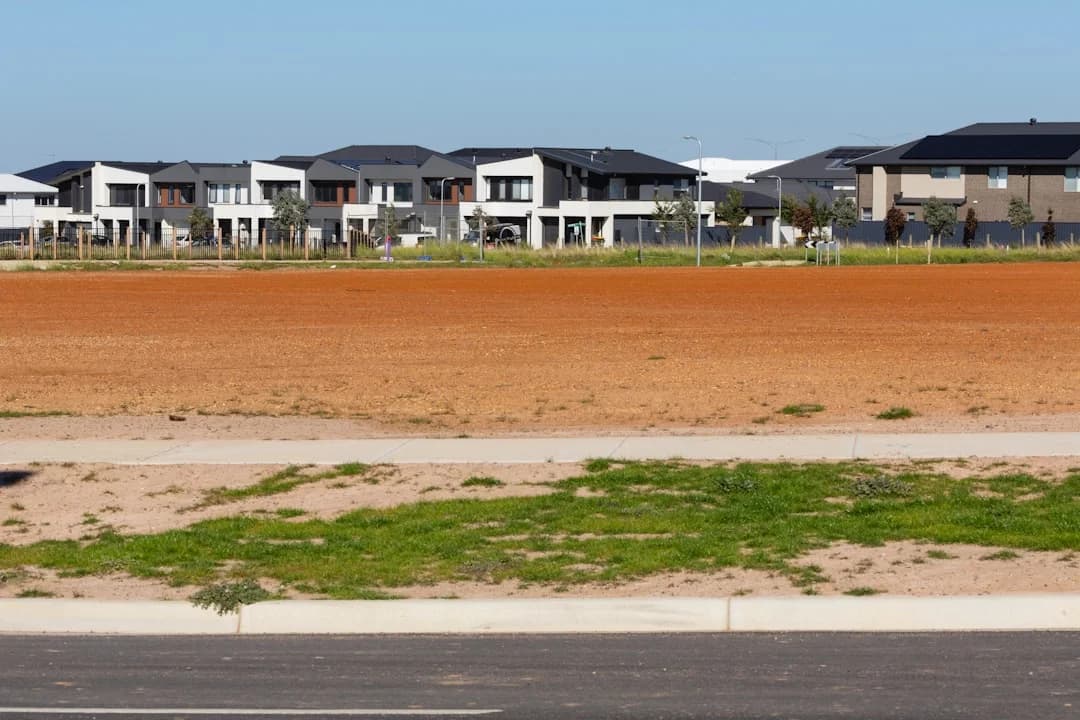
Photo by Troy Mortier on Unsplash
Dueling headlines came out of Albany and City Hall on April 2, 2026, signaling a new phase for Community Land Trusts NYC 2026. New York State Homes and Community Renewal (HCR) announced nearly $2 million in awards through the Community Land Trust Support Program (CLTSP) and the Community Controlled Affordable Housing (CCAH) initiative to stabilize, organize, and expand community-controlled housing across the five boroughs. The focus was explicit: place more affordable homes on community land, strengthen tenant organizing, and accelerate long-term affordability through governance structures that prioritize residents. The press release highlighted 16 CLT-related projects and 10 partnering organizations, with recipients spanning the Bronx, Brooklyn, Manhattan, Queens, and Staten Island. In a state that already houses more than 25 active CLTs, the funding adds a dedicated layer of financial support to scale local efforts and preserve community assets for generations. This moment matters not just for the listed projects but for the broader ecosystem of NYC’s community land trusts, which are increasingly seen as essential tools in the fight against displacement and inequality. The agency quoted RuthAnne Visnauskas, HCR Commissioner, calling CLTs “a critical tool for preserving housing affordability, combating displacement, and giving tenants a voice,” underscoring a broader strategy to embed community control into New York’s housing fabric. (hcr.ny.gov)
Parallel to the funding news, a parallel policy debate took shape in the city’s legislative arena. On January 28, 2026, the NYC Community Land Initiative coalition issued a pointed response after City Council failed to override Mayor Eric Adams’ veto of Int. 902-B, the Community Opportunity to Purchase Act (COPA). The coalition framed COPA as a crucial mechanism to stabilize buildings and preserve long-term affordability by giving CLTs and other mission-driven housing groups a fair shot at acquiring rent-stabilized properties before market actors could. The veto decision was framed as a setback for tenant organizers and housing advocates, while the coalition pledged to reintroduce COPA with renewed support in the same year. The development punctuates the current moment: CLTs are no longer a niche idea but a political centerpiece in NYC’s housing strategy, with organizers insisting that a reworked COPA could unlock a path to scale state and city investments through community governance. (nyccli.org)
The city’s executive branch signaled continued interest in leveraging CLTs as part of a broader housing architecture. In late May 2026, Mayor Mamdani released the “Block by Block: The Housing Plan for a New Era,” a sweeping framework designed to accelerate production, preservation, and resident empowerment. The plan explicitly references community land trusts as stabilizing stewards in certain preservation contexts and highlights a one-stop approach to approvals and project management to unlock faster timelines. Although the plan is not a CLT-specific policy package, its recognition of CLTs as credible, resident-centered trustees of land reinforces a growing alignment between city strategy and CLT objectives. The plan also emphasizes a commitment to tenant protections, durable affordability, and a robust capital program that would benefit CLT-adjacent projects if fully realized. (nyc.gov)
Section 1: What Happened
Funding Round Sparks CLT Growth
The April 2, 2026 funding round from HCR marked a watershed moment for Community Land Trusts NYC 2026. The agency reported nearly $2 million in CLT-related awards designed to stabilize affordability and expand community governance across a broad geographic footprint. The awards were channeled through two intertwined programs: the Community Land Trust Support Program (CLTSP) and Community Controlled Affordable Housing (CCAH). Together, the awards aim to support tenant organizing, pre-development and acquisition activities, structural rehabilitation, and the conversion of distressed properties to community-controlled ownership. The goal is not merely to fund more units but to anchor them to long-term, resident-governed land trusts that can endure shifts in funding cycles and market conditions. The grant tally covers 16 CLT-related projects in five boroughs, with 10 technical assistance providers supporting capacity-building for New York City CLTs. The total beneficiaries include 500 affordable homes that will be stabilized or brought under CLT land in some form, either through direct ownership or through long-term governance arrangements. This marks a sustained investment in the CLT sector at a moment when the city and state are intensifying efforts to preserve affordability where displacement pressures are most acute. The roster of funded organizations includes a mix of neighborhood-driven efforts and established CLTs that have been expanding operations in recent years. For example, the Northern Manhattan Community Land Trust (NMCLT) was listed among the award recipients, with $60,000 allocated to support its ongoing work on permanently affordable homes in upper Manhattan. East Harlem El Barrio Community Land Trust and Western Queens Community Land Trust also received notable program support, reflecting a multi-borough approach to scale and resilience. The State’s press materials also highlighted the broader context: New York State currently hosts more than 25 CLTs and continues to support a growing pipeline of community-backed efforts to stabilize neighborhoods and promote wealth-building through homeownership and community land stewardship. The awards’ emphasis on governance—paired with tangible improvements in housing stock—signals a serious pivot toward resident-led models in NYC’s affordable housing toolbox. The day’s disclosures provide a concrete data point in a broader narrative about how state and city funding can catalyze CLT growth across major urban neighborhoods. The HCR release also included an explicit list of funded projects and units, illustrating the concrete scale of investment and the kinds of outcomes CLTs are expected to deliver. Quote: “Community land trusts are a critical tool for preserving housing affordability, combating displacement, and giving tenants a voice,” said HCR Commissioner RuthAnne Visnauskas. “This infusion will help protect tenants from predatory landlords, blight, and unstable housing.” This quote underscores the exact rationale behind the funding push and situates CLTs within a broader mission of tenant empowerment and long-term stability. (hcr.ny.gov)
Notable Projects and Partners
In the HCR’s funding roster, several projects stood out for their geographic reach and unit counts. For instance, the East Harlem El Barrio Community Land Trust (EHEBCLT) received a $150,000 award to support 140 units, illustrating a significant scale in a neighborhood long identified as a hotspot for affordability challenges. The Interboro CLT, in partnership with Habitat for Humanity NYC and Westchester, received $75,000 to support 83 units in a project that builds on Interboro’s growing national profile as a model for permanently affordable homeownership. Cooper Square CLT is highlighted as an earlier successful example of HPD financing combined with governance and land stewardship on Manhattan’s Lower East Side; a project that has guided subsequent CLT activity in the city and served as a reference point for policymakers and practitioners alike. The NYCPD’s HPD page on CLTs emphasizes that these projects often rely on long-term ground leases (typically 99 years) and regulatory agreements to secure affordability, while the CLT itself maintains governance and oversight of the land beneath the housing. This structure—long-term leases, rent controls or affordability covenants, resident governance—provides a durable framework for keeping neighborhoods affordable beyond the typical 30- to 60-year funding horizons that characterize many conventional affordable housing deals. The HCR release explicitly names a broad set of CLTs that were funded, including the Northern Manhattan Community Land Trust (NMCLT) with a $60,000 award and the East New York Community Land Trust (ENY CLT) with a separate allocation, reflecting a city-wide distribution of funds designed to deepen the reach of CLTs into historically underserved corridors. These projects demonstrate a deliberate strategy to seed CLT activity in neighborhoods that have faced persistent affordability pressures and to diversify the types of housing assets placed on CLTs, from multifamily affordable rentals to owner-occupied dwellings and mixed-use developments. The list of awardees also points to a broader coalition of community development organizations that are now more formally integrated into CLT governance and financing pipelines, signaling potential for cross-neighborhood collaborations and shared training resources. (hcr.ny.gov)
Policy Moves, Governance, and the Regulatory Backdrop
The state-level CLT funding and the city’s policy actions sit within a layered governance framework. HPD’s CLT page outlines the mechanics of how CLTs interact with the city’s regulatory and financing ecosystem: CLTs work with HPD to enforce affordability, provide resident governance, and empower tenants, often through tripartite boards that include residents, community members, and public representatives. The ground-lease structure and long-term affordability terms (e.g., 99-year ground leases) give CLTs tools to enforce affordability over multiple generations, in contrast to more transient ownership models. The HPD framework also emphasizes how CLTs can unlock property tax exemptions and city-subsidy funding, along with a suite of preservation and homeownership financing programs (e.g., HPD’s Open Door program and preservation initiatives). The combination of governance requirements and financing tools is designed to stabilize neighborhoods by tying land ownership to long-term affordability and local decision-making. This is a critical backdrop for understanding why the HCR awards matter: they validate the CLT governance model in a high-stakes housing market and provide funds that can be used to expand capacity, acquire more land, strengthen tenant organizing, and ensure that the land remains permanently accessible for affordable housing. HPD also illustrates examples of CLT projects across the city, including Cooper Square CLT (East Village) and Interboro CLT (built with NYCHA land formerly owned by the Housing Authority), which serve as models for how new projects can scale while preserving the core governance principles. The HPD framework demonstrates that CLTs are not just land-holding entities but dynamic governance structures designed to ensure long-term affordability and resident voice. (nyc.gov)
The COPA dynamic and its implications for 2026
The COPA debate has been a test of political will around community-controlled land and the pace at which the city can assemble lands for CLTs. The January 28, 2026 statement from NYCCLI framed COPA as a tool to prevent displacement and to accelerate community-led acquisitions, arguing that the Council’s veto would slow down a proven mechanism for resident-led preservation. The coalition’s stance signals continued momentum for COPA in NYC’s policy conversations, even as the veto creates a temporary pause. The broader takeaway for Community Land Trusts NYC 2026 is that policy instruments can either unlock or constrain CLT growth, depending on political alignment and the specifics of the legislation. The conversation around COPA is also resonant with the mayor’s housing plan, which explicitly contemplates using land and governance-based approaches to preserve affordability and support tenant protections. In the May 2026 Block by Block transcript, CLTs are framed among the tools that could help preserve affordability in a city that faces structural housing challenges. This intersection of executive policy, legislative action, and community organizing is where the CLT movement in NYC is most likely to push for clarity and scale in the months ahead. (nyccli.org)
Why It Matters
Housing Affordability and Stability
For neighborhoods across NYC, community land trusts promise a way to insulate long-term affordability from the cyclical nature of real estate markets. The HPD framework underscores that CLTs tether affordability to land stewardship, not just to financing terms or rental ceilings. Ground leases and regulatory agreements help ensure that affordability restrictions endure beyond the original development phase, creating a more durable safe-guard against displacement in gentrifying neighborhoods. The funding from the CLTSP and CCAH programs expands the capacity of existing CLTs to acquire land, rehabilitate buildings, and convert property ownership or governance structures in a way that aligns incentives with residents’ long-term interests. The practical upshot is a portfolio of properties that remain affordable for generations, rather than a series of one-off projects whose affordability terms expire over time. (nyc.gov)
Community Governance and Wealth Building
One of the most distinctive features of CLTs is governance. Tripartite boards—comprising residents, community members, and public representatives—are designed to distribute decision-making power and embed local accountability into land stewardship. This governance model is not just about fairness; it’s about building community wealth and resilience. When CLTs own land, residents can participate in governance, shaping not only housing policy in their blocks but also related services and community spaces. The HCR funding roster, which includes organizations like NMCLT and ENY CLT, demonstrates a broad and deliberate effort to connect land stewardship with local leadership, which, in turn, supports broader wealth-building and community empowerment. The constructive point here is that Community Land Trusts NYC 2026 represents more than housing units; it reflects a governance experiment with potential ripple effects for neighborhood economics, civic engagement, and intergenerational opportunity. (hcr.ny.gov)
Policy Context and City Investment
Policy signals from City Hall and the state legislature indicate a sustained interest in CLTs as part of a larger portfolio of preservation and anti-displacement tools. The mayor’s Block by Block housing plan highlights the city’s willingness to rethink how land and housing projects proceed—from land use processes to project management—potentially accelerating the delivery of affordable homes with community controls. COPA’s fate remains an important stress test for the viability of community-led acquisitions, and the coalition’s commitment to reintroduce COPA shows an ongoing push to align legislative frameworks with the city’s CLT ambitions. The combination of state funding (HCR) and city-level policy signals helps explain why 2026 is shaping up as a pivotal year for the CLT sector in NYC. The policy environment matters because it shapes which neighborhoods receive investment first, how quickly properties can be placed under CLT stewardship, and how long-term affordability terms are embedded into city housing pipelines. (nyc.gov)
Section 3: What’s Next
Upcoming Milestones and Programs

Photo by Jermaine Ee on Unsplash
Looking ahead, the most consequential near-term milestones for Community Land Trusts NYC 2026 involve continued funding cycles, policy re-introductions, and the expansion of CLT pilots into additional neighborhoods. State-level funding through HCR, which is already showing a commitment to more than 25 CLTs statewide, provides a blueprint for how NYC can scale CLTs with operational capacity and governance oversight. The CLTSP and CCAH funds are designed to cover planning, acquisition, rehabilitation, and governance work, which means that successful 2026 rounds could produce a pipeline of CLT-led acquisitions and community-led governance structures across multiple neighborhoods. In addition to state funding, local government initiatives that integrate CLTs into regulatory agreements and ground leases—tools highlighted by HPD—will be crucial for maintaining affordability in the long run. The NMCLT, ENY CLT, and East Harlem CLT examples show that there is a broad appetite for CLT-based solutions in both upper Manhattan and outer-borough neighborhoods. The ongoing activity of CLTs in communities like East New York—as reflected in ENY CLT’s and NMCLT’s local engagement—signals a momentum that city planners and housing advocates will likely seek to sustain in 2026 and beyond. Upcoming events and milestones, such as CLT trainings and capacity-building workshops hosted by HPD, will provide opportunities for new organizations to join the movement and for existing CLTs to scale their governance and land-holding capacity. The ongoing alignment between state grants and city governance instruments could help ensure that CLTs become a recognizable, scalable component of NYC’s affordable housing toolkit. (nyc.gov)
Watch Points for 2026–2027
Several key watchpoints will determine how quickly and effectively Community Land Trusts NYC 2026 translates into durable, neighborhood-wide impact. First, COPA’s legislative trajectory remains a bellwether for the pace at which community land trusts can gain ground in real estate acquisitions. The January 2026 veto, followed by public advocacy and reintroduction efforts, indicates that 2026 will feature renewed advocacy and negotiation around CLT-enabled acquisitions. Second, the distribution and deployment of CLTSP and CCAH funds across the state will shape the capacity of NYC CLTs to expand their land bases, with awards already demonstrating a broad borough reach. A third watchpoint is the growth of CLT-led projects on publicly owned land, including city and state parcels, where HPD and other agencies are already testing new models of collaboration. The ENY CLT and NMCLT examples signal a trend toward more formalized partnerships that could reduce development timelines if paired with strong governance. Finally, the success of CLTs in delivering affordable units that remain permanently affordable will hinge on the ability of CLTs to navigate financing cycles, regulatory requirements, and ongoing community organizing to sustain momentum beyond individual projects. In short, 2026 could be a year when the CLT sector moves from a growing set of pilots to a cohesive, scaled strategy, thanks to funding, policy alignment, and the continued participation of community-led organizations. (nyccli.org)
Closing
The ascent of Community Land Trusts NYC 2026 reflects a city that recognizes land as a long-term public asset rather than a commodity. With state funding in place, a rising chorus of policy voices supporting community-led stewardship, and a mayoral plan that gestures toward preservation alongside production, the CLT movement in New York City is positioned to expand in both scale and sophistication. Yet the path forward remains contingent on sustained political will, robust capacity within CLTs to manage governance and land acquisition, and the ability to translate policy into action on the ground. As neighborhood advocates, developers, and residents watch for COPA’s next iteration, the coming months will reveal whether NYC can turn its ambition for permanent affordability into a replicable, citywide model. For readers seeking to stay informed, updates from HPD’s CLT initiatives, the NYS HCR funding announcements, and ongoing COPA-related coverage will be essential touchpoints as Community Land Trusts NYC 2026 continues to unfold. (nyc.gov)