Chinatown Redevelopment 2026: Public Spaces Reshape NYC

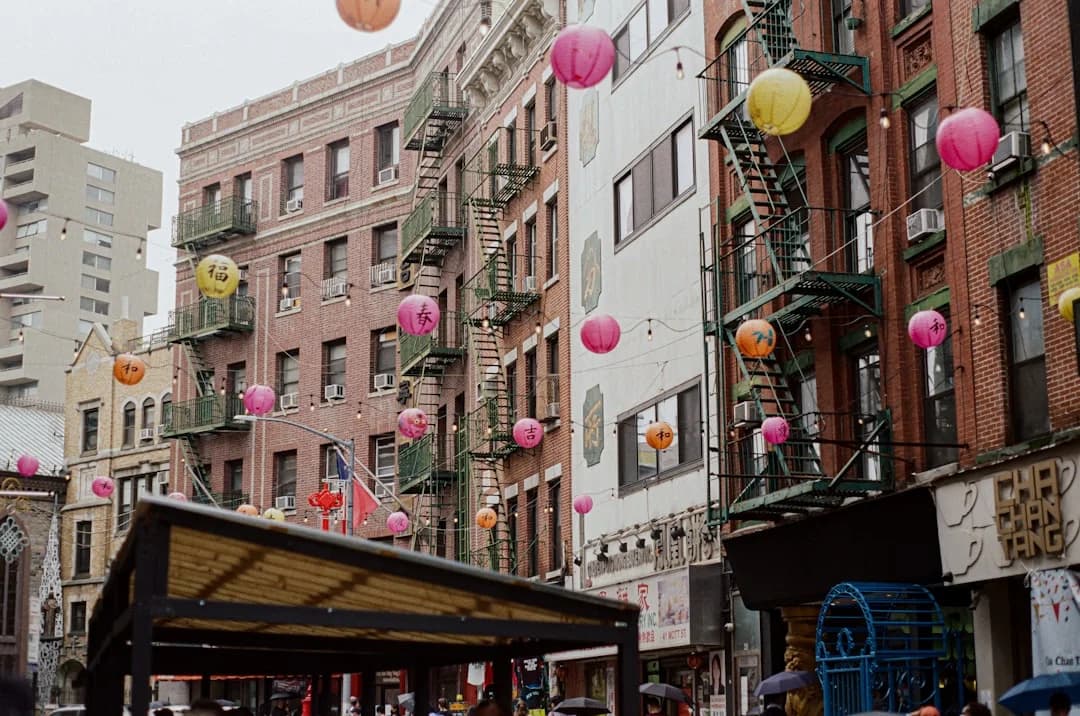
Photo by Ruben Abreu on Unsplash
Chinatown redevelopment 2026 is reshaping Manhattan’s oldest enclave through a coordinated mix of public-space upgrades, new business-support infrastructure, and planned transit-oriented renewal. In 2024, city and state leaders unveiled a broad agenda designed to improve walkability, safety, and vitality in a neighborhood that has long served as a gateway for immigrant communities and a magnet for visitors. The effort brings together capital from city and state programs, community-led planning, and private philanthropy to bolster public space, small businesses, and cultural institutions as core engines of neighborhood resilience. This year, observers will watch how these projects unfold in real time, with Manhattan’s Chinatown intensively covered by civic and business stakeholders and monitored by local residents who stand to feel the direct impact of upgrades to Kimlau Square, Park Row, and nearby corridors. The Chinatown redevelopment 2026 story is not a single project but a portfolio of initiatives that, taken together, aim to reimagine traffic flow, expand open space, and stitch together a more resilient local economy. (nyc.gov)
The backbone of this transformation rests on a multi-agency push known as Chinatown Connections, a coordinated city-state investment announced in February 2024 that earmarks a total budget of $56 million for public-space improvements in Chinatown, with roughly $44.3 million from city funds and $11.5 million from New York State’s Downtown Revitalization Initiative (DRI). The plan foregrounds safer, more pedestrian-friendly streets, a redesigned Park Row connection to the Brooklyn Bridge, and a newly envisioned Chinatown Welcome Gateway that honors the neighborhood’s cultural heritage. Public engagement is a cornerstone of the effort, with a community working group and a schedule for workshops to shape design decisions as plans move toward physical construction. This initiative remains a central driver of Chinatown redevelopment 2026, setting a framework for future phases of the public realm investments in the neighborhood. (nyc.gov)
Beyond the public realm project, the state’s DRI Round 5 awards allocated substantial capital to dozens of specific improvements across Chinatown, including Kimlau Square renovations, extended Park Row connectivity, murals and light installations, health and wellness facilities, and institutional spaces designed to support small businesses and cultural programming. In December 2020, the governor announced eleven transformational projects for Chinatown as part of a $20 million Round 5 DRI grant, a package that is intended to lift activity, improve streetscapes, and diversify the neighborhood’s offerings to residents and visitors alike. The package includes: rehabilitation of Kimlau Square, Park Row beautification, expanded public-space corridors, mural programs, and a cultural-welcome center, along with facilities to enhance health, childcare, and business infrastructure. The ensemble of projects is intended to deepen Chinatown’s appeal as a place to live, work, and visit, while reinforcing the neighborhood’s resilience in the wake of the pandemic. (governor.ny.gov)
Meanwhile, Welcome to Chinatown has pushed forward with a long-planned Small Business Innovation Hub at 115 Bowery, a cornerstone component of the neighborhood’s ecosystem to accelerate existing businesses and incubate new ones. The Hub entered a construction phase in 2024 and was slated to re-open in fall 2024, following a successful pilot and a fundraising drive to support programming and workspace. The project’s momentum carries into 2026, where the Hub is highlighted as a live example of how the Chinatown redevelopment 2026 agenda translates into concrete, on-the-ground resources for entrepreneurs, with ongoing programming and community events anchored by a data-informed approach. The Hub’s work has been supported by regional economic development actors, philanthropy, and corporate partners, underscoring the public-private dimension of Chinatown’s renewal. (welcometochinatown.com)
In parallel, the Chinatown District Management Association (Chinatown BID) continues to play a central role in coordinating events, advocacy, and day-to-day improvements within the district. The BID’s 2026 Annual Meeting, scheduled for January 22, 2026, focused on reporting the prior year’s work, outlining future plans, and engaging the community in governance and financial oversight. This ongoing activity signals the sustained, hands-on dimension of Chinatown redevelopment 2026, where local stakeholders help translate broad planning into practical improvements and opportunities for residents and business owners. (chinatown.nyc)
Section 1: What Happened
Chinatown Connections: A Public Realm Overhaul
Chinatown Connections represents a flagship component of Chinatown redevelopment 2026, pairing city and state resources to transform public space at critical urban intersections and gateways. The initiative combines city capital funding with New York State’s Downtown Revitalization Initiative, delivering a total project budget of $56 million to reimagine Park Row, Chatham/Kimlau Square, and adjacent spaces. The project is designed to shorten pedestrian crossings, expand public space, simplify intersections, and establish direct cycling connections, with a broader goal of making Chinatown safer and more welcoming for residents and visitors alike. The design and procurement responsibilities fall to NYCEDC, in coordination with NYC Parks, DOT, and DCLA, reflecting a cross-agency approach to a complex urban improvement program. The program also contemplates a Chinatown Welcome Gateway to provide a recognizable, culturally resonant entrance to Chinatown, linking heritage to contemporary urban life. Community engagement is built into the process, with a standing working group to guide milestones across an 18-month engagement window. These elements together anchor Chinatown redevelopment 2026 as a multi-phase effort with both immediate and longer-term impact. (nyc.gov)
Scope, Funding, and Key Milestones
The budget structure for Chinatown Connections highlights how the city-state partnership translates into tangible improvements. The plan’s funding profile shows $44.3 million in city capital and $11.5 million from the state’s DRI awards, for a total of $56 million dedicated to the broader park-and-square renovation and related public realm enhancements. These investments are expected to deliver new pedestrian spaces, safer intersections, and a gateway that celebrates cultural identity while improving legibility and visibility for Chinatown’s businesses. The project’s scope spans both immediate pedestrian safety improvements and longer-term streetscape enhancements that will influence how people move through the district and how they experience it from the Brooklyn Bridge approach to Canal Street. The plan’s early months emphasize public engagement and a phased approach to design, which will shape construction timelines and funding allocations as the project progresses. (nyc.gov)
Gateway, Park Row, and Public Space Improvements
A central feature of Chinatown Connections is the introduction of a Chinatown Welcome Gateway and a reimagined Park Row corridor that better connects the neighborhood to the Brooklyn Bridge and the surrounding downtown environment. The gateway is intended to be a cultural beacon that anchors Chinatown’s entry while accommodating new public spaces, dynamic programming, and wayfinding that helps residents and visitors navigate the area more easily. Park Row improvements are envisioned to create a more pedestrian- and cyclist-friendly link between Lower Manhattan and Chinatown, with a pedestrian realm that prioritizes safety and comfort. The design process will consider traffic studies and community input to determine whether Park Row remains closed to private cars or reopens under a redesigned configuration. This work is part of the broader public realm push associated with Chinatown redevelopment 2026 and is closely watched by local stakeholders for its potential to reshape movement patterns and storefront foot traffic. (nyc.gov)
Engagement and Community Leadership
The public-engagement component of Chinatown Connections is a deliberate element of the plan, reflecting a commitment to community-driven design. A community working group will guide design milestones, and public workshops will continue throughout the early stages of the project. The goal is to ensure that the final configuration of Kimlau Square, Park Row, and the gateway reflects local priorities and cultural considerations while aligning with city planning standards and safety objectives. The emphasis on engagement is reinforced by quotes from senior city officials and transportation authorities who highlight the importance of community input in shaping the built environment in Manhattan’s Chinatown. (nyc.gov)
Downtown Revitalization Initiative Round 5: Transformational Projects for Chinatown
Chinatown redevelopment 2026 is also defined by the DRI’s Round 5 awards, which bring a targeted set of capital investments to strengthen public space, culture, health, and small-business capacity. In this round, Chinatown received a $20 million DRI award, a decision that underscores New York State’s commitment to supporting recovery, resilience, and tourism in this historic neighborhood. The projects span a mix of streetscape improvements, cultural programming, and community-serving facilities designed to increase foot traffic, support artists and restaurateurs, and expand access to essential services. The funding package includes measures to renovate Kimlau Square, beautify Park Row, upgrade Sara D. Roosevelt Park, install murals and light-projection art, expand lanterns, and create new health and wellness facilities, as well as support for childcare and small-business upgrades. The DRI program is designed to couple planning with catalytic, on-the-ground results, accelerating Chinatown’s recovery and long-term vitality. The explicit focus on public space, cultural amenities, and small-business support is a hallmark of Chinatown redevelopment 2026 in action. (governor.ny.gov)

A Blueprint for Public Realm and Cultural Destinations
The Round 5 projects place a strong emphasis on public-facing, place-making investments that broaden Chinatown’s appeal as both a neighborhood for everyday life and a destination for cultural experiences. Renovating Kimlau Square is aimed at expanding usable space for events and gatherings, while Park Row enhancements seek to improve accessibility and connectivity for pedestrians and cyclists—an important consideration given the district’s position as a gateway to Lower Manhattan. The murals and light-projection program, along with the lanterns expansion, is designed to create a vibrant, safe, and photogenic streetscape that invites longer visits and supports small businesses along the corridors. The health and wellness center, childcare improvements, and small-business grants reflect a holistic approach to community vitality, addressing not just commerce but also the social infrastructure that underpins a thriving urban district. These elements collectively illuminate why Chinatown redevelopment 2026 matters for residents, workers, and visitors alike. (governor.ny.gov)
Welcome Arch, Cultural Center, and Culinary Investments
In addition to streetscape upgrades, the Round 5 slate contemplates a Chinatown Welcome Arch or Gateway and the establishment of a Chinatown Cultural Welcome Center and culinary-arts facilities. These elements are intended to create recognizable anchors for the district that celebrate its heritage while supporting contemporary economic activity. The gateway project, together with culinary-arts capacity and the cultural-welcome center, signals a broader strategy to position Chinatown as a culturally rich, economically vibrant neighborhood whose identity helps attract visitors and sustain local businesses. The planned investments underscore a deliberate alignment between place-making and economic development in Chinatown redevelopment 2026. (governor.ny.gov)
The Welcome Arch and Cultural Economy
Chinatown’s Round 5 plan includes a dedicated investment to establish a Chinatown Welcome Arch and a Cultural Welcome Center, designed to provide a ceremonial entry point and a space for intergenerational knowledge transfer around food, art, and culture. These cultural-destination investments are intended to complement more utilitarian public realm improvements, creating a balanced experience that supports both residents and international visitors. The multi-part approach—combining public-space enhancements with cultural programming and workforce development—illustrates a holistic model for neighborhood renewal, one that is attentive to the social and economic well-being of Chinatown’s communities. (governor.ny.gov)
Welcome to Chinatown Small Business Innovation Hub: A Center for Entrepreneurs
Conceived by the Welcome to Chinatown nonprofit, the Small Business Innovation Hub at 115 Bowery represents a practical manifestation of Chinatown redevelopment 2026 aimed at strengthening the neighborhood’s entrepreneurial backbone. The Hub hosts business-support services, community events, and coworking space in a flexible, reconfigurable environment that leverages a cart-inspired module system to accommodate evolving programming. The initiative began with a soft-open period in 2023 and 2024, followed by construction activity in 2024 and a planned broader re-opening and expanded programming in the fall. The Hub’s existence and continued evolution are a clear example of how data-driven, community-informed planning translates into tangible resources for local businesses, artists, and residents, a pattern that mirrors the broader redevelopment logic playing out across Chinatown in 2026. The Hub’s development has drawn support from major regional partners and corporations, illustrating how private capital and public funding converge to sustain the neighborhood’s economic ecosystem. (welcometochinatown.com)
The Hub as a Model for Post-Pandemic Recovery
The Small Business Innovation Hub is described as a first-of-its-kind space dedicated to small-business acceleration and community-building in Manhattan’s Chinatown. Its modular, reconfigurable design—employing dim-sum-cart-inspired display elements and adaptable spaces—demonstrates an approach tailored to the neighborhood’s limited space and the need for flexible programming. This design strategy, highlighted in design publications and Showcased by Welcome to Chinatown’s press materials, underscores how Chinatown redevelopment 2026 integrates architectural experimentation with practical, day-to-day business support. The Hub’s ongoing programming and community-centered model illustrate how data-informed planning and collaborative design can create durable economic resilience in a neighborhood that has faced significant disruptions in recent years. (interiordesign.net)
The Chinatown BID and Community Governance in 2026
Community governance and local leadership continue to shape how Chinatown redevelopment 2026 unfolds on the ground. The Chinatown BID’s 2026 Annual Meeting, held on January 22, 2026, provided a snapshot of how residents, business owners, and public-minded organizations are coordinating to translate city-state investments into practical improvements. The meeting’s agenda—presentation of work completed over the prior year, discussion of future plans, and board elections—illustrates a governance model where local stakeholders actively participate in prioritizing capital improvements, programming, and district branding. The BID’s ongoing activity reinforces the importance of community stewardship in ensuring that Chinatown redevelopment 2026 aligns with neighborhood needs and values while remaining responsive to broader city and state policy directions. (chinatown.nyc)

Section 2: Why It Matters
Economic vitality and foot traffic
Chinatown redevelopment 2026 is anchored in a belief that well-designed public spaces and robust business-support ecosystems can restore and grow foot traffic, which has long been a central challenge for the neighborhood. The Round 5 DRI package explicitly targets public-space enhancements and business-support infrastructure, with projects like Kimlau Square renovations and Park Row connectivity designed to create a more hospitable environment for pedestrians, families, and workers. By expanding space for events, markets, and cultural programming, the initiatives aim to boost dwell times and encourage longer visits, which in turn can increase sales for local shops and restaurants. The stated objective across DRI and Chinatown Connections is to catalyze a virtuous cycle: safer streets and more welcoming spaces attract more visitors, which strengthens small businesses and rental incomes, creating a more resilient local economy. This broader economic lens is a central reason for the sustained attention to Chinatown redevelopment 2026 from civic, business, and philanthropic audiences. (governor.ny.gov)
Public safety and livability
A recurring theme in the Chinatown redevelopment 2026 narrative is safety and livability. The planned Park Row enhancements and Kimlau Square redesign are specifically framed as traffic-safety and pedestrian-access improvements. City officials describe the Park Row connection as a critical pedestrian corridor linking Lower Manhattan, Chinatown, and the Brooklyn Bridge area, with safety upgrades, improved signage, and better pedestrian flow. The proposals also contemplate the potential closure of Park Row to private vehicles or a redesigned configuration to reduce conflicts between drivers, cyclists, and pedestrians. These changes are intended not only to reduce crash risk but also to create a more inviting street life and a more legible urban landscape for residents and visitors. Public realm upgrades are seen as infrastructure that underpins neighborhood vitality, while safety-focused improvements are expected to bolster daily commerce and community life. (nyc.gov)

Cultural heritage, tourism, and place identity
The Chinatown Welcome Gateway and the inclusion of mural programs, light installations, and cultural centers speak to a broader strategy to weave cultural heritage into the fabric of economic renewal. By creating distinguishable symbols—such as a gateway arch and a cultural-welcome center—Chinatown redevelopment 2026 seeks to transform perception and experience, reinforcing Chinatown’s identity as a living, evolving cultural district while supporting local businesses and cultural institutions. In addition, the Round 5 projects emphasize culinary arts training and a cultural center, which are designed to attract visitors while equipping residents with new skills and opportunities. The intent is not merely to attract tourism but to foster a vibrant, sustainable local culture that sustains small businesses and anchors the neighborhood amid ongoing urban change. (governor.ny.gov)
Equity, housing, and long-range planning
A critical thread in Chinatown redevelopment 2026 is the tension between development pressure and neighborhood affordability. The Chinatown Working Group Plan (CWG Plan) is a community-led rezoning proposal that aims to protect Chinatown and the surrounding Lower East Side from displacement by setting rules on land use, height limits, affordable-housing requirements, and management of hotel growth. The CWG Plan emphasizes that thoughtful land-use controls are essential to preserving affordability for residents and small businesses in the face of external market pressures. While not a formal citywide zoning change, the CWG Plan represents a key blueprint that informs broader discussions about how Chinatown can grow while maintaining its essential character and affordability. This context helps readers understand why Chinatown redevelopment 2026 is as much about policy guardrails as it is about public spaces and infrastructure. (chinatownworkinggroup.com)
Section 3: What’s Next
Timeline and next steps to watch (2026–2029)
Looking ahead, Chinatown redevelopment 2026 involves a phased progression of construction, design updates, and programmatic activities. The Chinatown Connections scope anticipates major park and square interventions to proceed in a multi-year timeline, with engagement, design, and procurement guiding the next phases. While some interim improvements may roll out earlier or in parallel with other initiatives, the plan anticipates a longer-term buildout spanning 2027–2029 for certain street-improvement elements and related public spaces. The public realm work—park enhancements, gateway installation, and a more pedestrian-friendly Park Row—will be calibrated to community input and capital budgets, with ongoing coordination among NYCEDC, DOT, Parks, and DCLA to align design with safety and accessibility standards. Observers will be watching for milestones such as updated traffic studies, gateway design selections, and the progression of anchor projects within the DRI Round 5 portfolio. (nyc.gov)
Stakeholder roles and oversight
The ongoing realization of Chinatown redevelopment 2026 hinges on effective collaboration among government agencies, community organizations, and private partners. City and state leadership—tied to Chinatown Connections and the DRI—will continue to provide funding, policy alignment, and project governance, while community organizations like Welcome to Chinatown and the Chinatown BID will drive programmatic and event-level decisions, ensuring that the neighborhood’s needs, preferences, and cultural identity are reflected in the final outcomes. The combination of public funding, private philanthropy, and community leadership is intentionally designed to create durable momentum for the district’s recovery and growth, while simultaneously safeguarding affordability and access. The January 2026 Chinatown BID meeting and ongoing working groups illustrate how governance structures are adapting to the 2026 renewal cycle, keeping the neighborhood’s voice at the center of implementation. (chinatown.nyc)
What to watch in the near term
- Public-engagement milestones: The Chinatown Connections process includes ongoing workshops and stakeholder meetings to refine design concepts and align them with community priorities. These sessions will shape the final layouts for Kimlau Square, Park Row, and related public spaces. (nyc.gov)
- Gateway and gateway design decisions: The Chinatown Welcome Gateway’s siting, design language, and integration with surrounding streets will be key signals of the project’s cultural ambitions and its ability to attract visitors while stabilizing local business investment. (nyc.gov)
- DRI-funded capital projects: The Kimlau Square renovation, Park Row beautification, and murals/light-projection programs are among the most visible elements of the Round 5 package. Tracking procurement milestones, ground-breakings, and completion dates will provide a readable lens on progress. (governor.ny.gov)
- Hub programming and expansion: The Small Business Innovation Hub’s programming and partnerships will offer a front-row view into how Chinatown redevelopment 2026 translates into practical support for small businesses, which is critical to sustaining the district’s vitality. (welcometochinatown.com)
- Community governance: The Chinatown BID’s ongoing activities, including annual meetings and programming, will be a barometer for how well the neighborhood’s needs are being reflected in decision-making and resource allocation. (chinatown.nyc)
Closing
Chinatown redevelopment 2026 represents more than a collection of construction projects; it is a concerted effort to re-envision a historic urban district through a blend of public-space improvements, cultural investments, and entrepreneurial support. The combination of Chinatown Connections, DRI-funded projects, the Welcome Arch and cultural centers, and the Small Business Innovation Hub provides a multi-layered approach to urban renewal that prioritizes safety, accessibility, and local economic resilience. For residents, workers, and small-business owners, the near-term changes will be visible in narrower, more navigable streets, brighter, engaging streetscapes, and a more robust ecosystem of services and events. For visitors and the broader city, Chinatown redevelopment 2026 offers a clearer gateway into a neighborhood with deep cultural roots and a dynamic, evolving economy. As plans advance, the most reliable updates will continue to come from official channels such as the Chinatown Connections program, the NYCREDC Round 5 announcements, Welcome to Chinatown’s Hub communications, and the Chinatown BID’s public-facing updates. (nyc.gov)
Readers who want the latest developments should monitor official announcements and community meetings, including the Chinatown BID calendar and NYCEDC’s project notices. The 2026 landscape of Chinatown redevelopment will continue to unfold through 2026 and beyond, with periodic milestones that reflect the neighborhood’s lived reality, its history, and its future as a vibrant, inclusive, and economically resilient part of New York City.