Broadway Immersive Theater Trends 2026 NYC: Data Update
Discover Broadway's immersive theater trends for 2026 in NYC with an in-depth, data-driven analysis of tech-driven shows and market shifts.
 By
By 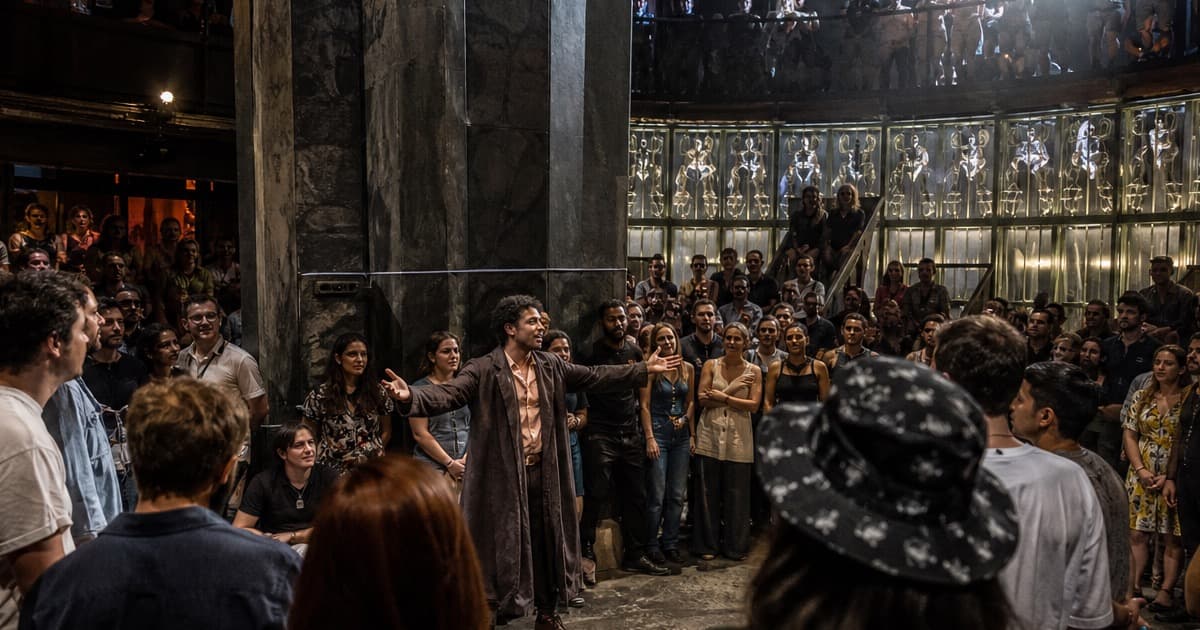
The Broadway immersive theater trends 2026 NYC landscape is expanding rapidly, with New York’s theatre ecosystem embracing high-tech, participatory experiences that blur the lines between audience and stage. In 2026, Manhattan venues—from traditional Broadway houses to Off-Broadway hubs and new experiential spaces—are rolling out immersive formats that prioritize interaction, multi-sensory design, and audience mobility. The latest developments signal a shift toward event-like productions and venue-driven storytelling that can attract both seasoned theatregoers and curious newcomers. Edge NYC’s summer 2026 refresh, the ongoing Masquerade Phantom reimagining, and a string of immersive shows across Broadway and Off-Broadway are collectively reshaping how audiences engage with live performance in NYC. These movements matter for producers, investors, audiences, and policymakers who track theatre economics, technology adoption, and consumer demand in the experiential economy. (edgenyc.com)
Edge NYC is leading a notable wave of 2026 immersive initiatives in Manhattan. The venue at Hudson Yards announced a major indoor refresh opening on June 11, 2026, featuring seven new multi-sensory environments designed to sit alongside its renowned outdoor sky deck. The seven installations—Prism, Pulse, Skyrise, Reflections, Kaleidoscope, Crystal Cave, and Infinite City—are described as scalable, weatherproof experiences that reimagine New York City through light, color, and sound. This marks a significant expansion of the city’s immersive portfolio, moving beyond single-room experiences into a curated ecosystem that can operate year-round and draw visitors regardless of weather. The project also includes a Skyline Bar & Café by Tao Group Hospitality and other hospitality extensions, signaling a broader hospitality-arts strategy for Hudson Yards. The opening date is confirmed as June 11, 2026, with tickets currently on sale. (edgenyc.com)
Masquerade, the immersive off-Broadway reimagining of The Phantom of the Opera, continues to extend its run in 2026, underscoring demand for up-close, site-responsive theatre experiences. Opened at 218 West 57th Street in 2025, Masquerade now operates with six groups per performance, delivering concurrent, tightly synchronized pulses across six spaces per night. The show has entered its fifth extension and is scheduled to run through September 6, 2026. This format—multi-room navigation, close audience proximity, and varied path storytelling—highlights a broader shift in how classical properties can be reinterpreted for immersive audiences. In a recent behind-the-scenes feature, production designers described the intricate, multi-floor staging and the precise timing required to keep six simultaneous groups in sync, illustrating the technical ambition behind today’s immersive Broadway offshoots. (broadway.com)
The NYC immersive theatre scene is now anchored by a mix of established productions and new platforms. Immersive and interactive offerings—from Masquerade’s Phantom reimagining to stage adaptations and offbeat experiences—are increasingly visible from Broadway to Off-Broadway and into new venue formats. A round-up published by Broadway Direct in April 2026 highlights Masquerade and several other immersive titles at venues ranging from The Overlook Bar to New World Stages, including interactive acts like Burnout Paradise, Speakeasy Magick, The Gazillion Bubble Show, and The 25th Annual Putnam County Spelling Bee, among others. The breadth of this list demonstrates a growing appetite for participatory formats across a spectrum of genres, not just traditional musical theatre. (broadwaydirect.com)
Section 1: What Happened
New immersive venues debuting in 2026
The most conspicuous development in the 2026 NYC theatre landscape is the launch of Edge NYC’s seven-installation indoor journey at Hudson Yards. The experience runs concurrently with Edge’s iconic outdoor skyline deck, creating a hybrid destination that blends architecture, light, and sound to tell city-inspired narratives. This marks a notable expansion from a single observation-deck concept to a full, multi-space immersive itinerary, designed to operate year-round and attract city visitors as well as locals seeking destination experiences. Edge’s May 11, 2026 press release outlined the seven new installations and the project’s dates, positioning Edge as a marquee example of how venues can repurpose height and view into a comprehensive immersive program. Opening date: June 11, 2026. Location: 30 Hudson Yards, New York City. The lineup includes Prism, Pulse, Skyrise, Reflections, Kaleidoscope, Crystal Cave, and Infinite City, with additional hospitality offerings and exclusive experiences for Mastercard Priceless members. (edgenyc.com)
Key productions and formats driving the trend
Masquerade stands out as a flagship example of NYC’s immersive evolution. Since opening in 2025, it has embraced a multi-level, six-group format that places audiences in intimate proximity to the action, with roughly 60 attendees per pulse and six concurrent experiences per show. The design emphasizes a non-traditional theatre flow, where audience position, timing, and path choice influence what each guest witnesses. Masquerade remains active in 2026, with extensions through September 6, 2026, underscoring demand for episodic, technically sophisticated experiences that reframe a familiar title for a new era of theatregoing. Industry coverage notes the production’s high-concept design and its alignment with the Phantom canon, while highlighting the logistical precision required to coordinate six simultaneous groups across multiple floors. Andrew Lloyd Webber’s team has publicly praised the production’s staging as a technical achievement, further validating immersive approaches to classic works. (broadway.com)
Other immersive options within the NYC ecosystem illustrate the breadth of formats now in play. A Broadway Direct roundup from April 2026 catalogs titles that push audience participation beyond observation, including The Gazillion Bubble Show at New World Stages, The 25th Annual Putnam County Spelling Bee with onstage volunteer participation, and Just In Time, a cabaret-style musical that creates a nightclub vibe with a live band and close audience proximity. The list also features CATS: The Jellicle Ball, a ballroom-infused reinterpretation reimagining a familiar property through performance spaces and audience engagement. These entries demonstrate that immersive design is not a single “one format fits all” approach but a spectrum that ranges from high-tech multi-room experiences to intimate, participatory performances. (broadwaydirect.com)
Timeline of announcements and milestones
- September 2025: Masquerade opens Off-Broadway at 218 West 57th Street, introducing a new immersive take on The Phantom of the Opera and setting an early benchmark for site-specific storytelling in NYC. The show runs with six groups per night, each group consisting of around 60 guests. (broadway.com)
- March 2026: Broadway.com publishes a feature detailing Masquerade’s design and its ongoing extensions through 2026, highlighting the show’s six-room, multi-path format and the technical innovations enabling synchronized, multi-group experiences. (broadway.com)
- April 2026: Broadway Direct releases a comprehensive NYC immersive guide, showcasing Masquerade alongside additional interactive shows like Burnout Paradise and Speakeasy Magick, illustrating the market’s breadth and the variety of audience-participation models. (broadwaydirect.com)
- May 2026: Edge NYC announces its summer 2026 refresh, detailing seven new indoor installations and the relaunch of an expanded immersive journey at Hudson Yards, with openings slated for June 11, 2026. This marks a strategic push to convert observation-curve experiences into cumulative, multi-installation journeys. (edgenyc.com)
- June 2026 and beyond: The immersive theatre narrative in NYC continues to unfold with ongoing extensions for Masquerade through September 6, 2026, and new immersive venues like Edge NYC entering the market, signaling a sustained push toward experiential, technology-driven theatre. (particle.news)
Section 2: Why It Matters
Market and audience implications for NYC
The expansion of immersive formats in 2026 reflects broader market dynamics affecting NYC theatre. Immersive productions appeal to audiences seeking unique, shareable experiences that blend live performance with interactive environments. The Edge NYC refresh exemplifies this shift: a venue traditionally known for a skyline view transforms into a year-round, multi-installation destination that seats visitors for longer, more varied visits across seven environments. This approach aligns with the “experience economy” trend, where value is increasingly tied to personalization, interactivity, and social engagement. Industry observers note that immersive concepts can serve as counterweights to the high-cost, high-risk dynamics of large-scale traditional productions by offering modular experiences that attract diverse ticket buyers. (edgenyc.com)
Masquerade’s ongoing success underscores the viability of site-specific, tech-forward reinterpretations of classic properties. The production’s six-group format creates a controlled flow of guests through a building that serves as a dynamic stage, enabling precise sound, lighting, and projection cues while maintaining safe, intimate audience distances. The show’s extension through September 6, 2026 demonstrates sustained demand for this format, suggesting that audiences are not only receptive to immersive experiences but actively seek them out as a core part of NYC theatre-going. The immersive Phantom approach also illustrates how established brands can be refreshed for contemporary audiences without abandoning their legacy appeal. (broadway.com)
Technology, design, and production implications
The tech backbone of NYC’s immersive trend is becoming a differentiator for productions and venues. Masquerade’s six-pulse architecture relies on distributed audio, multi-floor scenography, and synchronized, real-time control to coordinate multiple guest groups. A behind-the-scenes feature highlights the scale of technical coordination, including automated chandeliers, multi-room routing, and precise millisecond-level timing to maintain narrative coherence across levels. The Phantom reimagining demonstrates how advanced lighting, sound, and mechanical systems can translate a beloved stage story into a multi-dimensional experience that remains faithful to the source while offering fresh pathways for discovery. (broadway.com)
Edge NYC’s seven-installation plan leverages collaboration with global experiential design studios to realize prisms of perception, from rotating kaleidoscopes to mirror forests and light-driven cityscapes. The project’s collaboration with Moment Factory and other studios underscores a growing industry pattern: cross-disciplinary teams combining architecture, media art, software, and performance to craft immersive environments that scale beyond traditional theatre spaces. The tech-forward approach—interactive light fields, motion-responsive cues, and architectural choreography—demonstrates how technology is becoming a central storytelling partner rather than a decorative add-on. This shift has implications for training, staffing, and capital investment in NYC’s theatre ecosystem. (edgenyc.com)
Industry observers are watching closely for how immersive strategies affect long-term revenue, attendance patterns, and show longevity. In 2026, immersive works are increasingly positioned as event-like propositions that can drive longer dwell times, ancillary revenue (food, beverage, merchandising), and cross-venue promotions. Masquerade’s extensions suggest a model where demand remains high even when ticket prices are elevated, while Edge NYC’s hospitality integrations hint at a broader ecosystem approach to generating value beyond the performance itself. Analysts and practitioners emphasize that success depends on balancing artistic ambition with operational scalability and guest experience design that is accessible to a broad audience, including first-time theatregoers who might be drawn in by a visually arresting, highly social experience. (broadway.com)
Who is affected and what this means for NYC’s cultural landscape
The immersive boom affects a wide set of stakeholders: audiences, producers, venue operators, designers, and funders. For audiences, immersive formats offer more participatory paths to engagement, with varied entry points and levels of involvement. Masquerade’s ADA-accessible pathways show an effort to maintain inclusivity within complex spatial environments, a key consideration as experiences become denser and more technologically demanding. For producers and venues, the trend signals both risk and opportunity: higher upfront costs for immersive builds and tech, balanced by the potential for repeat visitation, premium pricing, and longer show lifespans in a crowded market. The Edge NYC model, which combines a sky-deck experience with indoor installations and hospitality offerings, may inspire adjacent venues to explore multi-area experiences that integrate food, beverage, and entertainment as a singular destination. (broadway.com)
From a cultural standpoint, the reliance on immersive formats reflects a broader appetite for experiential storytelling in NYC. The city’s theatre calendar increasingly features experiences that invite guests to navigate narrative spaces actively, rather than passively observing a single, fixed set. This aligns with similar movements in other cultural domains, where experiences blend art, technology, and audience agency to create shareable moments. While some purists may question whether immersive formats can sustain the same depth of character development as traditional book-based storytelling, proponents argue that the hands-on involvement can deepen emotional resonance and democratize access to complex narratives by offering multiple vantage points and entry points. (broadwaydirect.com)
Section 3: What’s Next
Upcoming openings and next phases
Looking ahead, NYC’s immersive theatre calendar is likely to feature continued expansion of multi-installation venues and further reimaginings of classic titles. Edge NYC’s seven-installation experience is expected to become a year-round draw, potentially spurring more hospitality partnerships and cross-promotional activities in the Hudson Yards district. As Edge and Masquerade both demonstrate, production teams are prioritizing scalable tech systems, modular design, and audience-centric pathways that can accommodate fluctuating attendance and evolving audience expectations. Observers will watch for how other venues—ranging from Broadway spaces to emerging experimental venues—adopt similar approaches, especially in an environment where ticketing dynamics and production budgets are increasingly scrutinized. (edgenyc.com)
What to watch for in the remainder of 2026
Two trends to monitor in the second half of 2026 are the pace of new immersive openings and the durability of demand for existing immersive formats. First, new projects (whether on Broadway, Off-Broadway, or in specialized venues) are likely to emphasize integrated hospitality, multi-floor storytelling, and tech-forward design, mirroring Edge NYC’s ecosystem approach. Second, extensions and renewals for productions like Masquerade will serve as bellwethers for audience appetite for immersive reimaginings of familiar titles. Industry outlets have highlighted the ongoing momentum of immersive theatre in NYC, with multiple outlets reporting on a steady stream of openings and expansions that reinforce the city’s status as a global hub for experiential performance. The general trajectory points to a longer arc of growth rather than a temporary spike, with continued interest from both local audiences and visitors seeking distinctive cultural experiences during peak NYC seasons. (particle.news)
What this means for creators and funders is clear: invest in experiences that combine robust storytelling with scalable technology and curated guest journeys. The success of Masquerade and Edge NYC demonstrates that when the narrative and the environment are tightly integrated, immersive formats can become mainstays in a competitive theatre market. But this also implies heightened expectations around safety, accessibility, and inclusivity, as audiences demand both innovative design and equitable access. In practical terms, that means more precise budgeting for technical systems, staff training for multi-sensory experiences, and clear communication with the public about what immersive shows demand from participants. As NYC continues to refine how immersive formats fit into a sustainable theatre economy, expect more partnerships between commercial producers, cultural nonprofits, and tech firms to drive innovation while protecting the artistic core. (edgenyc.com)
What comes next for Broadway immersive theater trends 2026 NYC is a blend of expansion, refinement, and experimentation. The city’s ability to attract global attention for immersive formats will depend on a combination of compelling storytelling, accessible price points, reliable technical execution, and smart venue ecosystems that can scale to meet demand. If Edge NYC’s model proves successful in attracting repeat visits across a year, other venues will likely follow with complementary experiences that build a connected network of immersive offerings. The balance between spectacular, tech-driven spectacle and intimate, character-driven storytelling will determine whether immersive formats become a niche novelty or a durable pillar of New York’s theatre industry. (edgenyc.com)
Closing
As the 2026 NYC theatre season unfolds, Broadway immersive theater trends 2026 NYC signal a redefined playbook for how audiences experience live performance. With Edge NYC reframing a skyline-deck into a multi-installation experience and Masquerade extending its Phantom-inspired immersive journey into the fall, the city is charting a course toward more interactive, technology-enabled storytelling across stages big and small. For readers and stakeholders, the key takeaway is clear: immersive theatre is moving from a niche niche to a central, data-informed strand of the city’s cultural economy, and its trajectory will be a barometer for how audiences—both local residents and visitors—engage with live performance in the coming years. Staying engaged means watching for new openings, tracking extension news, and following how technology, design, and hospitality intersect to create experiences that feel both cutting-edge and irresistibly human. (edgenyc.com)