Bio-Inspired Architecture NYC 2026 Manhattan Rise

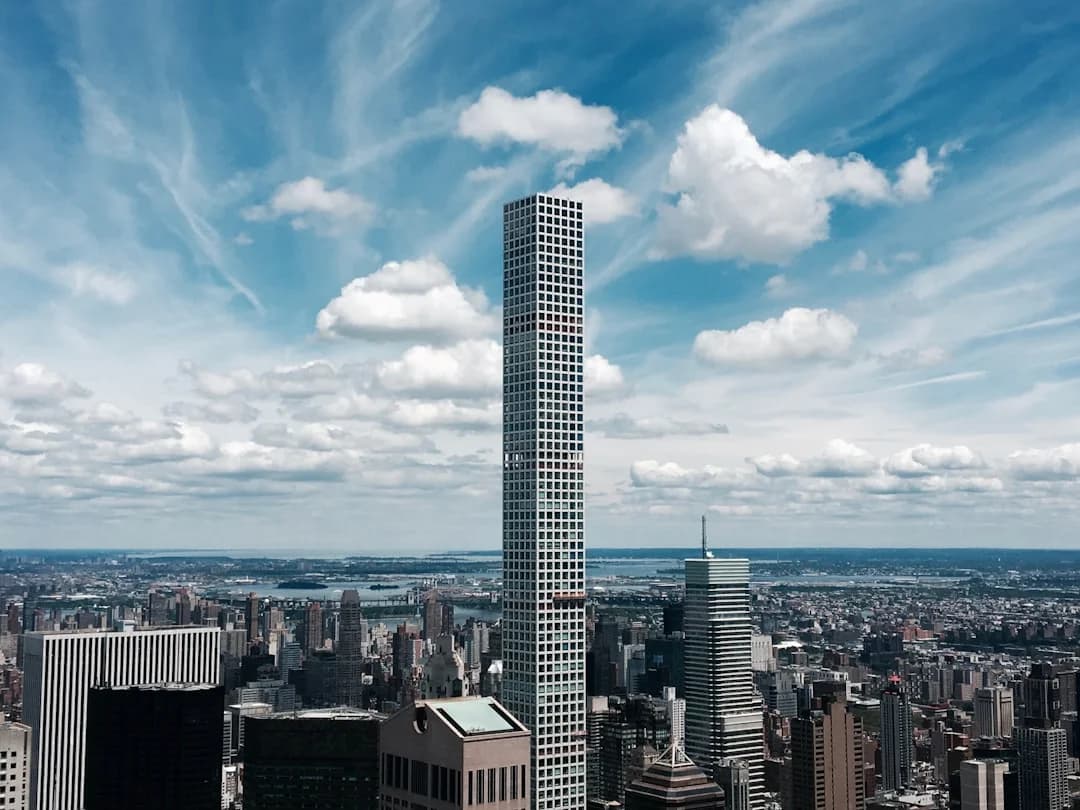
Photo by Yonghyun Lee on Unsplash
Manhattan is in the midst of a quiet architectural revolution that blends biology-inspired design with cutting-edge technology. Bio-Inspired Architecture NYC 2026 is no longer a niche concept confined to think pieces and academic journals; it is now shaping real projects, policy shifts, and market expectations across New York City. Across the boroughs, developers, architects, and city officials are advancing concepts that mimic natural systems—from living facades that filter air and manage energy to adaptive, modular façades that respond to weather and occupancy. The practical implications are immediate: more resilient buildings, healthier indoor environments, cleaner outdoor air, and a skyline that reads as a live experiment in sustainability. The conversations around this trend are moving from idea to implementation, with high-profile plans and demonstrations rolling out in 2026. Bio-Inspired Architecture NYC 2026 is turning into a throughline for who builds the city of the future, how it’s built, and what tenants and residents will demand in the years ahead.
In practical terms, major announcements this year show a trajectory from concept to construction. Edge at Hudson Yards announced a complete reimagining of its skyline experience, with immersive installations set to debut in Summer 2026. This is not merely a rebranding; it represents a new model for observation decks that fuse performance arts, digital environments, and architectural storytelling at one of the city’s most iconic heights. It also signals a broader trend toward experiential architecture that pairs sensational public spaces with sophisticated engineering. The disclosure came on April 6, 2026, as Edge prepared to open a new era of visitor experiences at 30 Hudson Yards, rising 1,131 feet above street level. The plan emphasizes an evolving, day-to-night exposure to light, color, and motion that follows the city’s pulse, rather than a static view of the skyline. This shift is consistent with the market’s growing appetite for destinations that offer more than function; they offer an anchored, data-informed experience. Edge’s announcement represents a tangible milestone in Bio-Inspired Architecture NYC 2026, illustrating how living systems and responsive design can be embedded into vertical metropolitan experiences. (related.com)
The same year features a series of corroborating developments that underscore a broader investment in living architecture. A landmark on the New York City skyline, 30 Hudson Yards and Meta Farley—two KPF projects—were featured in Built by Women 2026: New York City, a map recognizing women-led design projects across the city. The mapping initiative, published on April 17, 2026, highlights how equity and holistic design intersect with innovation in the city’s most visible towers. The projects themselves—30 Hudson Yards and the repurposed James A. Farley Building—demonstrate leadership in environmentally conscious, human-centered design practices that align with Bio-Inspired Architecture NYC 2026 goals. The map expansion to all five boroughs emphasizes that these practices are not isolated to a single neighborhood but are becoming citywide normalization rather than anomaly. (kpf.com)
As the year unfolds, a broader set of technological and architectural experiments are moving from theory to buildable reality. A new supertall at 520 Fifth Avenue offers a vivid example of how organisms’ adaptive morphologies can inspire form. The Architects’ Newspaper, reporting through the Facades+ platform, describes a facade whose arched modular frames stretch and compress in response to programmatic needs, producing a dynamic skin that references Beaux-Arts legacies while embracing a parametric surface condition. The article notes anticipated completion in 2026, illustrating how bio-inspired strategies are not only aesthetic but functional—facade performance, daylighting, and wind behavior are all part of the design equation. This is a concrete demonstration of Bio-Inspired Architecture NYC 2026 moving from concept to a building envelope that actively contributes to energy efficiency and occupant comfort. (facadesplus.com)
In another high-profile example, 60 Wall Street—the Paramount Group tower undergoing a $250 million renovation—will feature the largest indoor living wall in North America, a 100-by-80-foot installation designed by Habitat Horticulture and implemented with KPF. The project’s emphasis on a lush, plant-rich interior landscape, layered with suspended living cylinders, signals a push toward indoor environments that mimic natural ecosystems. The living wall aims to foster wellness, improve air quality, and offer a striking visual anchor in the building’s atrium, embodying Bio-Inspired Architecture NYC 2026 in a highly tangible form. The design leverages more than aesthetics; it is a programmable ecological system designed to deliver tangible human and environmental benefits as part of a broader renovation and modernization. Completion details note that the interior living wall is part of a larger $250 million upgrade, with KPF providing the architectural framework for daylighting and ecologies within the tower. (habitathorticulture.com)
The year’s discourse around bio-inspired strategies in New York City also intersects with design-week culture and professional discourse. NYCxDESIGN 2026, a city-wide celebration of design, featured Forth Bagley—KPF’s principal for Hudson Yards—speaking on timeless design in an era of exponential change. The event, hosted by HUSH Studio in Brooklyn on May 19, 2026, placed Bio-Inspired Architecture NYC 2026 within a larger narrative about resilient urbanism, public realm value, and the integration of density with humane, enduring design. Bagley’s participation, along with other industry leaders, underscored how the architectural profession is grappling with questions of longevity, adaptability, and the integration of public and private spaces in dense urban contexts. The event’s timing, just after Edge’s Summer 2026 unveiling, positions bio-inspired strategies as a central pillar of the city’s design agenda. (kpf.com)
In parallel with design week, mayoral policy initiatives in 2026 have touched the built environment in practical ways that intersect with bio-inspired architecture. On March 6, 2026, Mayor Mamdani announced a set of reforms to reduce sidewalk sheds and streamline facade inspections, a move designed to improve pedestrian experience and public space, while still preserving safety and resilience. The reforms include adjusting regulations to reduce the footprint of sheds and extend inspection cycles, aiming to accelerate facades repairs and re-open space for public use. The policy shifts are not about curtailing safety but about enabling a more fluid, adaptable city that supports ambitious architectural projects—an underlying condition for Bio-Inspired Architecture NYC 2026 to scale from pilot projects to citywide adoption. As officials noted, shedding sheds can improve street life and the urban experience without compromising safety. The policies also reflect a broader commitment to resilience and transparency in the city’s built environment. (nyc.gov)
Section 1: What Happened
Edge at Hudson Yards announces a transformative plan for its skyline venue, signaling a shift toward immersive, technology-enabled experiences. In a press release dated April 6, 2026, Edge revealed it would debut a complete reimagining of its indoor and outdoor experiences in Summer 2026, including a sequence of immersive installations—Pulse, Crystal Cave, and Infinite City—designed to evolve with the light of day and the changing cityscape. The installations are designed to envelop guests in a “sea of prismatic clouds,” guiding them from dawn through dusk into a transfigured night experience. The project also includes new hospitality spaces and elevated food and beverage concepts on the 100th floor. This initiative demonstrates how Bio-Inspired Architecture NYC 2026 can extend beyond static form into a dynamic orchestration of place, technology, and human perception. The press materials highlight a collaboration among Journey, Moment Factory, and SOFTlab to realize this immersive reimagining, and Edge emphasizes that the experience will be a signature offering seven days a week. The plan’s timing aligns with ongoing upgrades in Hudson Yards infrastructure and visitor experience strategies, signaling an integrated approach to urban entertainment, architecture, and high-rise design. (related.com)
30 Hudson Yards and Meta Farley highlight a different facet of the city’s Bio-Inspired Architecture NYC 2026 landscape: equity and leadership in design. The Built by Women 2026 map, published April 17, 2026, includes two KPF projects—30 Hudson Yards and Meta Farley—on its NYC-wide roster, acknowledging the pivotal role of women-led leadership in shaping the city’s built environment. The map’s expansion to all five boroughs underscores a broader recognition of inclusive design leadership as a driver of innovation, resilience, and social impact. 30 Hudson Yards is lauded as the first LEED Gold Neighborhood Development project in its district, reflecting a sustainability standard that aligns with the bio-inspired design ethos of energy efficiency and occupant well-being. Meta Farley, the repurposed James A. Farley Building, embodies inclusive workplace health and sustainability principles under an all-women senior team. Together, these projects embody Bio-Inspired Architecture NYC 2026 not just as a set of aesthetic moves, but as a framework for equitable, high-performance urban workspaces. Published on 04/17/2026, the map is a snapshot of a city embracing both ecological performance and inclusive leadership as core design objectives. (kpf.com)
A separate strand of activity centers on 520 Fifth Avenue, a new supertall that showcases a parametric, arch-inspired facade. The Arch Paper’s coverage of a February 27, 2026 post on Facades+ describes a facade composed of arched modular frames that stretch and contract in response to interior programmatic needs, producing a kinetic elegance that nods to Manhattan’s Beaux Arts legacies while leveraging modern computational strategies. The design’s adaptive surface aims to optimize daylighting, shading, and structural performance, reflecting a broader trend toward building skins that participate in energy management and occupant comfort. The project’s completion is anticipated in 2026, signaling that investors are embedding bio-inspired sensibilities into core envelope design rather than treating them as a postscript. (facadesplus.com)
The interior ecology trend continues with 60 Wall Street’s living wall, an ambitious installation that makes a tangible difference inside a major financial district building. The project’s details reveal a 100-foot-tall by 80-foot-wide living wall, the largest indoor living wall in North America, spanning the public atrium of the 47-story tower. The design, led by Habitat Horticulture with KPF as the architect, aims to deliver a dramatic environmental and experiential impact through plant diversity, vertical arrangements, and a daylight-rich atrium configuration. The installation is part of a broader renovation to modernize the tower and enhance the urban experience by blending architectural grandeur with ecological performance. The living wall’s complexity and scale, along with the plan for suspended living cylinders, illustrate how Bio-Inspired Architecture NYC 2026 can be translated into large-scale, measurable environmental benefits in a highly visible commercial context. (habitathorticulture.com)
On a design-week note, the NYC design community has been actively discussing how Bio-Inspired Architecture NYC 2026 can endure over time. Forth Bagley’s appearance at NYCxDESIGN 2026 positioned the conversation within a broader frame: how to achieve timelessness amid rapid technological change. The talk, documented on May 18, 2026, notes that the event took place on May 19 in Brooklyn, and Bagley’s remarks challenged the notion that timelessness and innovation are mutually exclusive. Instead, the discussion highlighted how durable, adaptable design—anchored in human behavior and public value—can coexist with cutting-edge technology and speculative future projects. This event reflects how industry leaders are actively shaping the narrative and priorities around Bio-Inspired Architecture NYC 2026, not only in established towers but also in the design education and professional development ecosystem that supports them. (kpf.com)
What’s Next: The Immediate Path Forward
Edge at Hudson Yards is poised to debut its new immersive experiences in Summer 2026, signaling a major milestone in Bio-Inspired Architecture NYC 2026 for New York City’s most visited skyline. The immersive program, including Pulse, Crystal Cave, and Infinite City, is designed to evolve with the city’s daily rhythms, offering a dynamic relationship between architecture, technology, and public engagement. As Edge emphasizes the skyline as a living, evolving stage, the project is expected to become a benchmark for how high-profile towers can incorporate sensory experiences into their identity without sacrificing structural performance or guest safety. The timeline anchors Edge’s broader strategy to redefine what a flagship urban observation space can be, particularly in a city whose public realm values are increasingly tied to data-informed, multi-sensory experiences. (related.com)
520 Fifth Avenue’s adaptive arch system is also expected to approach completion in 2026, with its kinetic facade described as a contemporary homage to historical forms updated through digital fabrication and performance-driven design. The Arch Paper’s coverage in late February 2026 points to a public dialogue about how contemporary skyscrapers can reference classic urbanism while leveraging modern envelope technologies to support energy efficiency, daylight controls, and occupant comfort. If completed as scheduled, 520 Fifth Avenue will be a high-profile proof point for firms pursuing a new generation of massing and skin strategies that blend form with function in a crowded midtown context. (facadesplus.com)
The Living Refuge concept, winner of the eVolo Skyscraper Competition and highlighted by Newsweek on April 17, 2026, frames a provocative vision for Bio-Inspired Architecture NYC 2026: a vertical ecological landscape that supports pollinators, moisture retention, and microclimates across a building’s exterior. While this vision remains theoretical in current builds, its public recognition helps propel policy discussions, investor interest, and academic exploration around how tall, dense urban structures can participate in ecological repair and biodiversity conservation. The concept’s emphasis on resorting to natural processes at a building scale resonates with an audience that now expects climate resilience to be a core design driver. It also signals potential future markets for researchers, product suppliers, and design teams that can deliver the ecosystem services embedded in such façades. (newsweek.com)
New policy and public-space initiatives during 2026 further shape the environment in which Bio-Inspired Architecture NYC 2026 can flourish. The March 6, 2026 announcement by Mayor Mamdani highlights a deliberate push to reduce sidewalk sheds and accelerate facade repairs, while ensuring safe and compliant construction and maintenance. The policy change is not a blanket liberalization of safety; rather, it is a calibrated approach to reduce unnecessary encumbrances on street life and to reallocate public space to pedestrians and commerce. The city’s actions—together with private-sector innovations—could accelerate the adoption of more ambitious façades and public realm interventions that are compatible with sustainable and bio-inspired strategies. As officials and engineers note, these reforms aim to maintain a safe, vibrant city while enabling the more ambitious, design-forward approaches that Bio-Inspired Architecture NYC 2026 envisions. (nyc.gov)
What It Means for the Market and the City
The year’s developments reflect a broader market trend: tenants and investors increasingly demand high-performance environments that support health, productivity, and well-being. Bio-Inspired Architecture NYC 2026 is evolving from a design philosophy into a market differentiator. Living walls, dynamic facades, and programmable skins are moving from spectacle to standard in premium office real estate, reinforced by sustainability programs and regulatory support that reward energy efficiency and occupant comfort. The Edge project’s immersive strategy, for example, demonstrates how entertainment and architecture can converge to sustain a premium experiential economy around high-rise destinations. At the same time, 60 Wall Street’s living wall integrates indoor ecology into a landmark financial district tower, signaling a broader acceptance that nature-based design can coexist with the city’s dense commercial milieu. The market implications are clear: developers who embrace bio-inspired strategies may enhance tenant acquisition, retention, and perceived value while contributing to resilience goals. These trends also align with a growing appetite for wellness-focused design in residential developments and corporate campuses that believe nature-based design contributes to long-term performance and profitability. (related.com)
From a policy perspective, the city’s 2026 actions reflect a dual objective: protect public safety and accelerate the adoption of innovative, high-performance design. The sidewalk-sheds reforms and updated Local Law 11 regimes signal a governance environment that can accommodate faster phasing of facade upgrades, which in turn helps make living facades and adaptive skins more feasible for developers. This combination of policy clarity and project-level innovation can reduce the friction that often slows bio-inspired projects from concept to completion. For stakeholders, the combination of public policy momentum, high-profile demonstrations, and industry leadership signals a new normal in which Bio-Inspired Architecture NYC 2026 is not only possible but increasingly expected in major new developments. (nyc.gov)
Section 2: Why It Matters
A new generation of buildings is emerging that uses biology-inspired principles to address three core urban challenges: energy efficiency, urban biodiversity, and occupant well-being. The concept is not new in theory, but the scale and visibility of 2026 demonstrations are accelerating adoption. The living wall at 60 Wall Street shows how interior ecological strategies can transform public spaces, while Edge demonstrates how experiential design can redefine a landmark’s role in the urban ecology of the city. The two projects together illustrate how Bio-Inspired Architecture NYC 2026 is translating ecological logic into building systems, material choices, and user experiences. The result is a more resilient urban fabric capable of absorbing shocks from climate variability and population density while delivering healthier environments for workers and visitors. The practical benefits—reduced heat gain, improved air quality, natural daylight, and a more engaging public realm—are increasingly backed by performance data and ongoing research. This is not merely an aesthetic trend; it is a demand signal from tenants, investors, and the public for buildings that are better integrated with natural processes. (habitathorticulture.com)
Photo by Marc Kargel on Unsplash
For policy makers and city agencies, Bio-Inspired Architecture NYC 2026 is a stress test for resilience and a lever for sustainable growth. The mayor’s 2026 sidewalk-shed reforms reflect a policy interest in improving pedestrian experiences and ensuring that façade repairs and updates proceed with fewer friction points. As the city codifies expectations around safety and performance, it simultaneously creates a more hospitable environment for ambitious envelope design that integrates natural processes and responsive technologies. If the city can maintain safety while reducing the architectural frictions associated with large-scale renovations, it will be better positioned to attract projects that invest in biomimicry, biophilic design, and dynamic façades. The policy environment thus becomes a critical enabler of Bio-Inspired Architecture NYC 2026 in practice, not just in theory. (nyc.gov)
From a market perspective, the trend carries implications for supply chains, product development, and service ecosystems. The scale and sophistication of the interior and exterior ecological installations—such as the 60 Wall Street living wall and the 520 Fifth Avenue parametric arch—require specialized horticultural, structural, and cladding solutions. They also drive demand for integrated design teams that understand the interplay among landscape, architecture, and building science. As more developers demonstrate a willingness to invest in extensive biophilic and biomimetic strategies, suppliers of living-wall systems, climate-adaptive skins, and smart envelope components can expect higher demand and greater price visibility for such systems. The result could be a virtuous cycle where better performance metrics drive more demand, which in turn fuels further innovation in materials and fabrication techniques. The industry is watching to see whether these strategies translate into measurable improvements in energy efficiency, indoor air quality, and tenant retention, but the early signals from Edge, 60 Wall Street, and 520 Fifth Avenue are encouraging. (habitathorticulture.com)
The living and ecological aesthetics also have a broader cultural and social resonance. The concept of a living façade or vertical ecological landscape reframes the way people relate to tall buildings in a dense urban environment. As Newsweek’s Living Refuge concept demonstrates, a building can be designed as a sanctuary for humans and pollinators, inviting residents and visitors to participate in a broader ecological dialogue. While such visions are still concentrated in competition entries and experimental prototypes today, they set a direction for how future skyscrapers might function as ecological infrastructures—supporting biodiversity, managing microclimates, and offering educational opportunities about urban ecology. This aligns with a growing public appetite for architecture that responds to climate realities while enhancing daily life and public space. The conceptual pull of Bio-Inspired Architecture NYC 2026 is clear: it is not only about circular economies and green credentials, but about a cityscape that is legible as a living system rather than a static collection of objects. (newsweek.com)
Section 3: What’s Next
In the near term, several milestones will shape the ongoing narrative of Bio-Inspired Architecture NYC 2026. Edge at Hudson Yards is anticipated to launch its new immersive experiences in Summer 2026, turning the skyline into a multi-sensory public amenity. This will be a formative moment for the concept of buildings as experiential ecosystems, not just as structures with a view. The project’s momentum could set new expectations for how other high-profile towers incorporate experiential design as a core feature of their value proposition. The timing is important, as it positions Edge to influence not only visitor experiences but also the way skyline branding and urban entertainment converge with architecture. (related.com)
Meanwhile, 520 Fifth Avenue is targeting completion in 2026, and its variable-arch facade is expected to influence future envelope design in midtown Manhattan. As more towers explore morphing facade geometries and parametric skins, developers may push design boundaries further, testing how to balance structural efficiency, daylighting performance, and facade adaptability in a city that prioritizes safety and resilience. The Arch Paper’s coverage suggests a trend toward facades that are both expressive and functional, capable of adapting to occupancy patterns and weather conditions without compromising urban dynamism. If the timeline holds, 520 Fifth Avenue could emerge as a high-profile case study for the architectural community, investors, and tenants seeking a biomimetic approach to building skin design. (facadesplus.com)
The Living Refuge concept—though a competition-winning concept rather than a current build—continues to influence the discourse around Bio-Inspired Architecture NYC 2026. Newsweek’s coverage underscores the competition’s focus on a vertical ecological landscape that serves both ecological and human needs, pushing designers and policymakers to consider how future tall buildings can function as regenerative systems within dense urban fabric. Even if The Living Refuge does not materialize in Manhattan immediately, its ideas inspire ongoing research and development of building skins that can host pollinator habitats, retain moisture, and cultivate microclimates around exterior surfaces. The growing attention to such visions signals a market that is receptive to radical ideas about how tall buildings interact with ecological systems. (newsweek.com)
The policy landscape will continue to influence the pace and scope of Bio-Inspired Architecture NYC 2026 adoption. The March 2026 shed-reduction policy and related facade-inspection reforms can facilitate a smoother path for envelope upgrades, which aligns with biomimetic strategies that require regular maintenance and system-level integration. As more projects pursue living walls and adaptive envelopes, a predictable, clear regulatory environment helps reduce risk for developers and investors while ensuring safety and accessibility for the public. The city’s willingness to align safety standards with innovation is a critical factor in ensuring that bio-inspired approaches become mainstream rather than experimental. (nyc.gov)
Closing
The story of Bio-Inspired Architecture NYC 2026 is not just about new materials or eye-catching façades; it’s about a city actively rethinking how tall buildings interact with climate, health, biodiversity, and public life. Edge at Hudson Yards, 60 Wall Street, and 520 Fifth Avenue each illustrate a different facet of the same arc: architecture that learns from nature, integrates advanced technologies, and places human well-being at the center of design decisions. The Built by Women 2026 map’s recognition of leadership in New York’s skyline signals that this is a team effort—across disciplines, genders, and sectors—to push for a more resilient, inclusive, and beautiful city. As policymakers, developers, and design firms move forward, the trajectory is clear: Bio-Inspired Architecture NYC 2026 is becoming the mainstream language of Manhattan’s future. The city is watching closely and ready to respond to new proposals, new technologies, and new ideas about how to inhabit one of the world’s most dynamic urban landscapes with greater care for people, ecosystems, and the built environment. (related.com)
Photo by Andrew Jephson on Unsplash
Staying informed will be essential for anyone involved in New York’s architectural and development ecosystems. Readers in Manhattan and beyond should monitor Edge’s Summer 2026 rollout, the progress of 520 Fifth Avenue and the 60 Wall Street renovation, and the ongoing conversations around bio-inspired design and public space in the city. Industry conferences, planning documents, and policy updates will continue to shape the pace and direction of Bio-Inspired Architecture NYC 2026, and New York’s regulatory and market environments will be as important a determinant of success as any design concept. In a city that has always thrived on reinvention, the convergence of biology-inspired ideas and urban form offers a compelling blueprint for a healthier, more resilient, and more beautiful metropolitan future.
"Edge at Hudson Yards will transform what it means to be a New York City landmark. Guests will be welcomed into a breathtaking, kaleidoscopic world before they even reach our thrilling outdoor sky deck." — Edge press release, April 6, 2026. (related.com)
"The Living Refuge becomes a site of ecological colonization and symbiosis." — Newsweek, April 17, 2026, describing the winning entry in the Skyscraper Competition. (newsweek.com)
"Sheds may seem small, but they are a big imposition on New Yorkers' quality of life." — Mayor Mamdani, March 6, 2026, on sidewalk-shed reforms. (nyc.gov)