Groundbreaking Marks Start of Second Avenue Subway Phase II
The Second Avenue Subway Phase II groundbreaking on June 8, 2026, led by Governor Kathy Hochul and MTA officials, initiates construction to extend the…
 By
By 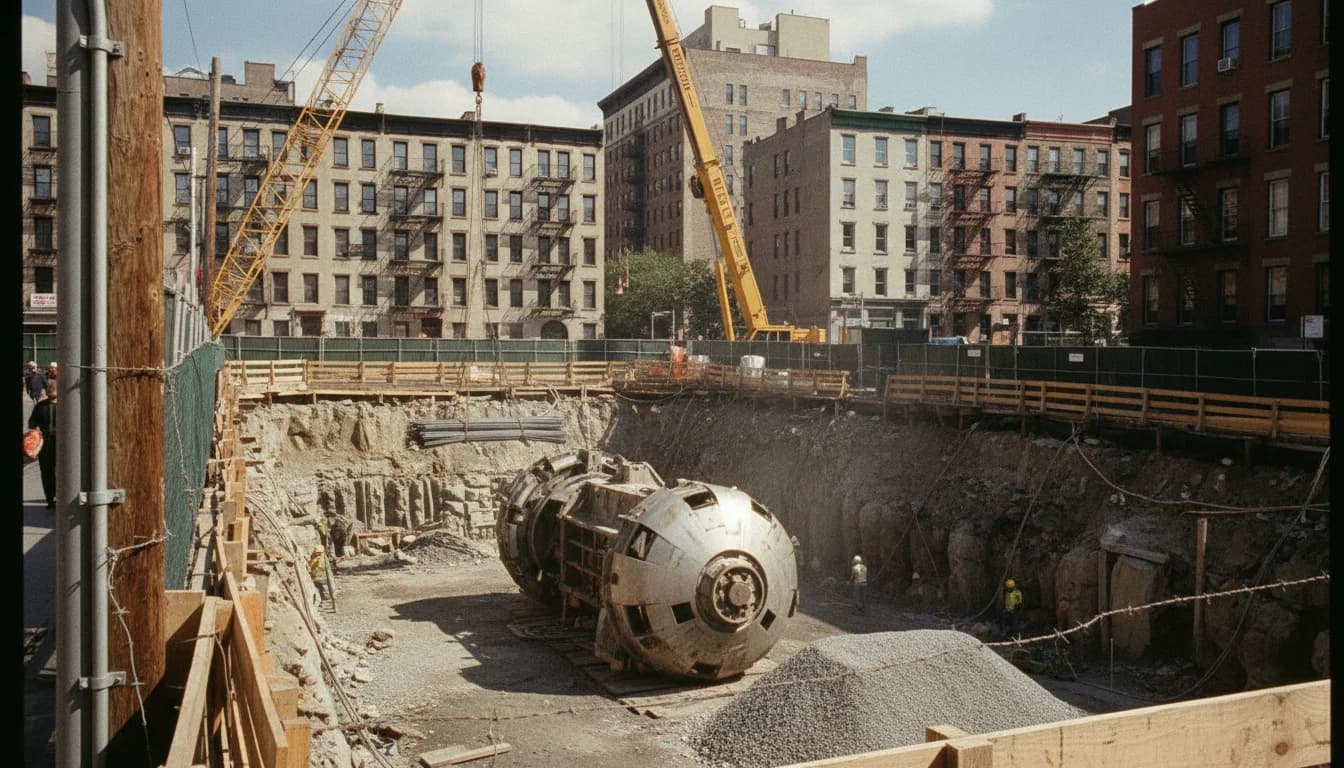
Groundbreaking milestones often signal the transition from planning to real construction, and the Second Avenue Subway Phase II Opening Ceremony marked a pivotal moment for East Harlem and Upper Manhattan. On June 8, 2026, Governor Kathy Hochul and Metropolitan Transportation Authority (MTA) leaders joined Harlem community officials and local partners to break ground on the major construction stage of the Second Avenue Subway Phase 2 project. This milestone, described by officials as a turning point for the northeast corridor, sets the stage for a northward expansion of the Q Line from 96th Street to 125th Street and Park Avenue, a move that analysts say will reshape transit options, neighborhood access, and local job opportunities in the decades ahead. The ceremony underscored a broader shift in New York City’s transit strategy: turn-key contractor coordination, lessons learned from Phase I, and an emphasis on faster delivery, cost containment, and greater community engagement as funding and project scope move forward. According to official statements, the groundbreaking signals not only construction progress but a re-emphasis on transit equity for Harlem and East Harlem communities that have long waited for expanded access. The event placed in the public eye a project budget that officials say remains on track for revenue service in 2032, with several contracts already awarded or in the procurement pipeline to advance tunneling, stations, and systems. This article draws on primary source materials from the Governor’s press office and the MTA’s Phase 2 project documentation to provide a data-driven snapshot of what happened, why it matters, and what comes next for this transformative project. and provide the official context and figures framing the milestone. (governor.ny.gov)
Groundbreaking details and the immediate scope of Phase 2
In the months leading up to the June 8 ceremony, officials had framed Phase 2 as a decisive expansion that would push the Q Line beyond its Phase I terminus at 96th Street. The Governor’s office notes that the groundbreaking occurred at the 120 Street site, with the tunnel-boring machine (TBM) scheduled to begin mining the new tunnels from 120 Street up to 125 Street and Malcolm X Boulevard. The same briefing emphasizes a parallel construction program that includes a 125th Street Station serving as a critical intermodal hub with connections to existing Lexington Avenue lines and regional rail, reinforcing a multi-modal transit strategy for Harlem and adjacent communities. The MTA’s project update confirms the same endpoints and adds detail on the three new Phase 2 stations—106th Street, 116th Street, and 125th Street—each designed to integrate with the surrounding neighborhoods and existing transit lines. The update also confirms a four-contract structure to accelerate delivery and to apply cost-containment lessons learned from Phase 1. (governor.ny.gov)
“The Second Avenue Subway Phase 2 project will bring modern transit access to East Harlem, expanding one-seat rides and improving connections to Midtown and beyond,” Governor Hochul asserted in the ceremony remarks. “After decades of planning and delays, today’s groundbreaking is a concrete step toward transit equity and mobility for a community that has long waited.” These quotes, echoed by MTA leadership, frame the project not just as a construction milestone but as a gateway to broader neighborhood opportunity. (governor.ny.gov)
The Governor’s briefing also highlights the project’s scale and the logistics of the groundbreaking. The TBM fleet, described as state-of-the-art, is designed to operate in diverse ground conditions, and its deployment will become a visible symbol of a program the administration says is aimed at delivering value through better management, smarter procurement, and targeted savings. The budget narrative is explicit: Phase 2’s total program budget is approximately $6.968 billion, and multiple contract packages have already been structured to optimize sequencing, reduce risk, and foster local hiring where feasible. Among these packages, Contract 2 alone is valued at about $1.97 billion, underscoring the size and complexity of the tunneling and related work. The two primary sources converge on the same core facts, providing a reliable, public record of the event and its financial framework. (governor.ny.gov)
What happened: timeline, contracts, and scope
The opening follows a deliberate sequence designed to translate long-range planning into on-the-ground activity. The MTA’s Phase 2 update outlines a schedule in which heavy construction is anticipated to begin in 2026 and continue through 2027, with completion projected for 2032. This timeline aligns with the broader financial and programmatic strategy outlined by the Governor and the MTA, which emphasize phased construction, targeted cost savings, and the reuse of existing tunnel segments from the 1970s where feasible. The ceremony itself is described as the official kickoff for the major construction stage, signaling a move beyond design and pre-construction into the primary tunneling and station-building phase. The four-contract approach is designed to incent competition, improve project controls, and facilitate parallel workstreams for tunneling, station works, electrical and systems integration, and ancillary facilities. (mta.info)
Groundbreaking details underscore the endpoints and the transit network implications. The Phase 2 alignment runs north from the existing 96th Street terminus, with the new tunnels and stations concentrated along Second Avenue in East Harlem, culminating in a Park Avenue corridor near 125th Street. The 125th Street Station is described as a major intermodal hub, linking with the Lexington Avenue lines (4, 5, 6), Metro-North, and several bus routes that serve the Harlem corridor. The plan contemplates a direct passenger transfer at 125th Street to the Lexington Avenue line and extended access to the Park Avenue rail corridor, creating a comprehensive, multi-line mobility node in East Harlem. This multi-modal integration is repeatedly highlighted in the official materials, signaling a deliberate shift toward more resilient, connected transit options in the area. (mta.info)
The financial architecture of Phase 2 is a central feature of the ceremony’s framing. The Governor’s filing notes that the Phase 2 project is budgeted at $6.968 billion, with Contract 2 representing roughly $1.97 billion of that total. This breakdown illustrates how major construction packages are distributed across the tunnel, shaft excavation, and station work, while the MTA’s project update outlines a broader plan to sequence four principal contracts to drive construction efficiency and reduce delivery risk. The emphasis on cost containment and reuse of existing tunnel segments—alongside a rigorous procurement framework—points to a program designed to deliver value while expanding capacity for tens of thousands of daily riders. (governor.ny.gov)
Section 1 also emphasizes the human dimension of the Phase 2 work. East Harlem’s residents have long argued for improved transit access as a core facet of urban renewal, and the ceremony foregrounded job creation and local hiring as a measurable benefit. The Governor’s briefing notes that Phase 2 will create thousands of jobs and includes commitments to local hiring goals, a theme echoed by MTA leadership throughout the event. The East Harlem community information and outreach components, including a dedicated Community Information Center, are intended to maintain ongoing engagement with residents and business owners throughout construction. The combination of economic opportunity and improved mobility is presented as a core justification for the investment. (governor.ny.gov)
Section 2: Why It Matters
Broader transit equity and neighborhood access
The Phase II project is framed as a crucial expansion that aligns with a broader equity agenda in New York City transit planning. The East Harlem context—often described as transit-dependent and historically underserved—receives explicit attention in the Governor’s remarks and MTA materials. The Phase 2 stations (106th, 116th, and 125th) are positioned to serve communities with high reliance on rapid, reliable access to job centers, educational institutions, healthcare facilities, and cultural destinations throughout Manhattan and the outer boroughs. The 125th Street intermodal hub is projected to improve transfers and shorten travel times, potentially altering daily commutes for tens of thousands of residents. The project’s design includes accessibility improvements and a diversified set of entrances, aimed at lowering physical and logistical barriers to use. This focus on equity is reflected in the administration’s messaging and is central to the policy rationale for the Phase 2 buildout. (governor.ny.gov)
“East Harlem has long waited for a new subway connection on Second Avenue,” Governor Hochul noted during the groundbreaking. “This investment is about transit equity, opportunities, and quality of life.” The statements from the Governor and MTA leaders frame Phase 2 as a catalyst for reshaping daily life for Harlem residents and a broader affirmation of the city’s commitment to modern, accessible transit infrastructure. The quotes underscore a narrative that connects infrastructure with social and economic outcomes, a linkage that urban researchers and policy analysts frequently track in megaprojects of this scale. (governor.ny.gov)
Economic and employment dimensions
From the outset, Phase 2 is presented as a generator of economic activity, with thousands of jobs anticipated across the construction workforce and related supply chains. The Governor’s briefing highlights a local hiring emphasis and the broader regional economic ripple effects of major transit investments. The MTA project update also emphasizes lessons learned from Phase 1 that are intended to yield cost savings and faster delivery for Phase 2. In addition to direct construction jobs, the project is expected to stimulate local retail activity around station nodes and enhance connectivity to education and healthcare sectors along the corridor, thereby supporting both short-term gains and longer-term regional growth. The collaboration among city and state authorities, federal partners, and labor unions is framed as essential to maximizing these benefits. (governor.ny.gov)
Connectivity, multimodal integration, and system resilience
A key strategic objective of Phase 2 is to knit Harlem into a denser, more reliable rail network. The 125th Street Station is described as a critical intermodal hub with connections to the Lexington Avenue Line and Metro-North, plus multiple bus routes on 125th Street and adjacent north–south corridors. The design contemplates efficient transfers and improved passenger flow, leveraging modern station design and robust signaling to minimize delays and maximize reliability. The broader system implication is improved resilience: more routing options and better interchanges can reduce crowding pressures on neighboring lines while enabling smoother evolution of service patterns as demand shifts. The official project documentation frames these benefits as foundational to the city’s longer-term mobility strategy. (mta.info)
What the data says about scope and scale
Beyond qualitative improvements, the Phase 2 program is quantifiably large. The Governor’s materials cite a total Phase 2 budget of nearly $7 billion and a four-contract delivery approach, with one contract alone (Contract 2) valued at about $1.97 billion for tunneling and related works. The Phase 2 plan also highlights a targeted revenue-service date of 2032, reinforcing the long-cycle nature of major subway expansions and the need for sustained political and public support over many years. These data points—budget, contracts, and schedule—anchor the narrative in concrete numbers that can be tracked over time and compared with Phase 1 performance to evaluate efficiency and value creation. (governor.ny.gov)
What’s Next: milestones and anticipated progress
Looking ahead, the Phase 2 program will move through a sequence of major milestones designed to unlock the new alignment’s service capabilities. The Governor’s release identifies key next steps, including the activation of the TBM and the progression of Contract 3 to construct the 106th Street Station and its adjacent tunneling activities. The MTA project update reinforces the expectation that heavy construction will intensify in 2026 and extend into 2027, with substantial activity focused on tunneling, station fit-out, track work, and electrical and signaling systems. The public-outreach component—anchored by the Community Information Center at 69 East 125th Street—will remain in place to support communication with residents and businesses, a critical element of minimizing disruption and maximizing community benefits. For readers tracking the project’s trajectory, these steps provide a concrete sense of how the Phase 2 program moves from groundbreaking to revenue service in a period of years. (mta.info)
What this means for the market and technology trends
From a market perspective, Phase 2’s scale and complexity illuminate several broader trends in large-scale urban infrastructure. The project demonstrates:
- The continued importance of phased delivery and multiple contracts to mitigate risk and maintain schedule integrity in dense urban environments.
- A continued emphasis on value engineering and cost containment, with lessons from Phase 1 informing design choices, procurement strategies, and construction sequencing.
- The role of intermodal hubs in modern transit design, with 125th Street positioned as a cross-modal node that can influence bus routes, regional rail connections, and last-mile mobility options.
- The integration of advanced station design features and signaling systems to improve reliability and passenger experience, a trend increasingly visible across major capital projects.
These trends align with broader public infrastructure patterns observed in other large urban rail programs, underscoring the maturation of public-private collaboration, sophisticated project management practices, and a growing emphasis on equitable mobility outcomes in dense urban centers. The Phase 2 journey offers a case study in how a city can translate ambitious plans into measurable improvements, while managing cost and schedule risk through disciplined governance and ongoing stakeholder engagement. (mta.info)
Section 2: What’s Next
Next milestones and process timelines
The Phase 2 program’s next milestones focus on contract execution, early utility relocation, and initiating main tunneling and station works. The MTA’s schedule outlines a phased approach: early contract packages for utility relocation and preparatory work between 105th and 110th Streets are already underway, with the tunneling, stations, and systems packages anticipated to begin later in 2025 and carry through mid-2027. The 125th Street Station and associated entrances will undergo design refinements and construction sequencing that balance accessibility, safety, and neighborhood impact. The plan anticipates substantial heavy construction activity at 125th Street and along the Second Avenue corridor beginning in 2026, with the project advancing toward a 2032 revenue service date. These timeline elements reflect a careful balance between ambitious mobility goals and a practical, risk-managed construction program. (mta.info)
Stakeholder engagement and community information
A robust community outreach program accompanies Phase 2, including a dedicated Community Information Center and ongoing coordination with Community Boards, local businesses, and residents. The MTA’s documentation emphasizes transparent communication about schedule, anticipated disruptions, and mitigation measures, including alternative transportation options during construction periods. The Governor’s messaging also highlights the importance of community involvement, local hiring, and economic opportunities as core components of the Phase 2 initiative. The combination of technical planning and stakeholder engagement is central to ensuring that the project proceeds smoothly while delivering tangible benefits to Harlem and East Harlem. (mta.info)
Real-world implications for riders and businesses
For daily riders, the Phase 2 extension promises shorter travel times, more direct connections, and new access points to the broader subway network. The 125th Street connection to Park Avenue and Lexington Avenue lines provides a more direct path toward both Midtown and Upper Manhattan, potentially transforming commute patterns and enabling new business and cultural activity along the corridor. For local businesses, improved access can translate into higher foot traffic, brighter storefront visibility, and opportunities for transit-oriented development around the new station entrances. The projection of thousands of construction jobs also signals a near-term economic bump for local workers and service providers, albeit accompanied by the usual construction-period inconveniences that communities expect to be mitigated through proactive planning and diligent engagement. (governor.ny.gov)
What audiences should watch next
Readers should watch for:
- Updates on Contract 3 (the 106th Street Station and surrounding tunneling), including procurement notices, bid results, and contractor announcements.
- Construction activity levels around 125th Street, including street-level work windows and utility relocation milestones.
- Updates to ridership forecasts and post-construction performance models, as agencies adjust estimates based on early field data and evolving intermodal connections.
- Community outreach metrics, including attendance at CIC events, access to multilingual materials, and reports on local hiring progress.
The official sources remain the best place to confirm these developments, and the reporting around Phase 2 continues to be anchored in the project’s formal documents and agency updates. (governor.ny.gov)
Closing
The Second Avenue Subway Phase II Opening Ceremony, framed as a groundbreaking for a major construction stage, signals more than a single milestone. It marks a commitment to expanding access, creating jobs, and delivering a longer-term, multimodal transit corridor for Harlem, East Harlem, and the surrounding neighborhoods. While the scale of the project means a long roadmap—from tunneling to station openings and ultimately revenue service in 2032—the event provides a clear public record of intent, budget, and schedule, with concrete endpoints that readers can track as the work progresses. For residents, riders, and investors alike, the Phase 2 program offers a lens into how New York City plans to evolve its transit system with better connectivity and greater resilience.
As the city moves forward, observers will be watching how the four contracted packages perform against milestones, how community outreach mitigates disruption, and how the project’s integration with bus routes and commuter rail shapes the broader regional travel network. Stay tuned to official project pages for the latest updates, and watch how this phase shapes the next decade of transit in Manhattan and its neighborhoods.
References and primary sources
- Governor Hochul Celebrates Groundbreaking for Major Construction Stage of Second Avenue Subway Phase 2 Project (June 8, 2026) — official press release, including endpoints, station plans, budget, and schedule. Anchored to 120 Street to 125 Street and Park Avenue alignment, and to three new stations (106th, 116th, 125th). Link: Governor Hochul’s press release. (governor.ny.gov)
- Second Avenue Subway Phase 2 Project Update — detailed MTA briefing document (PDF) outlining the three new stations, the four contracting strategy, and the schedule for heavy construction including the period 2026–2027, with a revenue service target of 2032. Link: MTA Phase 2 Project Update. (mta.info)
- Additional coverage and context: Groundbreaking and Phase 2 milestones reported by trade and trade press (e.g., Metro Magazine and Mass Transit). These provide corroborating context on the ceremony timing and project scope. (metro-magazine.com)
Note: This article draws on primary sources for key factual claims and supplements with industry coverage for broader context. The Phase 2 alignment, new station locations, and long-term schedule are described in the cited documents, which readers can consult for official detail and timelines.