Pocket Parks and Micro-Greenspaces NYC: Tech Trends
Explore a neutral, data-driven analysis of Pocket Parks and Micro-Greenspaces in NYC, highlighting the impact of tech on urban green spaces development.
 By
By 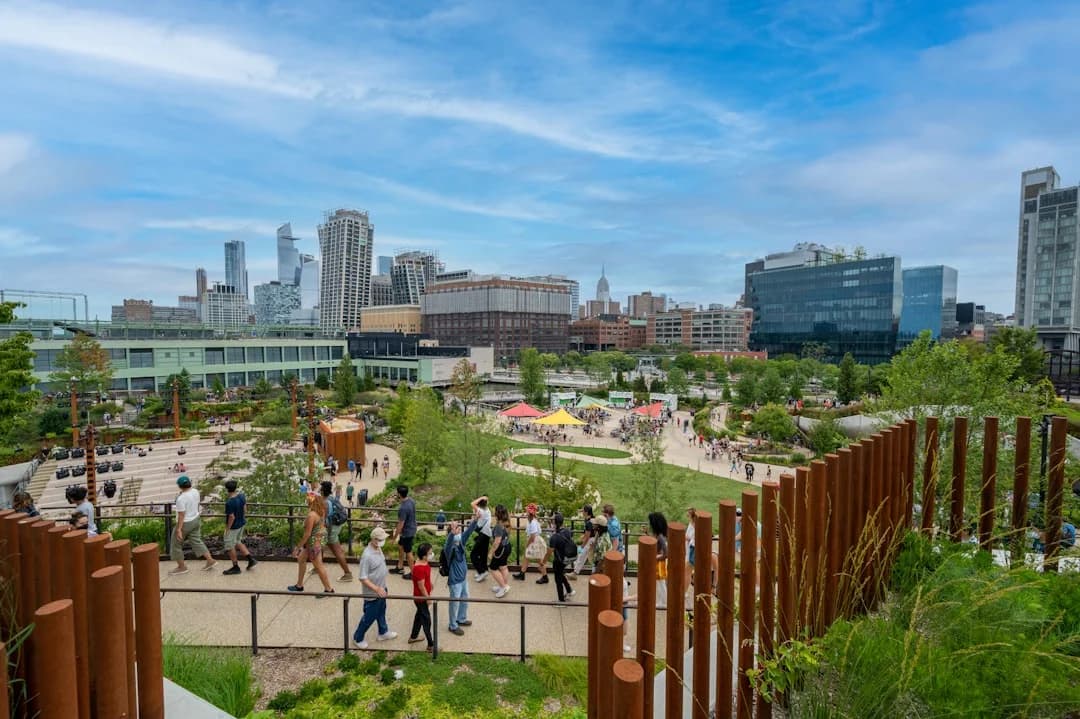
New York City is moving beyond traditional parks to redefine how streets can become usable, inviting public spaces. In a data-driven push that intersects urban design, public health, and market dynamics, the city is expanding pocket parks and micro-greenspaces across neighborhoods. The momentum is visible in 2026 planning cycles, where parklets, plazas, and street-scale green interventions are being coordinated with Open Streets programs, pedestrian plazas, and municipal investments designed to measure impact and equity as a core objective. As of May 24, 2026, Manhattan Monday reports that the city is actively rolling out and refining programs that transform streets into vibrant public spaces, supported by Open Streets initiatives, pedestrian plazas, and targeted park investments. The push is about more than aesthetics; it is about generating measurable urban vitality by marrying policy, design, and technology. This framing matters for residents, small businesses, and community groups who seek safer, more livable blocks while also tracking the economic and social returns on green-space investments. (Sources: Manhattan Monday coverage, NYC DOT and Plaza Program documents.) (manhattanmonday.com)
The broader context for Pocket Parks and Micro-Greenspaces NYC includes a long arc of public-space policy that predates 2026 but informs today’s experiments. In 2007, NYC DOT publicly kicked off a plaza program with a pocket park in DUMBO, turning a former parking lot into a pedestrian space and signaling a citywide ambition to reclaim street space as public realm. The press release announced that a pedestrian plaza would be created in every New York City community over the following years, a legacy of PlaNYC’s open-space expansion goals. This foundational moment established street-level interventions as a core instrument of urban vitality. (Quote: “This is a celebration, not of our ability to move, but of our ability to stop, to take a moment, to chat with our neighbors and to be part of our communities.”) (nyc.gov)
Opening with a brief survey of where Pocket Parks and Micro-Greenspaces NYC fit into city planning, it’s clear that these spaces sit at the intersection of sidewalks, plazas, and street-scale interventions. High-level guidance from NYC Parks’ design guidelines explicitly identifies pocket parks and plazas as a distinct park typology within the city’s open-space portfolio, underscoring that these spaces are not afterthoughts but integral infrastructure for social life, climate resilience, and urban design. The guidance also emphasizes the importance of microclimates, flexible amenities, and movable furniture to adapt spaces to shifting conditions and user needs. That framework has guided subsequent practices, including temporary installations in the 2009 era that helped demonstrate how streets can be repurposed for pedestrian use with minimal investment but meaningful impact. (Source: NYC Parks High Performance Landscape Guidelines; pocket parks as a defined typology) (nycgovparks.org)
What Happened
DUMBO’s pocket park milestone and the broader lineage of street-space reclamation
- 2007: DUMBO’s pocket park marks the citywide plaza initiative. In the August 8, 2007 NYC DOT press release, the agency announced the “Public Plaza Initiative” and the transformation of a former parking lot in DUMBO into a pedestrian plaza. The release framed this as a blueprint for creating a plaza in every NYC community over the next two decades as part of PlaNYC goals. This moment established a precedent for treating curb space as a public asset and signaled a long-running cadence of street-space activations that would later evolve into parklets, plaza programs, and Open Streets activations. (Quotes and details from early DOT release.) (nyc.gov)
2009: Street reclamation for pedestrian uses introduces a scalable model
- 2009: The city’s design guidance notes that in addition to building new parks, NYC began reclaiming portions of streets for pedestrian and public-use activities. This early move—emphasizing temporary chairs, planting, and minimal installation costs—helped illustrate how micro-scale interventions can transform the urban fabric without large capital outlays. Pocket parks and plazas are highlighted in the design guidance as a strategic typology for dense neighborhoods where space is precious. (Design guidelines reference 2009 practice and the pocket‑park/plaza typology.) (nycgovparks.org)
Strengthening oversight and governance for pocket spaces
- 2017: Local Law 250 (Int 1487-2017, etc.) codified enhanced oversight of privately owned public spaces (POPS). The law expands penalties and accountability for compliance, underscoring the city’s intent to ensure that privately managed spaces deliver public benefits in line with zoning and safety requirements. The POPS framework remains a critical backdrop for how pocket spaces on private property interfaced with public needs, particularly as neighborhoods seek more activated public realms. (Legal texts and council filings provide precise details on penalties and oversight.) (nyc.gov)
The Open Streets era and the multi-typo public-realm system
- 2020–2021: Open Streets emerged as a citywide platform to convert car space into pedestrian-forward space at scale, born in response to the COVID-19 era and formalized through permanent programming in subsequent years. The Open Streets program is part of a broader public-realm ecosystem that includes Plaza Program, Street Seats, and other activations designed to bring culture, dining, markets, and programming onto streets and plazas. The Comptroller and city agencies provide ongoing analyses of the program’s equity, funding, and management considerations, illustrating the complexity of sustaining street-based activations over time. (Open Streets origin, expansion, and governance are documented across DOT press releases and public reports.) (comptroller.nyc.gov)
2026: Open Streets and Plaza Program deadlines signal maturing deployment of pocket parks and micro-parks
- 2026: Manhattan Monday’s latest coverage and NYC DOT materials highlight a calendar of deadlines and pilot designs that indicate where parklets, plazas, and micro-parks are likely to appear next. Notably, the 2026 Plaza Program opened its application window with a deadline of June 30, 2026, inviting community organizations to propose new pedestrian plazas in areas lacking open space. In addition, the 2026 Open Streets program and related opportunities are advancing in coordination with school streets and urban programming calendars, signaling a measured, data-informed approach to space activation. The multi-year CPI investments in parks and the 70 completed CPI projects by March 2026 further illustrate a sustained, outcomes-focused public-space agenda. (NYC DOT Plaza Program and CPI references; executive summaries and deadlines provided in DOT and CPI communications.) (manhattanmonday.com)
Why It Matters
Public health, climate resilience, and the city’s equity ambitions
- Pocket Parks and Micro-Greenspaces NYC contribute to urban resilience by providing shaded, cooler microclimates and spaces for social interaction in dense urban blocks. The design guidelines specifically highlight the role of microclimates and shading in managing heat and improving comfort for pedestrians, while also noting how greenery can help address stormwater and air-quality considerations as part of climate adaptation strategies. As urban heat islands intensify, such micro-greenspaces become practical, measurable assets in reducing heat exposure and enhancing well-being. (Pockets of climate-focused design guidance within the High Performance Landscape Guidelines.) (nycgovparks.org)
Equity and access: public spaces as a citywide right
- The 2026 public-realm program ecosystem emphasizes equity in access to green space. The Public Space Equity Program (PSEP) and related CPI investments are designed to extend the reach of urban green spaces to neighborhoods historically underserved by city parks. The framing is clear: public-space activation should be inclusive, with community engagement, maintenance commitments, and programming that reach diverse residents. (Manhattan Monday synthesis and CPI governance materials; Open Streets equity discussions.) (manhattanmonday.com)
Economic vitality and community life
- Parklets, micro-parks, and plazas act as micro-infrastructure for neighborhood vitality, enabling outdoor dining, markets, small performances, and social gatherings that stimulate foot traffic and local commerce. The 2026 program architecture frames these spaces as part of a broader strategy to link street activation with economic activity, neighborhood equity, and mental well-being. The data-driven approach seeks to track usage, safety, accessibility, and satisfaction to justify ongoing investments in street-scale green space. (Open Streets governance discussions; Plaza Program and Street Seats integration.) (manhattanmonday.com)
Technology and data as performance levers
- Technology and data are increasingly central to how Pocket Parks and Micro-Greenspaces NYC are planned, activated, and evaluated. Studies on urban microclimate sensing and smart irrigation demonstrate how portable sensors and per-zone data can support cooling, soil moisture management, and resource optimization in park contexts. In practice, this translates to better watering schedules, more accurate microclimate mapping, and the ability to demonstrate tangible environmental and social benefits to residents and funders. The research literature and pilot projects show a trend toward data-informed design and operation for street-scale green spaces. (Research on environmental sensing in urban parks; smart irrigation deployments relevant to park-scale management.) (sciencedirect.com)
What’s Next
Key deadlines, pilots, and policy signals for the near term
- 2026 deadlines and opportunities: The Plaza Program’s June 30, 2026 deadline is a major inflection point for districts seeking to convert underutilized street space into active public areas. Also, the January 31, 2026 and March 31, 2026 Open Streets deadlines for school-based projects signal alignment with school calendars and community programming. The informational sessions (e.g., November 13, 2026) and the ongoing CPI investments in park upgrades suggest a continuous, well-documented process for expansion and renewal of Pocket Parks and Micro-Greenspaces NYC. These dates are part of a broader citywide effort to codify and expand public-space activation through Street Seats, Open Streets, and related programming, with a governance model that emphasizes equity, maintenance, and community engagement. (Cited from NYC DOT Plaza Program and Open Streets communications.) (manhattanmonday.com)
Watch points: governance, funding, and performance measurement
- The public-realm ecosystem is increasingly framed by formal performance metrics and governance processes. The Comptroller’s analyses and city reports highlight ongoing debates about sustainability, dedicated funding, operator capacity, and program maturity. As more CPI projects roll out, observers should monitor how environmental and social outcomes—such as park usage, mental-health indicators, and economic activity—are tracked and attributed to specific parklets, plazas, or micro-parks. This data-driven posture will influence future budgets, permit rules, and maintenance commitments, shaping where Pocket Parks and Micro-Greenspaces NYC proliferate next and how they’re financed. (Comptroller reports and CPI program materials.) (manhattanmonday.com)
Next steps for readers and practitioners
- Community organizations and neighborhood groups should prepare for the 2026 Plaza Program cycle by developing proposals that reflect neighborhood open-space deficits, maintenance capacity, and programming ideas. The city’s documents emphasize the importance of letters of support, equity considerations, and clear operating plans. In parallel, developers, designers, and municipal staff will increasingly rely on data to justify space changes, including sensors for microclimate monitoring and soil-moisture data to optimize irrigation in pocket parks and micro-greenspaces NYC. The research-backed model suggests that coordinated investments across Open Streets, plazas, and CPI projects can amplify social, environmental, and economic benefits across blocks and corridors. (Plaza Program guidelines; CPI investment summaries; Open Streets governance.) (manhattanmonday.com)
The practical implications for technology and market trends
- For technology providers and urban-innovation advocates, Pocket Parks and Micro-Greenspaces NYC offer a tangible testing ground for smart irrigation, microclimate sensing, and portable, modular green-infrastructure solutions. Academic and practitioner literature demonstrates how portable sensing platforms can map pedestrian-level microclimates and help city planners calibrate cooling strategies and plant choices in hard-to-serve urban pockets. As NYC formalizes its public-realm toolkit, demand for scalable, adaptable, and standards-aligned solutions is likely to grow. The convergence of city policy, design guidelines, and IoT-enabled maintenance could unlock new business models around public-space activation, measurement, and long-term stewardship. (Academic studies on outdoor microclimate sensing; SIMPaCT irrigation work; design guideline references.) (sciencedirect.com)
Closing
Pocket Parks and Micro-Greenspaces NYC exemplify a data-informed, equity-centered approach to urban space. The city’s evolution—from DUMBO’s early pocket park to a coordinated 2026 program that ties Open Streets, plazas, and CPI investments together—shows how urban design can blend aesthetics, resilience, and measurable outcomes. For residents and practitioners, the key takeaway is not just where these spaces exist, but how they are planned, funded, monitored, and improved over time. As deadlines approach and pilots expand, stakeholders should monitor public updates from NYC DOT, NYC Parks, and the CPI program, while also watching for new research and technology that can optimize irrigation, climate adaptation, and user experience in Pocket Parks and Micro-Greenspaces NYC. Readers should stay engaged with community partners, attend informational sessions when offered, and contribute ideas that emphasize accessibility, safety, and inclusivity across every block.
In the end, these micro‑scapes—pocket parks, plazas, and micro-parks—are not standalone features on a map. They are living experiments in how a great city can design, operate, and learn from spaces that invite neighbors to linger, connect, and invest in their shared future.
If you’d like ongoing updates on Pocket Parks and Micro-Greenspaces NYC, follow NYC DOT’s Public Realm Programming pages, the Plaza Program portal, and CPI project announcements, as the city continues to measure, refine, and expand public-space activation across all five boroughs. Additionally, academic and industry research on portable sensing, smart irrigation, and microclimate analysis will continue to inform best practices for park operators and designers looking to scale these approaches in New York and beyond.