The Sheds Come Down, the Cafés Stay: NYC's Outdoor Dining Grows Up
Pandemic-era dining sheds are being replaced by a permanent program with new rules. Here is what changes for restaurants and the streets they sit on.
 By
By 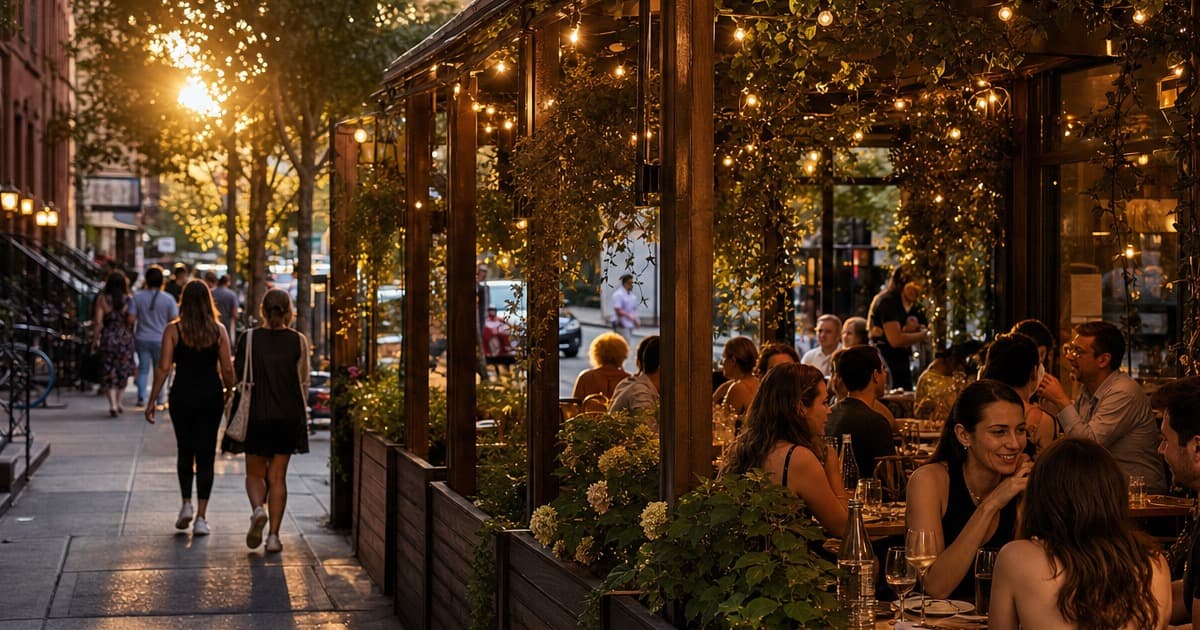
When New York let restaurants spill onto sidewalks and into parking lanes in the summer of 2020, it was an emergency measure to keep a battered industry alive. Almost overnight, plywood dining sheds appeared on thousands of blocks, and a city that had spent decades making outdoor dining difficult suddenly had more of it than anywhere in the country.
Five years later, the improvised version is ending and a permanent one is taking its place.
From emergency to program
The temporary "Open Restaurants" rules have given way to a permanent framework the city calls Dining Out NYC. It keeps outdoor dining but replaces the free-for-all with structure. The most visible change is seasonal: fully enclosed roadway sheds, the boxed-in structures that drew complaints about rats, trash, and blocked sightlines, are gone. Roadway seating is now allowed only during the warmer months, roughly spring through fall, and must be open-air and easy to remove. Sidewalk cafés, by contrast, can operate year-round.
Restaurants apply through a single licensing process and pay fees that are far lower than the old sidewalk-café rules once demanded, part of an effort to keep the program within reach of small operators rather than just deep-pocketed groups.
Winners and grievances
For many restaurants, the extra seats have been a lifeline, adding capacity that turned marginal locations into viable ones and giving neighborhoods a livelier street life. Diners, for the most part, liked eating outside enough to keep doing it well after the emergency passed.
Not everyone is cheering. Some residents welcomed the end of the enclosed sheds, which at their worst became derelict or abandoned structures parked outside their windows. Restaurant owners, meanwhile, have grumbled about the cost of tearing down and rebuilding seasonal setups each year, and about rules detailed enough to fill a manual. The seasonal roadway limit, in particular, means the round-the-clock outdoor dining of the pandemic years is not coming back in full.
A permanent change to the streetscape
What emerges is a compromise, and like most compromises it leaves everyone a little unsatisfied. But the larger shift is hard to miss. New York spent generations treating its streets as space for storing cars. The last five years reopened the question of who the curb is for, and the answer, at least for part of the year, now includes a table and a plate. That reallocation, more than any single shed, is the lasting legacy of the experiment.