Empty Offices, Full Apartments: Inside Manhattan's Conversion Boom
With office towers half-empty and housing scarce, developers are turning Manhattan's workplaces into homes. The math is finally starting to work.
 By
By 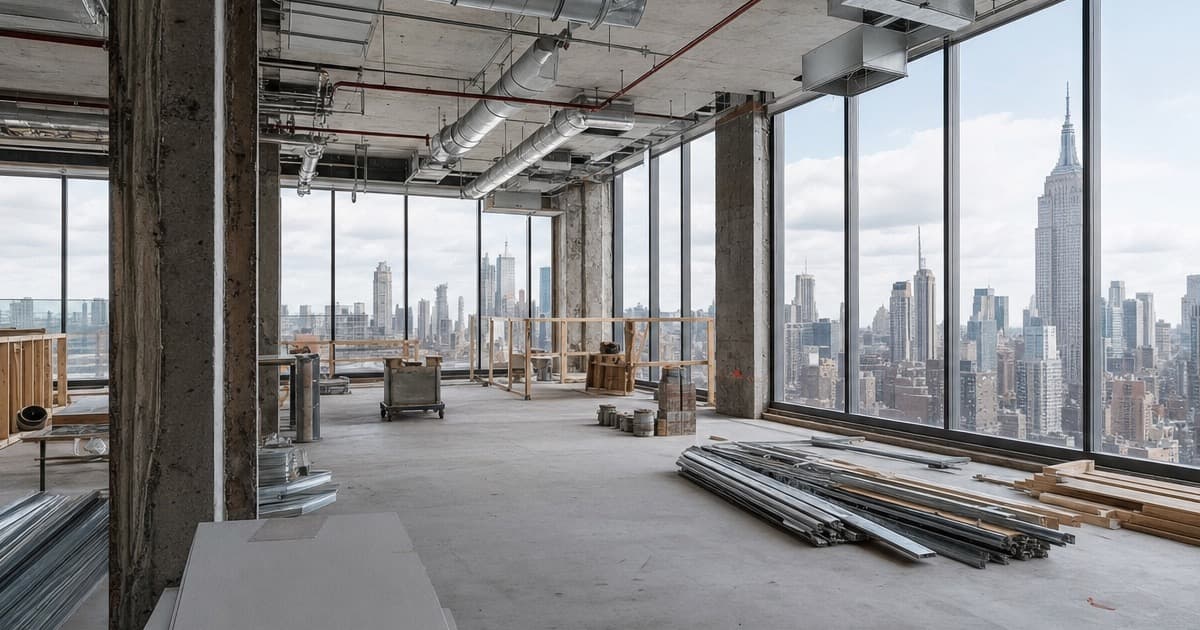
For most of the last century, the flow of Manhattan real estate ran one way: land got more valuable, and someone put an office building on it. The pandemic broke that pattern. Remote and hybrid work hollowed out older office towers, pushing citywide vacancy into the high teens and leaving whole floors dark in neighborhoods that once emptied out at 6 p.m. and stayed that way.
Now the buildings are being reborn as apartments, and the pace is picking up.
Why now
Office-to-residential conversions are not new. What changed is the arithmetic. Older Class B and C office buildings, especially in the Financial District and along the Midtown side streets, lost tenants and value at the same time the city faced a deepening housing shortage. When an office floor is worth less as an office than it would be as apartments, conversion stops being a novelty and becomes a business plan.
Two policy moves gave that plan a push. In 2024, New York State created a tax incentive designed specifically to encourage commercial-to-residential conversions that include affordable units. Around the same time, the city's "City of Yes for Housing Opportunity" rezoning made it far easier to convert a wider range of older buildings, extending eligibility to structures built as recently as 2001 rather than the previous mid-century cutoffs.
The showcase projects
The clearest proof of concept is downtown. The conversion of 25 Water Street in the Financial District has been billed as the largest office-to-residential project in the country, turning a hulking former office block into well over a thousand apartments. Nearby, the former Pfizer headquarters near Grand Central and a run of aging FiDi towers are following similar paths. Even the Flatiron Building, one of the most recognizable structures in the city, has been slated for a residential future.
These projects share a logic. The best conversion candidates tend to be older buildings with smaller floor plates, because apartments need windows and light in ways that a deep, open office floor cannot easily provide. A slender early-20th-century tower converts cleanly; a 1980s superblock with a vast windowless core is much harder.
What it fixes, and what it doesn't
Supporters frame conversions as a rare win-win: they chip away at a housing shortage while giving obsolete office stock a second life and keeping downtown streets occupied after dark. Neighborhoods built entirely around the workday, like the Financial District, stand to become genuine 24-hour communities.
The limits are real, though. Conversions are expensive and slow, and they cannot touch the newest, glassiest towers that make up the bulk of Manhattan's vacant square footage. Affordability is the other open question. Incentives require some below-market units, but the economics of a gut renovation in Manhattan still point toward higher rents. Conversions will reshape the skyline's purpose over the next decade. Whether they meaningfully lower what New Yorkers pay to live here is a harder promise to keep.