Iris Van Herpen Exhibition Launches at Brooklyn Museum
The Brooklyn Museum opened Iris van Herpen: Sculpting the Senses on May 16, 2026, showcasing over 140 haute couture pieces alongside natural-history…
 By
By 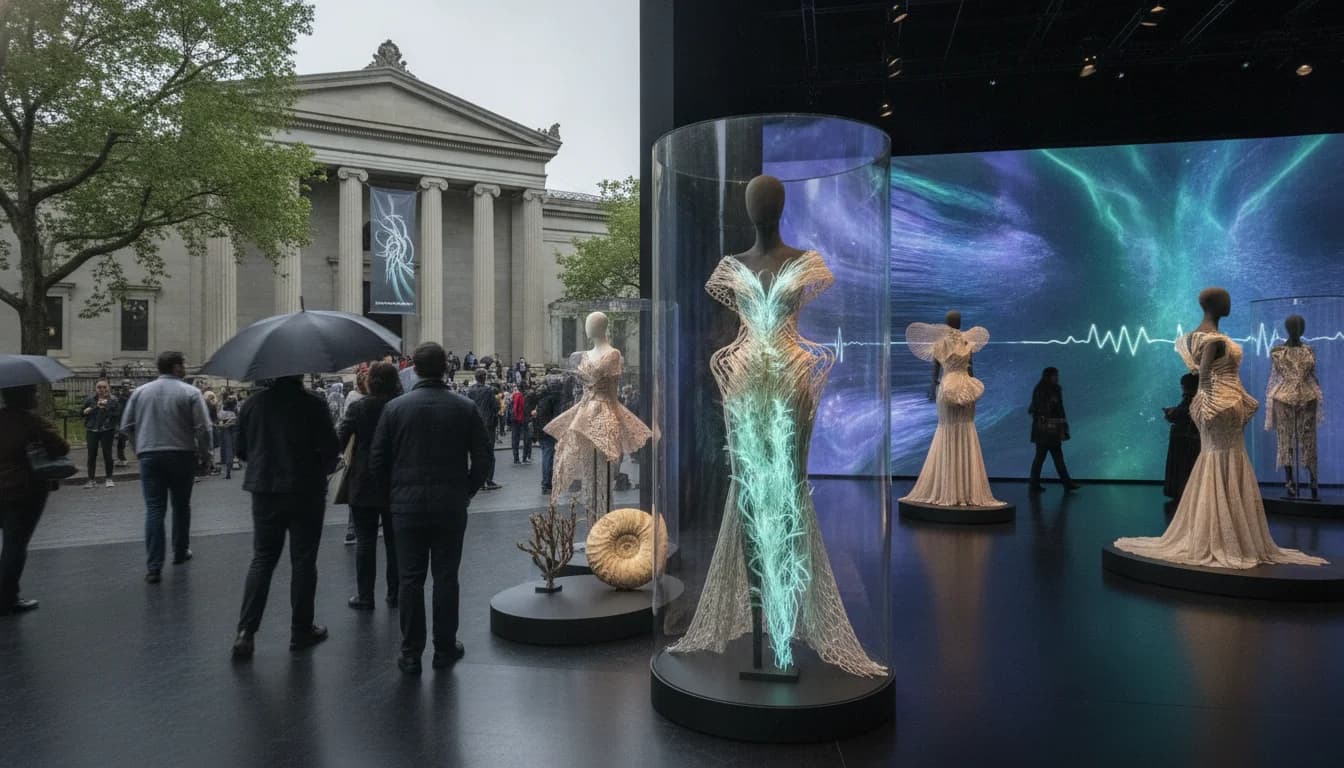
Brooklyn, NY — On May 16, 2026, the Brooklyn Museum opened Iris van Herpen: Sculpting the Senses, a landmark retrospective that fuses couture with science and places the Dutch designer’s experimental practice on a North American stage for the first time in this form. The official run, announced by Iris van Herpen and the museum, marks the exhibition’s extension of a global tour that began at the Musée des Arts Décoratifs in Paris and later traveled to Kunsthal Rotterdam, Singapore, and Brisbane before landing in Brooklyn. The opening aligns with a broader wave of fashion-forward museum shows that pair high-tech fabrication with immersive display, signaling a shift in how institutions frame couture within contemporary art and science. For readers tracking technology-driven market shifts, the Brooklyn debut represents a data point in the ongoing integration of digital tooling, biomaterials, and interactive experiences into public exhibitions. The exhibition runs through December 5, 2026, spanning roughly 204 days of programming, according to official announcements from Iris van Herpen. (irisvanherpen.com)
The scope of Sculpting the Senses is substantial: the show gathers more than 140 haute couture pieces across van Herpen’s career, juxtaposed with works from natural-history collections and contemporary art, enabling a dialogue between biology, geology, and fashion. This scale — and the way the show frames the body as a sensorium — positions the Brooklyn Museum show as a pivotal data point for understanding how fashion tech is entering mainstream museum programming. Early press materials and press-tour reporting highlight that the exhibit’s breadth is designed to illuminate both the tactile, material innovations of van Herpen’s practice and the science-inspired narratives that underpin her work. In practice, this means visitors encounter biomorphic silhouettes powered by kinetic or responsive elements, with the show offering not only garments but a curated set of installations that invite visitors to engage with the materiality and process behind the garments. The exhibition, which originated at the Paris MAD, then Rotterdam, Singapore, and Brisbane before New York, underscores a transnational strategy for presenting fashion-tech couture on a large stage. (irisvanherpen.com)
As the show opens to the public, readers should note that the Brooklyn run is complemented by interactive components and live experiences that extend beyond passive viewing. Hyperallergic’s preview coverage describes a live installation at the Brooklyn Museum in which visitors partner with van Herpen to pleat and shape digital organza forms, an approach that blurs the line between audience and designer and expands the traditional museum garment experience. This element, alongside the show’s immersive galleries, is indicative of broader trends where audience participation and real-time fabrication play roles in fashion exhibitions. The live-pleat concept is emblematic of how fashion-tech narratives are evolving in museums, turning exhibits into participatory events that capture attention in an attention-scarce media environment. (hyperallergic.com)
Opening paragraphs: Lead with the news, the date, and why it matters
- The Brooklyn Museum’s Iris van Herpen: Sculpting the Senses marks a high-profile debut of a globally traveling couture retrospective in the United States, with the May 16, 2026 opening date setting the formal launch of a run that will keep audiences engaged through December 5, 2026. The event is notable not only for its scale but for its positioning of couture as a hybrid discipline intersecting design, sculpture, and science. Official communications from Iris van Herpen describe the show as a comprehensive retrospective spanning nearly two decades of her practice, and the Brooklyn run confirms the exhibition’s continued global journey. (irisvanherpen.com)
- The broader significance centers on how fashion exhibitions are being reframed for tech-forward audiences. The show’s design brings together more than 140 outfits, tactile artifacts, and cross-disciplinary pieces that pair fashion with natural-history specimens and contemporary art. This arrangement mirrors a broader market trend toward blended-content experiences that courts a wider audience, from fashion enthusiasts to science and design communities, and it resonates with ongoing conversations about sustainability, material innovation, and women-led leadership in the arts. As the show’s organizers describe in official materials, Sculpting the Senses invites visitors to consider the body as a sensorium — a conceptual frame that aligns with the era’s interest in biomimicry, advanced fabrication, and interactivity. (news.artnet.com)
Section 1: What Happened
North American Debut and Opening
Opening Date and Location
- Iris van Herpen: Sculpting the Senses opened at the Brooklyn Museum on May 16, 2026, and runs through December 5, 2026. The museum’s official catalog and Iris van Herpen’s own announcements confirm the New York installation’s start and end dates, placing the show within a tightly scheduled, season-long engagement designed for high-visibility programming during the spring–winter window. In a related note, the designer and the museum marked the North American debut with a media-forward opening period, underscoring the collaboration’s status as a major cultural release for 2026. The official dates come directly from Iris van Herpen’s announcements and the Brooklyn Museum’s materials. (irisvanherpen.com)
- A contemporaneous opening event occurred earlier in May 2026. Iris van Herpen and the Brooklyn Museum celebrated the opening of Iris van Herpen: Sculpting the Senses on May 11, 2026, signaling the ceremonial start of the exhibition’s North American engagement ahead of the public opening date. This event is documented in the designer’s official communications and press materials, illustrating a staged rollout typical of blockbuster museum shows. (irisvanherpen.com)
Exhibition Details and Content
- The show’s core concept centers on a dialogue between couture, science, and natural history. Brooklyn Museum and Iris van Herpen communications frame Sculpting the Senses as a retrospective that surveys the designer’s process over nearly two decades, highlighting biomimicry, 3D-printed forms, and experimental fabrication. The exhibition’s material scope includes more than 140 haute couture pieces, which the show places alongside fossils, corals, and other natural-history objects to illuminate the designer’s process as a form of interdisciplinary practice. This arrangement not only expands the traditional fashion exhibit but also aligns with market and museum strategies to attract diverse audiences seeking cross-disciplinary storytelling. (news.artnet.com)
- The exhibition’s design emphasizes hands-on engagement and immersive environments. Early press and media coverage describe interactive elements, including live pleating and dynamic installations, that invite visitors to participate in the garment-making process and to experience the sensory dimension of van Herpen’s work. This approach aligns with broader trends in museum pedagogy that seek to translate high-fashion couture into experiential learning and public engagement opportunities. (hyperallergic.com)
Timeline and Delivery
- The show’s timeline reflects a carefully staged itinerary across multiple institutions, with Rotterdam’s initial presentation (September 2025–March 2026) serving as a prelude to the New York run. This transatlantic arc demonstrates how contemporary fashion retrospectives are increasingly global in scope, with museums coordinating catalogs, loans, and partnerships to maximize audience reach. The Rotterdam leg is documented in Iris van Herpen’s own news communications, which emphasize the show’s international footprint and the collaborative nature of the project with the Musée des Arts Décoratifs. (irisvanherpen.com)
Section 2: Why It Matters
Interdisciplinary Fusion and Market Signals
Fashion, Art, and Science Converge
- Sculpting the Senses epitomizes a broader shift in which fashion design is increasingly embedded in scientific inquiry, material science, and digital fabrication. The Brooklyn Museum show blends van Herpen’s biomorphic couture with fossilized remains, coral specimens, and other natural-history artifacts to highlight how fashion intersects with biology, geology, and ecology. This approach reflects market interest in cross-disciplinary storytelling, where fashion houses partner with museums and science institutions to create immersive narratives that appeal to a spectrum of audiences. Public-facing materials emphasize the intention to illuminate a process-driven practice that sits at the nexus of art, engineering, and natural history, signaling a strategic alignment with tech-forward cultural programming. (irisvanherpen.com)
- The inclusion of 3D printing, cutting-edge materials, and kinetic or shape-changing components has implications beyond aesthetics. As industry observers note, such innovations stimulate demand for materials suppliers, digital fabrication services, and education programs that bridge design and engineering. In markets where consumer interest in wearable technology and smart textiles continues to grow, museum exhibitions that showcase these capabilities can influence consumer perception and corporate partnerships, suggesting a pathway for brand collaborations and research-driven product development. (news.artnet.com)
Economic and Cultural Impact
- The sheer scale of Sculpting the Senses — more than 140 garments and related works — positions the Brooklyn Museum exhibition as a major cultural event with potential spillover effects on local hospitality, tourism, and cultural economy. Coverage across fashion and art outlets highlights the show’s capacity to draw visitors who might not typically attend couture-focused exhibitions, contributing to broader audience diversification for museum programming. Observers and critics note that such shows help elevate the profile of women-led design practices and amplify the conversation around sustainability and innovative fabrication in fashion. While explicit attendance figures aren’t published in every release, the curatorial scope and media attention imply a meaningful economic and cultural footprint for the institution and for the fashion-tech ecosystem. (news.artnet.com)
Accessibility, Education, and Public Engagement
- The exhibition’s interactive dimensions — including live pleating and gallery-level programming — are designed to enhance accessibility and education. Live experiences, artist conversations, and catalog-of-record publications provide multiple entry points for audiences at varying levels of familiarity with high-fashion couture and science-informed design. Reports and interviews with participants and curators suggest that Sculpting the Senses intends to democratize a complex practice by translating technical processes into approachable, visually compelling experiences. These elements matter for the market because they broaden the potential audience base for similar shows and encourage partnerships with schools, museums, and tech-forward brands seeking authentic engagement opportunities. (hyperallergic.com)
The Evidentiary Value of a Museum-Driven Tech Narrative
- In a market increasingly driven by data-informed curation and audience analytics, Sculpting the Senses offers a case study in how museums can monetize and contextualize couture within a science-inflected storyline. The show’s framing — as described by Iris van Herpen and the Brooklyn Museum — treats fashion as a cultural technology, not merely as apparel. This framing resonates with broader industry discourse about the role of museums as platforms for innovation, not just repositories of artifacts. The public-facing materials frame the exhibit as a cross-disciplinary journey that situates design within a longer historical arc of material experimentation. This positioning has implications for how fashion-tech investments are perceived by sponsors, funders, and policymakers interested in the cultural economy. (irisvanherpen.com)
Quotable Judgment
- "Nature is the best artist that we have on this planet," van Herpen has said during coverage of Sculpting the Senses, a sentiment that captures the show’s core premise: couture can be a scientific discourse, where organic processes inspire technology-driven form. This articulation, reported by Artnet News during the Brooklyn installation, captures the show’s broader cultural relevance as a catalyst for reframing fashion within both the art and science ecosystems. “Nature is the best artist that we have on this planet,” she said, highlighting how natural phenomena inform and justify the design discipline’s expansion into experimental media. (news.artnet.com)
What It Means for Audiences and Markets
- The Brooklyn Museum’s Sculpting the Senses provides a model for how to present complex craft practices in a way that is accessible to general audiences while still resonating with specialists in fashion, sculpture, and material science. The show’s cross-institutional partnerships and its emphasis on interactive experiences offer a blueprint for future exhibitions that seek to maximize engagement without sacrificing scholarly rigor. For professionals in fashion-tech, the exhibit underscores the continuing value of collaboration with museums as a way to validate and prototype new materials, fabrication methods, and performance-oriented garments in a public forum. The show’s structure — a curated conversation among body, material, and environment — also hints at a market demand for hybrid exhibitions that combine design, science, and education into a single narrative arc. (irisvanherpen.com)
Section 3: What's Next
Catalogs, Tours, and Next Steps
Catalog Release and International Reach
- The exhibition’s international journey has produced catalogs and companion publications that extend the narrative beyond the galleries. The MAD Paris and Rotterd am presentations were accompanied by catalog material and scholarly essays, with updated English-language references and cross-disciplinary essays that help students, curators, and designers study van Herpen’s process. The catalog and exhibition materials often provide the deepest dive into the technical aspects of construction, materials, and the theoretical underpinnings of van Herpen’s practice. For readers seeking a primary reference, the MAD Paris publication and the Rotterdam press materials offer detailed context on the show’s concept and its cross-cultural adaptation. (madparis.fr)
- Iris van Herpen’s official pages summarize the ongoing global arc of Sculpting the Senses, including the New York presentation, with previews pointing toward potential future iterations or related publications. The official site describes the exhibition as a long-running, international project that continues to shape how audiences perceive couture as a living, evolving process. This has implications for other museums considering similar cross-genre, tech-forward fashion retrospectives. (irisvanherpen.com)
Potential Extensions and Partnerships
- As museums and fashion houses seek to expand audiences through immersive, participatory experiences, Sculpting the Senses offers a tested blueprint for collaborations that blend artifact-based displays with participatory installation work. The live pleating component, already demonstrated in previews, is likely to become a precedent for future fashion exhibitions where visitors become co-creators for a limited on-site period. For brands and institutions, the model suggests opportunities to integrate digital fabrication labs, student programs, and outreach initiatives into exhibition planning, creating a richer, more resilient ecosystem around couture-driven content. (hyperallergic.com)
The Road Ahead for Iris van Herpen Sculpting the Senses
- The Brooklyn Museum show is scheduled to run through December 5, 2026, according to official materials, and this window will shape the exhibition’s media coverage, educational programs, and tourist draw during late fall and early winter. The catalog and companion materials will likely be published in the months following the run, offering a resource for scholars and practitioners analyzing the intersection of fashion, science, and museum curation. The ongoing narrative of van Herpen’s practice, amplified by the Brooklyn presentation, signals a continuing appetite for interdisciplinary storytelling within institutional settings. (irisvanherpen.com)
Closing
- Iris van Herpen: Sculpting the Senses represents a milestone in how couture is presented in a museum context, advancing a dialogue between fashion, science, and art that resonates with data-driven readers and culture-watchers alike. The show demonstrates that technology-enabled fashion can be both visually spectacular and analytically rigorous, creating a model for future exhibitions that aim to educate, inspire, and engage diverse audiences. As Brooklyn Museum’s programming continues to push the boundaries of what a fashion show can be within a museum setting, the project’s public data — including its 204-day run and its cross-institutional provenance — offers a useful lens for tracking the evolving relationship between fashion-tech, cultural institutions, and audience participation. Readers should stay tuned for updated exhibition materials, catalog releases, and subsequent announcements about additional touring or re-stagings in other venues. The discourse surrounding Sculpting the Senses is just beginning to take shape, and its impact will likely reverberate through fashion, design, and museology for years to come. (irisvanherpen.com)