Elon Musk, Trump and Xi’s State Dinner Guest List
Elon Musk joins the reported Trump–Xi dinner guest list. An eight-name comparison with the 2015 White House roster reveals changing business access.
 By
By 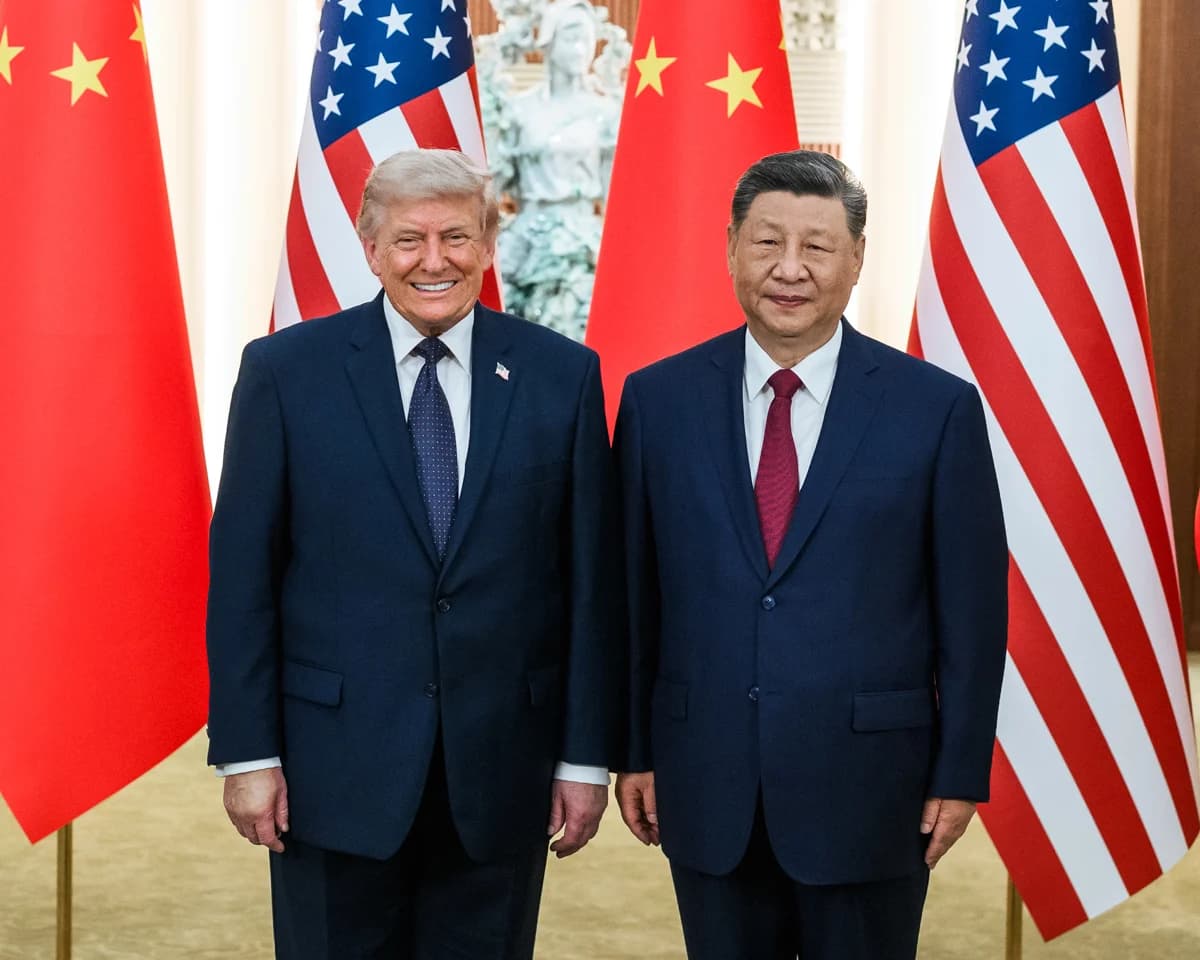
Elon Musk's reported invitation to Donald Trump's September 24 state dinner for Xi Jinping has attracted the sort of attention usually reserved for the seating plan at a particularly powerful New York gala. The guest list offers a public glimpse of who will have access to the room, and of which businesses Washington wants represented as the two presidents meet.
Eric Daugherty's September 20 X post singled out Musk, Nvidia's Jensen Huang and Michael Dell. The more revealing question is how that group fits into the longer history of American business at China state dinners. The White House has brought executives into these occasions before. The names, and the commercial questions surrounding them, have changed.
This is a preview published September 21. The dinner remains scheduled for Thursday, September 24, and reported invitations should be read as expected participation.
The Trump–Xi guest list, with an eleven-year reference point
Bloomberg's September 18 report named eight business figures expected at the dinner, citing a U.S. official. We compared those eight names with the Obama White House's complete published list of expected guests for September 25, 2015.
| Reported 2026 guest | Business association | Named on 2015 list? |
|---|---|---|
| Jensen Huang | Nvidia | No |
| Sam Altman | OpenAI | No |
| Sundar Pichai | No | |
| Jane Fraser | Citigroup | No |
| Jeff Bezos | Amazon | No |
| Elon Musk | Tesla / SpaceX | No |
| Michael Dell | Dell Technologies | No |
| Tim Cook | Apple | Yes |
Only one of the eight business figures named in that September 18 report, Tim Cook, also appears on the official 2015 expected-attendee list, a 12.5% overlap within this reported subset. The calculation counts people, uses all eight names in that report as the denominator and matches them against the archived list. It does not estimate turnover across the entire 2026 dinner.
The distinction between a complete historical roster and a partial current report matters. A missing name in the archive means that person was not on that published expected-attendee list. A missing name in the shorter 2026 report leaves open whether that person received an invitation. Neither document alone records everyone who ultimately walked through the door.
What the reported group represents
The eight names can also be grouped by the business connection that makes each relevant to this story. That produces a compact picture of the reported subset, with technology represented across several different kinds of company.

Source and method: eight names in Bloomberg's September 18 report, grouped editorially once each. AI and computing systems: Huang, Altman, Dell. Platforms and devices: Pichai, Bezos, Cook. Vehicles and space: Musk. Banking: Fraser. These categories describe this article's grouping, not official industry classifications or the full dinner roster.
For a New York reader, Fraser's reported inclusion gives the story a direct banking connection. The broader group also brings together companies with very different ways of reaching customers: selling physical equipment, operating platforms, building AI services or providing finance. A shared table creates an opportunity for conversation across those businesses. Any joint venture, investment or purchase would still require its own terms.
The chart should therefore be read as a guide to the people named in one report. It cannot reveal their seating arrangements, negotiating authority or share of the evening's influence. Those are separate facts that a guest list does not supply.
The 2015 room already mixed technology and finance
The archived 2015 list included Tim Cook, Mark Zuckerberg, Satya Nadella, Larry Ellison and IBM's Virginia Rometty. It also named Larry Fink, James Gorman, Stephen Schwarzman and Ray Dalio. That combination provides a useful historical check on the idea that prominent technology executives at a China dinner are a new development.
The roster extended beyond business. Misty Copeland, designer Phillip Lim and filmmaker Lee Daniels appeared alongside public officials and other guests. A state dinner assembles a public image of the host country as well as a collection of people with commercial interests. Its symbolism comes partly from which professions and institutions are represented together.
The comparison supports a narrower, more interesting judgment than a claim that corporate America has suddenly discovered diplomacy. The changing guest list shows a change in the faces of business access, while the practice of bringing business into state diplomacy continues. The official archive makes that continuity visible without requiring guesses about private conversations.
Two competing readings in the X replies
The visible discussion beneath Daugherty's post concentrates on personal relationships and perceived invitations. Rose's reply welcomed seeing Musk and Trump together again. It frames the event as evidence of renewed closeness. A reported invitation supports the expectation that they could share the occasion, while leaving the broader relationship open to interpretation.
Michelle Moore's reply welcomed Zuckerberg's apparent absence. The historical list gives that reaction an additional dimension: Zuckerberg was named among the expected guests in 2015. The current partial reporting, however, cannot establish that he has been excluded from this week's event.
Those reactions show how quickly a list becomes a story about favor and status. They are individual readings from the replies available during research. They do not establish a consensus among business leaders, New Yorkers or the wider public, and they offer no evidence about the substance of the leaders' talks.
The diplomatic setting has its own continuity
The White House's official photographs of the May 14, 2026 state banquet in Beijing document Trump attending a banquet with Xi at the Great Hall of the People. That provides a recent primary record of the two leaders using formal hospitality within their diplomatic relationship.
The September dinner brings that setting to Washington. Its immediate public products will include official remarks, images and whatever guest information the administration releases. Each can answer a different question: who participated, what the leaders chose to emphasize and which commercial claims were actually announced.
For readers following the New York business connection, the most useful follow-through is a named transaction or a specific policy change tied to a participating institution. An invitation explains access to an occasion. It does not identify the terms of a deal, allocate a financial benefit or establish that a guest shaped the outcome.
That is what makes the historical comparison valuable before the dinner happens. It supplies a documented reference point for the personalities and industries receiving attention today. Thursday's room will produce its own record; the 2015 archive shows how much can be learned by reading that record carefully.
Cover: Donald Trump and Xi Jinping before the state banquet at the Great Hall of the People in Beijing, May 14, 2026. Official White House photo by Daniel Torok, public domain. Photo source.