Artist-Run Micro-Studios Give Painters and Sculptors Space Again
Discover how Artist-Run Micro-Studio Hubs in NYC 2026 are transforming neighborhoods and expanding creative opportunities in urban areas.
 By
By 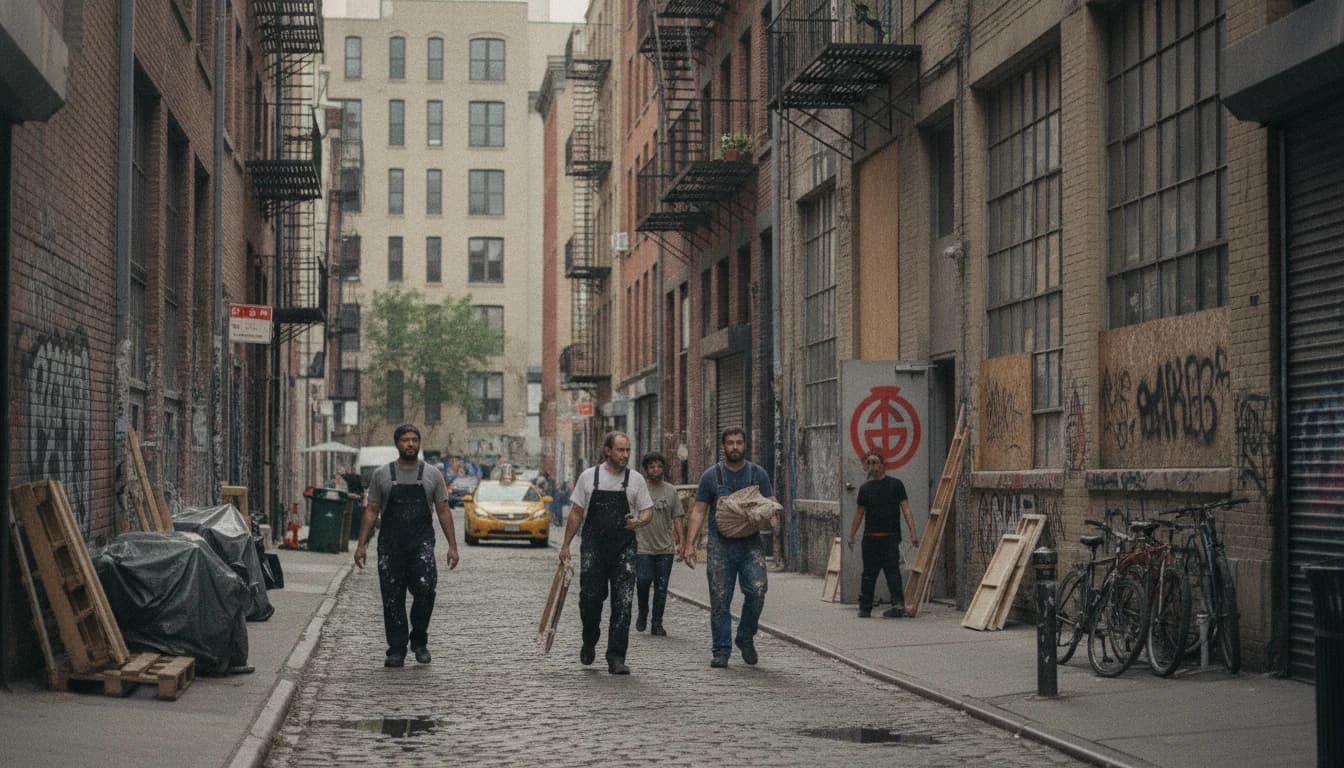
New York City in 2026 is seeing a notable shift in how artists access space, with a growing interest in small, artist-run micro-studio hubs across Manhattan and neighboring boroughs. Public and private groups alike are rethinking underutilized spaces — from storefronts to community centers — as productive studios and community venues. This trend arrives as storefront vacancy rates persist in parts of the city, prompting policymakers, funders, and developers to explore arts-led revitalization strategies. The emergence of micro-studio hubs in NYC 2026 matters because it intersects cultural production with neighborhood dynamics, real estate realities, and local economic vitality. Early signals suggest these spaces may influence how communities experience art, how artists sustain practice, and how neighborhoods adapt to changing demographics and commercial patterns. (ebs.publicnow.com)
Industry observers point to a mosaic of initiatives that collectively sketch a pathway for Artist-Run Micro-Studio Hubs NYC 2026, rather than a single, citywide program. Notable examples include ongoing artist residencies and multi-use studios run by nonprofit and community organizations, such as Manhattan Neighborhood Network’s Artist-in-Residence program for 2026 (June through November), which combines workspace access with a structured workshop series and monthly consultations. The program opened applications in March 2026, with a May 1, 2026 deadline for proposals and a May 18 announcement of selected fellows, followed by residency dates beginning in June 2026. It also provides a concrete grant-like resource ($5,000 project award) and access to production facilities. This kind of program highlights how NYC institutions are building formalized pathways for artists to work in publicly accessible spaces while engaging communities through open studios and events. (mnn.org)
Meanwhile, Noo Arts announced a Governors Island residency for Summer 2026, running May through October 2026. The Noo Arts project places a rent-free studio space inside a Governors Island house at 404A Colonels Row, offering a three-month studio phase with periodic open studios and public engagements. This program demonstrates a dedicated, seasonal model for artist space that still maintains a strong public-facing component, aligning with city-scale conversations about activating underused spaces for cultural purposes. The season is designed to host a rotating set of residents and public events during weekends and special Open House Saturdays. (nooarts.org)
In addition to formal residency programs, the city and its partners are supporting storefront-activation efforts that blur the line between retail space and artist studio. Downtown Manhattan’s RE:Store program announced its 2026 lineup in May, aiming to convert vacant storefronts into temporary pop-up storefronts operated by small businesses and cultural operators. The effort signals a policy and market signal that vacant retail can host creative activity, test concepts, and contribute to neighborhood vitality while the market rebuilds. This program complements other storefront-focused initiatives that cities around NYC have pursued to bring life back to commercial corridors through art and culture. (downtownny.com)
Beyond residency and storefront activation, NYC institutions are collaborating with private-sector entities to expand the footprint of artist spaces. For example, Kit Studios NYC opened its doors in June 2026, creating a 5,000-square-foot studio in Manhattan’s Flatiron District intended for recording content, collaboration, and events. With six recording rooms, a stage for live podcast recordings, a common area, and a curated library, Kit Studios showcases a model in which a creator-focused business blends physical space with community-building programming. The company frames its move as part of a broader trend in which creator platforms invest in real-world spaces to complement digital services, signaling market interest in boutique, high-quality production environments. (axios.com)
Finally, a handful of Brooklyn and city-wide spaces further illustrate the “artist-run hub” concept in NYC. Plexus Projects, located at 198 Greenpoint Ave. in Brooklyn, describes itself as an artist-run space for intersectional ideas, with a gallery, short-term studio rentals, and a platform for exhibitions and residencies. The space has existed as part of a larger ecosystem of artist-run practice since 2017, providing a model for flexible production and community-oriented programming in a neighborhood context. Pratt Institute’s collaboration with The Village West on Windows on 14th Street—a storefront window installation program launched in 2026—demonstrates how educational institutions are reactivating storefront corridors to showcase student work in public space. These examples collectively illustrate a city-wide push toward reachable, multi-use, artist-centered spaces in diverse neighborhoods. (plexusprojects.org)
What Happened
Timeline and Key Milestones
- March 26, 2026 — New York City marks a milestone in public art programming with the culmination of From Roots to Arts: Celebrating NYCHA’s Cultural Heritage, a city-supported artist-in-residence initiative embedded within public housing communities. The event at City Hall highlighted how artists can inhabit public spaces to produce site-specific works and engage residents across the five boroughs. The program’s model emphasizes participatory, community-driven art and the potential for such residencies to be scaled or repeated in other neighborhoods. This official acknowledgment of artist-in-residence activity in public housing underscores a broader recognition of artist-led activation as a legitimate urban-planning and cultural-development tool. (nyc.gov)
- March 25, 2026 — The MNN Artist-in-Residence 2026 program opens its application window, signaling a structured pathway for NYC-based artists to access production facilities and engage with the local community through workshops and public programming. The program explicitly lays out a six-month arc (June–November 2026) with monthly workshops and consultations, as well as a $5,000 project award to support residents’ practice. The timeline, along with the provision of dedicated facilities, demonstrates a deliberate institutional approach to sustaining artist space within the city’s cultural infrastructure. (mnn.org)
- May 1, 2026 — The MNN program’s application deadline occurs, with a May 18 announcement of the selected fellows. This timing indicates a tightly scheduled pipeline from application to residency, reflecting an organized effort to integrate artist space within NYC’s broader cultural calendar for 2026. (mnn.org)
- May–October 2026 — Noo Arts announces Governors Island residency programming as part of its WE ARE NATURE: Transformation Stories, with a dedicated art house on Governors Island operating seasonally. The schedule emphasizes weekend open studios and monthly public events, illustrating how a seasonal hub can function as both a studio and a public platform for contemporary practice. (nooarts.org)
- June 2026 — Kit Studios NYC opens a 5,000-square-foot studio in Manhattan’s Flatiron District, featuring six recording rooms, a stage, a library, and a hidden coffee shop. The space is designed to be accessible to creators on certain plans, while also hosting open-access days, reflecting a hybrid model of private membership and public programming. This development demonstrates a market-driven push toward physical studio infrastructure that couples content creation with community-building experiences. (axios.com)
- June–September 2026 — Pratt Institute launches Windows on 14th Street, a storefront-window installation project in collaboration with The Village West that reveals the work of Pratt students in a high-visibility public corridor. This campus-public-space collaboration signals an educational approach to activating storefronts as living studios and exhibition spaces, reinforcing the neighborhood-scale dimension of NYC’s artist-run hub strategy. (pratt.edu)
- Spring 2026 — Downtown Alliance’s RE:Store program announces its 2026 tenant lineup for free temporary storefronts in Lower Manhattan, leveraging vacant space to incubate small businesses and cultural activities. The program marks a concrete policy and programmatic direction to test the viability of storefronts as venues for arts and culture while the retail market cycles through recovery. (downtownny.com)
Notable Programs and Spaces Shaping NYC’s 2026 Landscape
- MNN Artist-in-Residence 2026 (June–November 2026) — The residency format emphasizes creative practice, scheduled workshops, and monthly progress plans, with explicit eligibility targeting NYC-based artists and a formalized timeline. The program’s resources include a $5,000 project award and access to dedicated facilities, demonstrating a public-facing investment in artist space and professional development. (mnn.org)
- Noo Arts Governors Island Residency (May–October 2026) — The seasonal, rent-free studio model embedded in a historic Governors Island setting offers a distinct geographic and logistical approach to artist space, with an emphasis on live events and open studios. The program’s public programming model aligns with the island’s seasonal cultural calendar and supports experimentation in ecology, performance, and collaborative practice. (nooarts.org)
- Plexus Projects (Brooklyn) — An established artist-run space offering a gallery and short- to mid-term studio rentals, with a focus on intersectional ideas and public programming. Plexus’s long-running presence (in operation since 2017) demonstrates how artist-run models can persist and evolve within a dense NYC arts ecosystem. (plexusprojects.org)
- Kit Studios NYC (Flatiron District) — A boutique creator space launched in 2026, providing six recording rooms, a live-stage area, and a library. The space is positioned as part of a broader trend in which creator-focused platforms invest in physical spaces to complement digital offerings and community events. This example shows how private sector entrants are monetizing studio infrastructure as a differentiator in a crowded creator economy. (axios.com)
- Windows on 14th Street (Pratt x The Village West) — An educational institution partnering to activate storefronts with student work, illustrating how universities and cultural organizations can seed public-facing studio activity through storefronts and neighborhood corridors. The program’s June 24, 2026 window reveal underscores a timely, campus-driven form of urban activation. (pratt.edu)
- RE:Store (Downtown Manhattan) — A storefront-activation program designed to provide free temporary retail spaces for small operators, including cultural participants, with selected tenants announced in May 2026. This program demonstrates a pragmatic approach to reimagining vacant spaces as venues for cultural experimentation and small-business experimentation. (downtownny.com)
Why It Matters
Impact on Artists, Neighborhoods, and the City
- Access to affordable space is a central constraint for many NYC-based artists, and the emergence of micro-studio hubs helps address this bottleneck by offering flexible, multi-use spaces that can function as studios, performance venues, or community-facing spaces. The convergence of residency programs, storefront activations, and private studio initiatives points to a diversified ecosystem, where artists can choose among seasonal, long-form, or pop-up space depending on their practice and funding cycles. The city’s ongoing storefront vacancy situation reinforces the perceived value of experiments in activation as a means to sustain neighborhood vitality while markets recover. (ebs.publicnow.com)
- The involvement of public and quasi-public bodies in artist residencies—such as From Roots to Arts and MNN’s residency program—illustrates a policy- and mission-driven approach to embedding culture within everyday life. These programs emphasize co-creation with neighborhoods and participants, aiming to amplify community voices and democratize access to creative resources. City agencies’ support for artist-based activation, including partnerships and public-facing programming, signals a recognition that cultural infrastructure can influence social cohesion, local identity, and urban competitiveness. (nyc.gov)
- Educational and non-profit organizations contribute essential legitimacy and continuity to NYC’s artist-run hub landscape. School-affiliated programs (Pratt) and community-based nonprofits (Plexus Projects, MNN) demonstrate sustainable models for long-term engagement, collaboration, and capacity-building. The presence of these institutions helps ensure that micro-studio hubs are not solely market-driven spaces but also sites for mentorship, learning, and inclusive participation. (pratt.edu)
Contextualizing with City and Market Trends
- Storefront vacancies in early 2026 remained a critical urban issue, prompting experimentation with arts- and culture-led activations as part of broader urban revitalization strategies. The Comptroller’s report on storefront vacancy dynamics underscores that, even as vacancies persist, cities are actively testing initiatives to “bring life back to retail corridors” through art, culture, and community programming. This creates a practical rationale for artist-run micro-studios as a complementary tool to traditional economic development strategies. (ebs.publicnow.com)
- Activating public spaces via artist residencies tied to housing and community programs demonstrates how art can be part of broader urban resilience strategies. The NYC design commission’s leadership and the Public Housing Community Fund’s collaboration with city agencies illustrate that cultural programming can be nested within housing and public space agendas, not merely within galleries or museums. This expands the potential impact radius of Artist-Run Micro-Studio Hubs NYC 2026 beyond craft and performance to include social and civic dimensions. (nyc.gov)
- The private sector’s interest in physical spaces for creators, as exemplified by Kit Studios NYC, signals a market appetite for professional-grade, community-oriented production environments. The move to open a sizable studio in Flatiron reflects a broader trend of creator-driven real estate that blends content production with experiential events and community engagement. This trend complements nonprofit and public initiatives, offering artists alternative pathways for access, collaboration, and revenue generation. (axios.com)
What’s Next
Upcoming Developments and Potential Trajectories
- Expansion of residency-based hub models: If NYC continues to demonstrate demand for artist-run micro-studio hubs, we could see more city-based residencies and seasonal spaces, potentially with longer-term leases or city-supported grants to stabilize operations. The MNN residency framework and Noo Arts Governors Island model could serve as templates for similar programs in other neighborhoods, allowing artists to rotate through multiple hubs and audiences over the course of a year. Observers should watch for potential announcements that connect residencies with youth programming, mentorship, or local business partnerships. (mnn.org)
- Storefront activations as a formal strategy: The RE:Store program demonstrates a replicable approach for short-term, low-barrier activation of vacant storefronts. If the model proves scalable, we may see additional rounds or parallel programs in other districts, with more formal metrics to assess economic and cultural impact. For readers, tracking the Downtown Alliance’s 2026 outputs and related city reports on storefronts may reveal how policy tools evolve to support grassroots arts-led renewal. (downtownny.com)
- Public-institution collaboration: The From Roots to Arts model indicates a potential path for expanding embedded artist residencies in other city housing developments or public spaces. If the model is refined and documented successfully, it could become a broader template for “public housing art-in-residence” programs, potentially scaled through city partnerships and philanthropic support. Stakeholders should monitor any announcements related to additional campuses, campuses-with-arts-courses, or multi-site collaborations beyond the five boroughs. (nyc.gov)
- Education-industry bridges: Projects like Pratt’s Windows on 14th Street demonstrate how universities can partner with neighborhoods to convert storefronts into public studios or exhibitions. In the coming months, more universities and cultural institutions could pilot similar collaborations, using storefronts to expose students to public-facing spaces and to gather real-world feedback on how audiences engage with student work in non-traditional venues. (pratt.edu)
- Market signals and investment: Kit Studios’ NYC opening shows that private capital is willing to back production spaces for creators, a sign that the market sees value in hands-on, community-facing infrastructure. The magnitude and persistence of this investment will depend on demand from creators, event organizers, and small brands seeking affordable, high-quality facilities for content creation and networking. Watch for additional studio openings in other Manhattan districts or in nearby boroughs that mirror Kit’s scale and programming ambitions. (axios.com)
What Readers Should Watch For
- New residency announcements and application windows: The NYC residency ecosystem appears active, with programs like MNN and Noo Arts offering structured pathways for artists to access space and funding. Prospective residents should monitor official channels for opening dates, eligibility criteria, and required materials, as these programs can shape the availability of studio space and the distribution of opportunities across the city. (mnn.org)
- Public space activations in storefronts: With RE:Store and similar storefront activation programs, readers should anticipate more pilot projects that test the feasibility and impact of turning vacant spaces into creative venues. Outcomes may influence future policy and funding allocations around urban renewal, cultural districts, and small-business support. (downtownny.com)
- Neighborhood-level outcomes: As more spaces open and more events occur, local residents may experience tangible changes in streetscape, foot traffic, and access to cultural programming. Analysts will want to track metrics such as attendance at open studios, the mix of participants, and any long-term effects on neighborhood vitality and small-business formation. The storefront vacancy data and city reports provide a baseline against which future changes can be measured. (ebs.publicnow.com)
Closing
The early-2026 moment in NYC suggests a promising, pluralistic approach to Artist-Run Micro-Studio Hubs NYC 2026. A mix of residency programs, storefront activations, and private studio ventures signals that the city is testing multiple models for enabling artists to work, showcase, and engage with communities in compact, flexible spaces. While no single, city-wide program monopolizes the space, the alignment of public policy, educational institutions, nonprofit organizations, and private operators points toward a broader, sustained shift in how New York embraces artist spaces as critical urban infrastructure. For readers of Manhattan Monday, the takeaway is clear: 2026 is shaping up as a year in which art spaces are not only studios but active drivers of neighborhood life, cultural exchange, and urban resilience. Stay tuned for updates as these programs mature, expand, or inspire new collaborations across the city.
In the months ahead, Manhattan Monday will continue to track announced residencies, storefront activations, and new studio openings, painting a data-driven picture of how Artist-Run Micro-Studio Hubs NYC 2026 unfold in real time. As the city tests these models, readers can expect ongoing conversations about space, access, and community impact — conversations that ultimately shape where artists work, how audiences participate, and how neighborhoods evolve in the years ahead.