AI-powered Historic Preservation NYC 2026
AI-powered Historic Preservation NYC 2026: data-driven coverage of how NYC balances history and growth with AI-enabled tools.
 By
By 
Manhattan Monday reports a watershed moment in AI-powered historic preservation NYC 2026, as city officials unveil a new suite of tools designed to balance housing growth with the protection of historic neighborhoods. On June 25, 2026, Mayor Zohran Kwame Mamdani and Landmarks Preservation Commission (LPC) Chair Lisa Kersavage announced a coordinated set of resources intended to ease housing production in historic districts without compromising the city’s signature built heritage. The rollout includes an interactive map showing where homeowners can add Ancillary Dwelling Units (ADUs) within historic districts, a new ADU fact sheet, and a dedicated LPC team to guide property owners through the approvals process. The tools are part of the Block by Block Housing Plan, the administration’s comprehensive effort to expand housing supply while maintaining neighborhood character. This development matters because it signals a pragmatic approach to urban growth that attempts to align preservation with affordability and density, addressing a core tension in New York City politics and planning. The news matters not only for homeowners and developers but for preservation practitioners who are watching how policy infrastructure will affect the management of historic resources through the 2020s. (nyc.gov)
In parallel, the private sector is increasingly integrating AI into historic preservation workflows in New York City. Panorama Restoration, a prominent NYC façade and historic preservation contractor, highlights AI-enabled project delivery as a core feature of its service offering. The firm emphasizes drone-assisted inspections, AI-powered scoping, AI-powered quantity takeoffs, and a formal Critical Path Method (CPM) scheduling discipline to minimize change orders and align project scope with actual site conditions. These capabilities are presented as a value proposition for landmarked properties across all five boroughs, underscoring a market trend toward AI-assisted accuracy, faster approvals, and cost control in preservation projects. The company’s May 2026 insights and May 2026 articles position AI as a differentiator in a market long defined by meticulous craft, LPC compliance, and meticulous documentation. (panoramarestoration.com)
Scholars and policymakers are increasingly focused on how AI should be implemented responsibly in cultural heritage. A 2026 npj Heritage Science article emphasizes the need for trustworthy AI in cultural heritage, highlighting explainability, fairness, and context-sensitive design as essential to credible AI-driven preservation analyses. The piece outlines a framework for embedding ethics into AI workflows that support documentation, decision-making, and interpretation, while acknowledging challenges such as data biases and the opacity of some algorithms. In parallel, the paper calls for sector-specific guidelines, illustrating the broader debate around how cities like NYC should govern AI use in historic resources. Taken together, these perspectives reinforce the idea that the NYC story around AI-powered historic preservation in 2026 sits at the intersection of policy, practice, and ethics. (nature.com)
What Happened
City regulators roll out preservation-friendly housing tools
On June 25, 2026, the Mamdani administration jointly with the LPC announced a new suite of tools designed to accelerate housing while protecting historic districts. The core elements include a searchable map indicating where homeowners can create ADUs within historic districts, an ADU fact sheet, and a dedicated LPC team to help property owners navigate approvals. The administration is also releasing detailed guidance on landmark transferable development rights (TDRs) to unlock revenue streams for maintenance and preservation near designated landmarks. As part of the Block by Block Housing Plan, these resources aim to balance two historically conflicting objectives: expanding housing supply and preserving the visual and cultural integrity of New York City’s 157 historic districts and countless landmarked properties. The announcement (and its accompanying materials) was framed as a citywide approach requiring a whole-of-government response to create housing relief while safeguarding history. (nyc.gov)
Private firms accelerate AI-enabled preservation workflows in NYC
Panorama Restoration, a NYC-based façade and historic preservation specialist, has positioned AI-powered project delivery as a core capability in its May 2026 materials. The firm promotes drone-assisted inspections and AI-powered scoping, coupled with AI-powered quantity takeoffs, to produce precise, data-driven proposals before work begins. The company emphasizes a CPM-based scheduling approach and a “Zero Change Order Goal,” arguing that AI-driven measurements and data capture reduce unanticipated adjustments during restoration projects. This kind of AI-enabled workflow is highlighted as a hallmark of modern preservation practice in New York, where LPC compliance and meticulous documentation are nonnegotiable requirements for landmark work. The company serves all five boroughs and presents AI-enabled project delivery as a differentiator in a competitive market. (panoramarestoration.com)
Global and local policy contexts frame the AI discussion
Beyond NYC, researchers and policymakers are actively debating how AI intersects with cultural heritage. A 2026 npj Heritage Science article argues for a trustworthy, explainable, and bias-aware AI framework in CH contexts, noting the need to tailor AI ethics to heritage-specific data and narratives. This scholarly work complements broader policy discussions at the city and state levels about preserving heritage while embracing data-driven tools for analysis, documentation, and interpretation. Separately, the New York State Historic Preservation Plan (2021–2026) outlines ongoing commitments to inclusion, planning processes, and preservation funding mechanisms, which provide the regulatory and institutional backdrop for NYC’s preservation activities. These sources collectively frame a landscape in which NYC’s 2026 AI-powered historic preservation efforts must operate—balancing innovation with accountability and inclusivity. (nature.com)
Why It Matters
Impact on housing, preservation funding, and administrative efficiency

Photo by Zoshua Colah on Unsplash
The city’s June 25, 2026 announcement positions ADUs and landmark TDRs as viable tools to generate revenue for preservation while enabling new housing near landmarks. By equipping property owners with an interactive map, official guidance, and a dedicated LPC team, the city is attempting to streamline approvals and reduce friction in landmark areas—a critical step for districts facing housing demand pressures. The announcement explicitly ties these tools to the Block by Block Housing Plan and to the city’s broader pro-housing zoning changes adopted through City of Yes for Housing Opportunity in 2024. This combination is intended to unlock near-term housing while funding ongoing preservation work, addressing the practical concern that preservation can impede new construction if funding streams and approvals are not aligned. The policy move is notable because it demonstrates a measured approach to policy design that recognizes preservation as a live component of urban growth rather than an obstacle to development. (nyc.gov)
The ethics and governance of AI in cultural heritage
AI’s promise in preservation—faster analysis, better documentation, more precise design data—must be balanced against ethical concerns. The npj Heritage Science piece argues that trustworthy AI in CH requires explainability, context-sensitivity, and bias mitigation. In practice, this means developers and institutions should document decision pathways, make uncertainty explicit, and ensure that heritage narratives from underrepresented communities receive fair treatment. For NYC, this means any AI-enabled tool used in preservation workflows should be transparent to LPC reviewers, property owners, and communities, with safeguards to prevent misrepresentation or overreliance on automated outputs. The NYS Historic Preservation Plan also emphasizes engagement with diverse stakeholders, inclusion, and accessible public outreach as integral to preservation work—principles that have direct implications for AI adoption and governance at the municipal level. (nature.com)
Market signals: AI in preservation is not just theory
The private sector’s move toward AI-powered workflows in NYC preservation signals a market shift toward data-driven accuracy and efficiency. Panorama Restoration’s emphasis on drone-based data collection, AI-driven quantity takeoffs, and CPM scheduling indicates demand for reliable, auditable project data in a field where precision matters to LPC filings and permit processes. The convergence of AI and preservation practice could reduce change orders, shorten project timelines, and improve record-keeping—benefits that align with the LPC’s need for thorough documentation and the DDC’s requirements for DOB filings. While the public sector frames policy and funding mechanisms, the private sector demonstrates real-world capabilities and client expectations for AI-enhanced workflows. These dynamics collectively shape a NYC preservation market that is simultaneously cautious, policy-guided, and increasingly data-driven. (panoramarestoration.com)
Broader regional and national context
New York’s preservation environment sits within a broader national and international discourse about AI in cultural heritage. The 2026 npj Heritage Science article and related scholarly work highlight the ongoing tension between innovation and ethics, urging practitioners to adopt transparent, accountable, and inclusive AI practices. At the state level, the New York State Historic Preservation Plan reinforces the importance of partnerships, public education, and inclusive preservation planning, which can influence how NYC local government designs and implements AI-enabled preservation tools. As AI technologies mature, the NYC story could provide a template for other cities dealing with similar preservation-development tensions, offering a blueprint for combining policy levers with technology-driven workflows to maintain historic character while enabling responsible growth. (nature.com)
What's Next
Immediate near-term milestones and indicators
Looking ahead, LPC is expected to continue expanding the suite of digital tools that accompany preservation work. The LPC 60th anniversary initiatives already point to additional interactive story maps and online exhibits that broaden access to New York City’s preserved places. The updated story map launched as part of LPC’s 60th anniversary is one example of how digital tools can illuminate the city’s preservation history and provide educational context for the public. In the near term, expect more online interpretive resources that help residents understand landmark designations, the history behind them, and the economic or community benefits of preserving historic spaces. These digital assets will complement the new ADU/TDR framework and support more informed public engagement around preservation policy. (nyc.gov)
AI governance, standards, and industry adoption in 2026–2027
The AI in CH ethics debate is far from settled. The npj Heritage Science article outlines an evolving framework for explainability, bias mitigation, and contextual analysis, which could influence how NYC agencies evaluate AI tools and partner with private firms on preservation projects. Expect continued dialogue among policymakers, preservation professionals, and technologists about standardizing AI workflows for CH documentation, BIM-like modeling of historic buildings, and risk assessment for endangered sites. NYC’s policy environment—anchored by the NYS Historic Preservation Plan and reinforced by campus and industry research—will likely shape pilot programs, procurement criteria, and contractor selection criteria tied to AI capabilities. This period will be crucial for establishing governance mechanisms that ensure AI contributes to preservation without compromising ethical standards or community trust. (nature.com)
The role of policy and funding in sustaining AI-enabled preservation
New York’s preservation ecosystem relies on a blend of policy, funding, and performance standards. The New York State Historic Preservation Plan emphasizes economic development, sustainability, and partnerships as central pillars, which can translate into funding streams and collaborative opportunities for AI-enabled preservation initiatives in NYC. As planning processes evolve, stakeholders will watch for funding announcements, grant opportunities, and coordinated city-state initiatives that support AI-enabled preservation projects, data infrastructure, and public engagement. The interaction between policy guidance and technology adoption will help determine whether NYC can sustain AI-powered preservation at scale, preserve the city’s historic districts, and maintain transparency and equity in how preservation decisions are made. (parks.ny.gov)
Closing
As NYC pursues an integrated path—where AI-powered tools support both preservation and growth—the city’s experience will offer valuable lessons on governance, technology adoption, and community engagement. The convergence of public policy, private-sector innovation, and scholarly ethics suggests that 2026 could be a turning point for how cities manage historic resources in a data-rich environment. Readers seeking ongoing updates should monitor official statements from the Mayor’s Office, the LPC, and the NYC Comptroller, as well as independent analyses that connect policy developments to practical preservation outcomes. The evolution of AI in historic preservation NYC 2026 will unfold through policy refinements, pilot projects, and the daily work of preservation professionals who translate data into durable cultural heritage.
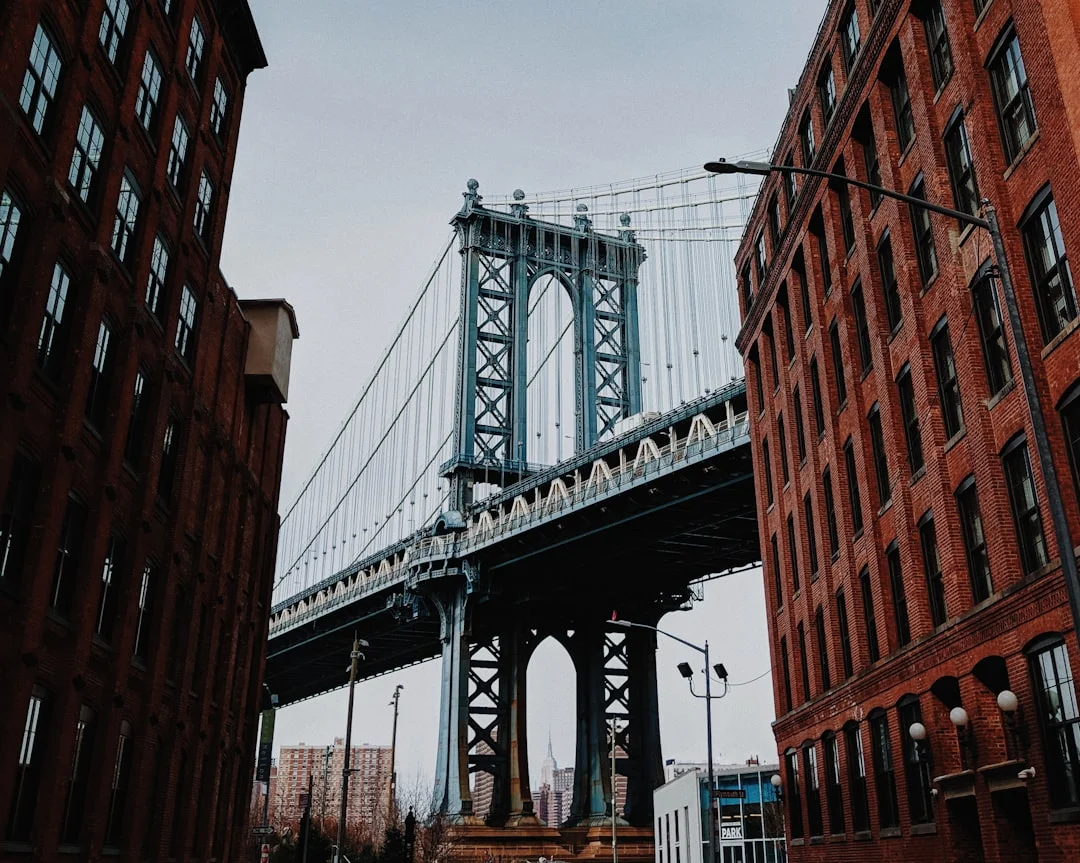
Photo by Patrick Tomasso on Unsplash