How 432 Park Avenue Fell From the World's Tallest Home to a $160 Million Headache
The pencil-thin Billionaires' Row tower was the ultimate Manhattan trophy. Then came the swaying, the cracks, the leaks, and a lawsuit.
 By
By 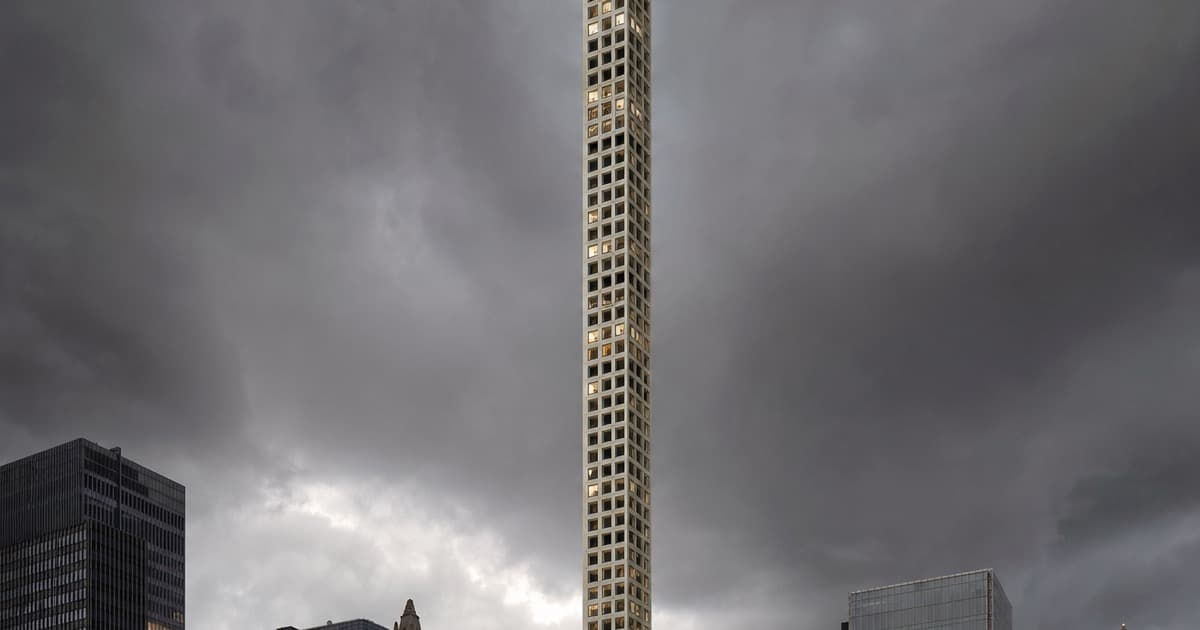
When 432 Park Avenue topped out in 2015, it was supposed to be the last word in Manhattan luxury. At 1,396 feet, it was the tallest residential building in the world, a pencil-thin column of white concrete and glass that loomed over Central Park like an exclamation point. Its penthouse sold for around $88 million. Its address became shorthand for the new billionaire skyline rising along 57th Street, the strip the press had already nicknamed Billionaires' Row.
A decade later, the story reads very differently. New York Magazine once called the tower a "luxury prison" for the ultra-rich. The building's own condo board is now suing the people who built it. And the question hanging over the whole project is a simple one: how did the most expensive real estate on Earth end up feeling like a cautionary tale?
A tower built to be thin
The appeal of 432 Park was always its silhouette. Designed by architect Rafael Viñoly, it is essentially a square tube, 93 feet on each side, stretched to a height-to-width ratio of roughly 15 to 1. That slenderness is what gave residents their sweeping, unobstructed views. It is also, it turns out, the root of the building's problems.
Supertall, super-slim towers behave differently from ordinary skyscrapers. They sway. Engineers design for it, but the people paying tens of millions of dollars to live near the top are the ones who feel it. Residents have described creaking walls, a swaying sensation in high wind, elevators that stall, and trash chutes loud enough to sound like a bomb going off. In 2019, water damage twice knocked out elevator service, at one point trapping a resident.
Thousands of cracks
The most serious allegations concern the facade itself. In a lawsuit filed in April 2025, the Board of Managers of the 432 Park Avenue condominium accused the developers of concealing structural defects, including thousands of cracks across the building's signature white exterior.
That white surface was never just decoration. The concrete had to be exceptionally strong to carry the loads of a tower this tall and this narrow, especially the forces generated when it flexes in the wind. According to the owners, the result is a facade riddled with cracks, fissures, and in places missing chunks of material, along with more than 20 separate water leaks reported since 2017.
The suit, brought against developer CIM Group and its construction and engineering partners in New York State Supreme Court in Manhattan, seeks damages that owners estimate could exceed $160 million to properly fix. CIM Group has pushed back hard, calling claims of structural failure baseless and defamatory and disputing that the repairs are necessary.
The economics of a trophy
Beyond the engineering, 432 Park exposed an uncomfortable truth about the trophy-tower boom. Many of the apartments were bought as investments or occasional pieds-à-terre, not primary homes, which left the building thinly occupied and its ownership fragmented across shell companies. When problems emerged, the owners found themselves fighting both the developer and, at times, one another over who should pay and how much.
Resale numbers have reflected the strain. Several units have traded at losses from their original purchase prices, a striking outcome for a building that was marketed as an unimpeachable store of wealth. The lesson landing on the rest of Billionaires' Row is that scarcity and altitude do not automatically translate into a sound investment when the underlying building is fighting itself.
What it means for Manhattan's skyline
432 Park did not just build an apartment tower. It helped define an entire era of Manhattan development, one built on the premise that engineering could push residential living higher and thinner than ever before, and that global capital would pay almost anything for the view. The tower proved the first part. The engineering worked, in the narrow sense that the building stands and sways within tolerances its designers accept.
What it called into question is the second part. The very features that made 432 Park a marvel, its height, its thinness, its experimental facade, are the features now generating cracks, leaks, and litigation. For a city that keeps reaching upward, that is the harder lesson: the most spectacular address in the world is only as valuable as the walls holding it together.